Meeting a Motorcycle Pack on a Forest Road
A motorcycle pack can appear around a blind bend on a Black Hills forest road before you have much room to react. Gravel, dust, steep grades, and narrow shoulders make a calm, predictable response safer than a sudden stop or sharp turn. This guide explains how to approach a group, pass one safely, and plan a South Dakota ride with shared roads in mind.
Prepare for Shared Forest Roads
Expect motorcycles and other traffic
Forest roads are shared spaces. Depending on the route, you may meet motorcycles, side-by-sides, passenger vehicles, bicycles, hikers, or trucks. A road that feels quiet at the trailhead can become busy farther along, especially near popular riding areas, scenic stops, and connections between communities. The Black Hills National Forest in South Dakota includes a large network of roads and trails, so a route may bring different kinds of users together.
Before heading out, check where motorized travel is allowed. Forest roads and motorized trails are not interchangeable: a road may be open to ordinary vehicle traffic while a nearby trail has a width restriction or seasonal closure. Use official travel information to confirm that your planned route is open and suitable for your machine. South Dakota Trail Maps and MVUMs can help you understand the distinction between a route shown on a recreational map and one authorized for motorized use.
A planning app such as onX Offroad can help you visualize a route and notice where roads connect, but treat it as a planning aid rather than the final word on access. Compare your intended route with the applicable official Motor Vehicle Use Map and check current closure notices before you leave. That extra step matters when a line on a screen looks continuous but a gate, seasonal restriction, or route designation changes what you can legally ride.
Set your machine and group up for the road
Before departure, make sure your ATV or UTV is in good working order. Check tires, brakes, lights, mirrors if fitted, fuel, and anything that could come loose over washboard or rocky stretches. Secure cargo so it cannot shift when you slow down or move to the edge of the road. A rattling cooler or loose tool can distract the driver at exactly the wrong moment.
Talk through a simple group plan before starting. Decide who leads and who rides last, agree to keep enough space to see and react, and choose a safe place to regroup if the group gets separated. If you are driving a UTV with passengers, tell them to stay seated and keep their hands and arms inside the vehicle when another machine passes. Passengers should not lean out to wave or take a photo from a narrow roadside.
It also helps to agree that nobody will stop suddenly in the travel lane to check a map or wait for another rider. If someone needs to pause, the group should look for a broad, visible place completely out of the road. A navigation tool such as onX Offroad can help you review junctions before riding, so you are less likely to make a last-second turn or pull over unexpectedly while trying to work out where the route goes.
What to Do When a Motorcycle Pack Approaches
Slow down early and stay predictable
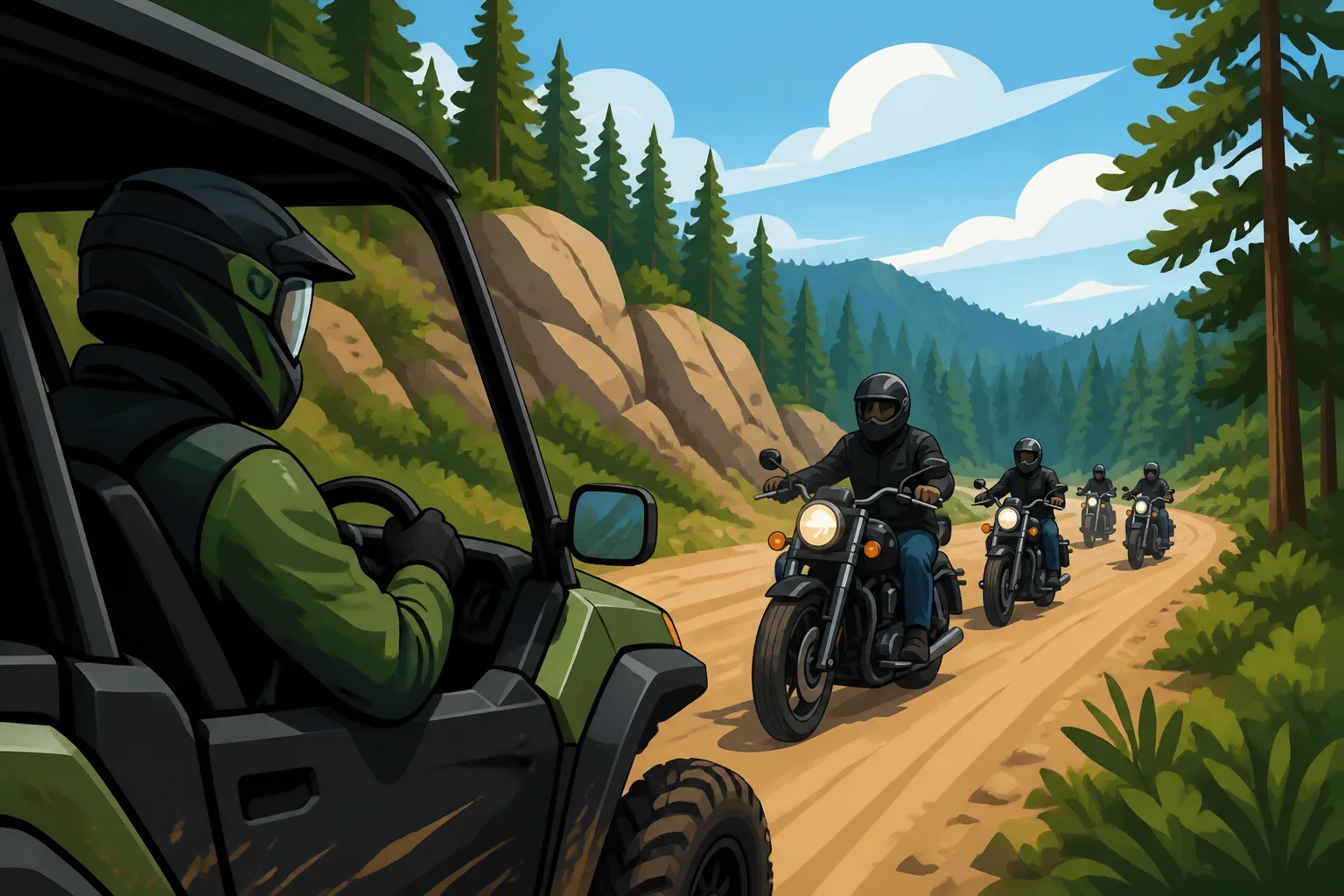
When you see motorcycles ahead, coming toward you, or in your mirrors, ease off the throttle gradually. Give yourself more following distance and avoid abrupt braking, swerving, or accelerating to get past the group before a bend. On loose gravel, a sudden steering input or hard stop can make a vehicle harder to control, and dust can reduce visibility for everyone.
Stay on your side of the road and leave room for the motorcycles to pass. A group may occupy more space than one rider, and individual riders may move within the lane to avoid potholes, washboard, loose rock, or debris. Do not assume that a motorcycle will hold a perfectly straight line or that the last rider will be close behind the first. Keep watching for the full group.
If you are approaching a blind corner or crest, slow enough that you can respond to something you cannot yet see. That may mean coming to a controlled stop on your own side if the road is too narrow to continue safely. Avoid stopping just beyond a blind curve, where a following rider might not have time to see you. When you can, choose a visible, wide section and leave the main track clear.
Let the group pass without creating a new hazard
If a motorcycle pack is coming toward you on a narrow road, ease toward the right side only when the shoulder or edge is firm enough to support your machine. A soft ditch, steep drop, loose berm, or hidden rock can be more dangerous than slowing down and waiting in a stable position. Don’t force your tires onto an uncertain edge just to make the road look wider.
If you are behind the pack, avoid tailgating or trying to pass several riders at once. Dust can hide the road surface and obscure oncoming traffic, while a motorcycle may slow suddenly for a turn, obstacle, or fellow rider. Wait until you have a clear view, enough room, and a safe opportunity to pass without squeezing anyone toward the edge. If those conditions do not appear, stay back and be patient.
A short, friendly wave can acknowledge other road users, but keep both hands in control whenever the surface or traffic requires it. A horn is not a substitute for slowing down and making your position predictable. For practical reminders about sharing busy routes respectfully, see South Dakota Trail Etiquette With Tourists. The same basic courtesy applies when the other people on the road are local riders rather than visitors.
| Situation | Safer response | Avoid |
|---|---|---|
| Pack approaching around a bend | Slow smoothly, stay to your side, and be ready to stop where visible | Cutting the corner or braking sharply at the last moment |
| Pack approaching on a narrow road | Make room only if the edge is firm and safe | Dropping a tire into a ditch or soft shoulder |
| Following a group in dust | Increase following distance and wait for clear visibility | Passing into a cloud of dust |
| Meeting riders near a crest | Reduce speed before reaching the crest | Accelerating over the rise without seeing what is ahead |
| Needing to check navigation | Pull into a wide, visible turnout and stop clear of the travel way | Stopping in a blind spot or at a narrow junction |
Ride With Dust, Grades, and Limited Visibility in Mind
Adjust your speed to the conditions
Forest roads can change quickly. A smooth stretch may give way to loose gravel, washboard, potholes, rock, or a steep grade. Rain can make dirt slick or leave ruts, while dry weather can create enough dust to hide an approaching vehicle. Choose a speed that lets you remain in control and respond to what you can see, rather than riding at a pace that only works on the best-looking section.
When dust reduces visibility, increase the gap between vehicles and avoid following so closely that you rely on the machine ahead to show you where the road goes. If you can no longer see enough of the surface or the road ahead to ride safely, slow down and find a suitable place to wait for visibility to improve. Keep the road open for others, and do not park where an approaching rider might mistake your stopped vehicle for an obstacle at the last second.
On a hill, keep your line steady and avoid stopping where a vehicle could roll or struggle to restart. If you meet a group on a grade, don’t try to squeeze past simply because one vehicle has reached a flatter patch. Pause at a safe, visible location if needed, and let the situation resolve without rushing. The South Dakota Trail Conditions Before You Ride checklist is a useful companion when weather, surface conditions, and closures may affect your route.
Communicate clearly with passengers and riding partners
A driver should make decisions early enough for passengers and other riders to understand what is happening. Slow down gradually, use lights or signals where appropriate, and avoid sudden moves that could surprise someone behind you. In a group, the lead rider should not assume that everyone saw the approaching motorcycles. A brief, agreed-upon warning can help, but it should never distract the driver or encourage unsafe hand signals.
If you are traveling with children or less experienced riders, explain that an approaching pack is a reason to stay calm and hold position—not to race toward the shoulder or wave from a moving vehicle. Make sure everyone knows to remain seated in a UTV and to follow the driver’s instructions. If a rider feels nervous, stop at a safe turnout after the encounter rather than discussing it in the road.
A map can support communication, too. Before the ride, use onX Offroad or another route-planning tool to identify likely junctions and places where the group can regroup without blocking traffic. Confirm those choices against official maps and local notices. If the group gets split, meet at a preselected safe location instead of having every rider stop at the next narrow intersection.
Choose Routes and Respond to Problems Carefully
Confirm access before you ride
A route being visible on an app or map does not automatically mean it is open to your vehicle. Check the route designation, seasonal restrictions, gates, and posted signs. Follow the rules that apply to the land and route you are using, and stay on authorized roads and trails. [South Dakota Rules for Riding Federal Land] can help clarify the broader responsibilities that apply when riding on federal ground.
Use maps as complementary tools. A planning app like onX Offroad can make it easier to see nearby connections and estimate how a ride fits together, while the official Motor Vehicle Use Map is the key reference for designated motorized routes on National Forest land. Check notices for temporary closures as well; a route that was open on a previous visit may be closed because of weather, maintenance, fire danger, or other conditions.
Keep your route realistic for your machine and group. A map line does not show every rut, steep section, narrow shoulder, or stretch of loose rock. If you are unfamiliar with an area, build in time to turn around safely rather than pressing on because you planned to reach a particular destination. Leave room in your schedule for slower travel and unexpected encounters with other road users.
If a meeting becomes difficult
If you meet a pack where neither side has a clear path, avoid trying to solve the problem with speed or aggressive gestures. Stop in a stable, visible position if you can do so safely. Make eye contact where practical, communicate calmly, and allow space for the group to pass one rider at a time if that is the safest arrangement. Do not stand in the travel lane or place yourself between moving machines.
If someone has a mechanical problem or a minor incident, first look for a place where the group can get fully clear of traffic. Keep other riders from crowding around a blind curve or narrow section. If there is an injury or immediate danger, contact emergency services and give the clearest location details you can, including a nearby road name, trail marker, junction, or known landmark. A map app may help you identify location details, but don’t delay urgent help just to perfect a route description.
After a close call, take a moment to settle everyone before continuing. Check that passengers and riding partners are comfortable, confirm the machine is undamaged, and review whether dust, fatigue, or route conditions call for a slower pace or a different route. A patient response can turn an unnerving encounter into a reminder to leave more room and plan better—not a reason to hurry through the rest of the ride.
Disclaimer
This article is for general informational purposes only and does not constitute professional advice. Laws, prices and regulations vary by location and change over time. Consult a qualified professional for guidance on your specific situation.