Black Hills Loops You Can Ride Before Dark
A Black Hills ride can feel deceptively short on a map, then stretch out when you meet slow traffic, stop for a view, or take a wrong turn at a forest-road junction. Planning a loop you can finish before dark means choosing routes around daylight, trail conditions, fuel, and your machine—not just mileage. This guide offers practical ways to plan a satisfying ride and get back safely.
Plan a Black Hills loop around daylight
Build in more time than the map suggests
A loop’s mileage alone is a poor predictor of how long it will take. Rocky sections, steep grades, dust, mud, gates, and busy staging areas can all slow a group down. Add photo stops and the occasional “let’s check that overlook” detour, and a route that looked easy to finish may run into dusk.
Start by setting a firm turnaround time based on when you want to be back at your trailer or lodging, then work backward. If sunset is at 8 p.m., for example, don’t plan to arrive at the trailhead at 7:55. Allow time to load machines, check straps, and deal with a flat tire or a delayed rider. A conservative plan gives you choices if the day doesn’t go smoothly.
Use your group’s slowest rider and the least capable machine as the planning baseline. A confident rider on a narrow ATV may move through a rocky stretch differently from a newer driver in a wider side-by-side. The goal isn’t to squeeze in the longest possible route; it’s to enjoy the ride without turning the last hour into a race.
Choose a route with an easy exit
A loop is convenient because it brings you back toward where you started, but not every ride needs to be a perfect circle. For a short afternoon, consider an out-and-back on a route you already understand. You can turn around at a known junction or viewpoint rather than committing to unfamiliar connections late in the day.
Before setting out, identify at least one reasonable bailout option. That might be a junction that lets you shorten the loop, a familiar route back to the staging area, or a place where your group can safely regroup and reassess. Mark the exit on your map, and make sure every driver knows what it looks like.
Navigation tools can help keep everyone oriented, particularly where forest roads and motorized trails meet. onX Offroad can be useful for reviewing a planned route and keeping track of your location, but treat it as a planning aid rather than permission to ride anywhere shown on a screen. Compare your plan with official forest travel information, posted signs, and current closure notices. For broader route planning, South Dakota Trail Maps and MVUMs is a helpful related topic.
Select a ride that fits your group and machine
Match the route to your available time
Instead of picking a loop by name alone, decide what kind of ride you want and how much time you actually have. A shorter outing close to a staging area may suit a family group or a late start. A longer route with more changes in terrain is better saved for a day when you can leave early and keep a generous time buffer.
| Ride plan | A good fit for | Planning approach |
|---|---|---|
| Short afternoon outing | Late starts, newer riders, or a relaxed family ride | Choose a familiar route near your staging area and turn around well before dusk |
| Half-day loop | Riders with some trail experience | Pick a route with clear junctions and a known way to shorten the ride |
| Full-day exploration | Experienced groups with early starts | Plan fuel, meal stops, navigation, and alternate exits before unloading |
| Uncertain conditions | Rain, changing closures, or mixed skill levels | Use a conservative out-and-back and leave room to change plans |
The places around Rapid City, Hill City, Lead, Deadwood, and Spearfish can all serve as starting points for exploring the Black Hills, but the best starting point depends on your lodging, trailer access, and the riding area you intend to use. Don’t choose a trailhead just because it sounds close to a town. Check the route to the staging area, parking arrangements, and whether your planned ride connects through routes open to your type of machine.
A planned loop should also account for where the return leg goes. A tempting connection on a digital map may be closed, unsuitable for your vehicle width, or not open to motorized use. Use official travel maps to verify legal routes, and double-check signs at junctions. South Dakota Trails With a Staging Lot can help with thinking through where to begin, while Black Hills Loops a Stock Machine Can Handle is relevant if you want to avoid planning around modifications your machine doesn’t have.
Check trail width, ability, and seasonal access
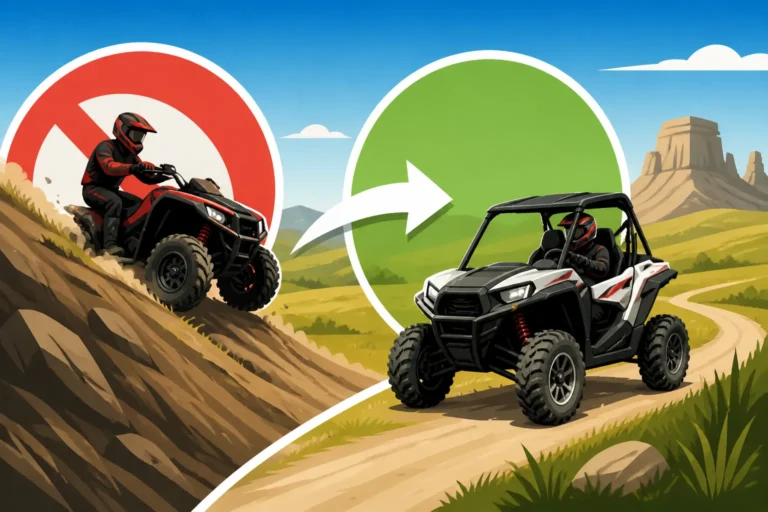
A side-by-side’s width can limit which trails are appropriate. Measure your machine from the outside of one tire to the outside of the other, then compare that measurement with the route restrictions shown on current maps. A route that works for a narrow ATV may not work for a wide UTV, and a last-minute change at a trail junction can make an otherwise simple plan frustrating.
Skill matters just as much as width. A route that includes loose rock or a steep climb may be manageable for an experienced driver but stressful for a novice, especially if the group is already tired. Be honest about the least experienced person’s comfort level. If your group has mixed abilities, pick a route with room to regroup and avoid making the newer driver feel pressured to keep up.
Motorized trail access is seasonal, and individual routes or areas can have additional restrictions. Published seasonal windows are not a guarantee that a trail is open on the day you arrive. Weather, maintenance, fire conditions, and other closures can change your plan. Check Trails Open May 15 to December 15 for seasonal context, then verify current conditions before loading up. South Dakota Trail Closures to Check First is another useful reminder to confirm access rather than relying on an old screenshot or a trip report from a different season.
Prepare for a safe return before you leave
Check permits, maps, and closures
The Black Hills motorized trail system has rules that can differ from road-use rules. Confirm what permit or decal applies to the machine and where it must be displayed. A street-legal plate does not automatically replace every trail requirement, and a permit for one area does not mean every nearby route is open to your machine. Review How the Black Hills Motorized Trail Permit Works before your trip so the permit question is settled before you arrive.
Carry a map even if you use a phone for navigation. A phone can lose battery, overheat, or fail to get a reliable signal in a draw or wooded area. Download maps for offline use when possible, bring a charging option, and make sure at least one other rider can navigate if your device stops working. onX Offroad can help you review route options and follow your position, but compare any proposed route with official motorized-use maps and the signs on the ground.
Before you depart, check for trail closures and make sure your backup route is legal too. If a planned trail is closed, don’t ride around a gate or follow tracks that appear to bypass a restriction. Where to Ride When a Black Hills Trail Shuts can help you think through alternatives without treating a closure as an invitation to improvise.
Plan for fuel, weather, and group delays
Estimate fuel needs using your own machine and riding style. Climbing, loose surfaces, heavy loads, and repeated stops can affect consumption. Don’t assume fuel will be available at the next trailhead or that a nearby town is a quick detour. Check Fuel Between Black Hills Towns when mapping out where you can refuel, and leave enough fuel for an unexpected change of route.
Pack for a delay, not just the ride you hope to have. Water, a basic first-aid kit, a tire repair option, a tool kit suited to your machine, warm layers, and a light source can make an unplanned stop less stressful. Tell someone where you’re going and when you expect to be back. If you’re riding in a group, agree on a regrouping point and a simple plan for what to do if riders get separated.
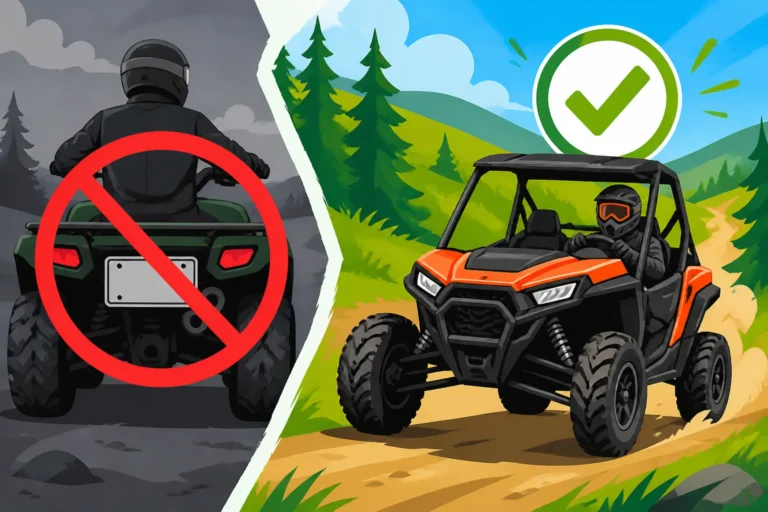
Weather and trail conditions can change the character of a route. A dry rocky section may become slick after rain, while fog or fading light can make it harder to judge terrain. If the ride is taking longer than expected, shorten the route early rather than waiting until the whole group is tired. And remember that the Mickelson Trail is not a motorized ATV route; Why the Mickelson Trail Turns Machines Away explains why it should not be used as a shortcut between riding areas.
Keep the ride enjoyable from start to finish
Use a realistic turnaround rule
Agree on a turnaround time before leaving the staging area, and have one person in the group keep an eye on it. The person checking the time doesn’t need to act like a trail boss; they’re simply helping the group make a calm decision before daylight becomes a problem. Set the time based on the slowest expected pace, not the fastest rider’s estimate.
If you reach the halfway point later than planned, shorten the route. If a machine needs attention, a rider is uncomfortable, or the weather starts to turn, adjust without treating it as a failure. A shorter ride that ends with everyone safe and relaxed is better than finishing a planned loop in the dark or feeling rushed on the way back.
For a group that likes to stop often, make that part of the plan. Tell riders how long the ride should take with breaks included, and avoid adding unplanned detours late in the day. onX Offroad can help the group follow the same general route, while a clearly agreed turnaround point keeps the decision-making simple when time starts getting tight.
Respect the route and the people sharing it
Stay on routes open to motorized travel and follow posted signs, even when a nearby track looks inviting. Riding off-route can damage vegetation and soil, create conflict with other users, and make access harder for everyone. Give other riders space, slow down near staging areas, and keep dust in mind when passing people or approaching a junction.
A considerate pace also makes the ride safer. Oncoming riders may appear around a blind corner, and a vehicle stopped to take in a view may be difficult to see through dust. Keep enough distance to react, use extra caution on narrow roads, and don’t assume that a route is quiet just because it was empty earlier in the day.
Before you load up, take a moment to confirm that everyone is accounted for, the machines are in good shape, and the group has the right permits and gear for the next ride. A little planning before departure—and a willingness to shorten the route—makes it much easier to enjoy the Black Hills and still get back before dark.
Disclaimer
This article is for general informational purposes only and does not constitute professional advice. Laws, prices and regulations vary by location and change over time. Consult a qualified professional for guidance on your specific situation.