What South Dakota Charges Visitors to Ride
Visitors often assume that an out-of-state plate is enough to ride anywhere in South Dakota, then discover that road registration, trail access and site fees are separate issues. This guide explains which charges may apply, what reciprocity does and does not cover, and how to check the rules for your machine and route before you unload.
What you may pay for as a visiting rider
There is no single “South Dakota riding fee” that covers every place and every kind of trip. Your total depends on the machine, where you plan to ride, how long you will stay and whether you will use roads as well as off-road trails.
For a visitor, the main costs to investigate are:
- A trail permit for designated motorized trails. In the Black Hills, a machine may need a permit to use motorized trails even if it has a valid plate from another state.
- A registration or road-use requirement. If your route includes public roads, check whether your home-state registration and equipment satisfy South Dakota’s rules for that use.
- A permit or registration for an unplated machine. A machine without a qualifying plate may have additional requirements on roads or public riding areas.
- A separate site or recreation fee. Some riding locations have their own access, parking or entrance charges. A trail permit is not automatically an admission ticket.
- A purchase or delivery charge. Depending on how and where you obtain a decal, there may be a transaction or mailing charge. Confirm the current details with the issuing agency or authorized seller.
These are different requirements, not interchangeable names for the same permit. A trail decal does not necessarily make an ATV or UTV street legal. A plate does not necessarily authorize use of every motorized trail. And a park or recreation-area fee may apply even if your machine is already registered and permitted.
| What you are doing | What to check | What it generally does not cover |
|---|---|---|
| Riding a designated Black Hills motorized trail | Whether each machine needs a current trail permit and which permit term fits your visit | Road legality, park admission or access to closed routes |
| Using a public road to reach a trail or lodging | South Dakota road-use rules, your machine’s registration and required equipment | A motorized-trail permit |
| Riding on a state or federal recreation site | The site’s specific access rules, closures and any entrance or parking fee | Permission to ride outside the approved area |
| Riding private property | The owner’s permission and any applicable machine rules | Access to neighboring land or public routes |
| Bringing an out-of-state plated machine | Whether the plate is recognized for the intended road use and whether a separate trail permit is needed | Automatic exemption from trail or site requirements |
For an overview of the main permit categories, start with South Dakota Trail Permits Explained. If you are planning a Black Hills trip, the details in How the Black Hills Motorized Trail Permit Works are especially relevant.
The practical starting point is your route, not the machine’s home state. Write down every place you intend to ride, including trail systems, roads, staging areas and parks. Then check each one. A weekend based at a campground near a trail network can involve different rules from a short ride entirely within a designated off-highway vehicle area.
The Black Hills trail permit and what it covers
Visitors commonly ask whether they need a separate permit to ride the Black Hills if their ATV or UTV is already registered at home. The safe planning assumption is that a valid road plate and a Black Hills motorized-trail permit serve different purposes. Confirm the current requirement for the trails you plan to use before traveling.
A trail permit is tied to use of the designated motorized trail system. It is not a general license for all public land, and it does not turn an otherwise non-road-legal machine into a road-legal one. Likewise, having a permit does not give you permission to ride a route that is signed closed, outside the approved motorized network or restricted to a different class of vehicle.
Check whether each machine needs its own permit
Trail permits are generally associated with the machine rather than the number of people riding it. If you are bringing two ATVs, do not assume that one decal will cover both. If you are renting, ask the outfitter whether the machine already has the required permit and whether the decal is current. Get a clear answer before booking rather than discovering an omission at the trailhead.
A permit is also not a passenger pass. The driver and passengers still need to follow the rules for the machine, route and location. Age, supervision, helmet, equipment and passenger requirements can be separate questions.
Choose a permit term that matches the trip
Permit options may include a short-term visitor option and a longer-term option, but the current choices, prices, validity periods and sales locations can change. Check the issuing agency’s current information before deciding. Do not rely on an old screenshot, a forum post or a past trip receipt as proof that the same permit is available now.
For a brief vacation, compare the valid days of a short-term permit with your actual riding schedule. Check when the permit period begins, whether it runs for consecutive days and what date it expires. For repeated trips or a longer stay, compare the annual option with the short-term option, but do not assume an annual permit carries into the next season. A permit’s expiration rules matter just as much as its initial cost.
Keep the decal with the machine
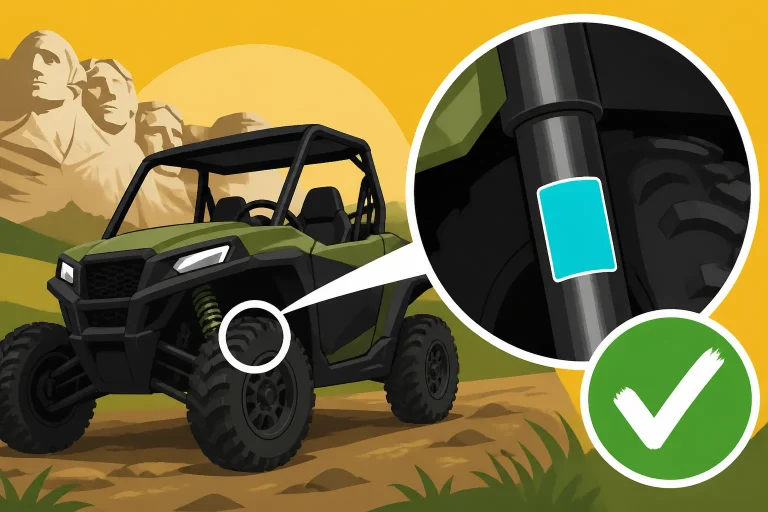
Where the permit is issued as a decal, follow the placement instructions exactly. A decal that is still in its backing, stuck where it cannot be seen or placed on a different machine may not meet the requirement. Before leaving the seller or outfitter, confirm that it is attached as directed and readable.
If the decal is being mailed, factor delivery into your plan. Check whether the seller provides a temporary proof of purchase and whether that proof is accepted for riding. Do not assume that a receipt, an email or a photograph substitutes for the required decal. The current instructions matter.
A permit is also not transferable just because the machine changes hands. If you buy a used ATV with a decal already attached, check whether the permit remains valid for the new owner and machine. If you sell your machine before the permit expires, do not promise the buyer that the decal transfers unless the issuing agency confirms it.
How out-of-state registration works
Reciprocity can be confusing because it is not one blanket agreement that covers every place a visitor might ride. An out-of-state plate may help establish that your machine is registered for road use under your home state’s system. That does not necessarily meet South Dakota’s separate requirements for using a designated trail or recreation area.
A useful way to think about it is:
- Registration answers whether the machine is registered under a recognized system.
- A trail permit answers whether the machine may use a particular motorized trail system.
- A site fee answers whether an individual location charges for access or entry.
- Road-use rules answer whether the machine may travel on that road and what equipment or operator qualifications apply.
Each answer needs to be checked on its own. For more detail on the registration question, see Does South Dakota Honor Out-of-State Registration?. If your machine is already plated at home, Riding South Dakota With an Out-of-State Plate can help frame the road-use issue.
A plate is not a universal trail pass
A valid plate can be important when your route involves roads, but it should not be treated as a substitute for a required trail permit. The reverse is true too: buying a trail permit does not authorize road riding where the machine, rider or route does not meet state requirements.
This distinction is easy to miss when the trailhead is reached by a public road or when a route map shows a mix of roads and motorized trails. Check the status of each segment. A route that is open to motor vehicles may have different rules from a trail managed for off-highway use.
For a focused explanation of this common misunderstanding, see Why a Plate Does Not Replace a Trail Permit. If you are crossing a road or riding a road segment, check the applicable requirements before assuming the permit settles the question.
Bring proof, but do not rely on a photo alone
Carry the machine’s registration documents and any required permit information in a safe place. Keep a copy of your purchase confirmation or permit receipt if one is provided, but treat it as supporting paperwork rather than a replacement for a required plate or decal.
A document pouch can keep papers dry and together during a dusty ride. Amazon may be one place to look for a basic waterproof pouch, but it is not a place to buy an official riding permit. Use the issuing agency or its authorized sellers for permits, and verify which documents are expected on the machine or in the rider’s possession.
Other places where a separate charge or rule may apply
The Black Hills motorized-trail permit is only one part of a South Dakota riding plan. A route may pass through land managed by different agencies or through a privately operated recreation area. Do not assume that one payment covers every boundary you cross.
Federal land and designated routes
On federal land, riding is generally limited to routes and areas open to the class of vehicle you are using. A trail permit does not let you leave the designated route, bypass a closure or ride into an area where motorized use is prohibited. Maps and signs may also distinguish routes by width, vehicle type or seasonal status.
Check the current travel map and closure information for the land you plan to visit. A route shown on an older map may have changed, and an open road is not automatically an open ATV trail. [South Dakota Rules for Riding Federal Land] provides useful background on why land status and route designation matter.
State areas, parks and managed recreation sites
Some sites have rules of their own, including entry, parking, access or operating requirements. A permit that applies to a motorized trail system should not be treated as proof that you have paid an entrance charge at a state park or another recreation site. Similarly, a park pass may not satisfy a motorized-trail permit requirement.
Before you drive to an area, check:
- Whether motorized riding is allowed at that specific site
- Which routes or riding zones are open to ATVs and UTVs
- Whether the site requires a separate access or entrance payment
- Whether the machine needs a plate, permit or both
- Whether the area has seasonal restrictions, event closures or special hours
The distinction is especially important if your trip combines riding with sightseeing. You may be able to ride a permitted route nearby but still need a separate park entrance payment to visit a park or attraction.
Private property and ranch roads
A private road can look like a convenient connector on a map, but appearance does not establish public access. Get permission from the owner before riding private ground. Respect gates, posted signs and grazing operations, and do not assume a route is open because it has tire tracks.
A permit cannot replace landowner permission. Nor does permission from one landowner necessarily extend to adjoining parcels or a leased grazing area. If a local business, campground or outfitter offers access, ask exactly which ground is included and which roads you may use.
Rentals and guided trips
When renting, ask the provider what is included in the quoted rental arrangement. Confirm whether the required trail permit is already on the machine, whether fuel or equipment is included and whether you may use the routes you have in mind. Ask how to handle a route closure or a machine swap: if the machine changes, does the permit arrangement change too?
A guided tour may follow a specific route and include some access arrangements, but do not assume the guide’s booking covers every fee or every optional stop. Ask what the tour price includes and what you would pay separately. For general rental planning, see [South Dakota Rules for Riding a Rented Machine].
How to work out your total before you travel
A good estimate starts with a list of machines and destinations. Add the costs that apply to each one, then verify each figure with the relevant official source or seller. Because fees, permit terms and authorized sales arrangements can change, use current information rather than a past season’s budget.
Make a machine-by-machine checklist
For every ATV or UTV in your group, record:
- The machine’s home-state registration status
- Whether it will be used on public roads
- Whether it will ride a designated motorized trail
- Whether it will enter a separate park or recreation site
- Whether it is rented, borrowed or privately owned
- Which permit or registration documents must be carried or displayed
This catches a common budgeting mistake: counting a group as one permit purchase when the requirement applies to each machine. It also helps you avoid paying for an option you do not need. If one machine will remain on private property while another rides public trails, their requirements may differ.
Identify every land manager on the route
Do not plan from a broad destination name alone. “The Black Hills,” for example, may include multiple trail areas, roads, communities and recreation sites. A day’s route can cross boundaries or pass through land with a different manager.
Use current official maps and notices to confirm the route. Check the location of staging areas, trailheads and access roads. If you are not sure which agency manages a segment, ask the local office or the permit seller before riding. A short phone call can prevent a long detour or a ticket.
Compare the options using the days you will actually ride
For permit options with different terms, count the days you expect to ride rather than the full length of your vacation. A permit that is valid for a set period may cover days when the machine stays on the trailer, but the best choice depends on the current terms and price. Check whether the term is consecutive and whether its clock begins at purchase, activation or another defined point.
If your group has several machines, calculate each one separately. If a visitor permit applies per machine, the total can add up even when the group is riding together. Likewise, if you make multiple trips in a season, compare the available longer-term option with the cost of repeated short-term permits.
Include the small practical costs
The permit itself may not be the only amount due. Depending on how you buy it, there may be a mailing or transaction charge. You may also need a separate site entrance payment, parking payment or rental charge. Those are not necessarily part of the permit price.
Do not confuse a fee tied to machine registration with a recreation permit fee. If you have purchased a machine recently, title, tax and registration costs may be separate from riding access. A visitor who is only bringing a machine for a trip may not face the same paperwork costs as someone buying or titling one in the state.
For a broader overview of visitor charges and permit categories, see [South Dakota Nonresident ORV Permit Requirements]. Make sure you are checking the requirement that fits your situation, not a similarly named charge for a different purpose.
Where to buy and what to confirm
Buy permits through the official channel or an authorized seller identified by the relevant agency. The permit may be available through an online process, at a local office or from a participating business, but availability can vary. Check the current sales options before setting out, especially if you will arrive outside normal business hours.
For the current purchase locations and instructions, see Where to Buy a Black Hills Trail Permit. If you plan to buy in person, confirm that the seller has the permit option you need and can issue it for each machine in your group.
Before completing a purchase, confirm:
- The permit applies to the exact machine type you are bringing
- The permit is valid for your planned dates
- The permit covers the trail system you intend to ride
- The decal or other proof is issued in the required form
- You understand where and how it must be displayed
- You know whether there is a separate delivery or transaction charge
- You have a plan if a decal is delayed, damaged or lost
Avoid buying a permit from an unofficial marketplace listing or a private seller who cannot explain whether it is transferable. Amazon can be handy for trip supplies such as a tire gauge or a small tool roll, but do not treat a listing there as an official permit source. For official requirements, use the agency’s current instructions or a seller the agency recognizes.
If you need extra riding supplies, make a separate shopping list. A phone mount, compact first-aid kit or spare straps can be useful, and Amazon may offer a way to compare those accessories. Those purchases are optional gear, not a substitute for a permit, plate, safety equipment or landowner permission.
A simple plan for visitors
The least stressful approach is to settle the route and paperwork before you reach the trailhead. Use this sequence:
- Choose the riding locations. List the trail systems, roads, parks and private properties you expect to use.
- Check the manager and rules for each location. Confirm open routes, machine limits, seasonal restrictions and any separate site charges.
- Check your machine’s registration. Determine whether your home-state plate is relevant to the road segments you intend to ride.
- Check the trail-permit requirement. Do this separately from the registration question, especially for Black Hills motorized trails.
- Compare permit terms and current costs. Use the current agency or authorized-seller information, and calculate the need for each machine.
- Buy through an approved channel. Allow time for delivery if the permit is mailed, and confirm what proof is accepted while you wait.
- Prepare the machine and documents. Attach the decal as directed, carry registration documents and review the route and closure notices again before departure.
If you are unsure whether a particular trail needs a permit, ask the agency or local permit seller using the trail name and machine details. “I have an out-of-state plate” is not enough information to resolve every question. Explain whether the machine is an ATV or UTV, whether it is plated, where you intend to ride and whether you will use public roads.
Keep the answer with your trip notes, but recheck before riding if your plans change. A trail closure, route change or different destination can alter what you need. When in doubt, pause and verify rather than treating an old decal, old map or another rider’s experience as a current rule.
Disclaimer
This article is for general informational purposes only and does not constitute professional advice. Laws, prices and regulations vary by location and change over time. Consult a qualified professional for guidance on your specific situation.