South Dakota Rules for a Rented Machine
A rental agreement does not give you permission to ride wherever you like. In South Dakota, the machine’s plate or permit, the route you choose, and the rider’s age and equipment all matter. This guide explains what to check before you leave the rental counter, how trail permits differ from road access, and what to do if the machine or its paperwork does not look right.
The rental agreement is only one part of the rules
When you rent an ATV or UTV, you are dealing with two sets of requirements: the rental company’s contract and South Dakota’s riding rules. The contract may limit who can drive, where you can go, and what happens if the machine is damaged. State and land-manager rules determine whether the machine can legally use a road, trail, or other public area.
Meeting one set of requirements does not automatically meet the other. For example, a rental company may allow a 16-year-old to drive, but that does not necessarily make every route open to that rider. Likewise, a machine may have a trail decal and still be prohibited from a road that is not open to that kind of vehicle.
Before you sign, ask the company to identify the machine’s intended use. Is it equipped and documented for a particular public trail system, intended for designated roads, or limited to private property? Do not assume that “street legal,” “trail ready,” or “permit included” means the same thing in every situation. Ask what those terms mean for that specific rental and route.
A useful distinction is:
| What you are checking | What it tells you | What it does not automatically allow |
|---|---|---|
| Rental agreement | Who may drive, where the company permits riding, and your responsibilities | Access to a closed or restricted public route |
| Registration or plate | Whether the machine is documented for applicable road use | A pass for every off-road trail |
| Trail permit or decal | Whether the machine has the required permit for a covered trail system | Permission to leave the designated route |
| Insurance or damage waiver | What financial protections may apply under the contract | Legal permission to operate the machine |
| Helmet, lights, mirrors, and other equipment | Whether the rider and vehicle meet requirements for the activity | A substitute for a plate or trail permit |
Read the contract before pickup, not while the employee is waiting with the keys in hand. If you are comparing several outfits, South Dakota Rental Age and License Rules can help you identify questions to ask about drivers and passengers. For a broader look at what rental firms may include, see What a South Dakota UTV Rental Includes.
Check the machine’s plate and permit before leaving
A rental may be prepared for a specific route, but the responsibility to confirm the setup is still worth taking seriously. Before riding, look over the machine and ask the rental company to show you the documents or decals that apply. If the company says the permit is included, ask where the decal is mounted and which riding area it covers.
South Dakota’s recreational trail permit and a vehicle plate are not interchangeable in every setting. A plate may matter for lawful road use, while a trail permit may be required for a particular off-road trail system. A plated machine should not be treated as automatically authorized on every trail, and an off-road permit should not be treated as road registration. The route and the machine’s legal status both matter.
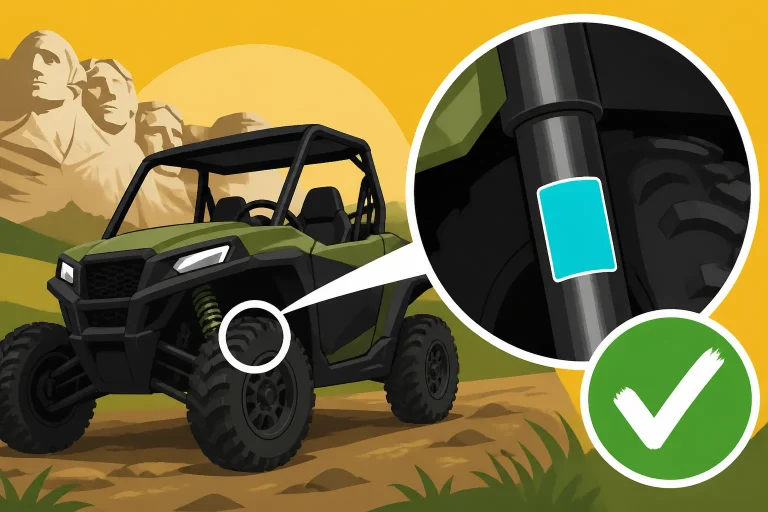
For Black Hills motorized trails, ask specifically whether the machine has the required permit decal for the system you intend to ride. Check that the decal is actually on the machine and readable; do not rely only on a verbal assurance or an old photo. A permit can be machine-specific, and one machine’s decal does not cover another machine in your group. South Dakota Trail Permits Explained describes the main permit distinction, while How the Black Hills Motorized Trail Permit Works explains how to think about permit coverage on that trail system.
If you are using the rental on a road, ask a different set of questions:
- Does this particular machine have a current plate or registration for the road use being discussed?
- Is the road open to this vehicle?
- Does the route cross or use any section where different restrictions apply?
- Are the lights, mirrors, horn, and other required equipment present and working?
- Does the rental contract allow the proposed road use?
Do not decide that a road is legal simply because it appears on a map, the machine has a plate, or another rider is using it. Road and trail access can change with the type of route, local restrictions, signs, and land ownership. If the rental staff cannot explain where the machine is permitted, ask them to mark an approved route or direct you to a current official map before you set out.
A permit decal that is missing, damaged, or attached to the wrong machine is a reason to pause. Ask the company to resolve the issue before you ride. Do not peel a decal from another machine, make your own copy, or assume that a receipt can replace an on-machine requirement. When in doubt, check the official instructions for the relevant permit or land manager.
Make sure your route is open to a rental machine
South Dakota is not one continuous riding area. A route can pass through public land, private property, a town, or more than one managed area, with different access rules along the way. A rental company may give you a route suggestion, but you are still responsible for obeying signs, closures, and restrictions where you ride.
For a Black Hills trip, distinguish between a designated motorized trail and a Forest Service road. They are not the same type of route, and the permitted vehicle widths or other conditions may differ. Check the current map for the route you plan to use, including its open status and any width limits. A UTV that is too wide for a particular trail does not become acceptable because it is rented or because it fits through the entrance. For background on managed public land, see South Dakota Rules for Riding Federal Land.
Stay on the route shown as open for your vehicle. Do not ride around a gate, closure sign, or barrier, and do not take a side path just because it looks well-used. A rental company’s suggested loop cannot override a closure. If weather, fire, maintenance, or another condition changes access, follow the posted direction and check with the land manager or rental company about an alternative.
Private land requires particular care. A rental agreement may allow you to ride only on a designated route or property. It does not grant access to neighboring land, a ranch road, a grazing lease, or a trail across private ground unless the owner or authorized manager has given permission. A route that appears to connect two public areas may cross private property. Ask where the rental company’s access ends and do not cross a gate or boundary without permission.
When you pick up the machine, ask for a route plan that answers practical questions:
- Where does the approved route begin?
- Which roads or trails are suitable for this machine’s width and equipment?
- Are there private-property crossings or areas where riding is prohibited?
- What signs or closures should prompt you to turn back?
- What should you do if you cannot tell whether a junction is open?
A good map or route description should make those questions easier to answer, not leave you guessing at a fork. If the rental staff suggests using a navigation app, still carry or access the current official map for the riding area. A phone route may be outdated, may not show a seasonal closure, or may direct you onto a route that is not open to motorized use.
Confirm who can drive and ride as a passenger
Rental companies set their own driver qualifications. They may require a minimum age, a valid driver’s license, a signed waiver, or an adult to be present. These are contract requirements, not a guarantee that a person meets every state or land-manager rule. Check the rental company’s terms in advance, especially if anyone in your group is under 18.
The company should clearly identify who is authorized to operate the machine. Do not let an unapproved friend or family member take a turn, even for a short stretch. If the contract names only one driver, ask before adding another. A verbal “it should be fine” may not protect you if the contract says otherwise or if an incident occurs.
Passengers need to be treated as riders with their own safety needs. Use only the seats and restraint systems designed for the machine. Do not carry someone in a cargo area, on a fender, or in a seat intended for a child if the passenger does not fit the manufacturer’s requirements. In a UTV, every passenger should use the available belt as instructed; in an ATV, do not assume that a passenger seat exists just because there is room behind the driver.
Rules can also vary with the kind of route and the rider’s age. Requirements that apply to a minor may differ from the rental company’s minimum age, and a person old enough to drive under the contract may still need to follow specific restrictions on public routes. For a closer look at passenger issues, see [South Dakota Rules for a Passenger on a Trail]. If a child is in the group, ask both the outfitter and the relevant land manager what applies to that child on the planned route.
Before taking the keys, have the rental employee identify the controls and safety equipment. Make sure each driver knows how to:
- Start and shut off the machine.
- Use the throttle and brakes smoothly.
- Select the correct drive mode, if the machine has one.
- Operate the parking brake and any winch or recovery equipment.
- Use the seat belt, door or net, and other restraints.
- Contact the rental company if the machine becomes stuck or disabled.
A quick orientation is not a substitute for experience. If a rider is uncomfortable with the machine, choose a guided option, a less demanding route, or a different activity rather than pushing ahead because the rental period has started.
Understand road rules, equipment, and protective gear
A rental machine is not automatically street legal. If you plan to ride on a public road, verify that the machine is properly equipped and authorized for that use, and that the road itself is open to it. A trail permit does not make a machine road legal, and a plate does not make every trail available.
South Dakota road-use rules can depend on the vehicle’s classification, equipment, route, and other conditions. A rental employee’s general statement that “you can ride it on the road” is not enough to establish that the particular machine and road meet the applicable requirements. Ask which roads the company permits and why the machine is suitable for them. If the answer is unclear, keep to a confirmed route rather than testing the rule in traffic.
Do not assume that a short road connection is harmless. The rules for using a road, crossing it, riding in a ditch, or entering a shoulder can differ. Follow signs and use only the crossings and connections allowed for your vehicle. For detailed road-use questions, South Dakota Street Legal ATV Requirements is a useful starting point.
Protective equipment deserves the same attention as the paperwork. Ask whether helmets are supplied, whether they fit each rider, and whether eye protection is included. A helmet that is too loose or too large is not a good fit simply because it came with the rental. For younger riders in particular, confirm the applicable helmet rules and make sure the equipment fits properly. South Dakota Rentals That Include Helmets can help you understand what to ask before booking.
Eye protection matters on dusty roads and trails even when a rider has a windscreen. Dust, insects, and flying grit can make it difficult to see, and a windscreen does not necessarily protect the eyes from every angle. Bring goggles or other suitable protection if the rental company does not provide them. If you shop for personal gear through Amazon, check the fit and product details carefully; a low price or a broad product description is not proof that a helmet or goggles meet the requirements you need.
The most useful gear is gear you can wear comfortably for the whole ride. Consider bringing:
- A properly fitting helmet if you prefer your own or the rental supply is uncertain.
- Goggles or other effective eye protection.
- Gloves that allow you to operate the controls.
- Long sleeves, durable pants, and sturdy footwear.
- Layers for changing temperatures and wind.
- Water and any personal medication you may need.
If you buy goggles or gloves through Amazon, check the sizing information and return terms before your trip so you are not trying to solve a fit problem at the trailhead. When in doubt, ask the rental company what it supplies and what it recommends for the routes you plan to ride.
Know what the contract says about damage and emergencies
The rental agreement matters most when something goes wrong. Before signing, find the sections about damage, breakdowns, recovery, late returns, fuel, cleaning, and permitted riding areas. Ask the staff to explain any term you do not understand. You are better off clarifying the difference between ordinary wear and chargeable damage before pickup than disputing it after the machine is returned.
A damage waiver, if offered, is not necessarily the same as insurance. The contract should explain what the option covers, what it excludes, and whether you could still be responsible for particular costs. Ask whether the agreement treats rollover damage, underbody damage, punctures, towing, or recovery differently. Do not assume that a waiver covers every incident or every type of use. South Dakota Rental Damage Waiver Cost is a related guide to the way these rental options may be structured; confirm current terms directly with the provider.
Before you leave the lot, inspect the machine with an employee. Take clear photos or video of existing scratches, dents, cracked plastics, worn tires, missing accessories, and any warning lights. Ask the employee to note damage on the checkout form rather than relying on your photos alone. Confirm that the machine has the accessories the contract says are included, such as a spare tire, tool kit, winch, or windshield.
Ask what to do if the machine breaks down or becomes stuck. Get a working contact number and learn whether the company expects you to call before attempting a recovery. A winch can be dangerous when used incorrectly, and pulling a machine with a strap may damage it or injure someone. Do not attempt a recovery that exceeds your skill or the equipment’s limits. Keep the group together, move to a safe location if possible, and follow the rental company’s instructions.
Before riding, agree on a simple group plan:
- Keep a safe distance and speed for the conditions.
- Stop at junctions so nobody is left to guess which way the group went.
- Tell the group before turning off the approved route or stopping.
- Know where you will meet if riders become separated.
- Keep a phone charged, but do not assume you will have coverage everywhere.
- Turn back if weather, visibility, a closure, or the machine’s condition makes continuing unsafe.
At pickup and return, be direct and factual about any incident. If you hit an obstacle, get a puncture, or notice a warning light, contact the company promptly. Continuing to ride after a problem may worsen the damage and complicate what the contract says about responsibility.
A practical checklist for the rental counter
A few minutes of checking can prevent a frustrating start to the ride. Use this list before you sign and again before you leave the lot.
Before booking
- Ask who is allowed to drive and what identification or license the company requires.
- Confirm the age and passenger rules for everyone in your group.
- Tell the company what area and route you plan to ride.
- Ask whether the machine is suitable for that route and whether width limits apply.
- Ask whether the required trail permit is included and attached to that machine.
- Confirm what safety gear is supplied and whether it fits the riders.
- Read the rules for cancellations, fuel, late returns, cleaning, damage, and recovery.
At pickup
- Match the machine to your reservation and inspect its condition with staff.
- Confirm the permit decal, if needed, is present and readable.
- Ask which routes are approved and how to identify a closure.
- Check the tires, brakes, lights, horn, mirrors, belts, doors, and restraints that apply to the machine and planned use.
- Make sure the driver understands the controls.
- Photograph existing damage and have it recorded.
- Save the rental company’s contact details and ask what to do in an emergency.
Before entering a public riding area
- Check the current official map and route status.
- Confirm that your machine’s plate or permit covers the activity you plan.
- Stay on open, designated routes.
- Respect signs, gates, private-property boundaries, and local restrictions.
- Keep the group within its skill level and turn back if conditions change.
If the company cannot answer a basic question about the machine’s permit, intended route, or emergency contact, pause before riding. You can ask for clarification, request a different machine, or choose a route whose rules you understand. Do not try to resolve uncertain paperwork by riding first and hoping it will be fine.
Disclaimer
This article is for general informational purposes only and does not constitute professional advice. Laws, prices and regulations vary by location and change over time. Consult a qualified professional for guidance on your specific situation.