Camping Near a South Dakota Trailhead
Camping near a South Dakota ATV trailhead can make a riding trip easier, but a campsite close to a trail is not automatically open to overnight parking, fires, or machine access. This guide explains how to choose a base, check trail and campground rules, plan around seasonal closures, and avoid arriving with a trailer only to discover your route does not connect.
Choose a campsite for the whole riding plan
Start with the trail network, not the campground name
The Black Hills are the main draw for many South Dakota ATV and UTV trips, but “near the Black Hills” can still mean a long drive between camp and the trails you want to ride. Before you reserve a site, choose your likely riding area and identify the roads or trailheads you expect to use. A campground that looks close on a regional map may be separated from your route by a highway, a closed road, or a stretch where the machine cannot legally travel.
Think through the full chain: campsite to staging area, staging area to permitted route, and the route back before dark. For example, staying near Pactola Reservoir may suit a trip focused on nearby Black Hills roads and trail access, while a base closer to Custer may make more sense for a different itinerary. These are starting points for planning, not promises that a specific campground connects directly to a motorized trail.
Use an official forest map or travel map to confirm the route, and treat a navigation app such as onX Offroad as a planning aid rather than the final authority. Compare the route on your phone with current land-manager information, signs at the trailhead, and any closure notices. If you are new to the area, [South Dakota ATV Trails Near Rapid City] can help you narrow the general region before you select a campsite.
Decide how much convenience you really need
A developed campground can be a good fit when you want a defined campsite, easier access to water or restrooms, and a clearer check-in process. A more remote camping option may appeal if you want quiet and are comfortable managing water, waste, and changing conditions yourself. Neither is automatically better. The right choice depends on your group, trailer size, riding schedule, and tolerance for a little uncertainty.
For a family with children, or a group arriving late after a long tow, a predictable place to park and settle in may matter more than shaving a few miles off the drive to a trailhead. On the other hand, riders planning early starts may prefer a base that reduces morning loading and road time. Ask whether the campground allows trailers, whether the access road suits your setup, and whether you can leave a tow vehicle and trailer parked while riding.
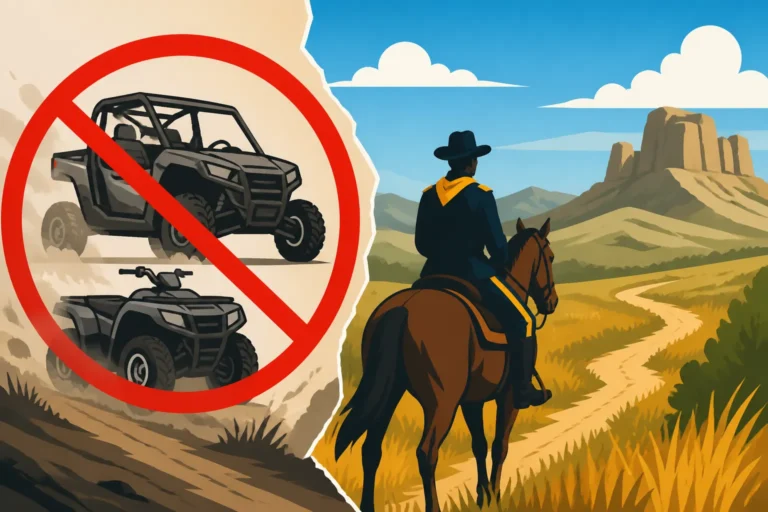
Do not assume a campground permits riding directly from a campsite. Some routes may require you to trailer the machine to a staging area, and a road that appears to connect two places on a map may not be open to your vehicle. For planning around the season and the riding window, see [South Dakota's May to December Trail Season] and confirm the status of the specific route before you leave.
Match your camping style to local rules
Understand the difference between developed and dispersed camping
A developed campground generally has designated sites and posted rules. Those rules may cover check-in, quiet hours, fires, vehicles, pets, waste, and how long you may stay. Read the site information before booking, especially if you are bringing a large trailer, multiple machines, or a group that needs adjacent spaces. A campsite suitable for a car and tent may not comfortably fit a tow vehicle, trailer, and UTV.
Dispersed camping is not simply “camp anywhere in the forest.” Areas may have restrictions on where vehicles can travel, where a tent can be placed, whether a fire is allowed, and how long a stay can last. A pullout beside a road is not necessarily an approved overnight site. Look for the applicable land-management rules and posted signs, and do not create a new campsite by driving off a route or into vegetation.
If you are considering a less developed option, make the plan conservative: identify an authorized area, have a backup campground, and avoid depending on a single unmarked turnoff. Map layers can help you orient yourself, but they do not grant permission to camp or ride. In particular, verify access and restrictions with the responsible land manager rather than relying on a route shown in onX Offroad or another mapping app alone.
Keep camping access separate from riding access
A campsite and a motorized trail are governed by related but distinct rules. You may be allowed to camp in one place but still need to trailer your ATV or UTV to a legal route. Likewise, a route that is open to riding does not necessarily provide a legal place to camp overnight. Confirm both parts of the plan independently.
Before departure, check whether the campground permits your machine to be driven within the campground, whether it can be parked at your site, and whether any connector road is open to the type of vehicle you have. If you are relying on an out-of-state plate, do not assume it replaces every riding requirement. The applicable permit rules depend on where and how you ride; [Do You Need a Permit on a Black Hills Trail?] and [Do You Need a Permit on a Black Hills Road?] address two different questions.
Keep the machine on routes open to it, and obey gates, signs, and temporary closures. A campground host or ranger can often point you toward the right office or map, but ask before treating informal advice as permission to ride a particular road. When a route is unclear, stop and verify it rather than discovering the restriction after you have unloaded.
Plan around the season and changing conditions
Check operating dates and closures close to departure
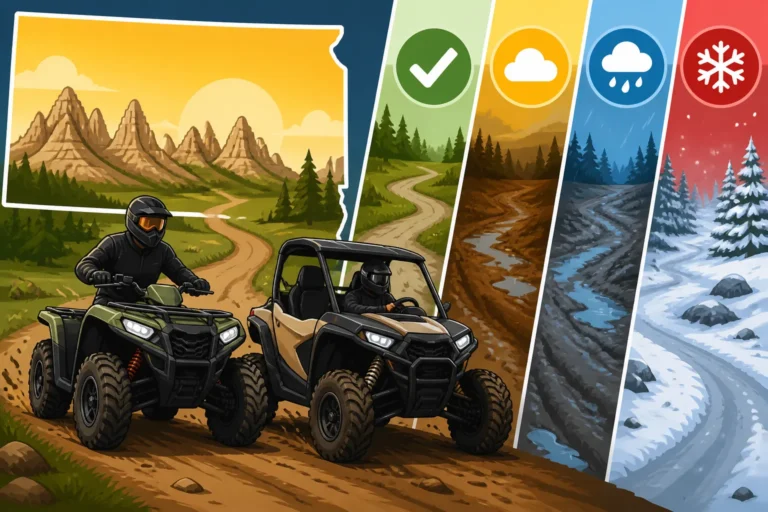
Motorized riding opportunities in the Black Hills can have seasonal operating windows, and not every route necessarily shares the same dates. Some trails are associated with a May-to-December season, while other routes may open later. Snow, mud, fire danger, maintenance, or other conditions can also affect access. Do not build a trip around a general season description alone; confirm the status of the specific trail or road you plan to use.
Check for closure notices shortly before traveling and again before heading out for the day. A route that was open when you booked a campsite may be affected by weather or a temporary restriction by the time you arrive. Keep a second riding option in mind, ideally one that does not require a major change in lodging or a long tow.
When planning with onX Offroad, use it to prepare a route and understand the surrounding geography, then compare that plan against current official maps and notices. Save a map for offline use if you expect weak cellular coverage, and carry a paper or downloaded reference as a backup. For a closer look at route conditions and closure checks, read [South Dakota Trail Conditions Before You Ride] and [South Dakota Trail Closures to Check First].
Prepare for weather, fire risk, and limited services
Conditions in the Black Hills can change over a day, and a sunny morning does not guarantee an easy afternoon ride. Rain can make some roads muddy or slick; wind, fog, and early snow can alter visibility and traction. If the forecast suggests a change, adjust the route or shorten the ride rather than trying to keep a rigid itinerary. A campsite close to town may offer more flexibility when weather pushes you off the trail.
Fire restrictions deserve particular attention during dry periods. Do not assume that a fire ring means a fire is permitted under current conditions. Check posted rules and local restrictions, use only approved fire areas when allowed, and fully extinguish any permitted fire. A camp stove can be a useful alternative, but it too should be used according to site rules and safely away from dry vegetation.
Do not count on fuel, groceries, repairs, or reliable cell service being available right beside a trailhead. Work out where you can refuel, carry water and basic supplies, and tell someone your rough itinerary if your group will be riding in areas with limited coverage. The planning advice in [Camping Near a South Dakota Trailhead] is most useful when paired with a realistic backup plan for weather, closures, and a delayed return.
Compare campsite options before you book
Weigh access, amenities, and trailer logistics
A campsite should work for the people and equipment in your group, not just look convenient on a map. Confirm the size and layout of the site, the road surface leading to it, and whether your vehicle and trailer can turn around safely. If you are bringing more than one machine, ask how many vehicles are allowed at the site and where extra equipment may be parked.
Also consider what you need after a full day of riding. Some groups prioritize showers and nearby supplies; others are comfortable with fewer amenities if they can reach their preferred routes. Check whether the campground has potable water, restrooms, waste facilities, or other services you care about, and verify which are available during your intended stay. Availability and operating arrangements can change, so do not assume a service is open just because it appears in an old trip report.
| Camping option | Often suits | Questions to check before committing |
|---|---|---|
| Developed campground | Families, first-time visitors, and groups seeking designated sites | Can the site fit your trailer? What services and rules apply? |
| Private campground | Riders seeking a managed base or convenient access to a nearby town | Are machines and trailers permitted? Is there a route to your riding area? |
| Dispersed camping where authorized | Self-sufficient campers comfortable with fewer services | Is overnight camping allowed at that exact location? What vehicle and fire rules apply? |
| Town or cabin base | Groups that want services, restaurants, or indoor lodging | How long is the tow to the trailhead, and where can the trailer be stored? |
A cabin or town stay can be a sensible choice if your group wants a dry place to recover after a wet ride, or if the campground options do not fit your trailer. It may add a daily drive to the staging area, so include that time in your riding plan. Do not assume a nearby property allows overnight trailer parking unless the owner or operator has confirmed it.
Book with the unglamorous details in mind
Before reserving, ask about arrival times, quiet hours, vehicle limits, generator rules, and cancellation terms. If you are arriving after dark, confirm that late arrival is allowed and that you can find the site without driving around a quiet campground. A headlamp, written directions, and an organized trailer can make a late check-in much less stressful.
Ask directly about machine storage and washdown. Some campgrounds may restrict cleaning vehicles or handling fuel, while others may have limited room for trailers. Never wash mud or fuel residue into a creek, storm drain, or campsite area. Pack out trash and follow the campground’s disposal instructions.
If your lodging host or campground staff recommends a route, ask for the map name or a clear destination, then verify it independently. A verbal suggestion can be helpful for local orientation, but it may not reflect temporary closures or vehicle restrictions. For a first visit, choose a campsite that leaves you more than one reasonable route option instead of planning every day around one narrow access point.
Pack and ride with your campsite in mind
Set up camp so the return is easy
A comfortable riding day starts before you leave camp. Keep riding gear, helmets, gloves, maps, and basic tools together so the group is not searching through sleeping bags and food boxes at dawn. Store food securely, keep fuel and other hazardous materials according to campground rules, and leave a clear path around the trailer in case someone needs to move a vehicle.
Agree on a simple return plan before the group rides out. Pick a time to turn around, identify a meeting point if riders get separated, and make sure each driver knows how to reach camp or the staging area. If cell service is uncertain, do not treat a text message as your only safety plan. Keep paper directions or an offline map available, and let another person know when you expect to return.
At the end of the day, check the machine for damage, loose parts, and mud buildup before loading it. A small issue noticed at camp may be easier to address than one discovered on a remote route the next morning. Give yourself time to clean up within campground rules, secure the machines, and rest rather than scheduling a long ride that ends after dark.
Respect the campground and the people around it
ATVs and UTVs can bring dust and noise into a campground, especially early in the morning or late at night. Follow posted speed limits and any restrictions on vehicle use within the grounds. If the campground does not allow riding in and out, load the machine and drive to the staging area instead. A short trailer trip is far less frustrating than a dispute with a host or a neighbor.
Keep conversations and engine noise considerate during quiet hours, and be thoughtful about where you park a trailer so it does not block another site or the road. Children and pets may be moving around camp, so drive slowly and watch carefully, even when the road looks empty. Store helmets and equipment without spreading them across shared space.
Finally, leave the campsite in good condition. Dispose of waste as directed, pack out what you brought in, and avoid leaving food scraps or broken parts behind. If a riding route is closed, do not try to reach it from camp by cutting across private property or driving around a barrier. For rules about land access beyond the campground, see [South Dakota Rules for Riding Federal Land] and [South Dakota Rules for Riding Private Property].
Disclaimer
This article is for general informational purposes only and does not constitute professional advice. Laws, prices and regulations vary by location and change over time. Consult a qualified professional for guidance on your specific situation.