Hauling a Machine Over From Iowa
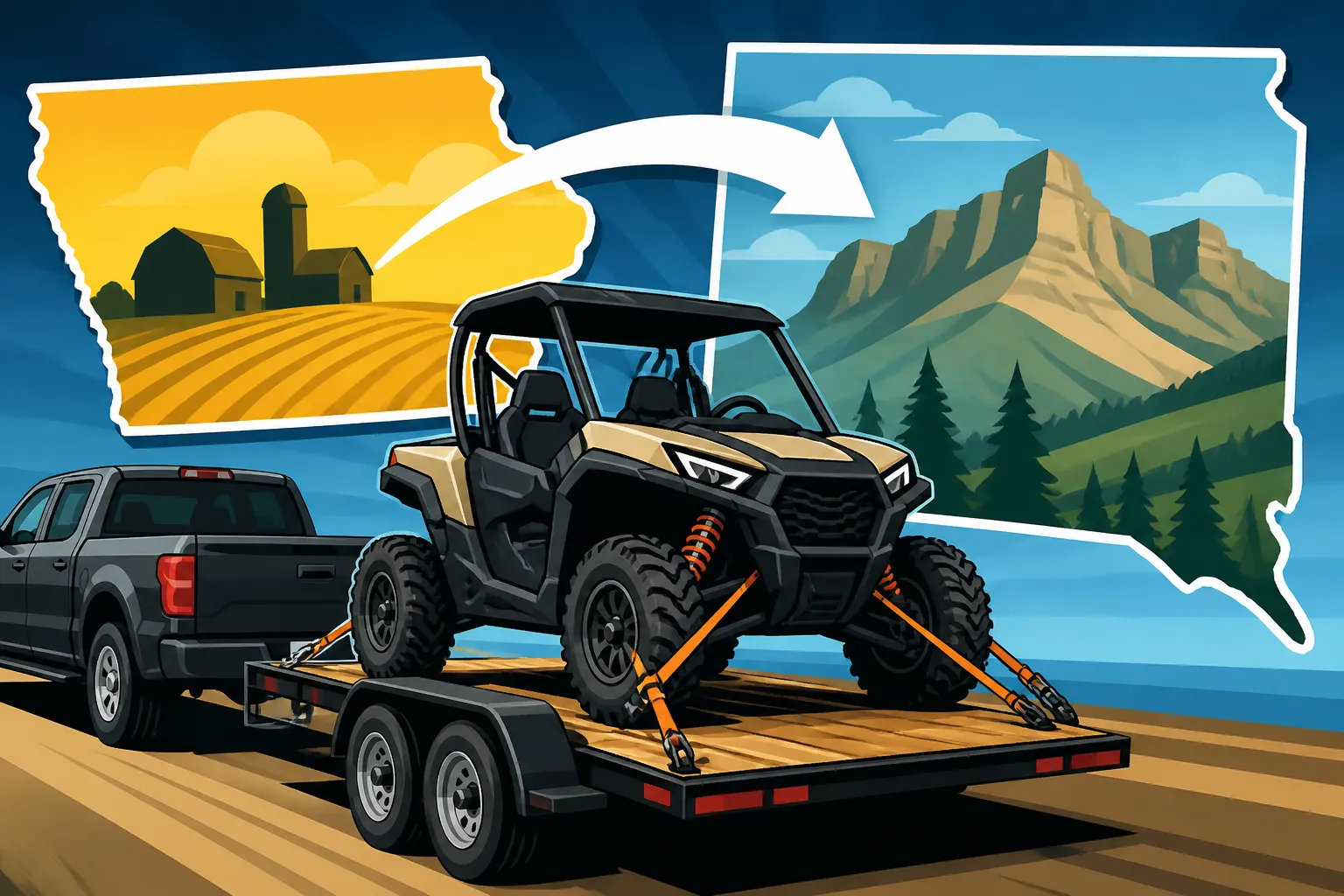
So, you've got your ATV or UTV in Iowa, and now you're looking to bring it over to the wide-open spaces of South Dakota, whether for a permanent move, an extended stay, or just to hit some of our incredible trails. You might be thinking, "It's just an off-road vehicle, what's the big deal?" But trust me, navigating the ins and outs of titling an out-of-state machine, especially from a neighboring state like Iowa, can feel like trying to find a needle in a haystack if you don't know the specifics. This guide is here to cut through the confusion and walk you through everything you need to know about successfully titling your machine from Iowa here in South Dakota.
Understanding South Dakota's Approach to Out-of-State Machines
Bringing your beloved off-road vehicle across state lines, even from a close neighbor like Iowa, isn't always as simple as parking it in the driveway and calling it good. Each state has its own unique set of rules regarding how ATVs and UTVs are classified, titled, and taxed. What might have been perfectly acceptable in Iowa could lead to a few extra steps or questions here in South Dakota. It's not about making things difficult; it's about ensuring all vehicles operating within the state meet our standards for ownership and revenue collection.
Why South Dakota Cares Where Your Machine Came From
South Dakota's titling laws are designed to create a clear record of ownership for all vehicles, including off-road machines. When you bring a machine from Iowa, the state needs to understand its history, particularly whether it was previously titled there. Iowa's titling requirements for ATVs and UTVs can differ from South Dakota's, especially for older models or specific types of vehicles. For example, some machines that might not have required a title in Iowa might absolutely need one here. This discrepancy is often the root of the "big deal" for new arrivals or those looking to ride long-term. Our goal is to ensure you meet the requirements for [Titling an ATV in South Dakota] so you can enjoy riding without any worries.
The biggest hurdle often comes down to proof of ownership and the state's definition of what constitutes an "off-road vehicle" in the first place. If your machine was never titled in Iowa because it wasn't required, South Dakota still needs a clear paper trail to issue you a title. This can involve more than just a simple bill of sale if the original owner is hard to track down. It's all about establishing a legal chain of custody from the previous owner to you, so the state can officially recognize you as the new, legal owner. Without this, you could face delays or complications when trying to get your machine legal for South Dakota roads and trails.
The Importance of Your Iowa Paperwork
When you're making the trek from Iowa to South Dakota with your ATV or UTV in tow, your Iowa paperwork becomes your most valuable asset. This isn't just about having a piece of paper; it's about having the right pieces of paper. What South Dakota treasurers are looking for is clear, verifiable proof of ownership. This usually means the original title issued by the state of Iowa, if one exists. If your machine was never titled in Iowa (which, as we discussed, can happen depending on the vehicle type or age), then a comprehensive [A South Dakota Bill of Sale for an ORV] is absolutely critical. This document should clearly state the buyer, seller, purchase price, date of sale, and a detailed description of the machine, including its Vehicle Identification Number (VIN).
Beyond the title or bill of sale, any other supporting documents can be helpful. This might include previous registration cards (even if expired), old insurance policies, or even a notarized statement from the previous owner if primary documents are missing. These documents all work together to paint a clear picture of your machine's history and prove that you are its rightful owner. The more comprehensive and organized your paperwork is, the smoother your titling experience will be. Without adequate proof, you could find yourself in a bureaucratic limbo, unable to title your machine and, consequently, unable to legally ride it on many public lands in South Dakota.
The "Off-Road Vehicle" Definition in South Dakota
Before you even start gathering your Iowa paperwork, it's crucial to understand what South Dakota actually considers an "off-road vehicle" (ORV). This definition is key because it determines whether your machine needs a title at all. In South Dakota, an ORV is generally defined as any motorized vehicle that is 60 inches or less in width, has an unladen dry weight of 2,000 pounds or less, travels on three or more tires, and is intended for use off public highways. This broad definition encompasses most ATVs, UTVs, and side-by-sides. If your machine fits these criteria, it's going to need a title here. You can dive deeper into the specifics of [How South Dakota Defines an Off-Road Vehicle].
This definition can sometimes catch folks off guard, especially if their machine was used primarily for agricultural purposes in Iowa. In South Dakota, while some agricultural vehicles might have specific exemptions, your everyday quad or side-by-side, even if used on a farm, typically falls under the ORV titling requirements. This is important to note because what might have been considered a "farm vehicle" in Iowa and thus exempt from certain rules, might not be here. Understanding [Why Farm Vehicles Sit Outside South Dakota's Definition] of ORVs for titling purposes is crucial to avoid any unexpected surprises at the county treasurer's office. If your machine is wider or heavier, it might fall into a different category, potentially still requiring a title but under different rules.
The South Dakota Titling Process for Iowa Machines
Once you understand South Dakota's definitions and have your Iowa paperwork in hand, the actual titling process can begin. It's largely a standardized procedure, but there are specific documents and steps unique to bringing a machine from another state. The key is to be prepared and organized before you even step foot in the county office. Thinking ahead about each piece of information they'll need will save you a lot of time and potential frustration.
Gathering Your Documents for the County Treasurer
The main point of contact for titling your ATV or UTV in South Dakota will be your local county treasurer's office. This is where all the paperwork gets reviewed, taxes are calculated, and your new South Dakota title is processed. To make this visit as smooth as possible, you'll need a specific set of documents. Firstly, you'll need a completed South Dakota Title and Registration Application. This form asks for all the details about your machine and your ownership. Secondly, and critically, you'll need your proof of ownership from Iowa. This means the original Iowa title (if applicable) or a solid bill of sale. If you've misplaced your bill of sale or it was never very formal, you might consider drafting a new one based on the original transaction details. Tools like LawDepot offer templates for creating legally sound bills of sale, which can be invaluable if you need to formalize a past, informal purchase or replace a lost document. Just be sure to accurately reflect the original sale.
In some cases, especially if your machine was never titled in Iowa or if there's any ambiguity, the treasurer's office might require a VIN inspection. This is a quick process where a law enforcement officer verifies that the VIN on your machine matches the VIN on your paperwork, ensuring it's not a stolen vehicle. It's always a good idea to call your county treasurer's office beforehand to confirm their specific requirements for out-of-state machines and to see if an appointment is needed. Remember, [Titling at a South Dakota County Treasurer] is a local process, and while the state sets the general rules, individual counties might have slightly different protocols or preferences for how documents are presented.
Calculating the South Dakota Excise Tax
One of the most significant costs when titling your ATV or UTV in South Dakota, aside from the titling fee itself, is the excise tax. South Dakota levies a [South Dakota's 4 Percent Excise Tax] on the purchase price of your machine. This tax applies whether you bought the machine new or used, and it's based on the price you paid for it. This is where your bill of sale becomes absolutely essential. It provides the clear, documented price point from which the 4% tax will be calculated. If you bought your machine for, say, $5,000, you can expect to pay $200 in excise tax.
But what happens if you don't have a clear bill of sale, or if the one you have doesn't state a price? This can become a bit trickier. In such cases, the county treasurer's office might rely on published valuation guides (like Kelley Blue Book or NADA guides for power sports vehicles) to determine a fair market value for your machine. This estimated value will then be used to calculate your 4% excise tax. This is why having a clear, accurate [A South Dakota Bill of Sale for an ORV] is so important—it allows the tax to be based on what you actually paid, not an estimation that could potentially be higher than your actual purchase price, especially for an older machine.
The Forty-Five Day Deadline and Penalties
South Dakota is pretty straightforward about deadlines for titling. Once you establish residency, purchase an ORV, or bring your machine into the state with the intent of keeping it here, you have a [South Dakota's Forty-Five Day Title Deadline] to get it titled at your county treasurer's office. This isn't just a suggestion; it's a firm deadline, and missing it can lead to additional costs. The clock starts ticking from the date of purchase or the date you officially bring the machine into South Dakota as its new home.
If you let that 45-day window slip by, South Dakota implements a tiered penalty system. For every month or partial month you're late after the 45-day grace period, a [South Dakota's 1 Percent a Month Penalty] is added to your excise tax amount. This might not sound like much, but it can quickly add up. And it gets worse: once 60 days pass from the original deadline, an additional [South Dakota's 10 Percent Penalty at Sixty Days] is tacked on, applied to the entire excise tax amount. These penalties are designed to encourage prompt titling and can be a real sting if you're not careful. It’s always best to get your paperwork in order and visit the treasurer’s office well within that initial 45-day window to avoid these unnecessary extra fees.
| Late Titling Period | Penalty Applied | Example (on $200 tax) |
|---|---|---|
| 46-75 days (1 month late) | 1% of excise tax | $2 |
| 76-105 days (2 months late) | 2% of excise tax | $4 |
| 106+ days (3+ months late) | 3% of excise tax (plus an additional 10% penalty if over 60 days late from original deadline) | $6 + $20 (total $26) |
| Over 60 days past deadline | Additional 10% penalty on total excise tax | $20 |
Note: The monthly 1% penalty continues to accrue in addition to the one-time 10% penalty for being over 60 days late.
Special Considerations for Iowa Riders in South Dakota
Beyond the general titling process, there are a few specific scenarios and fees that Iowa residents or former Iowa residents should be aware of when dealing with South Dakota's system. These often revolve around the distinction between temporary riding and permanent residency, and how different states handle off-road vehicle documentation.
Nonresident Permits vs. Full Titling
This is a critical distinction for anyone bringing an ATV or UTV from Iowa. If you're an Iowa resident simply visiting South Dakota for a riding trip, you might not need to title your machine here at all. Instead, South Dakota offers a [South Dakota Nonresident ORV Permit]. This permit allows you to legally ride your out-of-state registered (or non-registered, if your home state doesn't require it) ORV on designated trails and public lands in South Dakota. It's a temporary solution for visitors, ensuring you contribute to trail maintenance and access without going through the full titling process. This permit generally requires proof of ownership and a few other details, which you can read more about in [What a South Dakota Nonresident Permit Requires].
However, if you're an Iowa resident moving to South Dakota, or if you're a long-term visitor planning to keep your machine in the state indefinitely, then full South Dakota titling is usually the route you'll need to take. The permit is for temporary use; titling is for permanent ownership within South Dakota's jurisdiction. If you get caught riding without the proper documentation for your intent (e.g., trying to use a nonresident permit when you're clearly a resident), you could face fines and other legal issues. It’s always best to be clear about your intentions for the machine's stay in South Dakota.
The Nonresident Titling Fee
Here's a specific detail that can sometimes surprise folks coming from out of state: if you are not a South Dakota resident but you want to title your ATV or UTV here, you may be subject to an additional fee. South Dakota has a fee that is sometimes applied when an out-of-state owner attempts to title a machine here. This is detailed in [Why South Dakota Charges Nonresidents an Extra Hundred]. This fee is primarily aimed at individuals who attempt to use South Dakota's titling process (often perceived as simpler or cheaper than their home state's) without actually residing here.
This fee typically applies if you, as the titling applicant, do not have a physical South Dakota street address and a valid South Dakota driver's license. For example, if you maintain your primary residence in Iowa but own a vacation cabin in South Dakota and attempt to title your ATV using a South Dakota mailbox service or a family member's address, you could trigger this nonresident titling fee. It's designed to ensure that the titling process is primarily for bona fide South Dakota residents. Understanding [Why a Mail-Forwarding Address Triggers South Dakota's Fee] is important to avoid this unexpected charge. If you genuinely move to South Dakota and establish residency, this fee typically won't apply once you've obtained your South Dakota driver's license and have a physical address.
What If Iowa Doesn't Title My ATV?
One of the most common and confusing situations for Iowa riders is when they bring an ATV or UTV to South Dakota that was never titled in Iowa. This often happens with older machines or certain classifications of off-road vehicles that Iowa's Department of Natural Resources might have registered but never issued a formal certificate of title for. When you arrive at a South Dakota county treasurer's office with just a bill of sale and no prior title, it can feel like you've hit a roadblock. However, South Dakota has a process for this, though it requires meticulous documentation.
The key is to prove a clear chain of ownership from the original seller to you, even without a state-issued title from Iowa. This means your bill of sale becomes paramount. It needs to be as detailed as possible, including the full names and addresses of both buyer and seller, the date of sale, the purchase price, and a complete description of the machine, most importantly its VIN. If you have any previous registration documents from Iowa, even if they're not a "title," bring those too. Sometimes, county treasurers may ask for additional affidavits or notarized statements from the previous owner if there are any gaps in the documentation. For informal sales or older machines where documents might be sparse, creating a comprehensive bill of sale, perhaps using a template from a service like LawDepot, can strengthen your position significantly. This kind of document, even if created retrospectively (as long as it accurately reflects the transaction), provides the clear, written proof of transfer that South Dakota needs to issue its own title. Don't let the lack of an Iowa title deter you; just be prepared to provide robust alternative proof of ownership.
Disclaimer
This article is for general informational purposes only and does not constitute professional advice. Laws, prices and regulations vary by location and change over time. Consult a qualified professional for guidance on your specific situation.