South Dakota ATV Plate Requirements
Navigating the rules for riding your ATV or UTV on public roads in South Dakota can feel like trying to find your way through a prairie dog town blindfolded. It's not as simple as just throwing a license plate on your machine and hitting the highway. Many riders are surprised to learn about the specific requirements their off-road vehicle must meet just to qualify for a plate, let alone the equipment needed to be truly street-legal. This guide is here to untangle that confusion, explaining exactly what it takes to get that coveted South Dakota ATV plate on your machine so you can ride with confidence and stay on the right side of the law.
Understanding South Dakota's Definition of a Road-Legal ATV
Before you even think about getting a plate for your ATV or UTV in South Dakota, it's crucial to understand what the state considers eligible for road use. Not every machine built for the dirt can be legally plated for asphalt and gravel roads. There are specific criteria that your off-road vehicle must meet, primarily revolving around its engine size and how the state classifies it.
Engine Displacement and the 200cc Rule
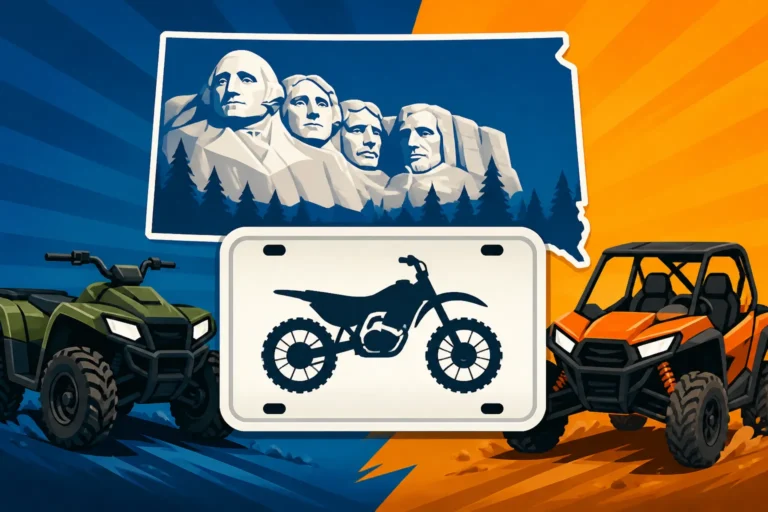
One of the most significant hurdles for many ATV owners looking to plate their machines in South Dakota is the engine size requirement. The state has a clear threshold: your ATV generally needs to be 200 cubic centimeters (cc) or larger to qualify for a motorcycle plate, which is what ATVs use when plated for road use. This rule is a common point of frustration for owners of smaller youth models or older, less powerful machines. It's not about whether your ATV can go fast enough, but about a specific legislative definition that determines its eligibility.
This 200cc rule isn't arbitrary; it stems from how the state categorizes vehicles for various licensing and registration purposes. If your machine falls below this threshold, you're likely out of luck when it comes to getting a plate for regular road use. It's a hard line, and there aren't many exceptions. This means that while your smaller quad might be perfectly capable of handling trails, it simply won't meet the criteria for a South Dakota motorcycle plate for public roads. It's vital to check your machine's specifications before you even begin the titling process to avoid disappointment. You can find more detail on this specific requirement in [South Dakota ATV Engine Size for Plates].
How South Dakota Differentiates Off-Road Vehicles
Beyond engine size, South Dakota also has specific definitions for what constitutes an "off-road vehicle" (ORV) versus a "motorcycle" for plating purposes. While your ATV might be called an ORV in general terms, for it to be plated for road use, it often needs to meet the characteristics of a motorcycle in the eyes of the law, which includes the aforementioned engine displacement. The state's Department of Revenue is the authority on these classifications, and their interpretation guides the county treasurers who handle the actual titling and registration.
This distinction is important because it dictates the entire process you'll follow. If your machine is classified purely as an ORV without meeting the motorcycle criteria, its use on public roads will be severely restricted, often limited to ditch riding where permitted by counties or crossing highways. Understanding [What South Dakota Counts as an Off-Road Vehicle] can help clarify these nuances. Essentially, a plated ATV in South Dakota is treated very much like a motorcycle for road travel, which explains why it needs to meet similar operational and safety equipment standards that we'll explore next.
Required Equipment for a Plated South Dakota ATV
So, you've confirmed your ATV meets the engine size requirement for a plate. Great! But getting a plate isn't just about having the right size engine; it's also about equipping your machine with the necessary safety features to make it road-worthy in the eyes of the law. Think of it like taking a dirt bike and adding street-legal components – your ATV needs to undergo a similar transformation if it's not already factory-equipped. These requirements are in place to ensure the safety of the rider and others on the road.
Lights, Reflectors, and Visibility
When you're sharing the road with cars, trucks, and even larger motorcycles, visibility is paramount. South Dakota mandates specific lighting and reflective equipment for any ATV that is plated for road use. This isn't just about having a headlight; it's about having the right kind of headlight, along with brake lights and taillights that are functional and visible under various conditions. You'll need at least one headlamp that casts a white light, visible from a specific distance, and a taillamp that emits a red light, visible from the rear. Naturally, a brake light that illuminates when you apply the brakes is also crucial.
Beyond just the lights, reflectors play a role, especially for side visibility. While some ATVs come with basic lighting, ensuring they meet the specific brightness and visibility standards for road use might require upgrades. This is especially true for machines primarily designed for off-road trails, where robust lighting for high speeds isn't always the priority. Riding after dark without proper illumination is not only dangerous but a surefire way to attract unwanted attention from law enforcement. These requirements ensure your machine can be seen, signaling your presence and intentions to other drivers on the road.
Mirrors and Horn
Imagine driving a car without rearview mirrors or a horn – it would be incredibly unsafe and illegal. The same logic applies to ATVs plated for road use in South Dakota. You are required to have at least one rearview mirror, properly mounted, which allows you to see traffic approaching from behind. Many riders opt for two mirrors, one on each side, for better visibility, even if only one is legally mandated. The placement and condition of the mirror are important; it needs to be securely attached and provide an unobstructed view. [South Dakota Mirror Requirement] provides further details on what you need.
A functional horn is also a non-negotiable item. This isn't just a novelty; it's a critical safety device used to warn other drivers or pedestrians of your presence. The horn must be audible from a certain distance, ensuring that it can effectively get attention when needed. Just like with lights, some off-road machines might not come with a factory-installed horn or one that meets the audibility standard. Before seeking that plate, you'll need to confirm these essential signaling devices are in place and working properly. These small additions make a big difference in your ability to communicate and react safely on public roadways.
Brakes, Tires, and Exhaust
Safety goes beyond just being seen and heard; it also involves your machine's ability to stop and operate without excessive noise or damage to road surfaces. Functional brakes on both the front and rear wheels are obviously essential, and they must be in good working order. Your tires should also be suitable for road use. While knobby off-road tires are fine for the dirt, overly aggressive treads might not perform optimally on pavement and could wear down quickly or even damage roads. While not always explicitly spelled out, "street legal" implies tires that offer adequate grip and stability for paved surfaces.
Lastly, your ATV must have an adequate muffler and exhaust system that meets sound level regulations. Loud, modified exhausts might be popular on the trails, but they can quickly draw fines when used on public roads. South Dakota has noise ordinances, and your plated ATV needs to comply. Furthermore, a spark arrester is typically required for any machine operating in forested or grassy areas to prevent fires, though this is more of a trail-riding requirement, it's a good practice for any machine, especially if you plan to transition between road and trail. Always ensure your machine is in good mechanical order, as a roadside check by a trooper will cover these essential components. [South Dakota Equipment List for Road Use] offers a comprehensive overview.
The Titling and Registration Process
Once your ATV is properly equipped, the next step is the bureaucratic one: getting it officially titled and registered with a plate. This process primarily takes place at your local county treasurer's office and involves several pieces of paperwork, along with a few fees. It's not always a quick in-and-out experience, especially if you're unfamiliar with the requirements. Being prepared with all the necessary documents beforehand will save you a lot of time and potential headaches.
Required Paperwork for a South Dakota ATV Plate
The foundation of getting your ATV plated is solid documentation. You'll need to present several key documents to the county treasurer's office. First and foremost, you'll need your Certificate of Origin if the machine is new, or the properly assigned title from the previous owner if it's used. This proves ownership. If you purchased the machine privately, a bill of sale is crucial, especially if the purchase price isn't clearly stated on the title. A robust bill of sale, perhaps a template found through a service like LawDepot, can protect both parties by clearly outlining the transaction details and condition of the machine.
You'll also need a completed application for title and registration, which you can typically obtain from the county treasurer's office or sometimes online. This form will ask for details about your machine, your personal information, and how the vehicle will be used. Be prepared to show your driver's license for identification. If you're coming from out-of-state, there might be additional forms or requirements, such as a VIN inspection, especially if your machine was previously titled elsewhere. Make sure all names and signatures match perfectly across all documents, as even minor discrepancies can cause delays. For a full list of what to bring, check out [South Dakota ATV Title Paperwork].
Fees and Taxes Associated with Plating
Getting that plate isn't free, and you'll encounter a few different fees and taxes during the process. The most significant cost for many will be the excise tax. South Dakota levies an excise tax on the purchase price of the vehicle, which is a percentage of what you paid (or its fair market value if no purchase price is available). This tax is typically paid at the time of titling. It's important to remember that this is a one-time tax on the transaction, separate from the annual registration fees.
Beyond the excise tax, you'll pay a title fee, a registration fee for the actual plate, and possibly other small administrative fees like a technology fee or a solid waste fee. While I can't give specific figures, understand that these fees contribute to various state and local services. The registration portion will be an annual cost to keep your plate current. If you're late in titling your machine after purchase, you could also face penalties. For example, [South Dakota ATV Late Title Penalty] describes the increasing costs of delaying your title application past the initial deadline. Always budget for these costs when considering plating your ATV.
Important Considerations for Plated ATV Use in South Dakota
Having a plate on your ATV opens up new possibilities for riding, but it also comes with a new set of rules and responsibilities. Just because your machine is plated doesn't mean you can treat it exactly like a car or motorcycle everywhere. There are specific regulations regarding where you can ride, helmet laws, and general operating procedures that are crucial to understand to avoid fines and ensure safety.
Ditch Riding and Highway Crossings
One of the unique aspects of ATV use in South Dakota involves ditch riding. While your plated ATV can technically use many public roads, the rules around riding in ditches or crossing highways are often distinct from general road use. In South Dakota, ditch riding is generally permitted on county and township roads unless a county has specifically opted out and posted "No ATV/UTV Riding" signs. This can be a point of confusion because a plated machine might have permission to be on the road itself, but different rules might apply to the adjacent ditch.
Highway crossings are another area of specific regulation. You can generally cross state and federal highways at right angles after coming to a complete stop and yielding to traffic, even with a non-plated ORV. With a plated machine, you have more flexibility, but still must follow all traffic laws. It's crucial to understand these distinctions because improper ditch riding or highway crossing can lead to fines, even if your machine is technically street-legal. Always look for [Regulatory Signs a South Dakota County Must Post] regarding ditch riding. Never assume; always check local ordinances.
Helmet Laws and Driver's License Requirements
While your ATV might be plated like a motorcycle, South Dakota's helmet laws for ATV riders have some specific nuances. Unlike typical motorcycle riders, adults aged 18 and over operating a plated ATV on public roads are generally not required to wear a helmet. However, riders under 18 absolutely must wear a helmet. This exemption for adults is a key difference from many other states and from South Dakota's own motorcycle helmet laws. Regardless of the law, wearing a helmet is always the safest choice, offering critical protection in case of an accident. [South Dakota Helmet Law for ATV Riders] offers a full explanation.
In terms of a driver's license, if you are operating a plated ATV on public roads, you will need a valid driver's license. This is because, when plated, your ATV is treated similarly to any other motor vehicle on the road. This isn't just about having the plate; it's about having the legal authorization to operate a motor vehicle. You don't need a special motorcycle endorsement unless your ATV's characteristics push it into that specific motorcycle classification, but a basic Class D driver's license is generally sufficient. It's always best to carry your license and proof of registration and insurance with you while riding.
Avoiding Fines and Staying Compliant
The bottom line for any plated ATV owner in South Dakota is compliance. The laws are there for safety and order, and ignorance of them is not an excuse. Riding an untitled machine, or one that doesn't meet the equipment requirements, can quickly lead to citations and fines. [South Dakota Fines for an Untitled ATV] or illegally used ATVs can be substantial, not to mention the inconvenience and potential impoundment of your machine.
Always ensure your registration is current, your plate is properly displayed, and all your required equipment is in working order. Be mindful of speed limits, traffic signals, and all other rules of the road. While having a plated ATV offers incredible freedom to explore [South Dakota Rules for Riding a Gravel Road] or connect trails, that freedom comes with the responsibility of adhering to all applicable laws. A quick check of your machine before each ride, especially if you're venturing onto public roads, can save you a lot of trouble and ensure your adventures are enjoyable and stress-free.
Disclaimer
This article is for general informational purposes only and does not constitute professional advice. Laws, prices and regulations vary by location and change over time. Consult a qualified professional for guidance on your specific situation.