Why South Dakota Charges Nonresidents an Extra Hundred
Thinking about bringing your ATV or UTV to South Dakota, maybe for an epic trip through the Black Hills or to enjoy some of the wide-open prairie? It's an exciting prospect, but if you're an out-of-state owner, you might have heard a whisper about an "extra hundred" dollars when it comes time to title your machine. This isn't just a rumor; it's a very real fee that can catch folks off guard. This guide is here to demystify that additional charge, explain exactly why it exists, and help you navigate the titling process so you know what to expect.
Unpacking the Nonresident Titling Fee
It can be a bit of a shock to discover an unexpected fee, especially when you're just trying to do the right thing and get your machine properly documented. The "extra hundred" for nonresidents isn't hidden, but it's certainly not always front and center, either. Let's break down where this fee comes from and who it actually applies to.
The Source of the "Extra Hundred"
The fee you're hearing about is a specific charge levied by the state of South Dakota when an off-road vehicle (ORV) is titled by someone who doesn't establish residency within the state. It's an additional cost that gets added on top of all the other standard titling fees, like the excise tax and the actual title issuance fee. It's one of those things that can make you scratch your head and wonder why you, as an enthusiast just wanting to enjoy the state's natural beauty, have to pay more. Rest assured, many out-of-state owners have felt that same frustration when they encounter it at the county treasurer's window.
This fee isn't arbitrary; it's part of the state's approach to how it funds certain services and maintains infrastructure that both residents and visitors utilize. While it might feel like an unfair burden, understanding its purpose can help you prepare. This particular charge is unique to nonresidents seeking to title their ORVs in South Dakota, distinguishing it from general title or excise tax rules that apply to everyone.
Who Pays This Surcharge?
Simply put, if you don't officially reside in South Dakota, but you choose to title your ATV or UTV there, you'll be subject to this extra charge. This includes a wide range of situations. Maybe you own a cabin near Spearfish Canyon and keep your side-by-side there year-round, or perhaps you're a snowbird who spends several months enjoying the state but maintains your primary residence elsewhere. Even if you frequently visit and have strong ties, if your legal domicile isn't South Dakota, you're considered a nonresident for titling purposes.
Think about the couple from Iowa who bought a used quad advertised in the Black Hills, planning to keep it at their seasonal campground. Or the Montana family who inherited a UTV from a relative in South Dakota. In both these scenarios, if they want to title that machine in South Dakota rather than their home state, they'll encounter this fee. The key differentiator is your official state of residence, not just where the machine is physically located or where you spend a portion of your time. This often leads to confusion, as people assume that since the machine is in South Dakota, they can title it there without additional burdens beyond the standard costs.
Why the Fee Exists at All
So, why does South Dakota single out nonresidents for this extra titling cost? The core reason often ties back to infrastructure and services. Residents contribute to the state's tax base in various ways—income taxes, property taxes, sales taxes—which in turn fund the roads, trails, emergency services, and administrative functions that support the use of ORVs. While visitors also pay sales tax, for those who choose to title their machines in South Dakota without being full-time residents, this fee is a way to ensure they contribute a bit more directly to the system they're utilizing.
It's essentially a mechanism to balance the books and ensure that the administrative burden and impact on state resources from out-of-state titled vehicles are covered. This can include everything from the upkeep of motorized trails to the administrative costs of processing titles for individuals who don't contribute to the broader tax base. For many states, attracting tourism and outdoor recreation is a huge economic driver, but managing the associated costs is also a constant challenge. This fee is South Dakota's way of addressing part of that challenge when it comes to ORV titling for nonresidents.
The Mechanics of Paying the Nonresident Fee
Understanding why the fee exists is one thing, but knowing how and when you'll actually pay it is another entirely. This fee isn't some abstract concept; it's a tangible line item you'll see when you go through the titling process. It's crucial to be prepared for it, so there are no surprises when you're standing at the counter.
When and Where You'll Encounter It
The nonresident titling fee becomes due when you physically go to title your ATV or UTV at a [Titling at a South Dakota County Treasurer]. Just like all other titling fees, this additional $100 will be collected by the county treasurer's office in the county where you're titling the machine. It's not something you'll pay separately or at a different location; it's integrated directly into the overall cost of getting your title issued.
Imagine you've just bought a side-by-side from a private seller in Meade County, and you're ready to head to the county treasurer's office to make it official. When the clerk tallies up your fees, the $100 nonresident charge will be added right alongside your base title fee, the [South Dakota ATV Excise Tax Rate], and other smaller fees. It's part of the comprehensive financial transaction that completes your legal ownership transfer in South Dakota. Being aware of this upfront helps you budget accordingly and ensures a smoother experience at the counter, preventing any last-minute financial scrambling.
What You Need Beyond the Extra Hundred
Paying the $100 nonresident fee is just one part of the titling puzzle. You'll still need all the standard documentation that any South Dakota ATV or UTV titling requires. This typically includes a properly completed [A South Dakota Bill of Sale for an ORV], the previous owner's signed-over title (if applicable), proof of identification, and potentially an application for title. If you're buying a used machine, it's always wise to check the [Checking a VIN Before a South Dakota Purchase] to ensure it hasn't been stolen or salvaged.
For those purchasing privately, a reliable bill of sale form, perhaps one you can customize from a service like LawDepot, will be essential. This document proves the transfer of ownership and the purchase price, which is critical for calculating the excise tax. The nonresident fee simply tacks on top of these requirements; it doesn't replace any of them. Think of it as an extra step in your financial calculation, but not an extra step in the paperwork collection process itself. All the other ducks still need to be in a row.
Payment Methods and Practicalities
When you visit the county treasurer's office to pay your titling fees, including the nonresident surcharge, most offices will accept a variety of payment methods. Typically, you can expect to use cash, a personal check, or a debit/credit card. However, it's always, always a good idea to call ahead to the specific county treasurer's office you plan to visit. Policies can vary slightly from county to county regarding which cards they accept, whether there's a processing fee for card payments, or if they have limits on check amounts.
For example, a busy office in a tourist hub like Lawrence County might be very used to handling card payments, while a smaller, more rural county might prefer cash or check. Having all your documentation ready and knowing your payment method beforehand can save you significant time and hassle. Don't assume all offices operate the same way; a quick phone call can ensure you're fully prepared and that your titling process goes as smoothly as possible.
Exemptions and Avoiding the Nonresident Fee (Legally!)
The idea of paying an extra $100 for titling your ORV can be frustrating, especially if you spend a lot of time in South Dakota. However, there are specific situations where this fee doesn't apply, or ways to legally avoid it. It mostly boils down to the question of residency.
When the $100 Fee Does Not Apply
The most straightforward way to avoid the nonresident fee is to become a legal resident of South Dakota. If you can prove that South Dakota is your primary and permanent home, then you will be treated just like any other resident when it comes to titling your ATV or UTV. This means you won't be assessed that additional $100. It's not about how long you've been in the state, but about establishing official residency.
It's also important to understand that simply having a mail-forwarding address in South Dakota isn't enough to bypass this fee. The state requires a more substantial connection. [Why a Mailbox Address Is Not Enough] highlights this distinction perfectly. You can't just rent a P.O. box and expect to be exempt. The state is looking for genuine ties that indicate your primary dwelling and legal domicile are within South Dakota's borders. For instance, if you're titling a machine for a [South Dakota Titles for a Rental Fleet], the company's established residency in South Dakota would generally exempt them from this fee.
Establishing South Dakota Residency for Titling Purposes
So, what does it take to establish South Dakota residency? It’s more than just saying you live there; it involves concrete actions that prove your intent to make South Dakota your home. Typically, this means:
- Getting a South Dakota Driver's License: This is often one of the first and most significant steps.
- Registering to Vote: If you intend to vote in South Dakota, that's another strong indicator.
- Establishing a Physical Address: This means a genuine home address, not just a P.O. box or a mail-forwarding service.
- Transferring Vehicle Registrations: Titling and registering any other vehicles you own in South Dakota.
- Obtaining Utility Bills: Having utilities in your name at a South Dakota address.
- Filing South Dakota Income Tax: If applicable, though South Dakota famously has no state income tax, other tax filings might still apply.
It's a collection of these actions that paint a clear picture for the state. You can't just pick one item off the list; it's about demonstrating a holistic commitment to residing in South Dakota. The county treasurer's office will be looking for multiple forms of proof, and if your primary residence is clearly elsewhere, they will apply the nonresident fee.
The Nonresident ORV Permit Versus Titling
It's crucial not to confuse titling your machine with obtaining a [South Dakota's Nonresident ORV Permit]. These are two distinct processes serving different purposes, and one does not eliminate the need for the other, nor does the permit exempt you from the nonresident titling fee if you choose to title your machine in South Dakota.
- Titling: This is about establishing legal ownership of your ATV or UTV within the state of South Dakota. It's a one-time process for each machine (unless you transfer ownership again). If you're a nonresident and you title your machine here, you'll pay the $100 fee.
- Nonresident ORV Permit: This is a separate, annual permit required for any nonresident who wants to ride their ORV on public lands and trails in South Dakota, regardless of where the machine is titled. Even if your machine is titled and registered in your home state, you still need this permit to ride on designated trails.
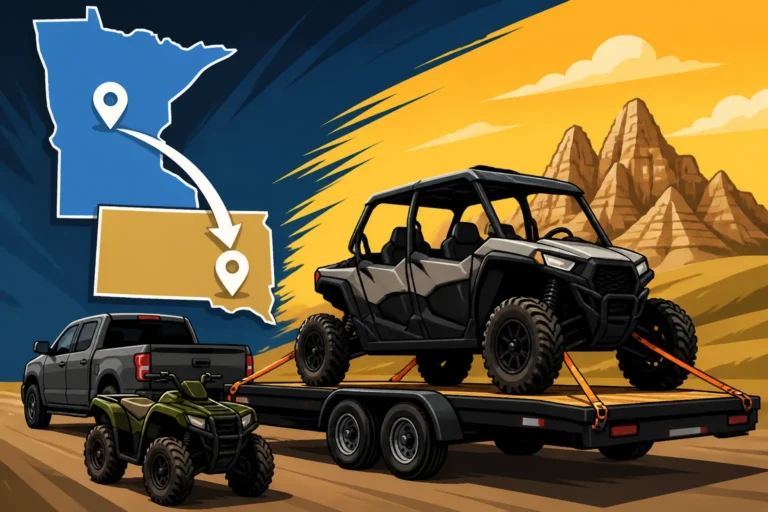
Think of it this way: you could have an ATV titled in Minnesota, and you'd still need a South Dakota Nonresident ORV Permit to ride in the Black Hills. Conversely, if you're a nonresident and choose to title your ATV in South Dakota, you'd pay the $100 titling fee and you would still need an ORV permit (either a resident or nonresident one, depending on where you actually live) to ride the trails. They are completely separate charges for entirely different purposes.
Understanding the Overall Cost of Titling in South Dakota
While the "extra hundred" might feel significant, it's just one component of the full cost of titling an ATV or UTV in South Dakota. To truly budget for your machine, it's helpful to see the bigger picture of all the fees involved.
Breaking Down the Standard Titling Costs
Regardless of whether you're a resident or nonresident, several standard fees make up the [What a South Dakota ORV Title Costs]. These generally include:
- The Title Fee Itself: This is a relatively small, flat fee for the issuance of the certificate of title.
- Excise Tax: This is often the largest component for new purchases or recently acquired used machines. South Dakota charges a [South Dakota's 4 Percent Excise Tax] on the purchase price or fair market value of the machine.
- Technology Fee: A more recent addition, the [South Dakota's $2 Technology Fee] helps fund improvements to the state's motor vehicle systems.
- Solid Waste and Patrol Dollars: You'll also see small, dedicated fees like [Why Every ATV Title Includes a Solid Waste Dollar] and a dollar that contributes to [Why $1 of Your Title Fee Funds the Highway Patrol]. These are typically small but consistent additions to every title transaction.
- Lien Notation Fee: If you have a loan on your machine, there will be a small fee, typically around [South Dakota's $10 Lien Notation], to record the lien on the title.
When you add all these up, they form the foundation of your titling expenses. The nonresident fee is then layered on top for those who don't call South Dakota home.
How the Nonresident Fee Stacks Up
To illustrate how the nonresident fee impacts the total, let's look at a hypothetical comparison. Remember, specific numbers for excise tax will depend on your purchase price, but this table shows the structure of the fees.
| Fee Type | Resident Cost (Example) | Nonresident Cost (Example) | Notes |
|---|---|---|---|
| Base Title Fee | Standard Fee | Standard Fee | For issuing the title document |
| Excise Tax (4%) | Varies by Machine Value | Varies by Machine Value | Calculated on purchase price or NADA value |
| Technology Fee | Small Flat Fee | Small Flat Fee | Supports state IT systems |
| Solid Waste Fee | Small Flat Fee | Small Flat Fee | Contributes to environmental initiatives |
| Highway Patrol Fee | Small Flat Fee | Small Flat Fee | Funds state law enforcement |
| Nonresident Fee | $0 | $100 | This is the "extra hundred" |
| Total Titling Costs | Sum of Resident Fees | Sum of Nonresident Fees | Nonresident total will be $100 higher for the same machine and value |
As you can see, for the same machine with the same purchase price, the nonresident titling bill will be exactly $100 higher. This additional cost is clearly itemized, so you'll be able to see it on your receipt from the county treasurer. It's a fixed charge that doesn't fluctuate based on the value or type of your ORV, unlike the excise tax.
The Impact on Your Budget and Planning
For many out-of-state owners, especially those who only title one machine, an extra $100 might not seem like a deal-breaker. However, if you're someone with a fleet of ORVs, perhaps for a hunting camp or a larger family, that $100 per machine can quickly add up. Two ATVs means an extra $200, three means $300, and so on. This makes budgeting for your South Dakota outdoor adventures even more important.
It's also a factor to consider if you're weighing the pros and cons of establishing residency in South Dakota versus simply visiting. While the titling fee alone might not sway your decision, when combined with other potential benefits (or costs) of residency, it becomes part of the bigger financial picture. Planning ahead and knowing these costs before you purchase or move a machine to South Dakota will help you avoid any unpleasant surprises and keep your outdoor budget on track.
Navigating the Titling Process as an Out-of-State Owner
Titling an ATV or UTV in South Dakota as a nonresident doesn't have to be a daunting task, but it does require attention to detail and preparation. Knowing the steps and potential pitfalls can make the experience much smoother.
Step-by-Step for Nonresidents
The process for a nonresident titling an ORV in South Dakota largely mirrors that of a resident, with the key difference being the additional $100 fee. Here's a general guide:
- Gather Your Documents: This is the most crucial first step. You'll need:
- The original title signed over by the previous owner (if applicable). If it's a new machine, you'll need the Manufacturer's Statement of Origin (MSO).
- A completed [A South Dakota Bill of Sale for an ORV]. Make sure it clearly states the purchase price, especially if you're using a template from a service like LawDepot for a private sale.
- Proof of identification (driver's license).
- Completed [South Dakota's Title and Registration Application].
- Locate Your County Treasurer's Office: You'll need to visit the treasurer's office in the county where the ORV is principally garaged or where you conduct your business in South Dakota. For example, if your cabin is in Pennington County, you'd go to the Pennington County Treasurer.
- Submit Paperwork and Pay Fees: Present all your documents to the clerk. They will review everything, calculate the total fees (including the 4% excise tax, the $2 technology fee, the solid waste and patrol dollars, and, for you, the extra $100 nonresident fee), and collect payment.
- Receive Your Temporary Documentation: Once all fees are paid and paperwork is processed, you'll typically receive a temporary registration or receipt. The actual title will usually be mailed to you within a few weeks. [How Long Before a Title Arrives From the County] can vary, so be patient.
Being organized makes a huge difference. Having all your forms filled out correctly and your payment ready can significantly speed up the process at the county treasurer's counter.
Common Pitfalls and How to Avoid Them
Even with careful planning, things can sometimes go sideways. Knowing common issues can help you steer clear of them:
- Missing or Incorrect Paperwork: This is probably the biggest holdup. Ensure all fields on the title and bill of sale are filled out, signatures are present, and the VIN matches. A single missing signature can send you back to the seller, delaying everything.
- Late Titling Penalties: South Dakota has a strict [South Dakota's Forty-Five Day Title Deadline] from the date of purchase to get your machine titled. If you miss this window, penalties start accruing. You'll face [South Dakota's 1 Percent a Month Penalty] after 45 days, and it jumps to [South Dakota's 10 Percent Penalty at Sixty Days] once two months have passed. These penalties apply to the excise tax due, not the title fee itself, but they can still add up.
- Misunderstanding Residency Rules: As discussed, simply having a South Dakota mailing address isn't enough to avoid the nonresident fee. Ensure you genuinely meet the residency requirements if you're trying to bypass the $100 charge. Don't try to bend the rules; it rarely works out in your favor and can lead to more complications.
- Incorrect Payment Amount: Make sure you've calculated all your fees, including the $100 nonresident charge, to avoid delays at the counter. A quick call to the county treasurer beforehand can clarify any doubts.
Seeking Assistance and Verification
If you're unsure about any part of the titling process, especially as a nonresident, don't hesitate to reach out for help.
- Your County Treasurer's Office: This is your primary resource. The staff at the specific county treasurer's office where you plan to title your machine are the experts on local procedures and state regulations. They can clarify required documents, acceptable payment methods, and specific nuances of your situation.
- The South Dakota Department of Revenue: For broader policy questions or if you need clarification on state-level laws, [The South Dakota Department of Revenue and ORVs] is another excellent resource. While they don't handle individual titling transactions, they oversee the regulations that county treasurers implement.
- Seller's Advice: If you're buying from a dealer, they are often well-versed in the titling process and can provide guidance. For private sales, while the seller might not know the nonresident specifics, they should be able to provide clear information about the machine's previous title and history.
By being proactive, asking questions, and preparing thoroughly, you can navigate the South Dakota titling process as a nonresident with confidence, even with that "extra hundred" added to the bill.
Disclaimer
This article is for general informational purposes only and does not constitute professional advice. Laws, prices and regulations vary by location and change over time. Consult a qualified professional for guidance on your specific situation.