Why the Treasurer Will Only Take the Original Title
It's an all too common scenario: you've just closed a deal on a fantastic ATV or UTV, maybe bought it from a private seller or even inherited it, and you're ready to make it officially yours in South Dakota. You gather all your paperwork, perhaps including a perfectly clear copy of the title, and head to the county treasurer's office, expecting a quick and easy process. Then, you're told the copy isn't enough – they need the original title. This can be incredibly frustrating, feeling like an unnecessary roadblock. But rest assured, there are very specific and important reasons why the South Dakota county treasurer adheres strictly to this rule, and understanding them will help you navigate the titling process smoothly.
The Immutable Rule: Why Only the Original Title Will Do
When it comes to transferring ownership of an off-road vehicle in South Dakota, the county treasurer's office has a very clear mandate: they need the original title. This isn't just about bureaucracy; it's a critical step in safeguarding property rights, preventing fraud, and maintaining a clear, unbroken chain of ownership for every ATV and UTV in the state. Think of the original title as the definitive proof of ownership, like a deed to a house or the original certificate of a stock share. It carries a legal weight that a copy simply cannot replicate.
Preventing Fraud and Forgery
One of the primary reasons for requiring the original title is to prevent fraud and forgery. An original title often incorporates security features that are difficult or impossible to replicate on a standard copy. These can include watermarks, embossed seals, specialized paper, or even microprinting. If a county treasurer were to accept a photocopy, it would open the door to individuals potentially creating fraudulent titles, selling vehicles they don't legitimately own, or even selling the same vehicle multiple times. Imagine buying an ATV from someone who presents a convincing photocopy, only to find out later that the vehicle was stolen or still legally owned by someone else. The requirement for the original title acts as a crucial first line of defense against such illicit activities, protecting both buyers and sellers from significant financial and legal headaches. This rigorous check helps maintain integrity in the system, ensuring that when you purchase a vehicle, you're truly getting legitimate ownership.
Establishing a Clear Chain of Ownership
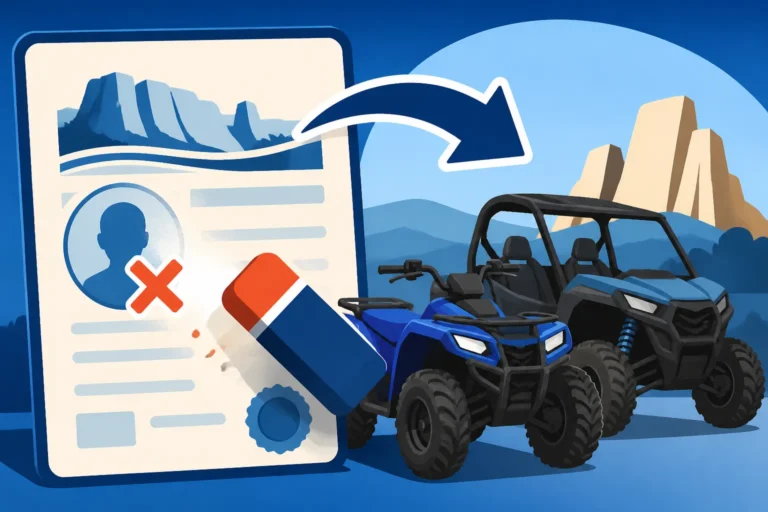
The original title is the physical record that establishes the legal chain of ownership. Each time an ATV or UTV is sold, the seller must sign off on the original title, transferring it to the new owner. This signed original then goes to the county treasurer, where the old owner's name is removed and the new owner's name is officially recorded with the state. This continuous documentation creates an indisputable history of the vehicle's ownership. Without the original, it becomes incredibly difficult to track this chain, leaving gaps that could lead to disputes. For instance, if an ATV has been through several owners, and one of them only had a copy, proving that each transfer was legitimate and that the current seller truly has the right to sell it becomes a quagmire. The original title ensures that the state has an accurate record of who legally owns every titled machine, which is essential for everything from law enforcement inquiries to tax purposes. This clear record is also vital if you ever need to apply for a [South Dakota ATV Title Lookup] to verify a vehicle's history.
Meeting State Record-Keeping Standards
South Dakota, like most states, has stringent record-keeping standards for vehicle titles. The original title document is specifically designed to be part of this official record. When you submit it to the [South Dakota County Treasurer], they process it, often stamping or marking it as "canceled" or "transferred," and then issue a new original title in your name. This process requires the physical document to be surrendered and replaced. A photocopy simply cannot fulfill this role in the state's official system. It's not just about what's legible; it's about the physical integrity and legal authority embedded within the original document itself. The state's database is updated based on these physical transactions, ensuring that the electronic record matches the paper trail. This methodical approach minimizes errors and provides a robust system for tracking valuable assets like ATVs and UTVs.
Navigating the System When the Original is Missing
It's a frustrating but common problem: you're ready to title your ATV or UTV, but the original title is nowhere to be found. Maybe it was lost, accidentally destroyed, or perhaps the seller didn't provide it in the first place. While the county treasurer absolutely needs the original, there are established processes to help you navigate this situation in South Dakota. It might take a bit more time and effort, but it's far from a dead end.
The Process for Obtaining a Duplicate Title
If you are the current recorded owner of the ATV or UTV and your original title has been lost, stolen, or destroyed, you can apply for a duplicate title. This is a common occurrence, and the state has a clear process for it. You'll typically need to fill out an application for a duplicate title, which usually requires your signature and some form of identification. There will also be a fee associated with issuing the duplicate. The key here is that you must be the last owner officially on record with the state. If you bought the vehicle from someone else and they lost the title before transferring it to you, then they are the one who needs to apply for the duplicate title. This means you might need to go back to the seller and explain the situation, requiring them to take this step before they can properly transfer ownership to you. Without their cooperation, you could be stuck. This is why when [Buying a Used ATV in South Dakota], always verify the seller has the original title in hand.
When the Seller Doesn't Have the Original Title
This situation can be particularly tricky. If you've purchased an ATV or UTV and the seller only provided a copy, or worse, no title at all, you're facing a hurdle. As mentioned, the county treasurer cannot simply accept a photocopy for transfer. Your first course of action should be to contact the seller and explain the necessity of the original title. They will either need to locate it or, if they are the last recorded owner, apply for a duplicate themselves. This is where a well-drafted [A South Dakota Bill of Sale for an ORV] comes into play. While not a substitute for a title, a comprehensive bill of sale, perhaps generated using a service like LawDepot, can serve as proof of your purchase and often specifies that the seller is responsible for providing a clear title. It might also contain clauses about what happens if the title is not produced. If the seller is unwilling or unable to help, you could be in a difficult position, potentially needing legal advice to compel them or to pursue other avenues for establishing ownership, which can be a long and complex process. Never proceed with a purchase without a clear understanding of the title status; a missing title can lead to significant headaches down the road.
Proving Ownership Without a Traditional Title
In very rare and specific circumstances, where an original title is genuinely unobtainable through the duplicate process (e.g., the original owner is deceased and the estate is complex, or the vehicle is very old and was never formally titled), you might need to explore more extraordinary measures. This could involve applying for a bonded title, if applicable to ORVs in South Dakota, or going through a court process to establish ownership. These paths are usually a last resort and involve significant legal fees and time. They require a substantial amount of documentation, including bills of sale (which a tool like LawDepot can help you create), affidavits, and any other evidence that proves you legitimately acquired the vehicle. However, for most modern ATVs and UTVs, the expectation is that a valid, original title exists and can be transferred. The state's system is designed around this premise, so these alternative routes are exceptions, not the rule. If you're facing a situation like this, consulting with an attorney specializing in vehicle titles is highly recommended to understand your options.
The Legal and Financial Risks of Not Having an Original Title
Ignoring the requirement for an original title in South Dakota isn't just an inconvenience; it can expose you to significant legal and financial risks. Operating an ATV or UTV without proper titling or the ability to prove ownership can lead to a host of problems, from minor fines to major legal battles and financial losses. Understanding these risks underscores why the county treasurer's strict adherence to the original title rule is in everyone's best interest.
Inability to Legally Sell or Transfer Ownership
Without an original title, you simply cannot legally sell or transfer ownership of your ATV or UTV in South Dakota. When a buyer comes along, they will face the exact same problem you did when trying to title it: the county treasurer will refuse to process the transfer. This drastically reduces the value of your machine, making it very difficult to sell through legitimate channels. Most knowledgeable buyers will flat-out refuse to purchase an ATV or UTV without a clear, original title. If you were to somehow sell it without a title, you could be held liable for fraud or misrepresentation down the line, especially if the buyer discovers they cannot title it. The original title is the fundamental document required for [South Dakota ATV Title Transfer] to occur, confirming that the seller has the right to convey ownership and that the buyer can become the new legal owner. This document is central to the entire transaction process.
Fines and Legal Complications
Operating an ATV or UTV in South Dakota without a properly transferred and valid title can lead to legal complications. While the title itself isn't necessarily proof of registration for trail riding (that's often handled by a separate permit system), it is fundamental to proving legal ownership. If law enforcement ever questions your ownership, perhaps during a routine stop or an incident, not having a clear title or the ability to prove you are the legal owner could lead to investigations, impoundment of your vehicle, or even [South Dakota Fines for an Untitled ATV]. Furthermore, if your vehicle is stolen, proving it's yours to law enforcement or your insurance company becomes incredibly difficult without an original title. This lack of clear legal documentation can turn a simple traffic stop or a theft claim into a drawn-out, stressful, and potentially costly ordeal.
Issues with Insurance and Financing
Most insurance companies require proof of ownership, usually in the form of a valid title, before they will issue a policy for your ATV or UTV. If you don't have an original title, you might find it impossible to secure comprehensive insurance coverage, leaving your valuable asset unprotected against theft, damage, or liability claims. Imagine if your uninsured, untitled side-by-side is involved in an accident in the Black Hills, causing significant damage or injury; you would be personally responsible for all costs, which could be catastrophic. Similarly, if you ever wished to use your ATV or UTV as collateral for a loan, lenders would require a clear title to place a lien. Without it, financing options would be unavailable. The original title is a cornerstone of responsible ownership, enabling you to protect your investment and manage your financial obligations properly. This is especially true if you are [Titling a Machine With a Lien in South Dakota], where the lienholder's name must be accurately recorded on the official title document.
Here's a quick overview of what you'll typically need to present at the county treasurer's office for a title transfer:
| Document Type | Purpose | Required? | Notes |
|---|---|---|---|
| Original Title | Legal proof of ownership for transfer | Yes | Must be signed by seller(s) on transfer line. |
| Bill of Sale | Proof of purchase price for excise tax, details of transaction | Often | Useful for establishing sales price and purchase details. A LawDepot form can be helpful. |
| Identification | Verify your identity as the new owner | Yes | Driver's license or state ID. |
| Application Form | South Dakota Title & Registration Application | Yes | Available at the treasurer's office or online. |
| Payment for Fees & Tax | Excise tax, title fee, technology fee, other applicable charges | Yes | Check with your county for accepted payment methods. |
Ensuring a Smooth Title Transfer: Best Practices
Dealing with title issues after a purchase can be a major headache, adding unnecessary stress and delays to what should be an exciting new acquisition. By understanding the requirements and following a few best practices, you can ensure a smooth title transfer process when buying or selling an ATV or UTV in South Dakota. Taking these proactive steps will save you time, money, and potential frustration down the road.
Verification Before You Buy
The absolute best practice for a smooth title transfer begins before you even hand over any money. Always verify that the seller has the original title in their possession. Ask to see it. Inspect it for any signs of alteration, and compare the Vehicle Identification Number (VIN) on the title to the VIN stamped on the ATV or UTV itself. Make sure they match exactly. Also, check that the seller's name on the title matches their identification. If anything seems off, or if the seller offers excuses about why they only have a copy, consider it a major red flag. It’s always safer to walk away from a deal than to get stuck with an untitled machine. A quick [South Dakota ATV VIN Requirements] check can save you a lot of trouble. This upfront due diligence is critical for preventing future complications, ensuring that you’re entering into a legitimate transaction with a clear path to ownership.
Completing the Paperwork Correctly
Once you have a legitimate original title, make sure all the necessary sections are filled out correctly during the transfer. The seller typically needs to sign in a specific spot to release their ownership, and the buyer will sign to accept it. Ensure that the purchase price is accurately recorded, as this will be used to calculate the South Dakota excise tax. Don't leave any blanks that could be filled in fraudulently later. It's often a good idea to complete a separate bill of sale, even if the title itself has a space for sale details. A detailed bill of sale, which you can easily generate using templates from services like LawDepot, can protect both parties by clearly stating the terms of the sale, the condition of the vehicle "as-is," and any agreements made. This document provides an additional layer of proof for your purchase, supplementing the information on the title itself.
Timely Submission to the Treasurer
South Dakota has a deadline for titling vehicles after purchase. Generally, you have [South Dakota's Forty-Five Day Title Deadline] from the date of purchase to submit your original title and other paperwork to the county treasurer's office. Failing to do so within this timeframe can result in penalties, such as the [South Dakota's 1 Percent a Month Penalty] which starts after the 45 days, and can even escalate to the [South Dakota's 10 Percent Penalty at Sixty Days]. It’s easy to procrastinate, especially after the excitement of a new purchase, but those penalties can add up quickly. Make it a priority to visit your local county treasurer's office as soon as possible after acquiring your ATV or UTV. If you're mailing in your application, ensure it's sent with enough time to spare before the deadline, and consider using a method that provides tracking and delivery confirmation. Prompt submission ensures you avoid unnecessary fees and officially establish your ownership without delay. This is a crucial step in the overall [Titling an ATV in South Dakota] process.
Disclaimer
This article is for general informational purposes only and does not constitute professional advice. Laws, prices and regulations vary by location and change over time. Consult a qualified professional for guidance on your specific situation.