Black Hills Annual Trail Permit Cost
The Black Hills annual trail permit is the lower-hassle option for riders making repeated trips, but it is not a blanket pass for every road or riding area. The key question is whether your machine needs a permit for the route you plan to ride. Here’s how the annual cost compares with short-term options, what the decal covers, and when a plate matters.
Black Hills annual trail permit cost
The Black Hills annual motorized trail permit costs $25 per machine. It is an annual decal, not a per-rider charge: if a household or group takes several machines, each machine needs its own permit when one is required.
The $25 price is the permit fee itself. If you buy remotely, check the seller’s current checkout details for any mailing or processing charge, and allow time for the physical decal to arrive. A receipt or printed copy is not a substitute for the decal when the machine must display one.
The annual permit can make sense for a rider who expects more than one outing in the Black Hills during the permit year. It can also be convenient if a trip is long enough that a short-term permit would be close to the annual price. For a single brief visit, compare the shorter option before paying for a full year.
| Option | Cost | Usually a practical fit for |
|---|---|---|
| Annual Black Hills trail permit | $25 per machine | Repeat visits or multiple rides during the permit year |
| Seven-day permit | $10 per machine | A short trip that fits within the permit period |
| Road use by an appropriately plated machine | No trail permit substitution | Roads where the machine’s valid plate is accepted; the plate does not replace a trail permit |
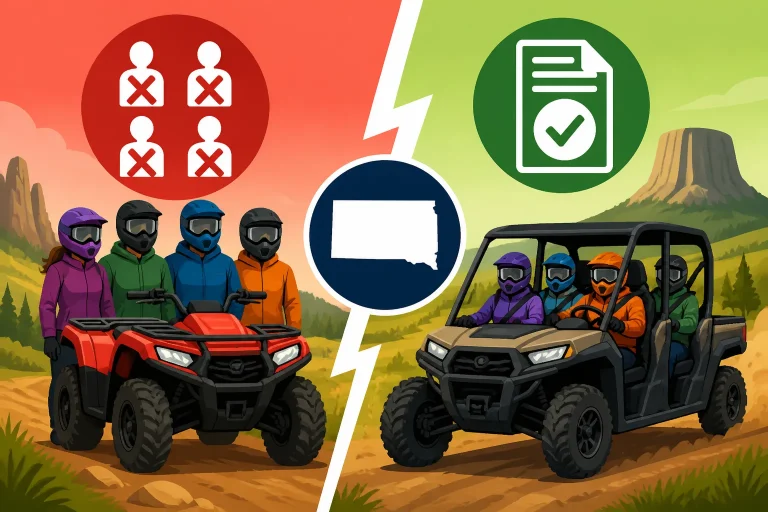
The annual permit applies to a machine, not to everyone riding it. A group of four riders sharing one permitted machine does not need four decals for that machine. But four machines need four permits when the route requires them. See One Permit Per Machine, Not Per Rider for that distinction.
The permit’s dates matter as much as the price. An annual permit is valid through December 31 of its permit year, rather than for twelve months from the day you buy it. Buying late in the year therefore provides a shorter period of use. Check When a Black Hills Trail Permit Expires before deciding whether the annual option is worthwhile for a late-season trip.
Permit rates can be subject to change. A proposed increase is not the same as an adopted fee, so do not treat a proposal as the current price. Before purchasing, confirm the fee and available permit types through an official South Dakota permit outlet or a Black Hills National Forest office. The related discussion of Why the Proposed Permit Price Is Not the Price explains why it is important to distinguish an announced proposal from an active fee.
What the annual permit covers, and what it does not
A trail permit is for riding on routes where that permit is required. It is not general permission to drive anywhere in the Black Hills, and buying one does not make a closed route open. Riders still need to follow posted closures, route designations, width limits, seasonal restrictions, and rules about staying on the designated route.
The permit is tied to the machine. The decal needs to be displayed as directed, so install it on the specified part of the vehicle and keep it visible. Before applying it, check Black Hills Trail Permit Decal Placement. A decal that is lost, damaged, or stuck in the wrong place can create an avoidable problem during a roadside check.
The permit also does not replace ordinary vehicle requirements. A machine that needs a plate for public-road use still needs the appropriate plate and equipment. Likewise, a permit does not give a rider permission to use private land, a closed trail, or an area that does not allow that type of vehicle.
A useful way to separate the rules is to think in terms of the route:
- Designated motorized trail: Plan on needing a trail permit, even if the machine has a plate. The exact route and any closure notices still control where you can ride.
- Forest road open to motor vehicles: A valid plate may satisfy the road-use requirement for a road-legal machine, while an unplated machine may need a permit. Confirm the rules for the particular road.
- Private land: A public trail permit does not grant access. Get the landowner’s permission and follow any conditions.
- Closed or restricted route: A permit does not override a closure, seasonal restriction, or vehicle-width limit.
The most common misunderstanding is assuming a street plate works as an all-purpose trail pass. It does not. A plate can matter on eligible roads, but it does not automatically cover designated trails. For more detail, see Why a Plate Does Not Replace a Trail Permit and Do You Need a Permit on a Black Hills Trail?.
If you are bringing a machine from another state, distinguish its registration status from its trail access. A valid out-of-state plate may be relevant to road use, but that does not erase the trail permit requirement. Check Does South Dakota Honor Out-of-State Registration? and confirm the rules for the actual route you intend to ride. The answer can differ between a road and a designated motorized trail.
Choosing annual or short-term
The annual permit is straightforward when you expect to ride repeatedly, but it is not automatically the best value for every visitor. The seven-day permit costs $10 per machine and may be a better fit for one short vacation. Compare the length of your trip, the number of rides, and whether you expect to return before the annual permit expires.
A simple comparison:
- Choose the annual permit if you expect several separate rides, plan more than one Black Hills visit, or want one permit arrangement for the rest of the permit year.
- Consider the seven-day permit if you have one short trip and do not expect to ride again during the year.
- Check both options carefully if your visit is near the end of the year, because the annual permit expires on December 31 rather than lasting a full year from purchase.
A permit is generally purchased for each eligible machine, so compare total costs rather than just the amount for one vehicle. For example, a family bringing two machines should calculate the permit cost for both, even if only one adult is arranging the purchase. Do not assume one decal covers a trailer, a whole group, or a second machine.
Residents and visitors should also avoid assuming that the annual fee changes based on where the owner lives. The listed annual permit price applies on the same basic basis rather than offering a lower resident rate. For the residency question, read Why South Dakota Sets No Resident Discount and South Dakota’s Nonresident Annual Permit. Nonresidents should also keep the trail permit distinct from any other permit or registration rule that might apply to their machine.
When comparing options, include the practical details, not just the fee. A short-term permit may be cheaper for one visit, while an annual decal can be simpler if plans change or another ride is added. If ordering by mail, delivery timing matters; if buying in person, confirm the outlet’s availability before making a special trip. Current buying locations and methods are covered in Where to Buy a Black Hills Trail Permit.
Before you ride
A little preparation helps avoid paying for the wrong permit or arriving without the required decal. Start with the vehicle and route, then check the permit.
- Identify the machine. Note whether it is plated for public-road use, whether the plate is valid for the machine, and whether it meets any route-specific width or equipment restrictions.
- Map the route. Separate roads from designated motorized trails. A road-use rule and a trail-permit rule are not interchangeable.
- Choose the permit period. Compare the annual permit with the seven-day option, keeping the December 31 expiration in mind.
- Buy through an authorized source. Confirm the current fee, any delivery charges, and how the physical decal will be provided. If it must be mailed, leave enough time for delivery.
- Mount the decal correctly. Follow the placement instructions and keep the decal legible and visible.
- Check conditions before departure. Verify that the route is open, suitable for the machine’s width, and available during your planned dates.
If your trip is only a few days, the seven-day permit may be sufficient. If you make recurring visits or ride for a longer part of the season, the annual permit’s $25 cost may be easier to justify. Either way, the permit is only one part of a legal ride: route access, machine eligibility, posted restrictions, and decal display still matter.
For a road-heavy itinerary, do not buy a trail permit assuming it automatically legalizes road use. For a trail-heavy itinerary, do not rely on a plate as a substitute for the required trail decal. Confirm the specific route requirements before loading the machine; that is more reliable than making assumptions based on what worked on a different road or trail.
Disclaimer
This article is for general informational purposes only and does not constitute professional advice. Laws, prices and regulations vary by location and change over time. Consult a qualified professional for guidance on your specific situation.