Filming on South Dakota Forest Land
Filming on South Dakota Forest Land can be as simple as recording a ride for personal memories—or as involved as bringing a crew, drones, and production equipment onto public land. The key is knowing when filming may need advance approval, what riding rules still apply, and which questions to ask the Forest Service before setting a date.
First decide what kind of filming you are doing
There is an important difference between casually recording your own ride and organizing a production on National Forest land. A phone clip or action-camera video made during an ordinary ride is not automatically the same as a commercial shoot. A planned production can raise different questions, especially if it involves a business, a hired crew, substantial equipment, props, or a request to control or reserve a location.
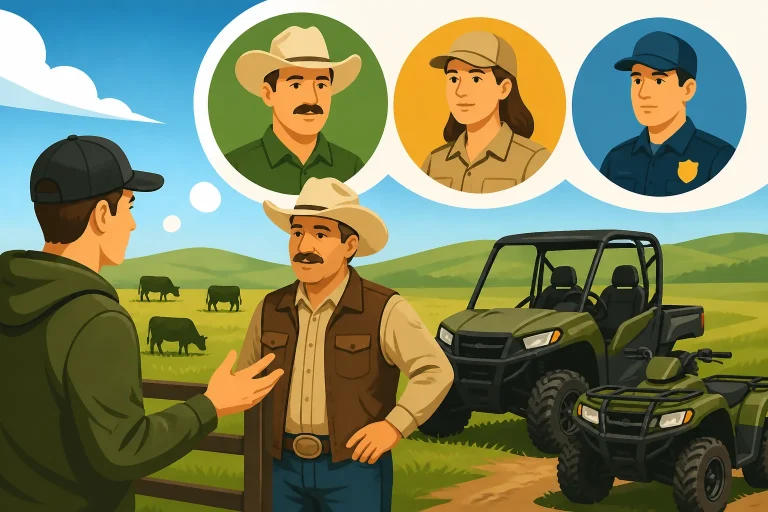
The Black Hills National Forest is federal land managed by the U.S. Forest Service. If that is where you plan to film, contact the Forest Service office responsible for the location and describe the project before arriving. Ask whether your particular activity needs authorization and what information the agency needs to make that determination. Requirements can depend on the production’s purpose, its footprint, its effect on other visitors and resources, and the way the site will be used.
A useful first distinction is:
| Filming situation | What to consider |
|---|---|
| Personal ride video using a phone or helmet camera | Follow normal access rules and avoid blocking routes or disturbing other visitors. Ask the district if the setup is more than incidental recording. |
| Content made to promote a business, product, or paid service | Explain the commercial purpose and equipment to the Forest Service before filming; ask whether authorization is needed. |
| Crew, lighting, staged scenes, props, or multiple vehicles | These can make a project more involved than casual filming. Get the agency’s direction before setting up. |
| Organized group ride or event with filming | Check both event requirements and filming requirements. One approval should not be assumed to cover the other. |
| Drone footage | Check current Forest Service site restrictions and applicable aviation rules before launch. A drone does not make a closed or restricted location available. |
Do not treat “public land” as an automatic filming permit. Public access means visitors may use places under applicable rules; it does not necessarily mean a production can reserve space, bring in a large operation, or alter a site without authorization. The best approach is to describe the project plainly: who is filming, what the finished material is for, how many people and machines will be present, what equipment is involved, and whether anything will be placed, moved, or staged.
If you are unsure whether the shoot is commercial, explain how the video will be used rather than trying to fit it into a label. A short promotional clip for a rental business, for example, raises different practical questions from footage kept for family use. The agency can tell you how it treats the specific plan.
Keep filming within riding and access rules
Permission to film, if required and granted, does not automatically authorize ATV or UTV travel wherever a camera operator wants to go. The machine still has to be used in places open to that type of motorized travel, and riders need to follow route, vehicle, permit, and closure rules. Start by checking South Dakota Rules for Riding Federal Land and the current South Dakota Trail Maps and MVUMs.
In the Black Hills, the motorized route network is not a blanket invitation to ride off-route. A road or trail shown on a map may have limits based on season, vehicle width, or current conditions. Before planning camera positions, identify a legal route and a safe place to stop. Keep vehicles on the designated route unless the applicable rules expressly allow otherwise. See [South Dakota Rules for Riding Off a Route] for why shortcuts to a better shot can create a separate problem.
The motorized trail permit is another issue to handle separately. Where a permit is required for riding, filming does not replace it, and a production authorization should not be assumed to replace it either. Check How the Black Hills Motorized Trail Permit Works and confirm whether each machine in the group needs its own permit for the area and activity you have planned. If you are bringing a machine from out of state, do not assume a home-state plate covers every Black Hills requirement.
A filming plan should account for other visitors as well as rules. Avoid placing a camera, tripod, lighting stand, or parked machine where it blocks a narrow trail, road, trailhead, or access point. Do not direct riders to stop in a blind corner or on a steep, loose section to repeat a shot. Pick a stable pullout or other suitable location, and keep people clear of moving traffic. If the planned scene requires a stop in a place where stopping would be unsafe or disruptive, change the shot rather than expecting other users to wait.
Check for seasonal openings, temporary closures, fire restrictions, and other notices close to the filming date. A route that was open when you planned the production may not remain available. South Dakota Trail Closures to Check First and Checking a Forest Notice Before You Load Up can help you build that check into your plan. If a closure affects the location, do not cross a barrier or route around it to save the shoot. Find another lawful location or reschedule.
Plan for cameras and drones separately
A handheld camera or helmet-mounted camera generally has a different footprint from a full production setup. Still, even small equipment can create hazards if it is left on a trail or used where riders cannot see it. Keep gear secured, keep cables out of travel routes, and avoid asking a rider to operate a camera while driving if that would distract them or compromise control of the machine.
Drones need their own check. Confirm both the aviation requirements that apply to the flight and any current restrictions for the specific Forest Service location. Ask the local Forest Service office whether launching, landing, or operating a drone is allowed in your intended area. Do not assume permission for ground filming answers the drone question. If a drone cannot be used there, plan a ground-based shot instead.
Also consider privacy and consent. Public land use does not mean everyone who appears in your video has agreed to be part of a promotional production. Avoid filming identifiable visitors in a way that makes them the focus without asking, and do not create a staged encounter that could mislead viewers about what is allowed on a route.
Ask the right questions before you set a date
Contact the Forest Service office responsible for the proposed location early enough to adjust your plan. Provide a concise description, then ask for guidance in writing where practical. The goal is not just to find out whether a permit applies; it is to understand what the approved activity would allow and what it would leave unchanged.
Share details such as:
- The specific area, route, or trailhead you hope to use.
- The purpose of the footage and how it will be distributed.
- The number of crew members, riders, and vehicles.
- The types and approximate scale of equipment, including any drone.
- Whether the shoot includes staged actions, props, lighting, or temporary structures.
- Whether you need to stop, park, or occupy a particular location.
- The proposed date or range of dates, including any backup plan.
Then ask whether the Forest Service considers the activity to require an authorization, whether a separate event or group-use approval may be needed, and what application materials or conditions apply. Ask whether the proposed filming location is open to motorized use at that time and whether any seasonal or temporary restrictions may affect it. If you are coordinating a ride with multiple participants, review South Dakota Rules for an Organized Ride and When a Special Recreation Permit Is Needed. Event approval, filming approval, and individual riding requirements are related but distinct questions.
If an authorization is needed, wait for the agency’s instructions before treating the shoot as approved. Do not assume that submitting an application, receiving an informal phone response, or having a trail permit is enough to proceed with an activity that requires separate permission. Keep any written authorization with the production lead, and make sure the crew understands its limits, such as where it applies and what equipment or activities it covers.
The cost and processing requirements, if any, depend on the authorization and the current rules. Ask the Forest Service directly about applicable charges, insurance or documentation requirements, and how much lead time the review may need. Avoid relying on an old application, an online discussion, or another creator’s experience as a guarantee that the same terms apply to your project.
A simple, low-impact plan can make the conversation easier. Use existing roads and trails, keep the group small, avoid exclusive use of a location, and leave the ground as you found it. If the shoot needs to close access, bring in bulky equipment, or alter the setting, explain that clearly rather than presenting it as a casual ride video.
A practical filming-day checklist
Once you have confirmed what approvals apply, make a short checklist for the day. The person coordinating the shoot should be able to answer three questions without hesitation: where the group may go, what activities are allowed, and what to do if conditions change.
- Confirm current access. Check the Forest Service’s latest notices for closures, fire-related restrictions, and route changes. Verify the exact location rather than relying on a pin or an old map screenshot.
- Check every vehicle’s requirements. Confirm that each ATV or UTV is permitted for the route and that any applicable permit or registration requirements are met. A filming authorization is not a substitute for vehicle requirements.
- Brief riders and crew. Explain where to park, where cameras may be set up, who is directing movement, and where visitors and traffic may pass. Make sure nobody improvises a new route for a better angle.
- Keep equipment contained. Place gear where it will not block access, damage vegetation, or become a hazard. Remove temporary items when the filming is finished.
- Have a fallback plan. If a route is closed, the weather changes, or the Forest Service directs the group to stop or move, be ready to use an alternate approved location or postpone.
- Leave the site undisturbed. Do not cut vegetation, move signs, dig, create tracks off-route, or leave materials behind. Report any damage or incident through the appropriate channel.
For a production involving a larger crew or staged activity, assign one person to communicate with the Forest Service and keep the group within the agreed plan. That helps prevent a common misunderstanding: one person has permission for a limited activity, while the rest of the crew assumes it applies to anything they decide to do on site.
If the shoot is a casual personal recording, the same basic habits still matter. Stay on legal routes, do not interfere with other visitors, and check local restrictions before using a drone or setting up equipment. If the project grows into paid promotion, a sponsored production, or a coordinated shoot, pause and ask the Forest Service whether the changed plan needs additional review. For detailed questions about the agency’s process, Filming on Black Hills Ground is a related topic to check alongside direct guidance from the responsible office.
The safest rule is straightforward: plan the filming activity and the riding activity as separate parts of the same trip. Confirm the land-use requirements with the Forest Service, verify the route and machine requirements, and keep the shoot within the boundaries you were given. That makes it easier to capture useful footage without disrupting the public land or creating avoidable problems for the crew.
Disclaimer
This article is for general informational purposes only and does not constitute professional advice. Laws, prices and regulations vary by location and change over time. Consult a qualified professional for guidance on your specific situation.