Why a Trail Always Needs the Permit
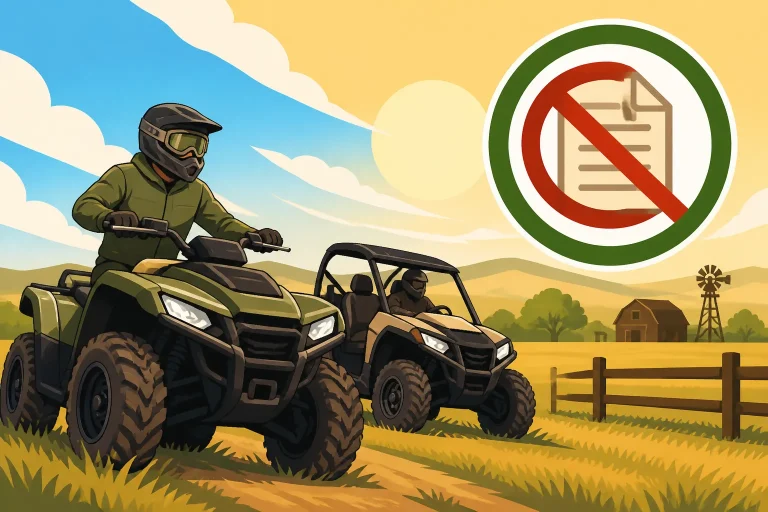
A plated ATV or UTV can still need a trail permit in South Dakota. The key is where you ride: road-use credentials and access to a designated motorized trail are separate questions. Here’s how to tell when the permit applies, what a plate does and doesn’t cover, and what to check before unloading.
Why a trail permit is separate from a plate
A plate and a trail permit serve different purposes. A plate or other accepted registration relates to using a machine on roads where that kind of road use is allowed. A motorized trail permit is for access to designated motorized trails that require it. Having one does not automatically give you the other.
That distinction matters most when a ride combines roads and trails. A machine might be properly plated for an authorized road segment but still need a trail permit before entering a permit-required trail. The trail’s access rules don’t disappear because the machine can legally travel somewhere else. For a closer look at the distinction, see Why a Plate Does Not Replace a Trail Permit.
The permit system is also separate from the rules about what kind of machine may be operated on a road. A trail decal doesn’t make an ATV street legal, and it does not replace required road equipment or registration. Likewise, satisfying road-use rules does not necessarily satisfy trail-access rules.
Think of the two credentials as answers to separate questions:
- Can this machine use this road? Check the applicable registration, plate and road-use rules.
- Can this machine enter this designated trail? Check whether the trail requires a motorized trail permit and whether the machine has one.
- Is the route open to this kind of machine? Check current maps, signs and land-manager rules. A permit is not permission to use a closed route or one that excludes your machine.
This is why a trail permit can still be required when your ATV or UTV has an out-of-state plate. The plate may be relevant to road use, but it does not automatically satisfy a separate trail-permit requirement. Does South Dakota Honor Out-of-State Registration? covers the registration question; it’s still necessary to check the permit rules for the trail itself.
The title “a trail always needs the permit” needs one important qualification: it means a trail that is part of a system where the permit is required. Not every path, private track, public road or recreation area in South Dakota follows the same access rules. The permit is not a universal pass for every place a machine could travel. Use the route’s actual designation and managing authority to decide what applies.
For Black Hills riding, start with the rules for the motorized trail system you plan to use. South Dakota Trail Permits Explained gives a broader overview, while How the Black Hills Motorized Trail Permit Works focuses on the Black Hills permit. Confirm the current requirements before you ride, especially if your itinerary crosses between land managers or includes both roads and trails.
Where the permit applies and where the rules may differ
The word “trail” is used casually for many kinds of routes: a signed motorized trail, a forest road, a two-track across private land, or even a path visible on a map. Those routes may look similar on the ground, but they can have very different rules.
A designated motorized trail is the clearest case to investigate. If the trail system requires a motorized permit, plan to have the required permit on each machine entering it. Do not assume that a vehicle plate, a permit bought for another machine, or permission to ride somewhere else covers that trail.
A road is a separate category. A road may allow motorized travel under road-use rules, and the relevant requirement may be a plate or another form of authorization rather than a trail decal. But a route that appears to be a road on one map can connect to a trail, and a trail can begin shortly after a staging area. The sign at the entrance and the official route map matter more than the name you use in conversation. For the road-versus-trail question, see Do You Need a Permit on a Black Hills Road?.
| Where you plan to ride | What to check | Why a trail permit may still matter |
|---|---|---|
| Designated motorized trail | Trail-system permit requirements, route status and vehicle limits | The trail may require a permit even if the machine has a plate |
| Authorized public road | Road-use rules, registration or plate requirements, and route access | A road’s rules are not automatically the same as a connected trail’s rules |
| Private property | The owner’s permission and any applicable restrictions | A public-land permit does not replace permission to enter private land |
| Recreation area managed under separate rules | The area’s own vehicle and access requirements | A trail permit may not be the only authorization, or the rules may differ |
| Route near a boundary or junction | Signs, current maps and managing-agency information | A short turn can move you onto a route with a different designation |
The map needs to answer more than “is there a line here?” Look for the route type, whether motorized use is allowed, any machine-width or seasonal limits, and signs of closures or restrictions. A trail permit does not override a seasonal closure, a local restriction, a width limit or a rule against riding off the designated route.
A route may also pass near land with a different manager. In that case, don’t assume one decal covers every segment. Check which authority manages the route and whether the permit rules change at a boundary. The South Dakota Trail Maps and MVUMs article explains how to use mapping information to plan a route; on the ground, follow posted signs even if a map suggests the route is open.
Permits and maps solve different problems. A permit may satisfy an access requirement, but it does not tell you that a particular trail is open that day or suitable for your machine. A map may show a route, but it does not prove you have met the permit requirement. Check both before leaving the staging area.
What a plate and out-of-state registration do not cover
It’s easy to think a plate should be enough because it identifies the machine and may allow certain road use. But trail access can have its own requirement. On a permit-required trail, a plate should not be treated as a substitute for the trail permit unless the official rules specifically say that an exception applies.
That applies to machines registered outside South Dakota, too. A home-state registration can be important for road use, but it does not automatically exempt a visitor from a South Dakota trail permit. Check the local trail requirement rather than relying on the idea that your registration “works everywhere.” Why South Dakota Honors Only a Plated Machine discusses the role a plate may play in the broader rules, while Does South Dakota Honor Out-of-State Registration? addresses what to check for visiting riders.
The distinction is especially important for people who ride a route that includes both a road and a trail. A machine may meet the requirements to travel along the road but still need a decal when it turns onto the designated trail. An out-of-state plate does not make that trail segment a road, and a trail permit does not necessarily authorize travel on a road where separate requirements apply.
Avoid treating any one of these items as a universal pass:
- A plate: It may satisfy a road-use requirement, but does not by itself prove that a trail-permit requirement is met.
- A trail permit: It may satisfy a permit requirement on the relevant trail system, but does not make a closed or prohibited route legal.
- A map: It helps identify route designations and closures, but is not a permit.
- A permit from another place: It may be valid only in the system or area named in its terms.
- An owner’s permission: It matters on private land, but does not replace a public trail system’s permit requirements.
If your machine is plated in another state, verify two things separately: whether the registration is accepted for the road segments you intend to use, and whether the trail system requires its own permit. Riding South Dakota With an Out-of-State Plate can help with the first question; it does not remove the need to check the trail’s permit and access rules.
For a mixed route, plan the transitions before you ride. Mark where you leave a road and enter a trail, where you cross a boundary, and where a route has a width or seasonal restriction. If a junction is confusing, stop and read the signs rather than assuming the permit covers every direction from the intersection. Riding off an authorized route can create a separate problem even when the machine has the right decal; see [South Dakota Rules for Riding Off a Route].
Choosing, buying and displaying the right permit
Once you’ve confirmed that the trail requires a permit, make sure the permit you obtain fits the ride. South Dakota’s trail-permit options include short-term and annual choices, but validity periods and current requirements should be checked with the official seller or managing authority. Don’t rely on an old receipt, a permit from a previous season or a friend’s description of what was valid for a different trip.
A simple way to choose is to work through these questions:
- Which trail system are you using? Confirm the system and its current permit rule.
- How long will you ride? Compare the available permit period with your planned dates. Check when the permit period starts and when it expires.
- How many machines will enter trails? Confirm coverage for every machine; a permit bought for one ATV should not be assumed to cover an entire group.
- How will you receive the permit? If it is mailed as a decal, allow enough time for it to arrive and be attached before the ride.
- Where must it be displayed? Follow the current placement instructions for that kind of machine.
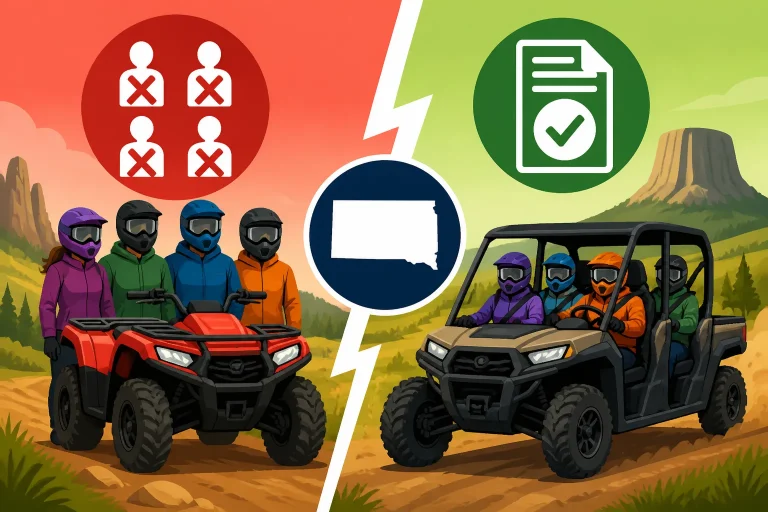
Permits are generally tied to the machine, not shared among riders. If a group brings three machines, don’t assume one permit covers all three just because one person bought it or will be driving. Check the permit’s coverage and attach the required decal to the machine it applies to. One Permit Per Machine, Not Per Rider explains that distinction in more detail.
Purchase timing matters for a physical decal. A confirmation page or order receipt may show that you bought a permit, but it may not meet a rule requiring the decal to be displayed on the vehicle. Check whether the permit is issued immediately or mailed, and leave enough time for delivery. Where South Dakota Trail Permits Are Sold and How Long a Black Hills Permit Takes to Arrive cover the practical purchase and delivery questions.
Do not assume you can print a substitute at home or show a phone screenshot instead of displaying the required decal. Follow the official instructions for the permit type. If it arrives as a sticker, attach it in the specified location and keep it visible. Placement can differ by vehicle design, so use the instructions supplied with the permit rather than copying another rider’s setup. More on placement is available in Black Hills Trail Permit Decal Placement.
Before you leave, check that the decal is attached to the correct machine and can be seen. A loose sticker in a storage box is not the same as a properly displayed permit. If a decal is damaged, lost or applied incorrectly, contact the seller or managing authority for instructions; don’t improvise a replacement or assume the receipt is enough.
Rental customers should ask the outfitter whether the required permit is included and already displayed. A rental may come prepared for certain routes, but that doesn’t mean every permit is included or every trail is allowed. Confirm the coverage, the machine, and the routes you’re permitted to use. If you’re comparing rental arrangements, Do Rentals Arrive With the Trail Permit Already Paid? covers the right questions to ask before pickup.
A pre-ride check that prevents common permit mistakes
The easiest way to avoid a permit problem is to treat it as part of route planning, not a last-minute purchase. Before loading the ATV or UTV, check the route, the machine’s eligibility, the permit and the decal. A few minutes of preparation can prevent an expensive detour or a ride that has to stop at the trail entrance.
Use this checklist:
- Identify every route segment. Separate roads from designated motorized trails, and note where routes cross between land managers.
- Confirm the route is open. Check current maps, notices and signs for closures, seasonal limits and vehicle restrictions.
- Check the permit rule for the trail system. Don’t infer it from the presence of a plate or from what another rider needed elsewhere.
- Match the permit to the machine and dates. Check the permit period and confirm that each machine has the required coverage.
- Display the decal as instructed. Make sure it is attached to the right machine and visible before entering the trail.
- Keep road-use requirements separate. A trail permit does not automatically make the vehicle legal on public roads.
- Ask before using a rental. Confirm whether the permit is included and which routes the rental agreement allows.
- Follow posted directions. If a sign conflicts with an assumption or an outdated route plan, stop and resolve the issue before proceeding.
Several mistakes come from confusing paperwork with permission. A purchase receipt is not necessarily the required displayed decal. A plate is not necessarily a trail permit. A permit is not permission to ride a closed route, a private road or land you don’t have authorization to enter.
Another common mistake is assuming that the vehicle’s driver is the permit holder in a way that lets the group share one decal. If permits are required per machine, each machine needs the required coverage. The fact that the group is traveling together does not change what applies to each ATV or UTV.
Finally, don’t rely on an old trip plan. Trail access and closures can change, and a route that was open on a previous visit may not be open now. Verify the current map and posted information close to the ride date. If the route crosses a boundary or uses a combination of forest roads and trails, check each segment rather than treating the whole loop as one category.
The practical rule is straightforward: when a designated trail system requires a permit, carry the correct permit for each machine and display it as directed, even if the ATV or UTV has a plate. Then check that the specific trail is open and that your machine is allowed on it. That is the safest way to avoid mistaking road credentials for trail access.
Frequently Asked Questions
Does a South Dakota plate replace a trail permit?
Not on a permit-required trail unless the official rules provide a specific exception. A plate and a trail permit address different requirements. Check the rules for the exact trail system.
Does an out-of-state plate exempt a visitor from the permit?
Do not assume it does. Out-of-state registration may matter for road use, but it does not automatically satisfy a separate trail-permit requirement. Confirm both before riding.
Does one permit cover every ATV or UTV in a group?
A permit should not be assumed to cover multiple machines. Check its terms and make sure each machine entering a permit-required trail has the required coverage and display.
Does having a permit mean every trail is open to me?
No. A permit does not override closures, route restrictions, vehicle limits, private-property boundaries or land-manager rules. Check current maps and signs before riding.
Disclaimer
This article is for general informational purposes only and does not constitute professional advice. Laws, prices and regulations vary by location and change over time. Consult a qualified professional for guidance on your specific situation.