When Ranch-Only Riding Needs No Trail Permit
Riding an ATV or UTV only on a South Dakota ranch may not require the same trail permit as riding a designated public route. The hard part is knowing what “ranch-only” really means: a ranch can include leased public land, access roads, or connections to public trails. Here’s how to tell when the permit question changes—and what to check before unloading.
When ranch-only riding usually needs no trail permit
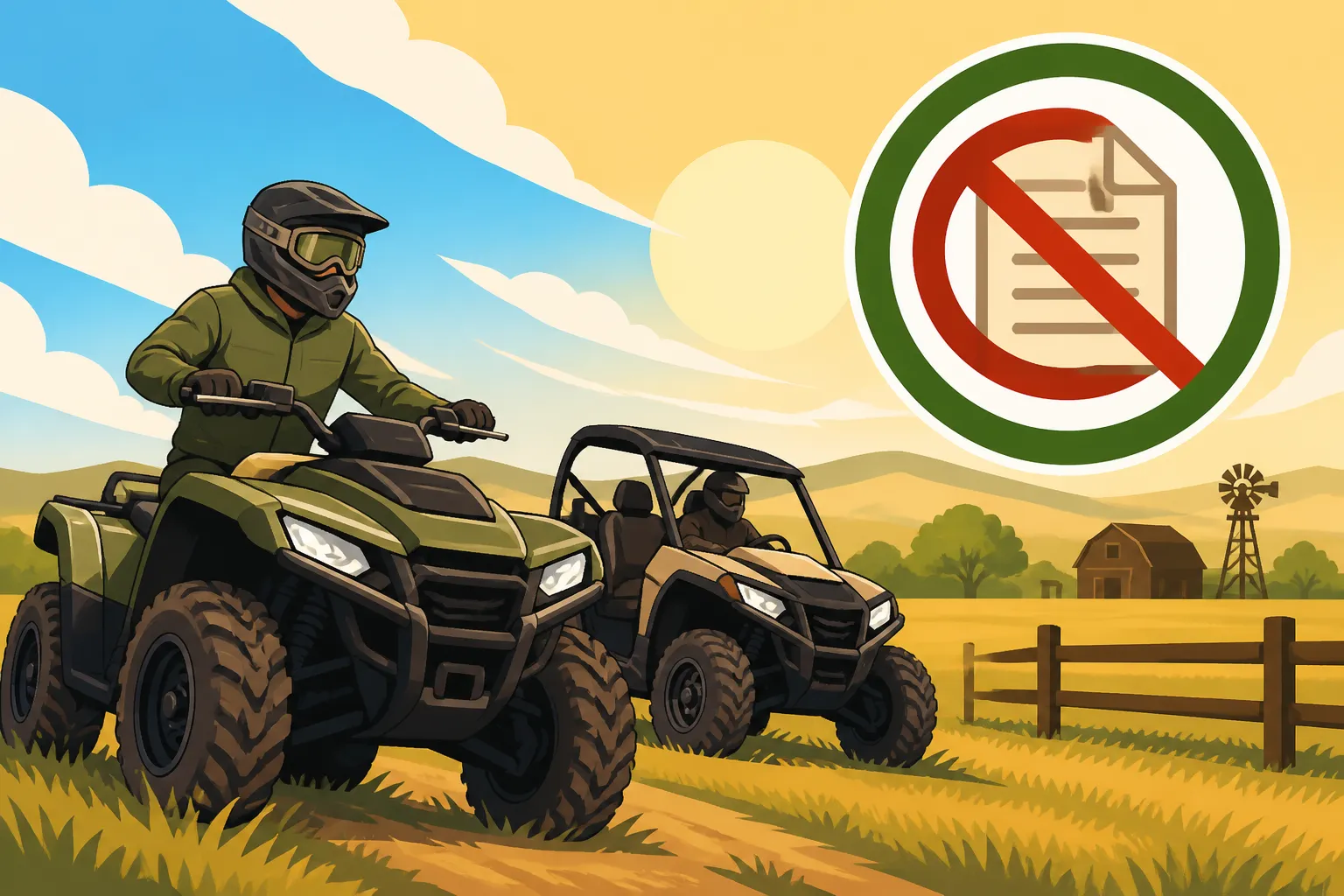
If you ride only on private property, with the landowner’s permission, you generally do not need a Black Hills motorized trail permit for that private-property ride. The permit is tied to riding in places where the trail permit is required, not simply to owning or operating an ATV or UTV in South Dakota.
That distinction matters for a rancher who keeps a machine on private ground for checking fences, moving between pastures, or other ranch work. It also matters for a visitor invited to ride on a private ranch: permission to use the property and a public-land trail permit are separate questions.
A private ride does not become a public trail ride just because the ranch has dirt tracks or established routes. But the answer can change if your route crosses a public road or enters land managed for public motorized recreation. A ride that starts and ends on private land can still involve a permit if part of the route uses a public motorized trail where one is required.
| Where you ride | Trail permit takeaway | What to check |
|---|---|---|
| Entirely on private ranch land | A Black Hills trail permit generally is not required just for the private-land ride | Confirm the boundaries and get permission from the landowner |
| On a designated public motorized trail | The applicable trail permit may be required | Confirm the route is open and check permit requirements before riding |
| On a ranch route that crosses public land | Do not assume the private-land exception covers the whole trip | Identify who manages the crossing and what permit or access rules apply |
| On a grazing lease or leased pasture | A lease does not automatically make the land private or grant you recreation access | Confirm land ownership, lease terms, and permission from the right party |
| On a public road between ranch parcels | A trail permit is not the only question | Check the road’s vehicle and access rules separately |
The scope of your ride is the key. A machine used only within private ranch boundaries is different from one taken onto public land, even if both are parked at the same ranch. For a broader overview of where a permit applies, see South Dakota Trail Permits Explained.
Private property, grazing leases, and permission
“Ranch land” is a useful everyday description, but it does not always tell you who owns or manages each parcel. A ranch may include privately owned fields, public land under a grazing lease, road rights-of-way, or land crossed by an easement. Treating all of that as one private riding area can lead to a wrong assumption about both access and permits.
Private land
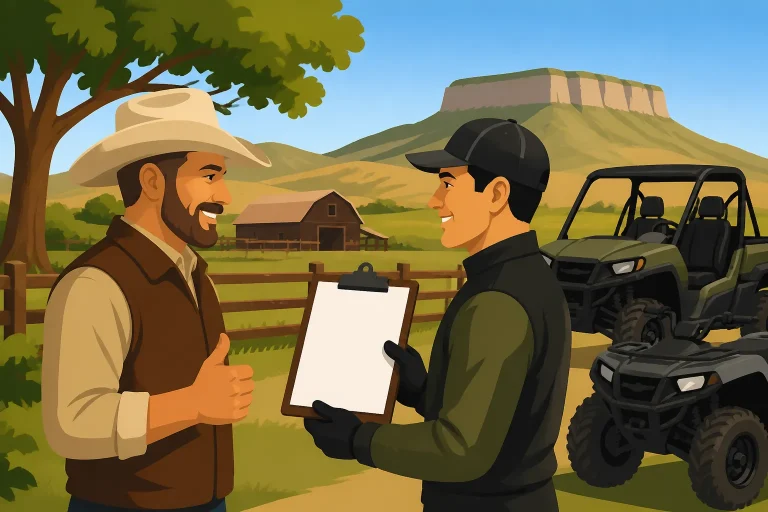
On land owned or lawfully controlled by a private landowner, get permission before riding. Permission should cover the particular area and activity, not just the general idea of visiting the ranch. Ask whether you may ride an ATV or UTV, which routes are allowed, and whether there are limits on passengers, speed, season, gates, or livestock areas.
Written permission is especially helpful when a ride involves several parcels, guests, or a route near a boundary. A text or email can clarify what was agreed to. It does not replace required permissions from another land manager if the route also crosses public land.
Do not assume that a visible track is open to riders. It might be used for ranch work, cross private property, or lead to land where recreational access is restricted. Follow the landowner’s directions, close gates as instructed, and stay off crops, wet ground, and areas containing livestock or equipment unless you have been told otherwise.
For the access side of the question, South Dakota Rules for Riding Private Property and South Dakota Landowner Permission Requirements can help you think through what permission needs to cover. The basic practice is straightforward: ask before riding, follow the route you were given, and avoid treating silence or an open gate as consent.
Grazing leases and other leased land
A grazing lease does not automatically turn public land into private property or give every visitor the right to ride there. A rancher may have permission to graze livestock on land managed by a public agency, but that lease may not authorize recreational vehicle use by the leaseholder, guests, or the public. The land manager’s rules and the lease terms matter.
This is where the word “ranch” can be misleading. If your route goes through a grazing allotment or leased pasture, first determine whether the parcel is private or public and who controls recreational access. Then confirm whether motorized travel is allowed on that specific route. Landowner approval alone may not be enough if a public agency manages the land.
Do not use a rancher’s permission as a substitute for checking a posted closure, route designation, or agency rule. If you are not sure who manages the parcel, ask the landowner or leaseholder to identify the boundary and the land manager. For more on the issue, see South Dakota Rules for Riding a Grazing Lease.
When a ranch ride crosses onto public routes
A permit question arises when you leave private land and use a public motorized route where a permit is required. That route might be part of a designated trail network or another managed area. A short crossing can still count: a rider cannot assume that a trip is permit-free just because most of it stays on the ranch.
Plan the route before you ride. Look at a current map and identify the property boundaries, public roads, trail connections, and any route restrictions. If you are riding in the Black Hills, check the current motorized route information and the permit instructions for the area you intend to use. A route shown on an old map, a ranch map, or a phone app is not proof that riding is allowed there now.
Keep these distinctions in mind:
- Private ranch tracks: Permission and any landowner conditions control. A public trail permit generally is not needed solely because you ride on private ground.
- Public motorized trails: Follow the permit rules for that area, along with route and seasonal restrictions.
- Public roads: Road access and vehicle requirements are separate from trail-permit rules. Do not treat a road as an unrestricted trail.
- Routes through mixed ownership: Check every section rather than relying on the status of the starting point.
A trail permit does not grant permission to cross private land, and a landowner’s permission does not waive a public-land permit requirement. The two permissions solve different problems. Private Ground Access for South Dakota Riders offers a related way to think about access where ownership and public riding routes meet.
If your ATV or UTV is registered in another state, do not assume that registration automatically answers every South Dakota permit question. Rules can depend on the land, route, and type of permit involved. Check the requirements for your machine and destination; Does South Dakota Honor Out-of-State Registration? addresses the separate reciprocity question.
A simple check before you unload
Use this short process whenever a ride is described as “ranch-only,” especially if you are a guest or visiting from out of state.
- Ask who owns or manages the entire riding area. Do not stop at the ranch name. Ask whether the route includes leased public land, a road right-of-way, an easement, or another owner’s parcel.
- Get permission for the exact route. Confirm which tracks you may use and whether guests may ride. Ask about gates, livestock, seasonal restrictions, and any places that are off limits.
- Trace the route on a current map. Mark where the route leaves private property, enters public land, or reaches a public road. If ownership or route status is unclear, pause and verify it.
- Check the rules for each public section. Confirm whether motorized riding is allowed and whether that area requires a trail permit. Also check for closures or seasonal limits.
- Keep the requirements separate. Private-property permission, a trail permit, registration, and road-use requirements are not interchangeable. One does not automatically satisfy the others.
- Recheck if the plan changes. A last-minute detour to a public trailhead or scenic route can change which rules apply.
For example, a guest who rides only on a ranch’s private pastures and private tracks, with permission, generally does not need a Black Hills trail permit for that ride. If the group takes a connecting public motorized route, the group must check the permit and access rules for that route. The same applies if the connection runs across land that is publicly managed under a grazing arrangement: verify the land status and authorization rather than assuming the ranch permission covers it.
If the landowner says a route is private but a map or sign suggests otherwise, do not try to settle the boundary by riding through. Ask for clarification, check with the relevant land manager, or choose a route you know is permitted. That small pause can prevent a trespass problem or an avoidable permit violation.
The safest takeaway is simple: a genuinely private, permission-based ranch ride usually does not need the Black Hills trail permit merely because it uses an ATV or UTV. The exception is not a blanket exemption for every route connected to a ranch. Confirm the boundaries, stay within the permission you were given, and check the rules whenever the ride enters public land or a public road.
Disclaimer
This article is for general informational purposes only and does not constitute professional advice. Laws, prices and regulations vary by location and change over time. Consult a qualified professional for guidance on your specific situation.