South Dakota Rules for Riding a State Trail
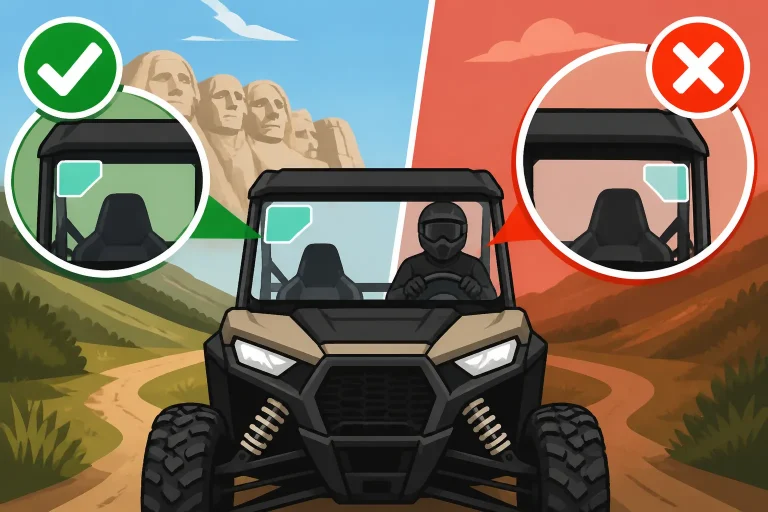
South Dakota’s “state trail” label does not mean an ATV or UTV can ride it. Many designated trails are intended for nonmotorized use, while motorized riding is limited to routes and areas specifically opened to it. The key is to check who manages the route, what machines are allowed, and whether a trail permit is required before unloading.
First, find out what “state trail” means
South Dakota has trails managed by different agencies and landowners. A trail’s name, location, or appearance does not tell you whether it is open to ATVs or UTVs. A route may be intended for hiking, biking, horseback riding, or snowmobiles—or may be a motorized route with its own restrictions.
A useful example is the George S. Mickelson Trail, a well-known rail trail in the Black Hills. It is not an ATV or UTV trail. A machine’s license plate, registration from another state, or South Dakota trail permit does not grant permission to ride it. See Why South Dakota’s Mickelson Trail Bans Machines for more on that distinction.
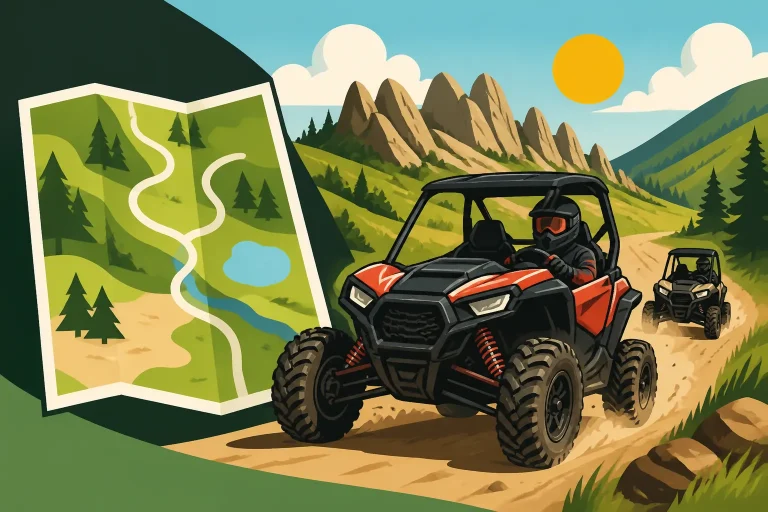
The safest starting point is the trail’s official map or managing agency. Look for the exact route, not just a nearby trailhead or recreation area. Confirm that the route is open to your type of machine and that its current seasonal status allows riding.
| What you are looking at | What to confirm before riding |
|---|---|
| A named state or regional trail | Whether motorized vehicles are allowed at all |
| A route in a motorized trail system | Machine-width limits, open dates, and route designations |
| A road near a trailhead | Whether it is a public road and what rules apply there |
| A recreation area with riding opportunities | Where the riding boundary begins and whether a separate permit applies |
| A trail shown on an old map | Whether it remains open and has not been rerouted or closed |
A trail that is open to “motorized use” may still exclude some vehicles. Check any width limits, vehicle-class restrictions, seasonal closures, and signs at the entrance. If a map and a sign appear to conflict, do not treat the less restrictive one as permission to proceed. Contact the land manager for clarification.
Permits do not create trail access
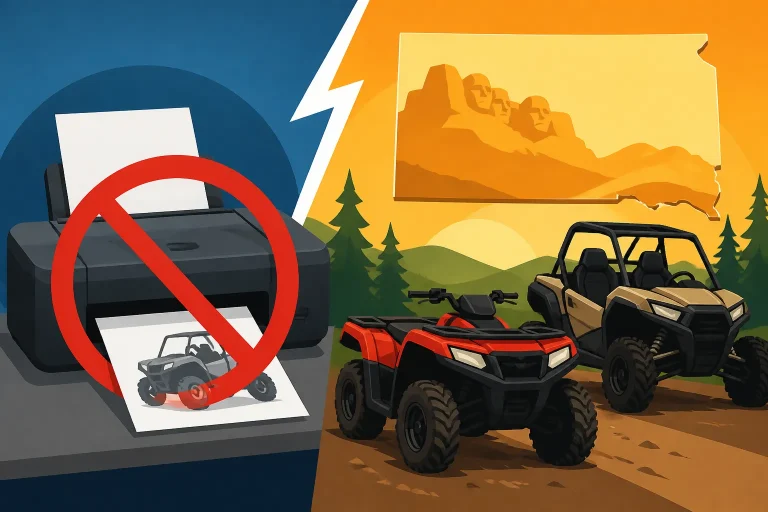
A permit answers only one part of the question: whether you have met a particular land manager’s permit requirement. It does not turn a nonmotorized trail into an ATV route, override a closure, or authorize riding off the marked system.
For example, the Black Hills motorized trail permit applies to designated motorized trails on the lands covered by that program. It is not a general permit for every trail in South Dakota. The routes and conditions matter; South Dakota’s Motorized Trail Permit explains the permit’s role and where to check its limits.
Keep these questions separate:
- Is this route open to my vehicle? Check the managing agency’s route map, posted rules, and current closures.
- Do I need a permit for this land or trail? Requirements depend on the location and the type of use.
- Does my machine need a plate or registration for the road I plan to use? Road requirements are separate from trail access.
- Are there seasonal or equipment restrictions? Check these before traveling, not after arriving at the trailhead.
A street-legal plate may help meet requirements for certain roads, but it does not automatically replace a motorized-trail permit. Likewise, a trail permit does not make a machine street legal or authorize use of a road where it is not allowed. For the road-versus-trail distinction, see Why a Road Needs a Plate or a Permit and Why a Trail Always Needs the Permit.
Check the actual route, not just the recreation area
Some places have multiple kinds of access close together: a motorized route, a nonmotorized trail, a public road, and private land can all sit within the same general area. A permit for one part does not necessarily apply to the others.
Use an official map that identifies the route as open to motorized use. For federal land in the Black Hills, motor vehicle use maps and current notices are particularly important; South Dakota Trail Maps and MVUMs explains what to look for. At the site, follow signs and barriers. A route marked closed is not available just because it appears on a map or was open on a previous visit.
Out-of-state plates and permits
Visitors should not assume that a plate or registration from another state settles every South Dakota requirement. Reciprocity depends on what the machine’s home-state credentials authorize, where in South Dakota you plan to ride, and whether that land manager requires a separate permit.
In practical terms, distinguish between riding on a road and riding on a designated motorized trail. An out-of-state plate may be relevant to road use, but it does not make a closed or nonmotorized trail available. Nor should you assume that registration from home automatically satisfies a trail-permit requirement. For the state’s approach to out-of-state credentials, see Does South Dakota Honor Out-of-State Registration? and Riding South Dakota With an Out-of-State Plate.
Before a trip, confirm all of the following:
- The machine’s registration or plate is valid for the kind of road use you intend.
- The specific trail or riding area permits your machine type and width.
- Any required trail permit is valid for that land and mounted as directed.
- You have checked current closures, seasonal dates, and route restrictions.
- You know whether the permit is required for each machine, rather than for each rider.
A permit purchased for one machine should not be treated as a group pass. If you are bringing multiple ATVs or UTVs, confirm the requirement for each one. If the machine is rented, ask the rental provider whether the permit is included and whether it covers the area you plan to ride.
A practical check before you unload
A few minutes of checking can prevent a wasted trip or an avoidable citation. Use this process whenever the route is described as a state trail, motorized trail, or recreation-area trail.
- Identify the exact trail and manager. Search by the route name and trailhead, then confirm which agency or landowner manages it.
- Verify motorized access. Confirm that ATVs or UTVs are allowed on the route—not merely in the surrounding region.
- Check your machine against the restrictions. Compare its width and type with the route rules. Do not assume a side-by-side and a narrow ATV have identical access.
- Review permits and registration separately. Determine what is needed for the trail and what is needed for any road you will use to reach it.
- Check current conditions and closures. Weather, maintenance, fire danger, and seasonal schedules can affect access. Check official notices close to the day of your ride.
- Follow signs and remain on the designated route. Do not ride around a closure or take an unmarked spur because it looks passable.
When instructions are unclear, ask the managing agency before riding. A visitor center, trailhead sign, online map, or permit seller may provide useful information, but the route manager is the best contact for a question about a particular trail. For motorized routes on federal land, also review South Dakota Rules for Riding Federal Land.
The short answer is that South Dakota does not offer blanket ATV or UTV access to trails simply because they are called state trails. Confirm that the exact route is open to motorized vehicles, then meet its permit, registration, seasonal, and machine-specific rules. A permit is important where required, but access comes from the route being open to your vehicle in the first place.
Disclaimer
This article is for general informational purposes only and does not constitute professional advice. Laws, prices and regulations vary by location and change over time. Consult a qualified professional for guidance on your specific situation.