South Dakota Rules for a Machine With No Decal
A machine without its South Dakota trail-permit decal may be ready to ride mechanically, but that does not mean it can enter every public route. The key is where you plan to ride and what the missing decal represents. Here’s how to tell when you need one, what a plate does and does not cover, and what to do if your decal has not arrived or is no longer usable.
What the missing decal means
In South Dakota, a trail-permit decal is proof that a machine has the required permit for riding on routes where that permit applies. It is attached to the machine, not carried by a particular rider. That distinction matters when a family or group shares machines: buying one permit does not cover every vehicle in the group. The rule is generally one permit per machine, not per rider.
The decal is not the same thing as a license plate, a vehicle title, or registration from another state. Those documents serve different purposes. A plated machine may be allowed on certain roads if it meets the applicable requirements, but a plate does not automatically replace the trail permit when you enter a route that requires one. For the difference, see Why a Plate Does Not Replace a Trail Permit and Why a Road Needs a Plate or a Permit.
| Where you plan to ride | What a missing decal may mean | What to check before riding |
|---|---|---|
| A designated motorized trail | You may not ride there until the required permit is properly displayed | Whether that route requires a South Dakota permit and where the decal must be mounted |
| A public road or forest road | The decal may not be the only or main requirement | Whether the machine may use that road and whether it needs a plate, registration, or permit |
| Private property | A trail decal may not be required simply to ride on the land | The owner’s permission and any rules that apply to the specific property |
| A separate riding area | The area may have its own access rules | The managing agency’s current requirements, including permits, fees, and closures |
Treat a missing decal as a reason to pause and identify the route, rather than assuming the machine is either permitted everywhere or barred everywhere. Public land is not one uniform riding area: a forest trail, a forest road, a state-managed recreation area, and a private ranch can each have different rules.
The decal also does not grant permission to ride off an authorized route. A permit is one requirement among several; it does not override signs, seasonal closures, width limits, or restrictions on where motorized vehicles may travel. Before heading out, check the current map and local notices. South Dakota Trail Permits Explained covers how the permit fits into the broader rules.
When you should not ride without the decal
If your planned route is a designated motorized trail that requires a permit, do not ride the machine there without its required decal displayed. Having paid for a permit, ordered one online, or kept a receipt in your pocket may not meet the requirement to display the decal. Follow the permit issuer’s instructions for what counts as valid proof and where the sticker must go.
This is especially important when a permit is being mailed. A purchase confirmation can show that you placed an order, but it may not authorize trail use before the decal arrives. Mailing and delivery can take time, so buying at the last minute creates a real risk that the machine will not be ready for the trailhead. If a ride is coming up soon, check whether an authorized seller or office can issue the decal in time. See How Long a Black Hills Permit Takes to Arrive and Where to Buy a Black Hills Trail Permit.
A permit bought for one machine should not be treated as permission for a second one. If you are hauling several ATVs or UTVs, check each machine separately. A decal attached to a tow vehicle, trailer, or companion machine does not cover the machine you intend to ride.
Nor should you assume that an out-of-state plate settles the issue. South Dakota may recognize a properly plated machine for certain road use, depending on the machine and the route. But trail access is a separate question. A plate from another state does not necessarily exempt the machine from South Dakota’s trail-permit requirement. Does South Dakota Honor Out-of-State Registration? explains why road recognition and trail access should be checked separately.
A road and a trail can be close together, or even appear to connect on a map, without having the same rules. Don’t use a road permission as a reason to turn onto an unsigned or designated motorized trail without checking the trail’s requirements. If you are unsure whether a route is a road or a trail, confirm its status before entering it. Do You Need a Permit on a Black Hills Road? can help you identify the distinction.
If the decal is delayed, missing, or damaged
The right next step depends on what happened. A decal that has not arrived is different from one that was never purchased, and both are different from a decal that was attached and later came loose.
You ordered a permit but the decal has not arrived
Check the order details and the permit issuer’s current instructions. Confirm that the machine’s information and mailing address were entered correctly, and ask whether there is an authorized way to obtain a replacement or temporary proof. Do not assume that an email receipt or online order screen is an acceptable substitute for the decal on a trail.
If you cannot get a clear answer before your trip, make a plan that does not involve riding that machine on a route requiring the decal. You might postpone the trail ride, use a machine with a valid decal, or choose a route whose requirements you have verified. A long drive to a trailhead does not change the permit rules.
The decal was lost or came off
Do not simply place the old backing or a photograph of the decal on the machine and assume it counts. Contact the permit provider and ask how replacement decals are handled. Keep any purchase details available, including the machine identification information and proof of purchase, so you can explain what happened.
Avoid altering, copying, or transferring a decal unless the issuing authority explicitly allows it. A permit tied to one machine may not be transferable, and a makeshift display can leave an officer unable to verify that the machine has the required permit. Until you have replacement instructions, avoid routes where the decal is required.
You have a decal but it is hard to see
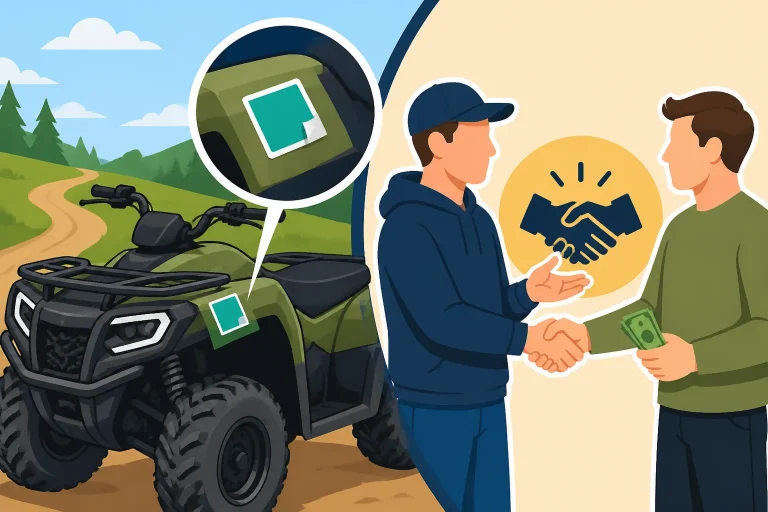
A permit that is present but obscured, damaged, or stuck somewhere other than the approved location may be difficult to verify. Follow the current placement directions rather than choosing a spot based only on convenience. The placement can differ depending on the machine’s design; a UTV panel and a dirt-bike fork do not offer the same mounting options. Black Hills Trail Permit Decal Placement explains the practical placement issue.
Before leaving, inspect the sticker and make sure it is secure and visible. If the surface is dusty or wet, clean and dry it as directed so the decal can adhere. Don’t cover it with a panel, bag, or accessory. If it has become unreadable, ask the permit provider what to do rather than assuming an officer will accept it.
Check the route and machine before loading up
A short pre-ride check can prevent a costly and frustrating trip. Start with the exact place you intend to ride, not just the name of the region. Identify whether the route is a designated motorized trail, a road, a separate managed riding area, or private land. Then check the current requirements for that specific place.
Next, check the machine. Confirm whether it has the correct permit for the route, whether the decal is attached as instructed, and whether any separate plate or registration requirement applies. A trail permit does not make a machine street legal, and a street-legal plate does not automatically satisfy trail-permit rules. If you are riding a machine with an out-of-state plate, check both the home-state status and South Dakota’s rules for the route you plan to use.
Finally, check for closures and access restrictions on the day you ride. A decal does not authorize entry when a trail is closed, nor does it allow a machine to use a trail beyond the posted width limit. Seasonal changes, weather, fire activity, and maintenance can affect access. The official route information and posted signs should take priority over an old map, a forum comment, or a route someone shared online.
A practical checklist:
- Identify each road, trail, or riding area on your planned route.
- Confirm whether that specific route requires a South Dakota trail permit.
- Check whether the machine also needs a plate, registration, or other authorization.
- Make sure every machine has its own required decal, attached and visible as directed.
- If a decal is pending, lost, or unreadable, contact the permit issuer before riding.
- Check current closures, access notices, and route limits before departure.
When your machine has no decal, the safest answer is not to guess based on the plate or the fact that you purchased a permit. Verify the route’s rules and get the required decal properly displayed before entering a trail that requires it. For a general overview of the state permit and where it applies, see Why a Trail Always Needs the Permit.
Disclaimer
This article is for general informational purposes only and does not constitute professional advice. Laws, prices and regulations vary by location and change over time. Consult a qualified professional for guidance on your specific situation.