Getting a Rancher’s Permission in South Dakota
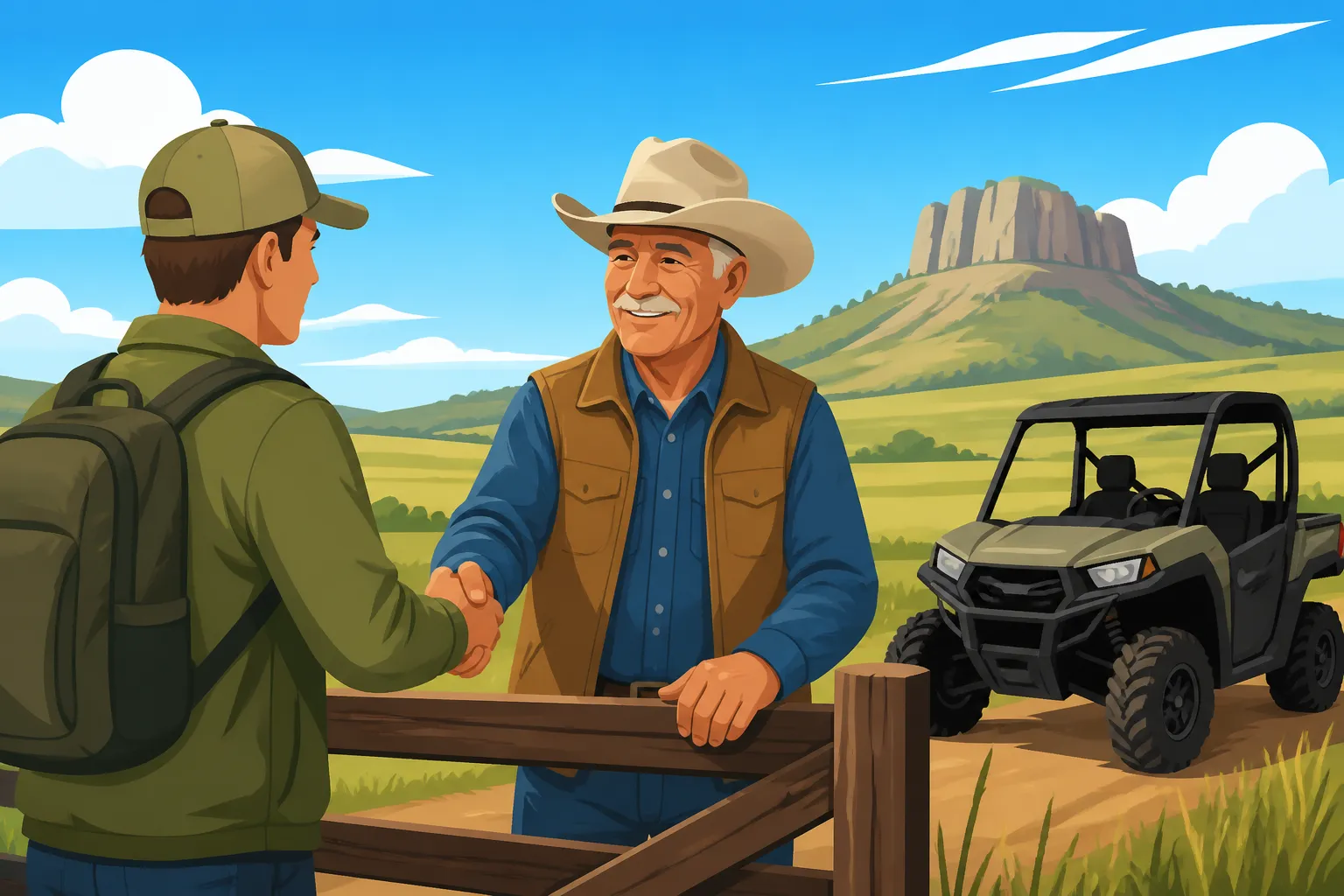
Getting permission from a rancher can open up a ride that is not available on public trails, but a friendly yes does not automatically settle where you can go or what rules apply. Before unloading your ATV or UTV, confirm that the person granting access has authority over the land, agree on the route and conditions, and check whether separate permits or access rules still apply.
Start by confirming who can grant access
In South Dakota, riding on private ranch land depends on permission from someone authorized to allow it. The person you meet at a gate may be the landowner, a tenant, a ranch manager, or someone else who works the property. Do not assume that every ranch employee can grant access across the whole operation.
Ask plainly who controls the parcel and whether the person can authorize recreational riding. If a rancher says a neighbor owns part of the route, or that a section is leased or managed by someone else, get permission from the relevant person before entering that area. A ranch may span several parcels, and its working boundaries may not match the ownership lines.
This distinction matters especially where a route crosses land that is not privately owned. A grazing lease, for example, may give a rancher permission to use public land for livestock without giving them the authority to approve recreational access on behalf of the public land manager. Get clarification about the land status and who controls motorized use. See [South Dakota Rules for Riding a Grazing Lease] and South Dakota Rules for Riding Federal Land for the separate issues that can come up on leased or federally managed ground.
It also helps to make the request before arriving with a group and a trailer. A cold call or message gives the rancher time to decide whether riding fits their operation, and it avoids putting them on the spot while they are handling livestock or equipment. If you already know someone on the ranch, ask whether they are the right contact rather than treating personal familiarity as permission.
Ask specific questions about the property
A broad question such as “Can we ride here?” can lead to different assumptions. The rancher might mean a short trip on one established two-track, while you might picture exploring the whole property. Make the request concrete:
- Which dates or time window are you asking about?
- How many riders and machines will be coming?
- What kinds of machines are involved, such as ATVs, UTVs, or motorcycles?
- Where will you enter, park, and unload?
- Which roads or trails may you use?
- Are there areas, gates, or fields that are off limits?
- Do you need permission for passengers, guests, or a support vehicle?
- Are there conditions about speed, noise, dogs, firearms, camping, or hunting?
A clear request helps the rancher set boundaries and lets you decide whether the approved route suits your group. If the route is too short, unsuitable for your machine, or inaccessible from your staging point, settle that before you arrive.
Verify the boundary, not just the ranch name
A ranch name or mailing address does not define the land you have permission to ride. Ask the rancher to identify the parcel or route in a way you can recognize, such as a marked map, a named gate, a road junction, or a track shared directly with you. If a route passes through multiple ownerships, identify each one and obtain permission from each authorized party.
Online property maps can help you prepare, but do not treat a map line as permission. Maps can be outdated, approximate, or difficult to interpret in the field. A fence may not follow a legal boundary, and a road that looks continuous may pass onto another owner’s land. Ask the rancher how to identify the approved route on the ground.
For additional context, [South Dakota Rules for Riding Private Property] and [South Dakota Landowner Permission Requirements] cover the broader permission question. The practical point is simple: permission from one landholder does not extend to a neighboring parcel, a public right of way, or land managed by a different agency.
Put the permission and riding conditions in writing
A verbal agreement may be useful, but a short written record reduces the chance of a misunderstanding. It does not need to be a complicated contract. A text or email can capture the essentials, provided the rancher agrees and the message clearly describes what they approved.
Include the rancher’s name or the contact who authorized access, the date permission was given, the dates you plan to ride, the number of riders and machines, and the approved route or area. Note any limits, such as no riding near livestock, no travel after dark, no passengers, or no entry through a particular gate. If the rancher changes the plan, update the written record rather than relying on an old message.
A written confirmation should reflect the rancher’s actual decision, not a generic permission form that implies broader access than was offered. If the permission is for one visit, say so. If it covers repeated visits during a period, make that clear and confirm whether you need to check in each time. Do not assume permission is transferable to friends who were not included in the request.
Make the boundaries and route usable
The best written permission is specific enough to use outside the ranch office. A message might identify:
- The entrance gate or parking area
- The named road, two-track, or marked trail
- A turn-around point or maximum route
- Areas to avoid, including yards, corrals, planted fields, or water facilities
- Whether you may cross a pasture or must stay on established roads
- The time you must be off the property
- Who to contact if conditions change
If the rancher sends a map, save it offline or take a screenshot before leaving cell coverage. Ask whether the route is still open if weather, fire, livestock movement, or ranch work changes conditions. A route that was available last month may no longer be appropriate.
Written permission is not a substitute for following the conditions. If you are asked to stay on a two-track, do not treat open ground beside it as part of the approved route. If the rancher says to avoid a pasture, do not enter it because the gate happens to be open.
Clarify who is covered
Permission granted to one rider does not necessarily include a whole group. Provide an accurate head count and identify whether anyone will be driving a separate machine. If your group changes, check back before adding riders or inviting another vehicle.
The same applies to family members, passengers, and people arriving later. Ask whether passengers are allowed and whether each machine must be operated by a rider who has permission. If the rancher allows you to bring a friend, confirm whether that friend can bring another guest. Avoid assuming that a person who is permitted to ride can invite others.
For a commercial outing, organized event, guided tour, or ride where participants pay to take part, get specific authorization before making plans. Casual permission for personal recreation should not be treated as approval for a business activity or public gathering.
Agree on rules for gates, livestock, and ranch operations
Ranch land is working land, not a recreation area set aside for vehicles. Riding needs to fit around livestock, ranch employees, vehicles, fences, and the rancher’s schedule. Ask what is happening on the property and what conditions should make you postpone or change your route.
Keep speed low around livestock, people, buildings, and blind corners. Avoid sudden acceleration, revving, or close approaches that might startle animals. Give cattle and horses room to move; do not chase, herd, or split them. If animals block the route, stop at a safe distance and contact the rancher for instructions rather than trying to push through.
Gates deserve particular care. Ask which gates you may open and whether you must close each one behind you. Some may need to remain open or closed for a specific reason, so do not rely on a general assumption. If a gate is locked, chained, or marked against entry, do not bypass it. If you find a gate in a different position than expected, stop and ask before changing it.
A useful set of questions includes:
- Should the gate be left as found or closed behind us?
- Is there a preferred place to stop if livestock are on the route?
- Are there areas with calving, feeding, or other sensitive activity?
- Will ranch vehicles or equipment be using the same road?
- Are there times when the route is unavailable?
- What should we do if a fence is damaged or an animal is injured?
Follow the rancher’s directions about water sources, crops, yards, corrals, and other sensitive areas. Do not cross planted ground or cut across a field to save time unless that specific route is approved. Avoid spinning tires, making new tracks, or riding off the agreed route. If conditions are wet, ask whether the trail can handle vehicle traffic; rutting can cause lasting damage and may make future access less likely.
Keep the group together and make sure everyone understands the same rules before setting out. A short briefing at the staging point can prevent one rider from taking a side track that the others understood to be off limits.
Leave the property in good condition
Carry out trash, secure any load that could fall off, and avoid blocking gates, ranch roads, or access to equipment. Do not approach buildings or parked machinery unless the rancher has directed you there. If a machine breaks down, stop where it is safe and contact the rancher before moving it across the property.
Tell the rancher promptly if you see damage to a fence, gate, water line, or other property feature. Do not attempt a repair unless you are asked to do so and know what is appropriate. If a rider causes damage, hiding it can turn a fixable problem into a serious breach of trust.
Respect any limits on campfires, firearms, dogs, alcohol, or hunting. Permission to ride is not automatically permission to camp, hunt, discharge a firearm, or bring a dog. These activities may also be subject to separate laws or land-management rules. Ask about each one directly rather than assuming it is included.
Check permits and public-land rules separately
A rancher’s permission answers one question: whether that person allows you to use the land they control under the conditions they set. It does not necessarily replace vehicle requirements, trail permits, or restrictions that apply on a road or public parcel along the way.
Before riding, identify every part of the planned trip: the ranch parcel, any road used to reach it, and any public or agency-managed land the route may touch. If you leave the private property for a public trail, you may need a separate permit or must follow that land manager’s rules. A permit for a designated riding area does not grant access across a neighboring ranch, either.
In South Dakota, a trail permit, a vehicle plate or registration, and landowner permission are different things. Which requirements apply depends on where you ride and the machine involved. Check the rules for the exact location rather than relying on a permit or plate as a substitute for permission. South Dakota Trail Permits Explained outlines the permit distinction, while [South Dakota Rules for Riding Private Property] is useful for separating private access from other riding rules.
Do not assume that a rancher can authorize travel on a public road, a public right of way, or another agency’s land. Likewise, being allowed to cross a section of private land does not make the adjoining road or trail open to motorized use. If the route crosses a road, ask how to approach it safely and check the rules that govern that road. If it crosses land managed by an agency, contact that agency when authority is unclear.
A practical pre-ride check looks like this:
- Confirm the rancher’s authority over each parcel on the intended route.
- Get permission for the riders, machines, dates, and route you actually plan to use.
- Mark the approved route and any no-go areas on a map you can access offline.
- Identify any public roads, public land, or designated trails on the way.
- Check the applicable plate, registration, permit, and operating rules for those locations.
- Confirm that weather, livestock, ranch work, or closures have not changed the plan.
- Make sure every rider knows the route and conditions before entering.
If your trip stays entirely on private ranch land, ask the rancher what vehicle and access rules they expect you to follow and check any requirements that apply independently of the property owner’s consent. If your plans include a public trail or forest road, verify that segment separately. Permission on one part of a route cannot make a closed or restricted segment legal.
Handle changes, problems, and repeat visits carefully
Permission can be limited or withdrawn. The rancher may need the route for ranch work, move livestock into a different pasture, or close an area because of weather or damage. Treat a change as part of the agreement, not as an inconvenience to work around. If the rancher asks you to leave or avoid an area, comply promptly and contact them later if you need clarification.
If something unexpected happens, use the contact method agreed in advance. A broken machine, injury, damaged fence, lost rider, or blocked route can require quick coordination. Before the trip, ask whether there is a reliable phone number, a location where service is available, or a preferred way to report an issue. Do not assume you will have cell service across rural terrain.
For repeat access, check whether the original permission still applies. A yes for one weekend does not automatically authorize future visits, a different route, or a larger group. Ask when you should check in again and whether seasonal conditions affect access. Keep the confirmation and map together so you can review the conditions before each ride.
If the request is declined, accept the answer without pressing for a justification. You can ask whether the rancher knows of an approved alternative, but do not treat silence, an open gate, tire tracks, or past access as consent. Find a legal riding area or ask another landholder.
The table below summarizes the difference between what permission can cover and what still needs a separate check.
| Situation | What to confirm with the rancher | What may need a separate check |
|---|---|---|
| Riding on a privately controlled ranch parcel | Authorized contact, route, riders, dates, and conditions | Vehicle requirements that apply regardless of landowner consent |
| Crossing a neighbor’s parcel | Permission from the person authorized for that parcel | Public-road or trail rules along the route |
| Riding on grazing-lease land | Whether the rancher can authorize the intended use | The land manager’s access and motorized-use rules |
| Connecting to a public trail | Where private permission ends and public access begins | Trail permit, closures, and agency rules |
| Bringing a larger group or organizing an event | Explicit approval for the group size and activity | Event, commercial, or land-manager requirements |
| Returning on another day | Whether the original permission remains valid | Current conditions, closures, and any required permits |
A respectful, specific request gives the rancher a real chance to make an informed decision and gives your group clear boundaries to follow. When permission, land status, and applicable riding requirements are all confirmed separately, you are less likely to cross a line unintentionally or create a problem for the people who work the land.
Frequently Asked Questions
Is verbal permission enough to ride on a South Dakota ranch?
A verbal yes may communicate permission, but written confirmation is a practical way to record the route, dates, riders, machines, and conditions. Ask the rancher how they prefer to document the agreement.
Does permission from a rancher cover a grazing lease?
Not necessarily. A rancher’s authority over leased land may not include authority to approve recreational use on behalf of the land manager. Confirm the land status and get approval from the appropriate manager when needed.
Can I ride anywhere on a ranch after getting permission?
No. Permission applies only to the land, route, people, dates, and activities the authorized person approved. Stay within those limits and ask before changing the plan.
Does landowner permission replace a trail permit?
No. Permission and permits address different issues. Check the requirements for any public trail, road, or managed area on your route, even if a rancher has allowed you to cross private land.
Disclaimer
This article is for general informational purposes only and does not constitute professional advice. Laws, prices and regulations vary by location and change over time. Consult a qualified professional for guidance on your specific situation.