What a Black Hills Forest Officer Cites Riders For
A ride in the Black Hills can go wrong before the first rocky climb if you miss a closure sign, ride beyond a designated route, or leave a required permit decal at home. Knowing what a Forest officer may check helps you prepare, understand a roadside stop, and avoid preventable violations. The key is to match your machine and route to the rules in force that day.
What an Officer May Check on a Black Hills Ride
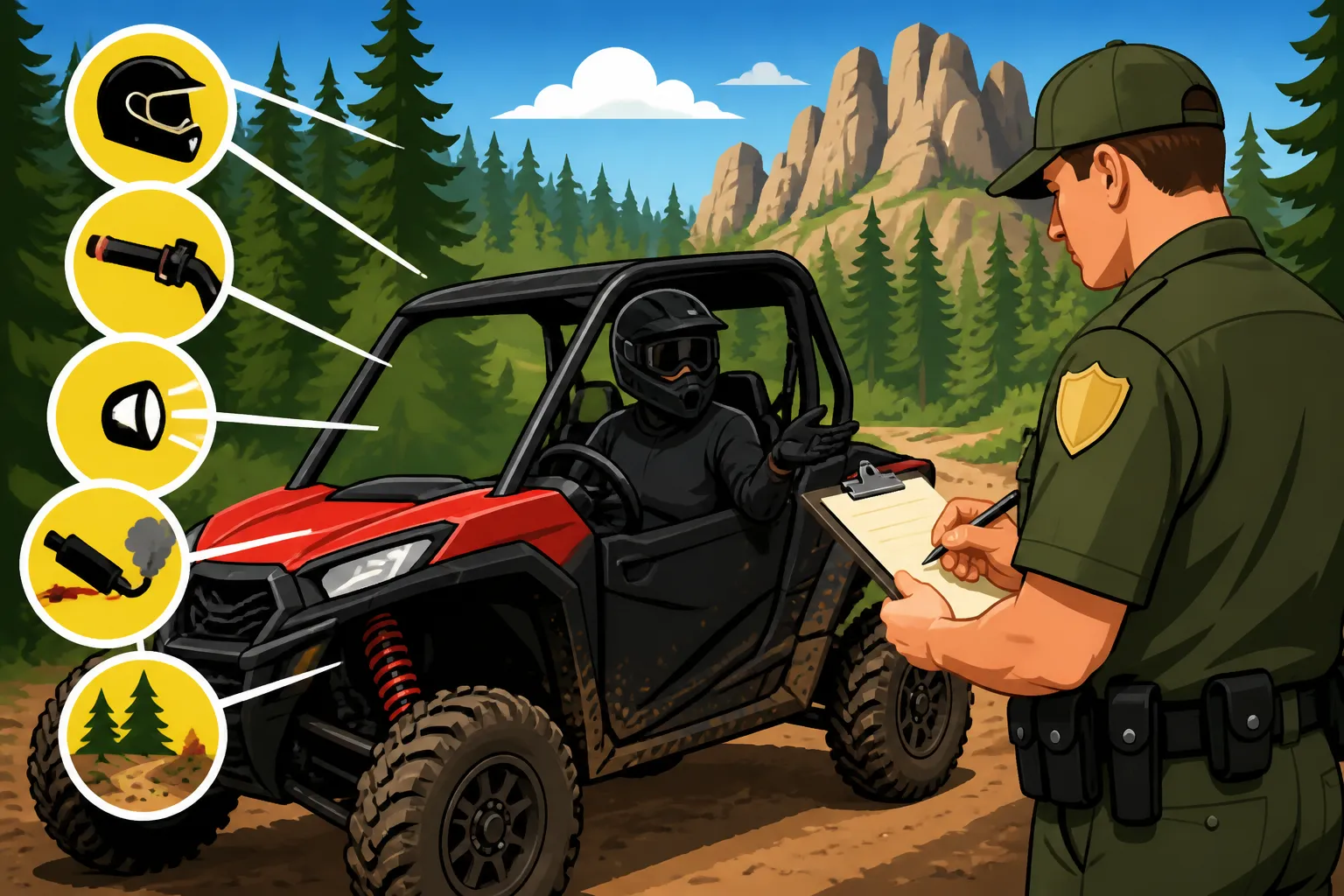
A Forest officer’s job is not limited to checking whether a machine has a plate. On National Forest System land, officers may check that riders are using routes open to their type of vehicle and following posted restrictions. They can also address safety and resource-protection concerns, such as riding around a closure or damaging vegetation by driving off a route.
Expect a check to focus on the machine, the route, and the conditions around you. An officer may ask where you are headed, look at your permit decal or plate, and check whether the route is open to your machine’s width. A calm, straightforward answer is usually more useful than relying on a route you saw in an old post or on an unverified map.
| What may be checked | Why it matters | What to do before riding |
|---|---|---|
| Trail or road status | Routes can be restricted or closed, and signs may identify current limits | Check current Forest Service notices and route information |
| Permit or plate | Riding a designated motorized trail may require a permit even if the machine is plated | Confirm which requirement applies to each machine and route |
| Vehicle width | Some trails are limited to narrower machines | Measure the machine as required and match it to the route |
| Route use | Riding off an authorized route can damage land and violate restrictions | Stay on the designated route, including at junctions and obstacles |
| Seasonal or temporary closure | Weather, fire danger, maintenance, or other conditions can change access | Check notices close to departure and watch for signs on site |
| Required equipment | Rules may address items such as spark arresters or sound limits | Check the requirements for the land and route you plan to use |
A trail permit and a plate are not interchangeable in every situation. A plate may be relevant to road use, while a trail permit may still be required on a designated motorized trail. Review Why a Plate Does Not Replace a Trail Permit and Do You Need a Permit on a Black Hills Trail? before assuming that registration in your home state is enough.
The decal itself matters, too. If a permit is required, make sure it is attached where the rules require and is visible for inspection. Carrying the backing paper or a receipt may help you explain a purchase, but it is not a safe substitute for following the decal instructions. For placement details, see Black Hills Trail Permit Decal Placement.
If you are unsure whether your machine qualifies for a particular route, do not guess based on its name or appearance. Width limits can determine which trails are available, and a side-by-side that fits one route may be prohibited on another. South Dakota Rules for a Machine Over 62 Inches explains why checking the actual limit matters.
Common Reasons Riders Can Be Cited
Riding a closed route
A route may be closed for a season, temporarily restricted, or marked closed at a specific entrance. Riding past a closure sign is a clear way to turn an otherwise ordinary ride into a compliance problem. Closures may be related to conditions such as fire danger, maintenance, or weather, so a route that was open on a prior visit is not necessarily open now.
Do not treat a gate, sign, or barricade as optional simply because another route appears nearby. Nor should you assume that a map showing a trail means it is currently open. Check current information before loading up, then pay attention to signs and notices at the trailhead. South Dakota Trail Closures to Check First and Reading the Gate Board Before a Black Hills Ride cover the checks that can prevent a wasted trip or a citation.
If conditions change while you are riding, follow posted directions and turn back when required. Continuing because you have already traveled a long way can make the situation worse and may create additional risk for you, other riders, or crews working in the area.
Leaving the designated route
Riding around a muddy patch, a fallen tree, or a difficult section can seem like a small detour. On Forest Service ground, leaving the designated route can damage plants and soil, widen the trail, and create new tracks that other riders may follow. It may also violate the route-use restrictions for the area.
If an obstacle blocks your way, do not automatically create a bypass. Stop, assess whether the route is safely passable, and follow any signs or instructions. If it is not safe or the route is blocked, turn around rather than cutting across the land. Riding Off a Route in the Hills explains why a short detour can be a serious issue.
A map app or GPS track is useful for navigation, but it does not grant permission to ride wherever a line appears. Use the official route information for the area, and treat an unauthorized track as a warning to check—not as proof that the route is open. For practical map checks, see South Dakota Trail Maps and MVUMs.
Using a trail that does not fit the machine
A trail’s width restriction applies to the machine, not just to the rider’s confidence or skill. A wide UTV may be barred from a narrower trail even if it can physically fit between the trees. Measuring outside tire to outside tire can help you understand the machine’s width, but use the measurement method specified for the relevant rules and follow the posted route limit.
Do not rely on a trailhead’s general appearance to decide whether your machine belongs there. Look for signs and check the route information before setting out. If your machine is near a width cutoff, confirm the applicable limit rather than rounding down. How South Dakota Measures Trail Width provides more context.
Riding without the required permit or decal
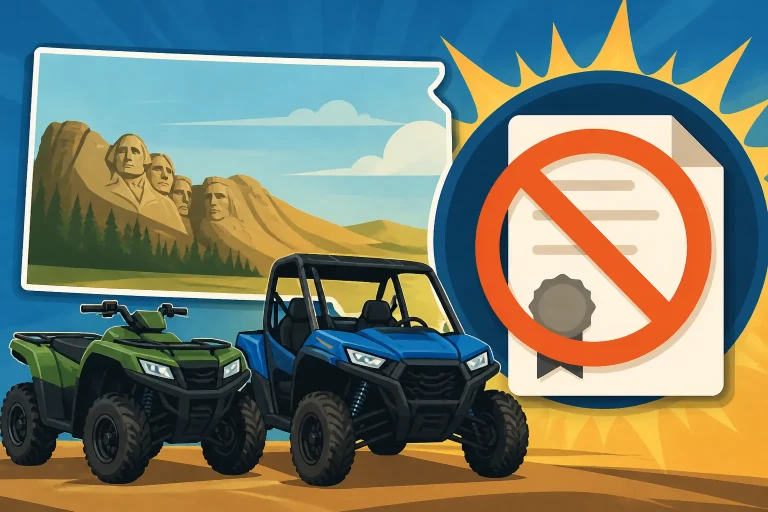
A rider may assume that a home-state plate, registration document, or permit receipt covers every kind of riding. That assumption can be costly. Requirements differ between roads and designated motorized trails, and a permit needed for a trail may not be replaced by a plate. Check the requirements for the specific machine and where you intend to ride. South Dakota Rules for Riding Federal Land is a useful starting point.
For a visitor, it is worth checking whether the machine’s home-state registration is recognized for the particular use. If it is not, you may need the relevant South Dakota permit. See Does South Dakota Honor Out-of-State Registration? for the distinction.
Ignoring equipment or operating restrictions
Officers may also address applicable equipment and operating rules. Requirements can vary by land, route, and machine. A spark arrester or sound restriction may apply, for example, and other rules may govern passengers, nighttime operation, or the use of a machine on a particular route. Do not assume that equipment suitable for private land meets the rules for a public trail.
Check the relevant requirements before the ride, rather than waiting to find out during a roadside stop. If you rent, ask the outfitter what is included and what you are responsible for. A rental machine does not make a route restriction disappear, and a permit decal on a rental does not authorize use on a closed trail.
How to Handle a Stop and Avoid Repeat Problems
If an officer signals you to stop, pull over where it is safe and follow instructions. Keep your hands visible, avoid sudden movements, and answer questions clearly. If you are asked for a permit, plate, or other documentation, provide what you have. If you do not understand the reason for the stop or the cited rule, ask politely for clarification.
A citation is not the right moment to argue from memory about a map or a rule you read online. You can ask what route, restriction, or requirement is at issue and make a note of the details. If you believe the citation is mistaken, use the process described on the citation or by the relevant agency rather than trying to resolve the disagreement on the trail.
When a citation is issued, read it carefully. Check the listed agency, location, date, and alleged violation, and note any response deadline or instructions. Deadlines and procedures can vary, so confirm them through the official contact provided. Do not ignore a citation because you were visiting from out of state or because the machine belongs to someone else.
A simple pre-ride routine helps avoid many common problems:
- Check current Forest Service notices and route maps for closures and restrictions.
- Confirm that your machine’s width is allowed on each planned trail.
- Verify whether the route requires a trail permit, a plate, or both.
- Attach the required decal as directed and make sure it is visible.
- Check equipment and operating requirements for your machine and route.
- At the trailhead, read signs before unloading or entering the route.
- Stay on the designated route, and turn back rather than bypassing a closure or obstacle.
If an officer points out a violation, treat the information as a reason to stop the activity immediately. Continuing the same behavior after a warning may create further trouble. Once you are off the trail, verify the rule with the appropriate agency and adjust your route or preparation for the next ride.
The rules can be different on National Forest land, state-managed areas, private property, and roads. A permit that applies in one place does not necessarily authorize riding elsewhere, and an open route on one map may be closed by a current notice. For a broader overview, see South Dakota Rules for Riding Federal Land and South Dakota Trail Permits Explained.
Disclaimer
This article is for general informational purposes only and does not constitute professional advice. Laws, prices and regulations vary by location and change over time. Consult a qualified professional for guidance on your specific situation.