Reading the Gate Board Before a Black Hills Ride
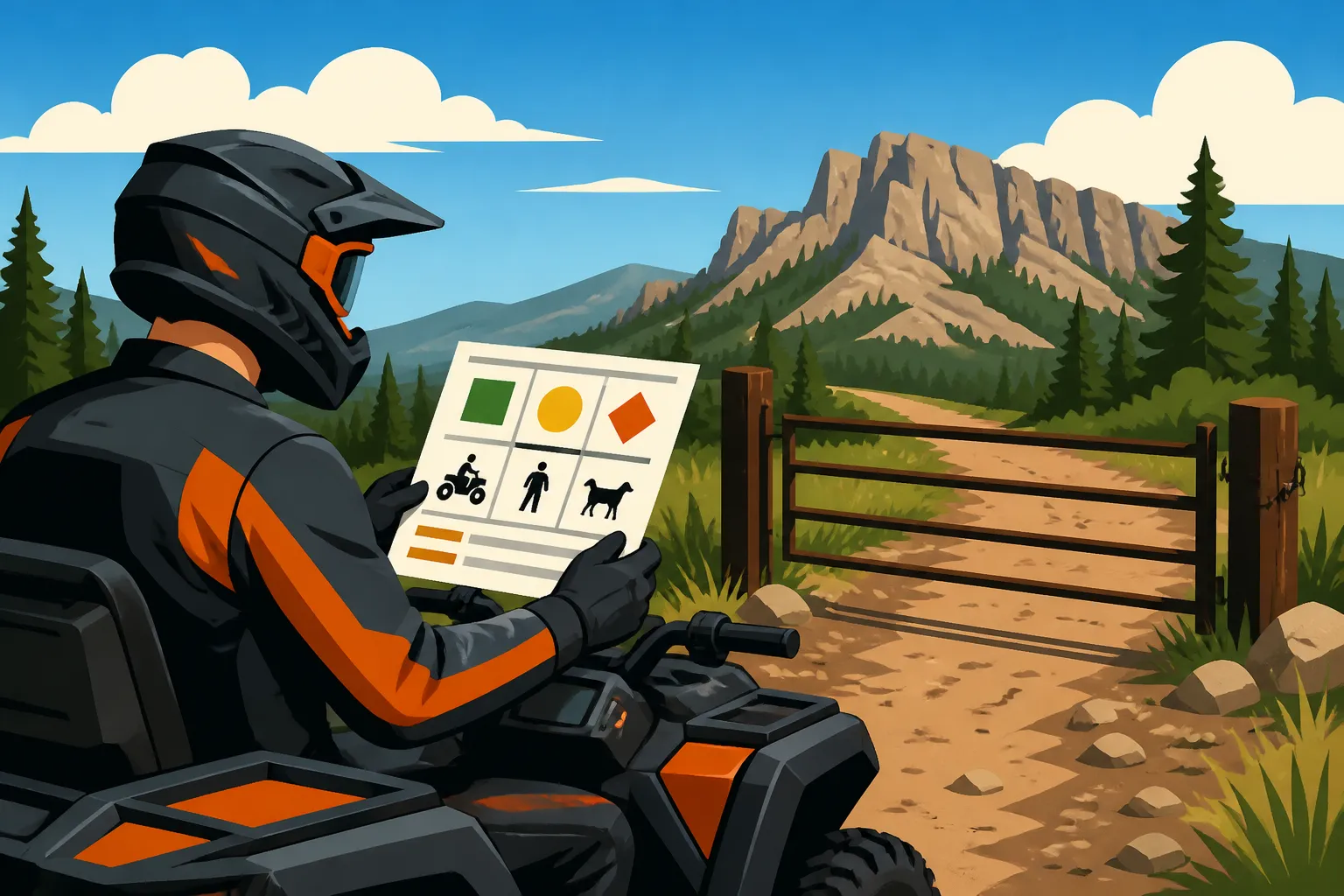
A gate board can change a Black Hills ride before it starts. It may show that a route is closed, has a seasonal restriction, or is open only to certain machines. Read the notice before unloading, then confirm the route and permit requirements on current maps. A permit or plate does not make a closed route legal to ride.
Why the Gate Board Deserves a Stop
A gate board is a last-minute check on access, not just a place to glance at a map. Conditions and restrictions can change after you plan a ride, and a route shown as available on an older map may have a current closure or other notice at its entrance. Stopping to read the board can prevent an unnecessary detour, a difficult turnaround, or a violation.
Boards and signs may appear at trailheads, route junctions, roads, or other access points. Their layout and level of detail can vary, so don’t assume every board uses the same symbols or wording. Read each posted notice in full, including dates, directions, and any conditions that apply. If a sign is unclear, treat that as a reason to pause and verify, not as permission to proceed.
Pay attention to the exact route named. A restriction may apply to one trail, road, segment, or area without applying to every nearby route. Conversely, a route that looks open on the map may connect to a closed segment. Check the signs as you travel, especially where routes split or cross.
A gate board also helps separate three questions that are easy to mix up:
- Is the route open to motorized use right now?
- Is your machine allowed on that particular route?
- Do you have the plate, permit, or other authorization required for the kind of route you plan to ride?
A “yes” to one does not answer the others. For example, having a permit does not authorize you to ride past a closure, and an open route is not automatically suitable for every machine.
Before heading out, review South Dakota Trail Maps and MVUMs alongside current notices. A map helps with route planning, but the gate board can provide information specific to the access point or conditions at the time of your ride. Read both rather than treating either one as a substitute for the other.
How to Read the Board Before Unloading
Take a few minutes to work through the board in order. If you are traveling with other riders, have one person read the notices while another checks the route on the map. That reduces the chance of missing a restriction while people are preparing equipment.
-
Find the route or area name. Match the wording on the board to the road, trail, or riding area you intend to use. A notice for one route should not be casually applied to another, but don’t assume a nearby route is open just because its name is absent from one notice.
-
Check whether the notice is current. Look for a date, time period, or other wording that indicates when the restriction applies. If the date is unclear, has passed, or is missing, don’t guess. Check a current Forest Service map or contact the relevant ranger district before riding.
-
Read the full restriction. Words such as “closed,” “open,” “authorized,” or “restricted” can determine whether you may continue. Also note any conditions about vehicle type, route direction, width, or other limits. Don’t rely on a symbol or headline if the smaller print adds detail.
-
Check the boundaries. A closure may begin at the sign, apply beyond a junction, or cover a larger named area. Look for nearby signs and map the affected segment. If you can’t tell where the restriction ends, choose a route you can confirm rather than riding through to find out.
-
Compare the notice with your machine. If the board identifies a width limit or a class of vehicle, compare it with your machine’s actual specifications. Width restrictions can matter even when a vehicle fits physically between obstacles. See How South Dakota Measures Trail Width for why the measurement is not simply a judgment made by eye.
-
Confirm the route on your map. Match the route name or number and check how it connects to the rest of your planned loop. A short segment marked closed can affect the whole outing if it is the only way to reach your intended destination.
-
Decide before entering. If a notice is hard to interpret or conflicts with the map, stop and verify. Do not pass a closure sign hoping that a route will become open farther ahead.
A simple note or photo of the board can help your group remember the conditions later in the ride. However, a photo is a reference, not authorization to disregard signs encountered farther along the route. Conditions can differ by location, and another posted notice may apply to the next section.
| What to check | Why it matters | What to do if it is unclear |
|---|---|---|
| Route name or number | The notice may apply to only one route or segment | Match it to the map and nearby signs |
| Dates or time period | A restriction may be temporary or seasonal | Confirm current status before entering |
| Closure wording | A permit does not override a closure | Do not ride past a closure |
| Vehicle or width limits | An open route may not allow every machine | Check your machine’s specifications |
| Route connections | A closed segment may block your planned loop | Choose a confirmed alternative |
| Permit or plate notes | Access and authorization are separate questions | Verify requirements for the route type |
Decide Whether to Ride, Reroute, or Turn Around
Once you have read the board, make a clear decision with the whole group before starting. If the route is open and your machine meets the posted conditions, continue with the plan while staying alert for signs at junctions and along the route. If a restriction affects only part of the plan, reroute using a route you can confirm is open and appropriate for your machine.
A closed route is not an invitation to go around a gate, ride beside the road, or take an unmarked path. Those choices can create new access problems and may cause damage outside the designated route. Turn around if you reach a closure unexpectedly. If there is no clearly legal alternative, end that part of the ride rather than improvising a shortcut.
Seasonal access can make advance planning especially important. A route may be unavailable at one time of year even if it was open on a previous trip. For general context, South Dakota’s May to December Trail Season describes the seasonal nature of motorized trail access, but a general season window does not confirm that a particular route is open on your riding day. Check the specific current notice and map.
Weather and land-management conditions can also affect access. A map downloaded before the trip may not show a newer closure, while a sign at the entrance may not answer every question about a larger area. Use the board as a prompt to verify the current route status, and check South Dakota Trail Closures to Check First before traveling if closures could change your plans.
If a board is damaged, missing key information, or hard to understand, avoid treating the uncertainty as a green light. Check the current map or ask the local ranger district for clarification. When a route’s status cannot be confirmed, the practical choice is to use a route whose access you can verify.
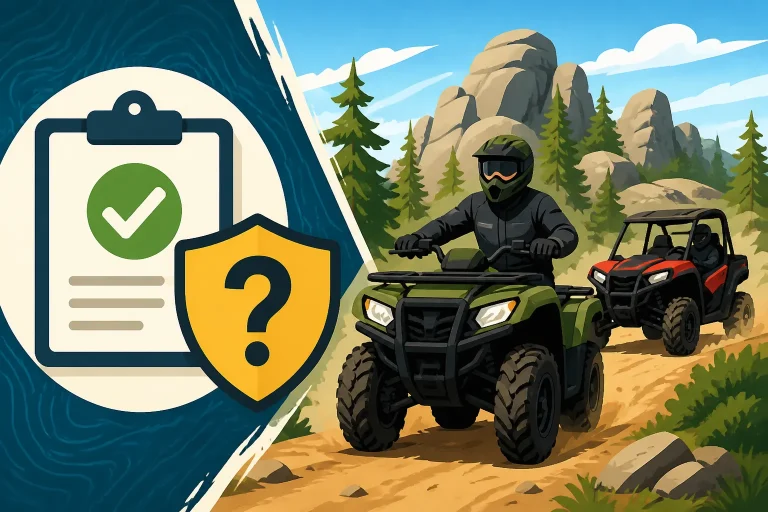
Confirm Permit and Route Requirements Separately
A gate board answers an access question; it may not explain every requirement for riding there. Before the trip, work out whether your planned route is a road or a designated motorized trail, then confirm what authorization applies to your machine and situation. The rules can differ by route type, and a permit requirement should not be inferred from the fact that a gate is open.
For example, a trail permit and a plate do not serve as interchangeable proof of access in every situation. Review Do You Need a Permit on a Black Hills Trail? and Do You Need a Permit on a Black Hills Road? for the distinction. The board can tell you whether a route is restricted, but it should not be your only source for deciding whether your machine has the required permit or plate.
Riders visiting from another state should check whether their out-of-state plate or registration meets the requirements for the route they intend to use. Don’t assume that a document recognized for road use also replaces a trail permit. Does South Dakota Honor Out-of-State Registration? and Why a Plate Does Not Replace a Trail Permit cover questions worth settling before travel.
If you need a permit, allow time to obtain it and follow the instructions for displaying it. Permit obligations are separate from route restrictions: buying or displaying a permit does not make a closed route open, remove a width limit, or grant permission to leave the designated route. For more on the permit itself, see How the Black Hills Motorized Trail Permit Works.
A useful pre-ride routine is to check the current route information, read the board at the access point, and confirm that your machine and paperwork fit the route’s requirements. Keep that routine even if you have ridden the area before. A familiar trail name, an old map, or a previous successful trip is not a guarantee that today’s access conditions are the same.
Disclaimer
This article is for general informational purposes only and does not constitute professional advice. Laws, prices and regulations vary by location and change over time. Consult a qualified professional for guidance on your specific situation.