Sticking a Permit to a Wheel Panel
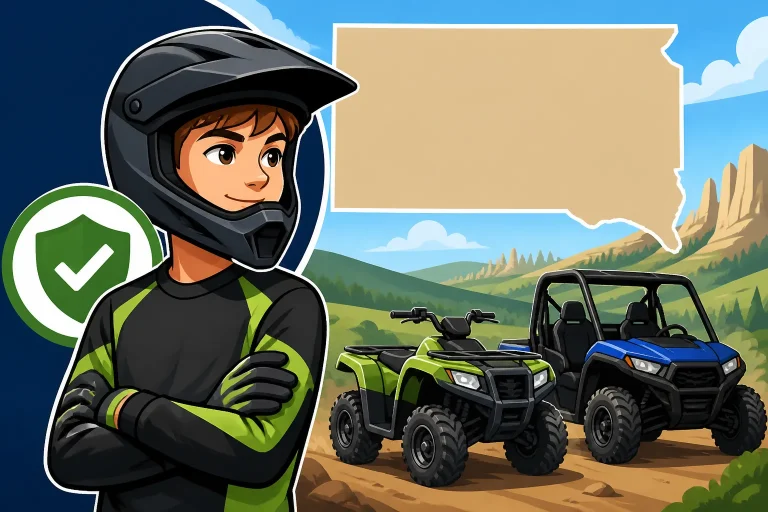
A decal stuck to the wrong part of an ATV or UTV can be hard to inspect—and may not meet South Dakota’s placement rule. The state off-road vehicle permit decal belongs on the rear of the machine, in an easily visible location, not on a wheel panel. Here’s how to position it and how to avoid confusing it with a separate Black Hills trail permit.
Where the South Dakota decal belongs
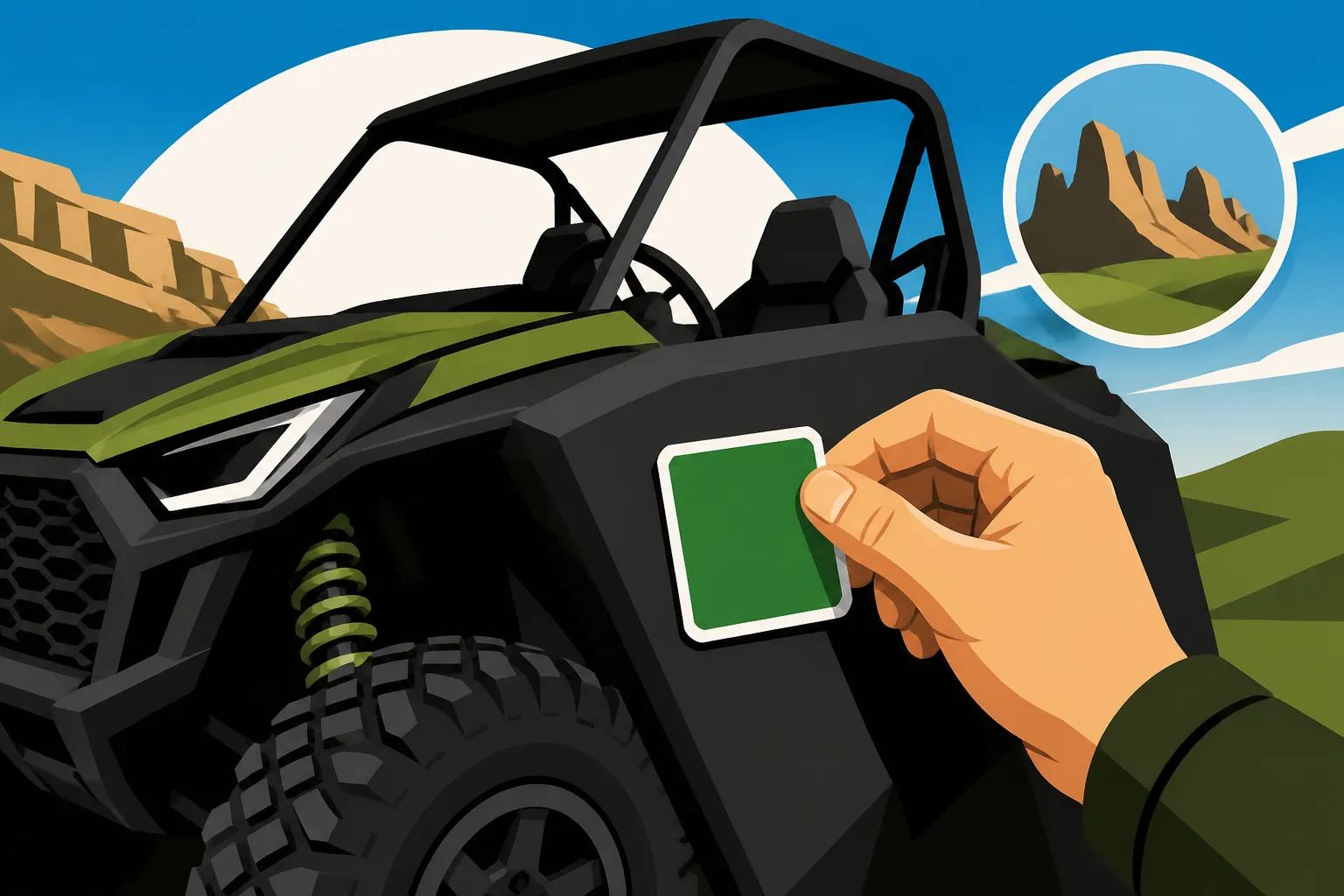
South Dakota Department of Revenue says the off-road vehicle permit decal must be placed on the rear of the vehicle, where it is easily visible for inspection. It also specifies that the decal should not go on a wheel panel. That means a spot on the rear bodywork is a better choice than a location on or beside a wheel.
The practical test is simple: could someone checking the vehicle see the decal without having to search around a wheel or move part of the machine? Choose a rear-facing or rear-side panel that is easy to view, and avoid positions likely to be hidden by gear, accessories, or the way the vehicle is parked.
The state’s rule addresses visibility and location, not a particular make or model of ATV or UTV. If your machine has little unobstructed rear bodywork, check with the South Dakota Department of Revenue before applying the decal. Don’t assume that a convenient flat spot on a wheel panel will count as an acceptable alternative.
This is a detail worth sorting out before the ride. A decal that is present but difficult to see can make an inspection slower, while putting it in the wrong place risks failing to follow the stated placement rule. For more on the permit itself, see South Dakota’s Nonresident ORV Permit.
Apply the decal so it stays visible
Before sticking on the permit, look over the back of the vehicle and choose a spot that meets the visibility rule. Think about how the ATV or UTV will look when it is loaded, parked, or being checked—not just how the chosen spot looks while the vehicle is sitting in your garage.
A straightforward approach:
- Find an unobstructed spot on the rear. Keep the decal away from a wheel panel and any location that is likely to be covered by cargo or an accessory.
- Check the view from behind and from the side. The aim is an easily visible decal, not one tucked into a recess or hidden by a rack.
- Follow the decal’s application instructions. Use the instructions that come with the permit rather than guessing about how to handle the adhesive or backing.
- Place the expiration sticker on the permit decal. South Dakota Department of Revenue says the expiration sticker must be placed on the decal for the permit to be valid.
- Check the finished placement. Make sure the decal and expiration sticker can both be seen and that the expiration sticker is attached to the decal, not elsewhere on the vehicle.
If you have already put the decal on a wheel panel, don’t treat its presence there as proof that placement is correct. Review the Department of Revenue’s current instructions and ask the agency how to resolve the problem before riding. Whether a decal can be moved or replaced depends on the permit materials and the agency’s directions, so avoid improvising if you are unsure.
The same care applies if you are buying a used vehicle with a permit decal already attached. A permit decal is not automatically transferable just because it remains on the machine. Confirm what applies to your permit and vehicle, and don’t rely on the previous owner’s placement or paperwork as a substitute for checking the rules.
For more decal-positioning detail, see Black Hills Trail Permit Decal Placement. That title concerns a different permit system, however, so do not assume its instructions replace South Dakota’s rule for the state off-road vehicle decal.
The state decal and a Black Hills trail permit are not the same thing
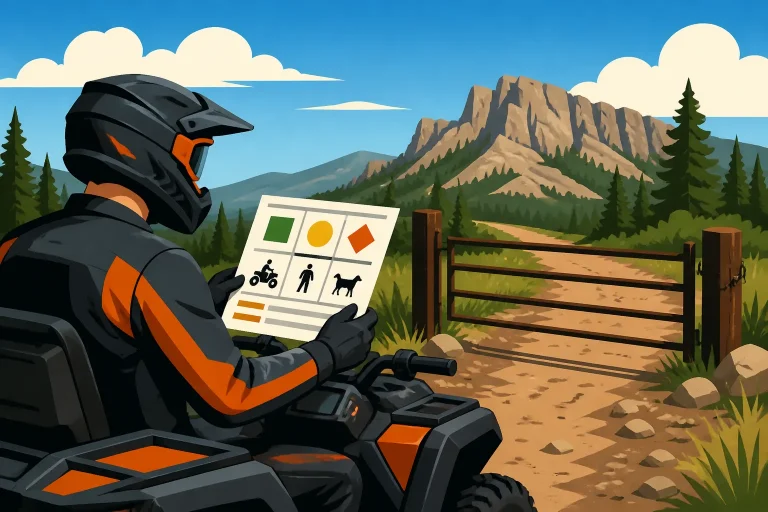
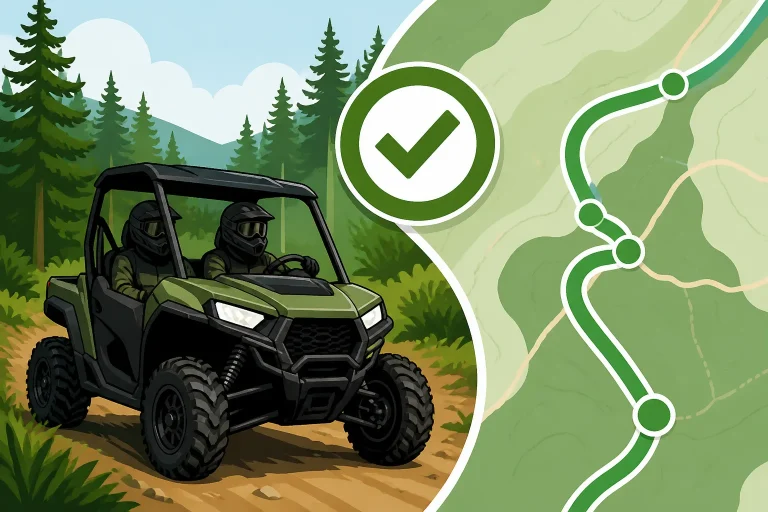
A common source of confusion is that South Dakota has a state off-road vehicle permit, while riding some public routes also requires a separate motorized trail permit. The decal placement rule discussed here is for the South Dakota off-road vehicle permit. It does not, by itself, settle whether you need a Black Hills National Forest permit for a planned route.
According to the South Dakota Department of Revenue, a permit is required for motor vehicles using motorized trails in the Black Hills National Forest. The Forest Service also says a valid Black Hills Motorized Trail Permit is required for unlicensed OHVs on forest roads designated Open to All Vehicles. A vehicle with a valid state license plate generally does not need that Forest Service permit unless it is traveling on a designated motorized trail.
| What you have or plan to ride | What to check |
|---|---|
| South Dakota nonresident off-road vehicle permit | Put the state decal on the rear in an easily visible location, not on a wheel panel; attach the expiration sticker to the decal. |
| Unlicensed OHV on a Black Hills National Forest road designated Open to All Vehicles | Check the Forest Service permit requirement for that road. |
| Vehicle with a valid state license plate on a forest road | The Forest Service says a permit is not needed unless the vehicle is on a designated motorized trail. |
| Any vehicle on a designated motorized trail in the Black Hills National Forest | Check the Forest Service motorized trail permit requirement, even if you also have a state permit or plate. |
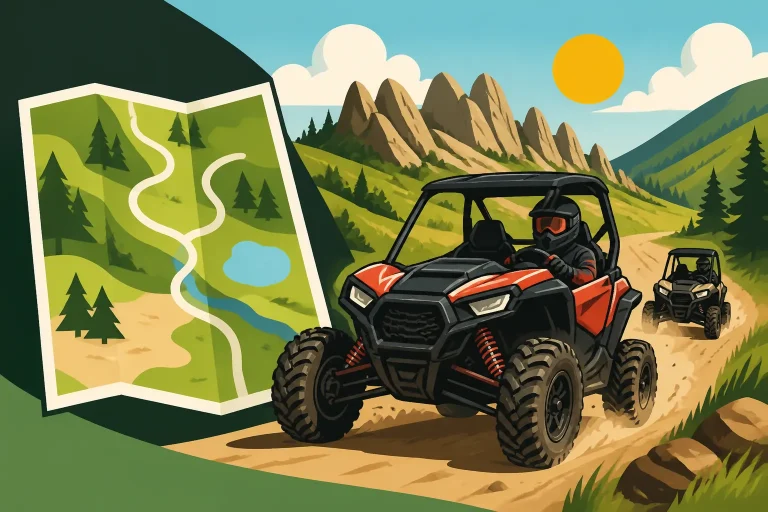
Use the official Motor Vehicle Use Map to confirm whether a road, trail, or area is open to motorized travel. The Forest Service identifies that map as the official map for public motorized routes on the National Forest. A route that appears passable—or a state decal on the vehicle—does not establish that the route is open or that all required permits are in hand.
The Forest Service says motorized trail permits can be purchased from Forest offices, local vendors, online, or the visitor center. To compare the permit systems and where each applies, see South Dakota Trail Permits Explained and Where to Buy a Black Hills Trail Permit. The distinction also matters for out-of-state visitors: a state permit decal and a Forest Service trail permit serve different purposes, so check the requirements for the exact route rather than treating one as a replacement for the other. For details, see Why a Plate Does Not Replace a Trail Permit.
Check the permit and vehicle before your trip
Placement is only one part of getting ready. The South Dakota Department of Revenue says nonresident off-road vehicle permits are valid for one year. As of November 2026, the agency lists the permit cost as $50, with an additional $2.50 mailing fee for decals mailed to applicants.
For an online application, the Department of Revenue recommends submitting it at least two weeks before the planned trip. Applicants must provide a copy of their driver’s license and proof of their Social Security Number. South Dakota residents cannot purchase the nonresident off-road vehicle decal, so check which permit requirements apply to your situation before applying.
Don’t assume that a state off-road vehicle permit makes an ATV or UTV street legal. The Department of Revenue says out-of-state OHVs need a hard license plate issued by their home state’s DMV to be street legal in South Dakota. The agency also sets minimum engine classifications for street legality: 200 cc for four-wheeled OHVs and 120 cc for two-wheeled OHVs. Electric four-wheeled OHVs are permitted to meet the four-wheel engine classification requirement. These road-use rules are separate from where the off-road permit decal goes.
Titling is another separate issue. According to the South Dakota Department of Revenue, off-road vehicles must be titled even though they may not be registered and licensed for highway use. If an authorized agent signs the title and registration application, the agency requires a Power of Attorney document. A permit decal does not replace title paperwork, a road-use plate, or a trail permit.
Before leaving, use this quick check:
- Confirm that the permit is the right one for your residency and intended riding.
- Make sure the South Dakota decal is on the rear, not a wheel panel, and can be seen easily.
- Verify that the expiration sticker is attached to the decal.
- Check whether the route needs a separate Forest Service motorized trail permit.
- Confirm that the route is open on the official Motor Vehicle Use Map.
- Keep the permit and vehicle paperwork together so you can answer questions about what the decal covers.
If you are still comparing state permits with Forest Service requirements, What a South Dakota Nonresident Permit Requires explains the application side, while Why There Is No Print-at-Home South Dakota Permit addresses why a mailed decal cannot simply be replaced by a printout. For an issue involving a missing or hard-to-see decal, check South Dakota Rules for a Machine With No Decal and confirm the right next step with the relevant agency before riding.
Sources
- South Dakota Department of Revenue — Off-Road Vehicles | South Dakota Department of Revenue (checked November 3, 2026)
Disclaimer
This article is for general informational purposes only and does not constitute professional advice. Laws, prices and regulations vary by location and change over time. Consult a qualified professional for guidance on your specific situation.