South Dakota Rules for a Rider Aged 12
A 12-year-old may be old enough for some South Dakota ATV riding, but age alone does not make every road, ditch, trail, or public area fair game. The rules depend on where the machine is being used, what kind of machine it is, and whether a permit or plate is required. Here’s how to sort out the main limits before a young rider heads out.
What South Dakota’s age-12 rule means
South Dakota’s age threshold matters most when a young rider is operating an ATV in a public highway right-of-way, such as a ditch where riding is allowed. A 12-year-old may ride in an eligible ditch, but that does not grant permission to ride on the roadway itself or on every public route.
Ditch riding is also subject to location-specific restrictions. A county may opt out of ditch riding, and some rights-of-way are closed under separate rules. The rider must follow posted signs and remain within the areas where riding is allowed. Check South Dakota Ditch Riding Rules Explained before choosing a route, especially if it crosses county lines.
Age is only one part of the decision. The machine’s engine size and the type of route can affect licensing and equipment requirements. A plated ATV, a smaller machine used off-road, and a UTV may not be treated the same way. Do not assume that a rule applying to a child on a trail also applies to a child in a highway ditch.
A few practical distinctions help:
- Age 12 is not a general road-riding permission. A young rider cannot treat a public road as an ATV trail just because the rider meets the minimum age for certain ditch riding.
- A county or land manager can restrict access. State-level eligibility does not override a local closure, trail sign, or land-use restriction.
- Private land is a separate question. The owner’s permission matters, and any applicable safety or land-use rules still apply.
- An adult’s presence does not automatically make a restricted route legal. Supervision may be required in some circumstances, but it does not replace age, route, or permit requirements.
South Dakota’s age rules can be easy to mix up because the minimum age for one activity is not necessarily the minimum age for another. For a broader overview of public-land riding ages and supervision, see South Dakota Minimum Age to Ride Public Land and South Dakota Supervision Rules for Young Riders.
Where a 12-year-old can ride and what to check
Before heading out, identify the exact place the child will ride. “Public land” is too broad a description to tell you which rules apply. A county ditch, a designated motorized trail, a state recreation area, a national forest road, and private ranch ground can each have different access conditions.
| Riding location | What to check for a 12-year-old |
|---|---|
| Public highway ditch | Confirm ditch riding is allowed there, the county has not opted out, and the rider stays within the permitted right-of-way. |
| Road or street | Do not assume an ATV may travel along the roadway. Check road-use, plate, licensing, and equipment rules for the specific machine and route. |
| Designated motorized trail | Check the land manager’s age, route, season, machine-width, and permit requirements. |
| State recreation area | Confirm the area allows the machine and the intended riding activity; do not rely on rules from a different riding area. |
| Private property | Get the landowner’s permission and agree on where the child may ride. |
| Forest road | Confirm that the road is open to the machine and that any required permit or registration is in order. |
A legal crossing is different from riding along a road. Where a highway crossing is allowed, use the designated or lawful crossing point, check traffic carefully, and cross directly rather than traveling along the highway. A crossing rule does not open a closed ditch or authorize riding on the shoulder. The details are covered in South Dakota Rules for Crossing a Highway.
Ditch riding can also become unsafe or unlawful when the route is obstructed, too close to traffic, or blocked by a sign. A young rider should know where the usable part of the ditch is and what to do when the route cannot be followed safely. An adult should review the route beforehand instead of relying on a child to interpret signs or make a last-second decision near traffic.
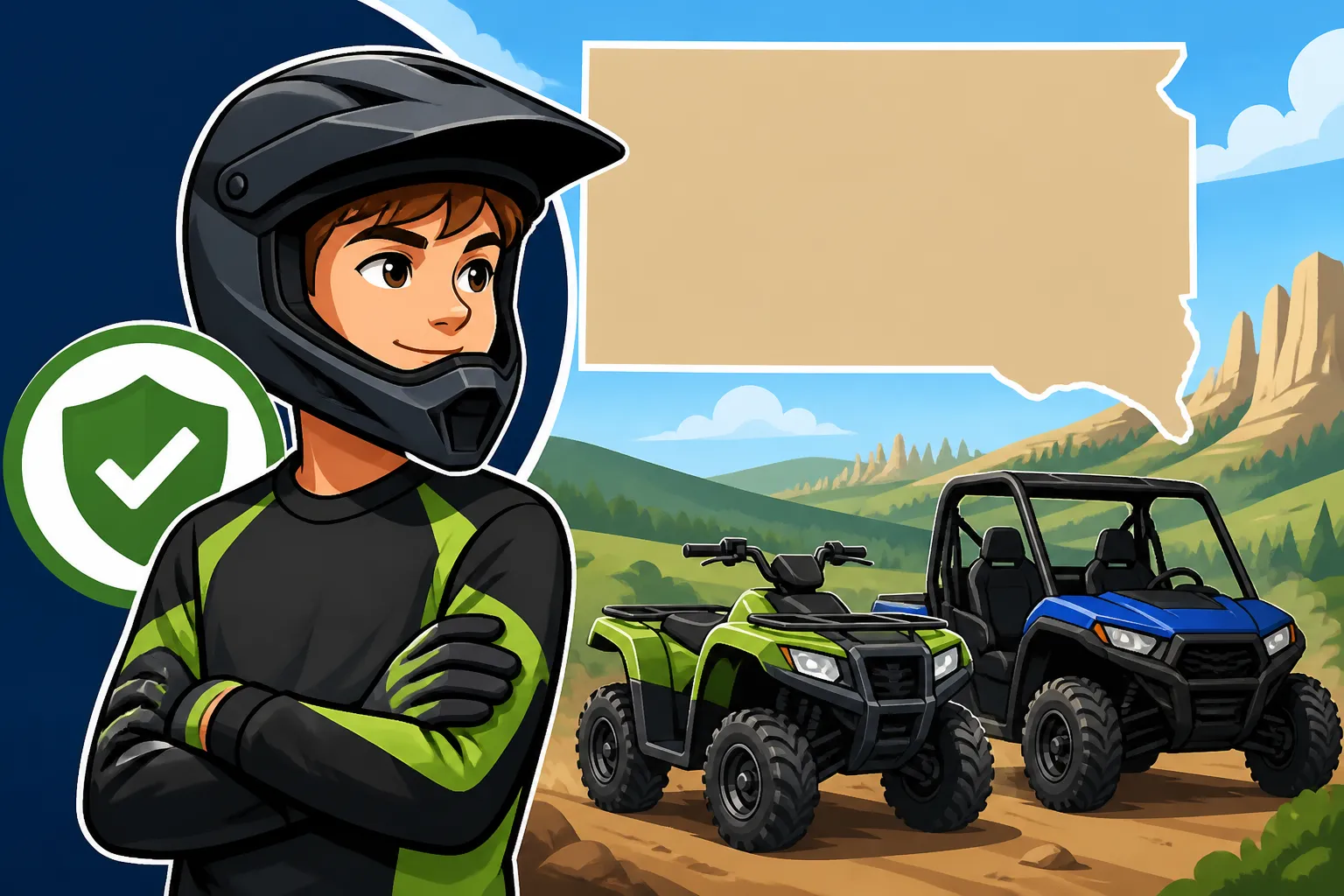
Helmet and eye-protection rules need the same location-specific check. South Dakota has a helmet requirement for riders under 18 in certain circumstances, so a 12-year-old should not ride on the assumption that a helmet is optional. Protective gear is sensible even where a particular rule does not require it. Review South Dakota Helmet Rules for ATV Riders and South Dakota Eye Protection Rules for Riders for the relevant requirements.
Equipment rules may apply when an ATV is used on a road or in a right-of-way. A machine that is suitable for an off-road trail may not meet the requirements for road use. Check the machine and intended route rather than relying on its age, size, or the fact that it has been ridden there before. South Dakota Equipment List for Road Use explains the road-use equipment questions to consider.
Permits apply to the machine and the riding area
A child’s age does not usually answer the permit question. Permits and registration are generally tied to the machine, its status, or the land where it will be ridden—not to the rider’s age. A 12-year-old may be eligible to ride in a place but still be unable to use it legally if the required permit or registration is missing.
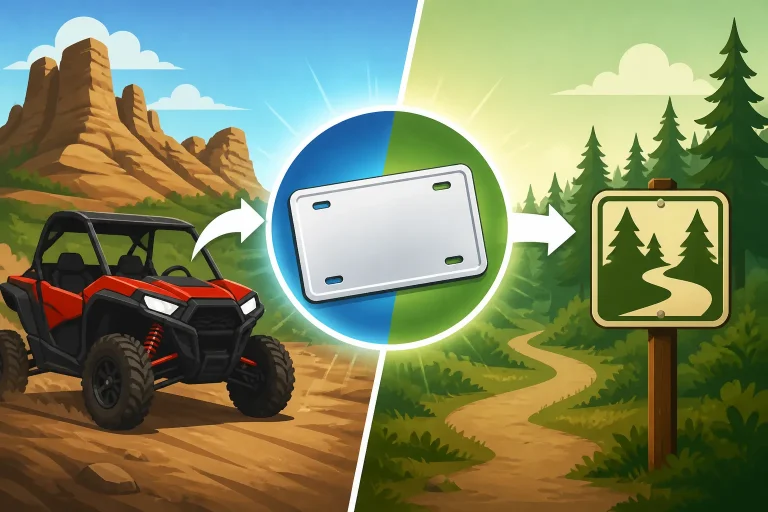
For example, a permit requirement for a designated trail is separate from the age rule for the person operating the ATV. In the Black Hills, check the current requirements for the specific Forest Service routes you plan to use. A trail permit is not a blanket pass for every road or area, and a plate does not necessarily replace a trail permit. See How the Black Hills Motorized Trail Permit Works and Why a Plate Does Not Replace a Trail Permit.
Keep these distinctions in mind:
- A permit for one riding area may not cover another. Check the rules for the exact trail system or public area.
- A permit is not permission to use a closed route. Closures, seasonal limits, width restrictions, and posted signs still apply.
- A plate and a trail permit serve different purposes. Determine whether the machine needs both for the route.
- A nonresident machine may have a separate requirement. Out-of-state registration or a home-state plate does not automatically answer every South Dakota permit question.
- Do not assume one rider’s permit covers a group. Some permits are issued for each machine. Check the terms before setting out.
If the machine is from another state, confirm whether its registration is recognized for the intended use and whether a South Dakota permit is also required. That question can depend on the machine and location. Does South Dakota Honor Out-of-State Registration? is a useful starting point, while South Dakota Nonresident ORV Permit Requirements covers the separate nonresident permit issue.
A rental machine may already have some required paperwork or decals, but ask the rental company what is included and where the machine can be ridden. Never assume that a permit sticker on a machine authorizes every route in the area. The same caution applies to a family machine that is already plated: confirm the requirements for the planned trail or public riding area.
A pre-ride check for a young rider
A short check before the ride can prevent the most common problems: taking a child onto a closed route, crossing where it is not allowed, or arriving without the right permit. An adult should verify the rules and route rather than expecting a 12-year-old to manage those details alone.
- Choose the precise riding area. Identify the trail, ditch, road, or private property—not just the nearest town or park.
- Check access and closures. Look for county restrictions, land-manager notices, seasonal closures, width limits, and posted signs.
- Confirm the machine fits the route. Check engine size, width, plate status, and any road-use requirements that apply.
- Verify permits and registration. Confirm what is required for that machine and riding area, including any separate rule for an out-of-state machine.
- Set clear boundaries with the child. Explain where riding is allowed, where it stops, how to handle a closed or blocked route, and where crossings are permitted.
- Use protective gear. Make sure the rider has properly fitted protective equipment and understands when to stop if visibility, weather, or traffic makes the route unsafe.
- Keep an adult involved. Stay close enough to supervise the ride and respond to changing conditions; do not rely on a child to resolve uncertainty at a road crossing or trail junction.
If any part of the route is unclear, choose a different area until you can confirm the rule. A map or permit does not replace signs on the ground, and an open route can close or change. For a final check, use the relevant county or land manager’s current information and confirm any legal requirement with the appropriate official source.
Disclaimer
This article is for general informational purposes only and does not constitute professional advice. Laws, prices and regulations vary by location and change over time. Consult a qualified professional for guidance on your specific situation.