Fire Ring Rules at a Black Hills Campground
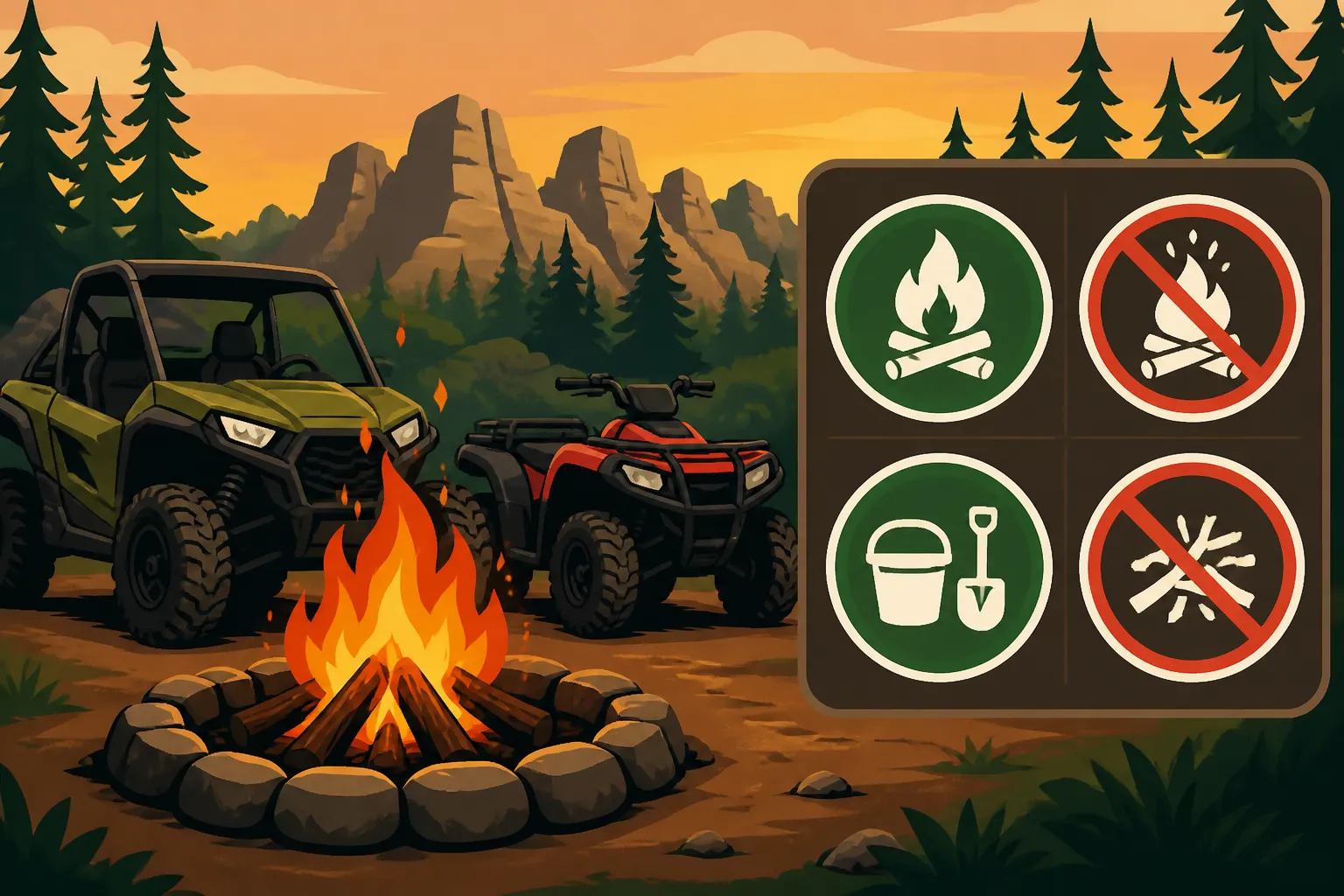
A fire ring at a Black Hills campground can look like permission to build a fire, but it does not override a campground’s rules or a temporary fire restriction. If you are camping with an ATV or UTV, check the rules before you unload, use only an approved ring when fires are allowed, and leave the site with the fire completely out.
A Fire Ring Does Not Automatically Mean Fires Are Allowed
Campground fire rules can vary by location and change with conditions. A built-in ring may be provided for campers, but a posted restriction, campground closure, or instruction from the land manager can still prohibit fires. Treat the current signs and instructions as the authority—not the presence of a ring, a previous visit, or what another camper is doing.
Before lighting anything, check the campground’s entrance signs and notices at your campsite. If there is a host or staff member, ask whether wood, charcoal, or portable gas fire appliances are allowed. A restriction may apply to one type of fire but not another, or it may prohibit all outdoor fires. Do not assume that a gas appliance is permitted just because it does not use wood.
Rules may also differ between a developed campground and a trailhead or dispersed campsite. A fire ring at a campground does not give you permission to build a fire elsewhere. Check the guidance for the specific place where you plan to stop, especially if you are combining an overnight stay with a ride. Camping Near South Dakota Trails can help you think through the camping side of a trail trip, while South Dakota Rules for Riding Federal Land is relevant when your ride takes you onto federal ground.
| What you see or want to do | Safer rule of thumb |
|---|---|
| A built-in fire ring | Use it only if fires are currently allowed there |
| No clear sign about fires | Ask campground staff or the land manager before lighting one |
| A temporary fire restriction | Follow it even if the ring is permanent or other campers have fires |
| A portable fire pit | Do not assume it is allowed; check the campground’s current rules |
| A ring outside the campground | Do not use it unless fires are allowed at that specific location |
| An existing bed of ashes | Do not assume the fire is fully out or that you may add fuel |
A fire restriction can be in effect even when the weather feels mild. Dry vegetation, wind, and recent conditions can make a small fire risky. Restrictions may be announced through campground notices or land-manager updates, so check again shortly before departure rather than relying only on information gathered when you booked.
The same principle applies when a ride plan changes. If a closure or restriction appears while you are on the trip, follow the current direction and do not move a campfire to a less visible spot. Check Fire Closures in a Dry Black Hills Summer and South Dakota Trail Closures to Check First as part of planning around changing conditions. A trail notice is not a substitute for a campground fire notice, but both can affect where and how you spend the day.
How to Use an Approved Ring Responsibly
When fires are allowed, keep the fire inside the campground’s designated ring and follow any instructions posted there. Do not enlarge the fire area, shift the ring, or build a second fire beside it. Avoid piling fuel above the ring’s sides or feeding a fire until it throws sparks. A contained fire can still escape if it is too large, unattended, or exposed to wind.
Use only fuel permitted by the campground. Some places may allow firewood but restrict other materials; some may prohibit wood fires during dry conditions. Ask before burning charcoal, packaging, treated or painted wood, or anything that produces fumes or sparks. Never burn rubbish in a ring. It can leave dangerous debris, create smoke, and make the site unpleasant for the next camper.
A few simple habits make a fire easier to control:
- Read the signs and confirm that fires are allowed before gathering fuel or lighting a match.
- Keep the fire modest and within the ring.
- Stay with it, and keep children and pets at a safe distance.
- Keep water or another suitable means of extinguishing the fire close at hand.
- Put the fire out before leaving the site or going to sleep.
- Check the ashes and ring carefully before you depart.
Wind matters even when a fire is small. If gusts are pushing sparks beyond the ring, stop adding fuel and put the fire out. Do not leave a fire burning while you take an ATV ride, go to the restroom, or walk away to another campsite. Assigning someone to “keep an eye on it” is not a replacement for staying attentive and making sure it is extinguished before the group leaves.
Be considerate about smoke, too. A fire can be technically contained and still blow smoke toward neighboring tents or vehicles. Keep the fire low, avoid damp or unsuitable materials that produce heavy smoke, and stop adding fuel if conditions make the smoke disruptive. Follow quiet hours and other campground rules alongside fire rules.
Portable fire appliances need their own check. A contained gas fire pit, stove, or grill may be subject to rules different from those for a wood fire. Confirm whether the appliance is permitted, where it may be used, and whether it must be placed on a particular surface. Do not set a hot appliance on dry grass or leave it unattended. If instructions are unclear, ask before using it rather than interpreting silence as approval.
ATV and UTV Campground Precautions
A campsite used as a base for riding has extra ignition and equipment concerns. Park machines where the campground allows, and keep them away from the fire ring, tents, dry grass, and anything that could catch fire. An engine and exhaust system can remain hot after a ride. Do not park over dry vegetation or unload a recently ridden machine beside the fire area.
Fuel handling deserves particular care. Keep fuel containers away from flames, sparks, cooking appliances, and hot machine parts. Follow the container’s safety instructions and campground rules for storage. Do not refuel near a burning fire, and do not use gasoline or other accelerants to start or revive a campfire. If fuel spills, keep flames away and handle the spill safely rather than trying to cover it with burning material.
Plan the evening around the return from the ride. If the group expects to get back late, do not leave a fire burning while everyone is out. It is safer to skip the fire than to rush through lighting one before a ride or leave it unattended to keep it going. Before riding away, confirm that all flames and embers are out; then check the ring again when you return.
Keep the fire area clear of riding gear, spare fuel, plastic containers, tarps, and loose clothing. Helmets, gloves, and protective layers belong away from flame and hot coals. Do not dry equipment over a fire or use the ring to warm parts, clean mud from components, or dispose of oily rags. Those actions can create fire hazards and may violate campground rules.
It is also worth separating campground rules from riding access rules. A campsite does not automatically authorize riding from the site onto any nearby road, trail, or open area. Confirm the route and access requirements independently, and check South Dakota Trail Conditions Before You Ride before heading out. If your plans include a staging area, do not assume its fire rules match the campground’s. Campfires at a South Dakota Trailhead addresses that separate setting.
If fire conditions affect the route or campground, adapt the trip rather than trying to work around restrictions. Check current notices before leaving camp and again before returning, especially during dry or windy weather. Checking a Forest Notice Before You Load Up is a useful planning reminder: conditions can change, and a sign at the location takes precedence over an old plan.
Extinguishing the Fire and Leaving the Site
A fire is not out just because visible flames have disappeared. Coals and embers can stay hot beneath ash and reignite when exposed to air or wind. Allow enough time to extinguish the fire properly; do not leave it until the last minute before checkout or departure.
If water is available and permitted for this purpose, apply it carefully to the coals and ashes, then stir the material so water reaches below the surface. Repeat until there is no heat, glow, or smoke. Avoid scattering hot coals outside the ring. If the campground gives a different extinguishing method, follow its instructions.
Do not bury embers or leave them in a pile beside the ring. Buried material can remain hot and may ignite later. Do not dump ashes into a garbage bin, onto grass, or near a tree unless the campground specifically directs you to a designated disposal location. Ask staff where cooled ashes should go if the campground provides a disposal area.
Before you pack, check the ring from more than one angle. Look for glowing pieces beneath gray ash, smoke, or heat coming from the center or edges. Keep people, pets, and machines away until the fire is fully cold. If you cannot confidently confirm that it is out, keep working on it and ask campground staff for help.
Leave the ring and surrounding site as you found them, or cleaner. Remove food packaging and other trash, but do not put rubbish into the fire. Avoid moving rocks or scraping new fire scars into the ground. If you find a ring that is still smoking when you arrive, do not assume another camper has finished with it; notify the host or campground staff.
A simple pre-departure check can prevent a rushed mistake:
- Is a fire currently allowed at this campground?
- Was the fire kept inside the approved ring?
- Are all flames, coals, and embers completely cold?
- Have ashes been left or disposed of as the campground directs?
- Are fuel, machines, and riding gear clear of the fire area?
- Have you checked current notices before leaving for a ride?
The practical rule is straightforward: use only the designated ring when fires are allowed, follow the campground’s current directions, and do not leave until the fire is fully extinguished. If restrictions or unclear instructions make that uncertain, skip the fire and enjoy the campsite without one.
Disclaimer
This article is for general informational purposes only and does not constitute professional advice. Laws, prices and regulations vary by location and change over time. Consult a qualified professional for guidance on your specific situation.