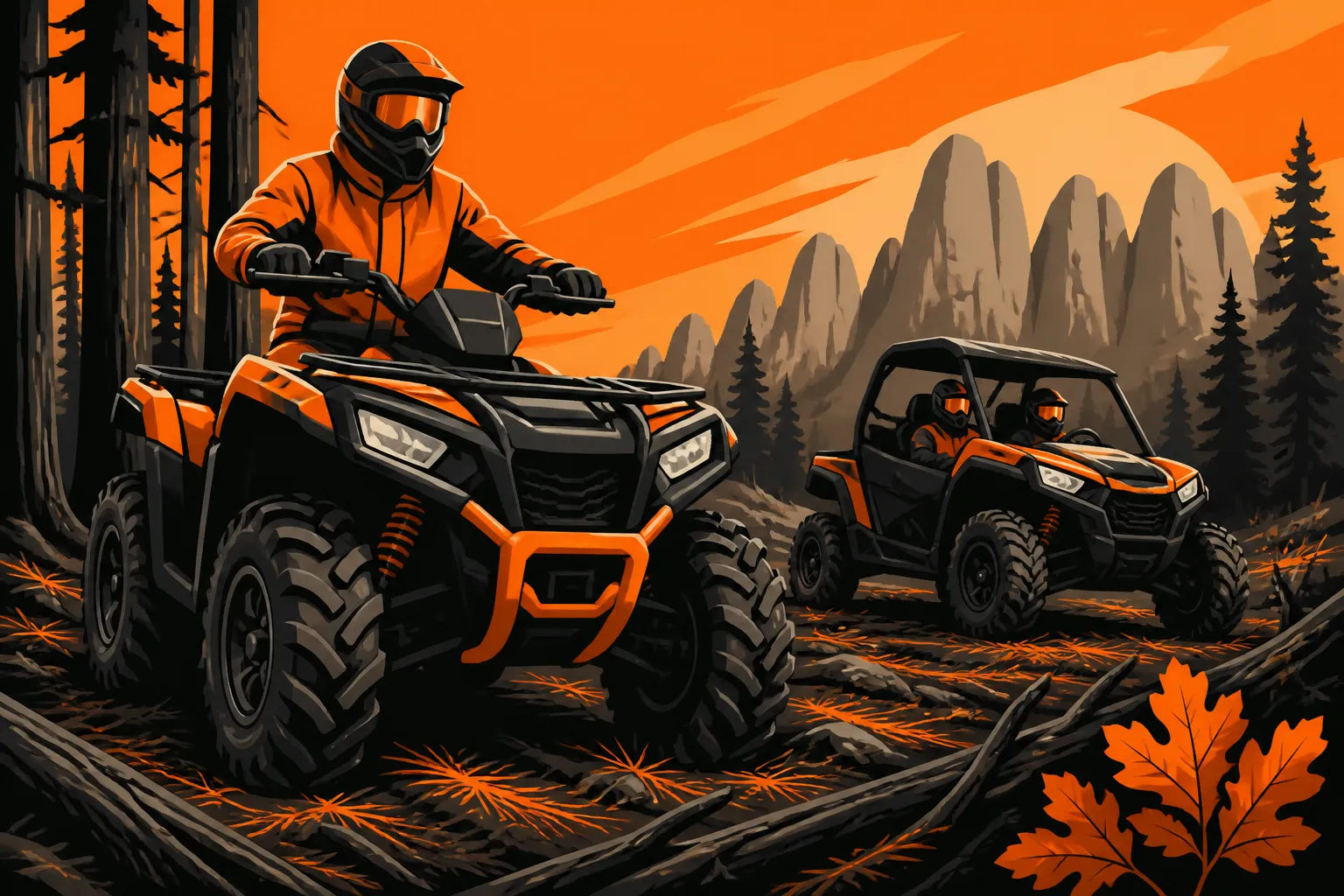
Blaze Orange on Black Hills Forest Ground
Blaze orange can be sensible on a Black Hills ride, especially when hunters are active, but that does not automatically make it a legal requirement for every ATV or UTV rider. The key is separating hunting rules from riding rules, then checking seasonal access and route restrictions before you head out.
Is blaze orange required for every Black Hills rider?
Generally, a rider does not need blaze orange solely because they are operating an ATV or UTV on Black Hills National Forest ground. Hunting-visibility requirements apply in connection with hunting and particular seasons; they are not automatically the same as a universal clothing rule for every forest visitor.
That distinction matters if you are riding with someone who is hunting, carrying hunting equipment, or planning to stop near an active hunting area. The current South Dakota hunting regulations and any applicable land or event rules are the sources to check for the exact requirements. Requirements can depend on what activity is taking place, the species and season, and the person’s role. Do not assume that a rule for a hunter necessarily applies to every passenger or trail user—or that riders are exempt when they are participating in a hunt.
For a regular recreational ride, treat orange as a visibility choice, not as a replacement for required riding equipment or route compliance. A bright vest or outer layer can help other people see you, but it does not make a closed route legal, replace a trail permit where one is required, or authorize riding away from designated routes.
| Situation | How to think about blaze orange |
|---|---|
| Recreational ATV or UTV ride, with no hunting activity | Do not assume it is universally required just because you are on Forest ground. Check any applicable current rules. |
| Riding while hunting or accompanying a hunter | Check the current hunting regulations for the specific season and activity. |
| Riding near hunters during an open season | Orange is a practical visibility measure, even if no rule requires it for your ride. |
| Riding on a closed route or outside an allowed area | Orange does not make the route or area permissible. |
| Riding on designated motorized trails | Confirm the route is open and meet applicable permit and machine requirements separately. |
The broader riding rules still matter. Start with South Dakota Rules for Riding Federal Land to understand why access depends on the land and route, not simply on whether you are wearing visible clothing. For trail access, South Dakota Trail Permits Explained covers the separate permit question.
When orange is a smart choice
Even when it is not required for your recreational ride, wearing orange can be a sensible precaution during hunting seasons. A forest road or trail may pass through areas where hunters are present, and riders can appear suddenly over a rise, around a bend, or through dust and trees. High-visibility clothing gives other people another chance to notice you.
That does not mean orange makes a ride risk-free. A vest can be dusty, hidden under a jacket, or difficult to see from the back of a machine. Forest terrain can also limit sight lines. Ride at a speed that gives you time to react, slow down where visibility is limited, and be prepared to stop if you encounter people on foot or a vehicle near a trail crossing.
For a group, it helps to agree on a simple plan before setting off:
- Check whether hunting seasons are underway and whether your intended area is open to motorized use.
- Decide whether everyone will wear a visible outer layer, especially if riders will separate or stop at different locations.
- Keep the group together where practical and use a known meeting point if someone falls behind.
- Reduce speed in dusty, wooded, or low-visibility stretches.
- Stop and give hunters and other trail users room rather than approaching closely or disturbing their activity.
Orange is most useful when it is easy to see from more than one direction. A vest or jacket worn over other clothing is generally more visible than a small patch or a layer covered by a pack. If you shop for riding gear through Amazon or another retailer, check that the garment is designed to be visible when worn over your normal riding clothes, and consider whether it will stay in place while you ride. Do not treat a color description or product listing as proof that a garment meets a legal hunting requirement; confirm the applicable standard in the current regulations.
Visibility works both ways. A bright garment may help a hunter spot you, but riders should also watch for people on foot, parked vehicles, and equipment near the route. Keep noise and speed under control when passing, and avoid assuming that a person you see has noticed your machine.
Check route access, permits, and seasonal conditions separately
Blaze orange and legal access answer different questions. Orange is about visibility and, in some circumstances, hunting compliance. Route rules determine where you may ride. A machine can be brightly marked and still be on a route that is closed, outside the motorized system, or unsuitable for its width.
Before leaving, use current travel information for the area and verify the status of the routes you plan to ride. A line shown on a general map is not enough by itself: confirm that it is open to your type of machine and that any seasonal restrictions or closures have not changed. South Dakota Trail Maps and MVUMs is a useful starting point for understanding the maps used to plan motorized travel. Also review South Dakota Trail Closures to Check before making a long drive to a trailhead.
Permit requirements are another separate check. A road-use rule, a motorized trail permit, a machine’s plate, and a hunting license are not interchangeable. Confirm what applies to your planned route and machine before setting out. If you are riding on a designated trail, review Why a Plate Does Not Replace a Trail Permit so you do not mistake one form of authorization for another.
Season timing can affect the plan as well. The Black Hills motorized trail system has seasonal opening and closing periods, and weather or land conditions can add closures. See South Dakota’s May to December Trail Season for the general seasonal context, then verify current notices for the specific route. An open season for hunting does not automatically mean every motorized route is open, and an open trail does not remove hunting-related responsibilities.
If hunting is part of your outing, coordinate the ride with the hunt rather than treating the two activities as unrelated. Confirm where the hunter will be, whether the route crosses the hunting area, and what rules apply to everyone in the group. Keep vehicles and people out of places where access is restricted, and avoid riding through an active setup simply because a trail appears on a map.
A practical pre-ride checklist
Before riding on Black Hills Forest ground during a period when hunters may be out, use this checklist:
- Confirm the activity. Is this strictly a recreational ride, or will anyone in the group be hunting or accompanying a hunter? That affects which regulations you need to check.
- Check current hunting rules. Look up the requirements for the relevant season and activity rather than relying on a general memory of hunter-orange rules.
- Confirm route status. Verify that each road or trail is open to motorized use and appropriate for your machine.
- Sort out permits and machine requirements. Do not assume orange clothing, a plate, or a hunting license covers trail-permit requirements.
- Choose visible clothing. If hunters may be nearby, wear a bright outer layer where it will remain visible while seated and riding.
- Ride defensively. Slow down around blind corners, dusty stretches, and areas where people may be on foot.
- Have a change-of-plan route. If you encounter an occupied hunting area, closure, or unsafe conditions, turn around and use a route confirmed to be open.
The practical takeaway is straightforward: blaze orange is a prudent visibility choice for many Black Hills rides during hunting activity, but it is not a substitute for checking the rules that apply to your specific situation. Confirm hunting requirements if anyone is hunting, verify that your route is open to motorized travel, and handle permits separately. Those steps are more useful than assuming a bright vest alone settles the question.
Disclaimer
This article is for general informational purposes only and does not constitute professional advice. Laws, prices and regulations vary by location and change over time. Consult a qualified professional for guidance on your specific situation.