Titling at a South Dakota County Treasurer
One of the most common headaches for new ATV and UTV owners, or even seasoned riders bringing a machine in from out of state, is figuring out the labyrinthine process of getting that all-important title. You might assume it's a simple trip to a central state office, but in South Dakota, the path leads directly to your local county treasurer. This guide will meticulously walk you through everything you need to know about titling your off-road vehicle right there at your county window, helping you avoid common pitfalls and frustrating delays.
Understanding the Localized Titling System
It can feel a little counterintuitive, can't it? You've just invested in a powerful machine, ready to hit the Black Hills trails or explore the vast prairie, and suddenly you're told to go to a local county office for something as official as a title. Many states centralize their vehicle titling through a Department of Motor Vehicles or similar state-level agency. South Dakota, however, has a distinct approach that empowers individual county treasurers to handle these critical transactions directly. This isn't just for cars and trucks; it very much includes your ATV or UTV, which the state broadly defines as an Off-Road Vehicle (ORV).
Why the County Treasurer Handles ATV/UTV Titles
This decentralized system means that while the core rules for titling are set at the state level by the Department of Revenue, the actual execution and collection of fees happen locally. Think of your county treasurer as the frontline representative for all things titling and registration. They're the ones who will verify your paperwork, collect your taxes, and ultimately issue your title certificate. This local touch can be a blessing, as county offices often offer more personalized service than a large, anonymous state bureau, but it also means you need to know which specific office to visit and what their local nuances might be.
When you're dealing with an ATV or UTV, the state considers it an ORV, and for these machines, the county treasurer is your official point of contact. This setup has historical roots in how South Dakota manages property and vehicles, distributing administrative tasks and revenue collection across its counties. It's a system designed to keep things close to home, which can be convenient if you live in a larger county with multiple offices or a smaller one where everyone knows your name. Just remember, while the process is local, the state regulations, like the [South Dakota's 4 Percent Excise Tax] or the [South Dakota's Forty-Five Day Title Deadline], are universal.
The practical implication for you, the rider, is that you'll be interacting with a specific county office, whether that's in Pennington County for those living near Rapid City, Lawrence County for Deadwood and Spearfish residents, or any other county across the state. These offices are equipped to process all the necessary paperwork, from verifying your bill of sale to issuing your actual title certificate. They handle the revenue collection, ensuring that the fees and taxes paid contribute to local and state services. This structure emphasizes local accountability and accessibility, aiming to make the titling process manageable within your own community.
Preparing for Your Visit: Essential Paperwork
Walking into the county treasurer's office without all your ducks in a row can lead to immediate frustration and a wasted trip. Trust me, I've seen it happen to countless people, eagerly anticipating getting their machine officially theirs, only to be turned away because of a missing signature or an unreadable VIN. The key to a smooth titling process in South Dakota is meticulous preparation, especially when it comes to gathering the right documents. This isn't just about having some paperwork; it's about having the correct paperwork in the correct format.
Gathering Your Core Documentation
At the heart of every ATV or UTV titling transaction in South Dakota is proof of ownership. For a brand-new machine, this almost always means a Manufacturer's Statement of Origin (MSO). This is the "birth certificate" for your off-road vehicle, issued by the manufacturer and proving it has never been titled before. It will include all the vital information about your machine, from its make and model to its unique Vehicle Identification Number (VIN). Ensure this document is original, complete, and free of any alterations.
If you're buying a used ATV or UTV, you'll need the previous owner's properly assigned title certificate. This means the seller must have signed it over to you in the designated area, often on the back of the title itself. Critically, make sure their signature matches the name printed on the title, and that the odometer reading (if applicable, though less common for ORVs) is accurately recorded. A missing signature, an incorrect date, or even a smudge could invalidate the transfer, sending you back to track down the seller, which can be a real headache, especially if they're not local. This is where attention to detail really pays off.
Beyond the MSO or previous title, you will absolutely need a bill of sale. Even if the state-issued title includes a sale price, a separate, detailed bill of sale is crucial, especially for private party transactions. This document confirms the purchase price, date of sale, and identifies both the buyer and seller. It's a key piece of evidence for calculating the [South Dakota's 4 Percent Excise Tax] and for proving the transaction legitimately occurred. You can find generic templates online, and services like LawDepot offer customizable bill of sale forms that can help ensure you're including all the necessary legal details for your South Dakota transaction.
Completing the Title and Registration Application
Alongside your proof of ownership and bill of sale, you'll need to fill out the official South Dakota Title and Registration Application form. This form is a comprehensive document that collects all the pertinent information about you, your machine, and the transaction. You'll need to provide your full name, address, driver's license number, and details about the ATV or UTV, including its make, model, year, and VIN. Take your time filling this out, as errors can cause delays.
The application also requires you to declare the purchase price of the machine, which is directly used to calculate your excise tax. Be honest and accurate here, as discrepancies between your bill of sale and your application could raise red flags. If you're coming from out of state, or if the machine has any unique circumstances like being a gift or an inherited item, there might be additional sections to complete. The county treasurer's office will review this form meticulously, so clear, legible handwriting or a typed form is always best.
Remember to have your valid driver's license or state-issued ID with you when you visit the treasurer's office. This is not just for identification, but also for proof of residency if you're a South Dakota resident. If you're a nonresident titling a machine in South Dakota, they'll still need to verify your identity. The application process is designed to be straightforward, but having everything prepared beforehand, including a printed copy of the [South Dakota's Title and Registration Application] filled out as completely as possible, will make your visit much smoother. Double-check all spellings and numbers before you even leave your driveway.
Navigating Fees and Taxes
Few things are as frustrating as thinking you know the cost of something, only to be hit with unexpected fees at the last minute. When titling your ATV or UTV in South Dakota, there's more to consider than just the basic title fee itself. The state has a clear structure of taxes and fees, and understanding them upfront will help you avoid any nasty surprises at the county treasurer's window. These fees support various state and local services, from road maintenance to law enforcement, so while they might feel like an extra pinch, they serve important purposes.
The South Dakota Excise Tax
The big one you'll encounter is the [South Dakota's 4 Percent Excise Tax]. This tax is levied on the purchase price of your ATV or UTV, whether it's new or used. It's not a sales tax in the traditional sense, but an excise tax specifically on the privilege of titling the vehicle. For example, if you bought a used side-by-side for $8,000, you'd owe 4% of that, which comes out to $320. This tax is due at the time of titling, and the county treasurer is responsible for collecting it.
It's important to accurately state the purchase price on your bill of sale and application. If the treasurer suspects the stated price is significantly undervalued (e.g., you claim you bought a nearly new machine for $500), they have the authority to use an average market value to calculate the tax, which could end up costing you more. This isn't common unless there's a clear attempt to skirt the tax, but it's a good reminder to keep your documentation realistic. If you received the machine as a gift, you might still owe tax based on its fair market value, so it's not a free pass on the excise tax entirely.
The 4% excise tax is a crucial part of the state's revenue stream, contributing to various public funds. This is why the county treasurer is so meticulous about verifying the purchase price and ensuring the tax is collected correctly. If you're bringing a machine in from out of state, and you've already paid a similar sales or excise tax in another state, you might get a credit for that tax, reducing or eliminating what you owe in South Dakota. However, you'll need to provide proof of that payment, usually in the form of a sales receipt or previous title showing the tax collected. Always discuss this with the county treasurer if you believe you qualify for a tax credit.
Other Required Fees
Beyond the excise tax, there are a few other fees you'll encounter. First, there's the basic titling fee, which is a flat rate for processing and issuing the title certificate. This covers the administrative cost of the paperwork and creation of your official document. It's a relatively small fee compared to the excise tax, but essential nonetheless.
Then there's the [South Dakota's $2 Technology Fee]. This fee, introduced to help fund the state's motor vehicle technology systems, is applied to every title transaction. It's a small amount, but it's a mandatory part of the total. While it might seem like just another small charge, these technology fees are vital for maintaining and upgrading the digital infrastructure that makes vehicle titling and registration efficient across the state. Without these systems, processing times would be much slower, and the accuracy of records could be compromised.
You'll also find smaller fees like the "solid waste dollar" and "patrol dollar" bundled into the overall title cost. These are very small, usually just a dollar or two each, and contribute to specific state programs. While you might not notice them individually, they are part of the detailed breakdown of where your titling money goes. These small, dedicated fees reflect the state's commitment to funding specific services directly from vehicle transactions, ensuring that essential environmental and safety programs receive consistent support.
Penalties for Late Titling
South Dakota is pretty clear about its expectations for timely titling. You have [South Dakota's Forty-Five Day Title Deadline] from the date of purchase (or entry into the state, for out-of-state machines) to get your ATV or UTV titled. If you miss this deadline, penalties start to accrue. The first penalty is [South Dakota's 1 Percent a Month Penalty] of the excise tax due, starting after the 45-day window closes. This means if you owe $320 in excise tax, you'll pay an additional $3.20 for every month (or part thereof) you're late.
It gets worse if you delay further. After sixty days past the purchase date, you'll face [South Dakota's 10 Percent Penalty at Sixty Days] of the excise tax, in addition to the monthly 1% penalty. This can quickly add up, turning a manageable tax bill into a significantly higher one. For that $320 excise tax example, waiting past 60 days means an additional $32, plus the 1% for the second month. These penalties are designed to encourage prompt titling, ensuring the state's records are up-to-date and tax revenues are collected efficiently.
The best advice here is simple: don't procrastinate. As soon as you purchase your ATV or UTV, make it a priority to gather your documents and visit the county treasurer's office. Waiting not only risks late fees but also means you're operating a machine that isn't fully compliant with state regulations, which could lead to other issues if you're ever stopped or involved in an incident. Mark your calendar, set a reminder, and get it done within that 45-day window.
| Fee/Tax Type | Description | Calculation/Amount | Due Date |
|---|---|---|---|
| Excise Tax | Tax on the privilege of titling an ORV in South Dakota. | 4% of the purchase price or fair market value. | At the time of titling. |
| Title Fee | Basic administrative fee for processing and issuing the title certificate. | Typically a flat rate (check with county for current exact figures). | At the time of titling. |
| Technology Fee | Funds state motor vehicle technology systems. | $2.00 per title transaction. | At the time of titling. |
| Solid Waste Dollar | Contributes to state solid waste programs. | Typically $1.00. | At the time of titling. |
| Patrol Dollar | Funds the Highway Patrol. | Typically $1.00. | At the time of titling. |
| Late Penalty (1%) | Penalty for titling after 45 days. | 1% of excise tax per month (or part thereof) overdue. | Applies after 45-day deadline. |
| Late Penalty (10%) | Additional penalty for titling after 60 days. | 10% of excise tax, in addition to 1% monthly penalty. | Applies after 60-day deadline. |
Special Titling Scenarios
Life isn't always a straightforward new purchase with a perfect MSO in hand. Sometimes, you're dealing with unique situations that add layers of complexity to the titling process. South Dakota's county treasurers are accustomed to these varying scenarios, but each one requires specific attention and often additional documentation. Understanding these ahead of time can save you immense frustration and multiple trips to the office.
Titling an Out-of-State Machine
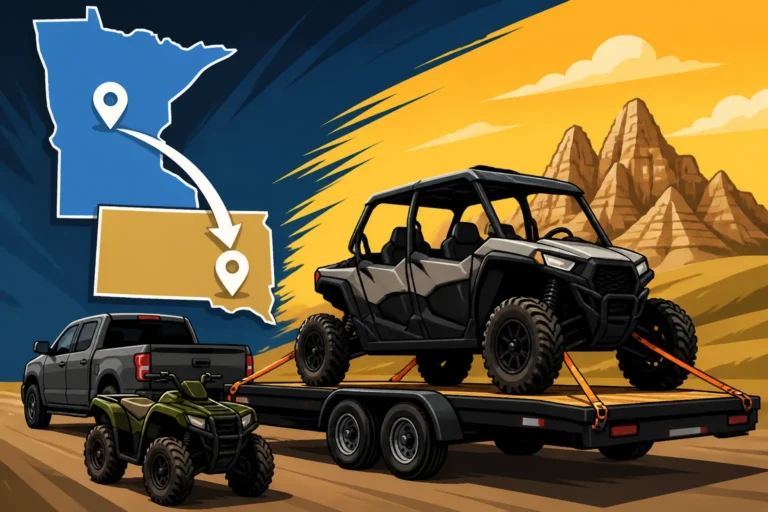
Bringing an ATV or UTV into South Dakota from another state, whether you just moved or bought it elsewhere to ride the Black Hills, has its own set of rules. The core requirement remains the same: you need to prove ownership. This typically means presenting the title certificate from the previous state, properly assigned to you by the seller. Just like with an in-state used purchase, ensure all signatures are present and correct, and that the title has no open liens.
One important consideration for out-of-state machines is [What an Out-of-State Owner Pays to Title in South Dakota]. If you're a nonresident but want to title your ORV in South Dakota (perhaps because it's kept here for extended periods), you might face an additional fee. This is often an extra hundred dollars, designed to capture some revenue for the state from machines that primarily operate here but aren't fully integrated into the resident tax base. This fee helps offset administrative costs and ensures that all machines using South Dakota's resources contribute fairly.
If you've paid sales or excise tax on the machine in another state, make sure you bring proof of that payment. South Dakota often offers a tax credit for taxes paid to other states, preventing you from being double-taxed. For example, if you bought your UTV in Minnesota and paid their sales tax, presenting that receipt or a clear notation on the Minnesota title could reduce or eliminate your South Dakota excise tax liability. Always confirm this with your county treasurer, as the exact credit can depend on the specific tax laws of the originating state and South Dakota's current regulations.
Titling an Inherited Machine
Receiving an ATV or UTV through an inheritance can be a wonderful, albeit sometimes somber, experience. The process for titling it in your name is different from a standard purchase because there's no "seller" to assign the title. Instead, you'll need documents proving your legal right to the machine. This usually involves presenting a certified copy of the death certificate of the previous owner and documentation showing you are the legal heir. This could be a will, letters of administration, or a court order.
For [Titling an Inherited Machine in South Dakota], the county treasurer will review these legal documents to confirm your rightful ownership. They'll also need the original title certificate, if available. If the title is lost, you'll have to go through the process of replacing a lost title first, which can add another layer of complexity. If the estate went through probate, the executor's signed authority and specific court orders regarding the distribution of assets will be critical.
Even though it's an inheritance, the 4% excise tax might still apply, based on the fair market value of the machine at the time of transfer. There are sometimes exemptions for direct lineal heirs, so it's crucial to discuss your specific situation with the county treasurer. This can be one of the more emotionally taxing titling scenarios, so having all your legal documents organized and clearly understood before your visit will make the process as smooth as possible. LawDepot can be a useful resource for finding templates for legal documents related to estates or wills, which might help clarify what you need to present.
Titling a Machine with an Existing Lien
Many people finance their ATVs or UTVs, which means there's a lienholder (the bank or credit union) listed on the title. When you purchase a machine with an existing lien, or if you're titling a machine where you still owe money, the process has an extra step. The lienholder's information must be recorded on the South Dakota title. This protects their interest in the machine until the loan is paid off.
If you're buying a used machine that still has a lien on it, the seller should ideally have paid off the loan before the sale. However, sometimes a sale is contingent on paying off the lien at the time of transfer. In such cases, you will need a lien release from the previous lienholder, confirming that the debt has been satisfied. Without this, the South Dakota county treasurer cannot issue a clean title in your name. For [Titling a Machine With a Lien in South Dakota], the county treasurer will typically record the new lienholder (if you financed it) or confirm the release of an old one.
The lien notation process ensures that anyone checking the title knows there's an outstanding financial interest in the machine. Once your loan is paid off, the lienholder will send you a formal lien release document. You'll then need to take this to the county treasurer's office to have the lien officially removed from your title, giving you a clear title free of encumbrances. This final step is important for future sales or transfers. Many financial institutions have their own specific forms for lien releases, but you can also find generic lien release forms on platforms like LawDepot, which can be useful if a lienholder doesn't provide one readily.
The Titling Process at the County Treasurer's Window
You've gathered your documents, double-checked everything, and mentally prepared for the fees. Now it's time for the actual visit to the county treasurer's office. While the process is generally straightforward once you're prepared, knowing what to expect can help ease any last-minute anxieties and ensure your visit is as efficient as possible.
What to Expect During Your Visit
When you arrive at the county treasurer's office, you'll typically take a number or wait in line, much like other government service centers. Many county offices, especially in popular riding areas like Lawrence County near the Black Hills, can get busy, particularly during peak seasons or around tax deadlines. It's often wise to call ahead to inquire about their busiest times or if they offer appointment scheduling.
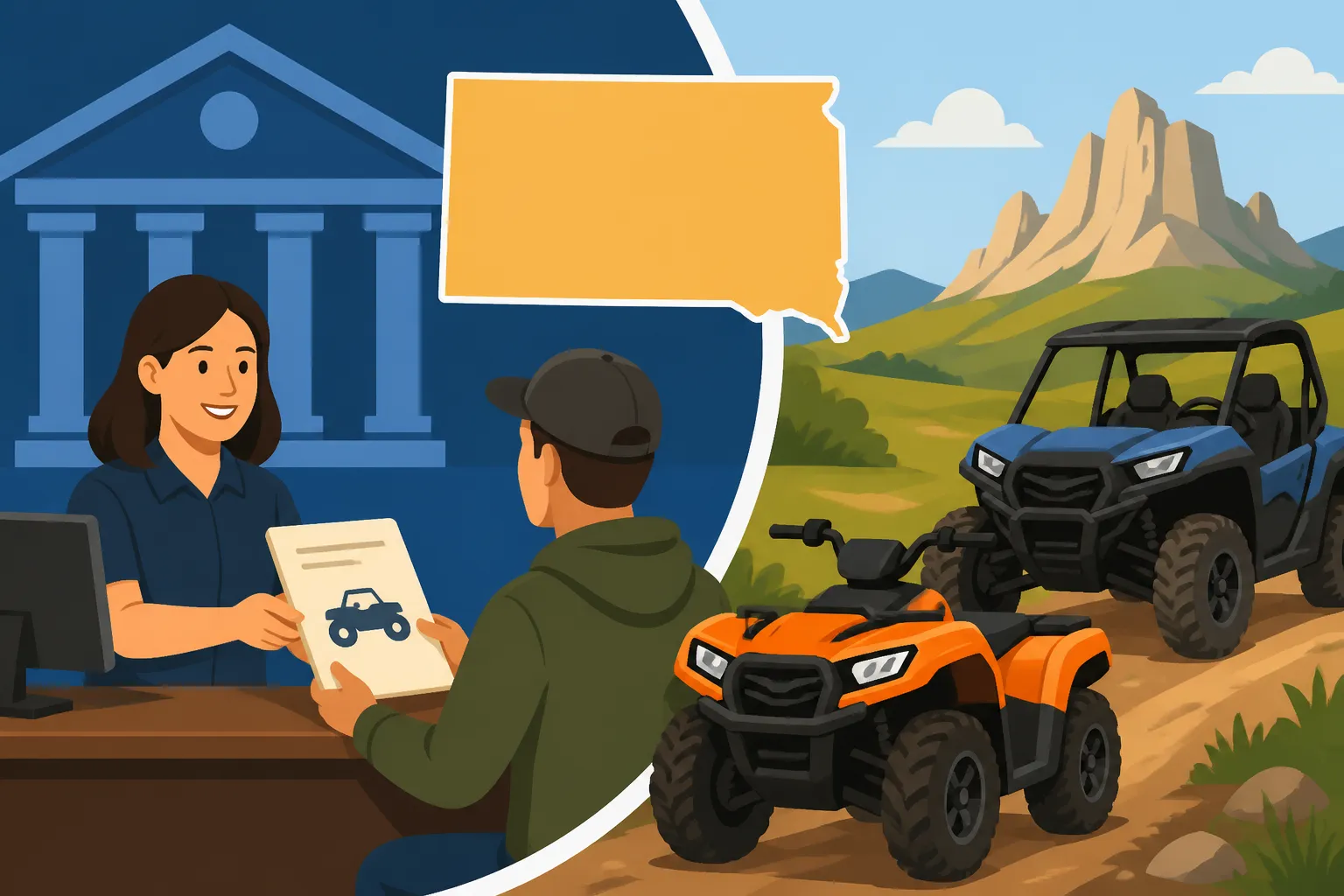
Once it's your turn, you'll approach the counter with all your carefully prepared documents. The deputy treasurer will meticulously review everything: your proof of ownership (MSO or previous title), your bill of sale, and your completed [South Dakota's Title and Registration Application]. They'll verify VINs, check for proper signatures, and ensure all dates and figures are consistent. This is why thorough preparation is so crucial; any discrepancies or missing information will likely result in you being asked to return once corrected.
They will also process your payment for all applicable fees and taxes. This will include the excise tax, the title fee, the technology fee, and any other minor fees. Most offices accept various forms of payment, including cash, check, and debit/credit cards, though some may charge a small processing fee for card payments. Make sure you confirm payment options with your specific county treasurer beforehand to avoid any surprises. Once payment is processed and all documents are deemed complete and correct, they will issue you a receipt and confirm that your title will be mailed to you.
What Happens After Your Visit
After your successful visit, you won't walk out with a physical title in your hand immediately. South Dakota typically mails the official title certificate to your address of record, often within a few weeks. This waiting period allows for final processing and verification at a central state level before the official document is printed and dispatched. Don't be alarmed if it doesn't arrive immediately; this is standard procedure.
While you wait for your official title, your receipt from the county treasurer serves as temporary proof that you've initiated the titling process and paid your fees. It's a good idea to keep this receipt with you, especially if you plan on riding your machine before the official title arrives. In some cases, depending on how and where you plan to ride, you might need additional permits. For example, if you're a nonresident planning to ride certain public trails, you'll need a [South Dakota's Nonresident ORV Permit] in addition to having your machine titled.
Once your title arrives, keep it in a safe, secure place. It's a critical legal document proving ownership, and you'll need it if you ever sell the machine, transfer it, or need to prove ownership for insurance purposes. Do not keep the original title on the machine itself while riding, as it could get lost or damaged. A photocopy or digital image might be useful for reference, but the original should be stored securely at home.
Common Hurdles and How to Overcome Them
Despite best intentions, sometimes things go sideways. Maybe you misplaced an important document, or the previous owner wasn't as diligent as they should have been. These hurdles can turn a simple titling trip into a frustrating ordeal, but almost every problem has a solution. Knowing what to do when things get complicated can save you a lot of time and stress.
Dealing with a Lost or Missing Original Title
One of the most common and frustrating problems is a lost or missing original title. If you're the registered owner and your title has gone missing, you can apply for a duplicate title. This process is handled by your county treasurer's office, and it requires you to fill out a specific application for a duplicate title and pay a fee, typically [South Dakota's $10 Duplicate Title]. You'll need to provide your identification and details about the machine, and the county will verify your ownership in their system before issuing a replacement.
The real challenge arises if you're purchasing a used ATV or UTV and the seller doesn't have the original title. In this situation, the seller is responsible for obtaining a duplicate title before they can legally transfer ownership to you. Do not proceed with a purchase if the seller cannot provide a clean, original title (or a certified duplicate). Buying a machine without a title, or with only a bill of sale, is incredibly risky and can lead to you owning a machine you can never legally title or sell yourself. It's a red flag that often signals potential issues, like a stolen vehicle or a machine with a hidden lien.
If you find yourself in this predicament, insist that the seller obtains the duplicate title in their name first. You might even offer to accompany them to their county treasurer's office to ensure it gets done. If they're unwilling or unable, it's a strong sign to walk away from the deal. There are plenty of other machines out there, and the headache of a "no-title" purchase is rarely worth the perceived discount. Checking a VIN before you buy can help you avoid some of these issues, as it can reveal if a title even exists or if there are any liens.
Overcoming Issues with Paperwork Completeness or Accuracy
It's easy to make a small mistake on paperwork – a transposed number in the VIN, a misspelled name, or an incomplete address. However, at the county treasurer's window, these small errors can become big problems. The deputy treasurers are trained to catch these inaccuracies because the title is a legal document that must be perfectly accurate. If an error is found, you'll likely be asked to correct it on the spot or, in some cases, return with a corrected document.
For example, if the purchase price on your bill of sale doesn't match what's on the application form, or if a signature is missing from the seller's assignment area on the title, you'll hit a roadblock. If the seller is present, they can often rectify it immediately. If not, you might need to track them down to get the necessary correction or signature. This is why using a detailed form like those found on LawDepot for your bill of sale, and carefully reviewing all documents before your visit, is critical.
Sometimes, the issue isn't an error but a lack of clarity, especially with older machines or those that have changed hands many times. If the chain of ownership is unclear, or if there are multiple assignments on the back of a title, the treasurer might require additional documentation or an affidavit to clarify the history. While this sounds daunting, the county treasurer's office can usually guide you through what specific steps or documents are needed to resolve these complex situations, ensuring the integrity of the ownership record.
Beyond the Title: What Comes Next
Getting your ATV or UTV titled is a huge step, but it's not always the absolute final piece of the puzzle for legal operation in South Dakota. Depending on how and where you intend to ride your machine, there might be additional requirements or options to consider after you've successfully navigated the county treasurer's office.
Understanding Plates vs. Permits
In South Dakota, titling your ATV or UTV establishes legal ownership. However, whether you need a license plate or a trail permit depends entirely on where you plan to operate your machine. If your ATV or UTV meets specific state criteria to be considered "street legal" (which is quite a high bar for ORVs in South Dakota, usually involving engine size and specific equipment like mirrors, horns, and lights), you might be able to [Licensing an ATV as a Motorcycle in South Dakota]. If it qualifies, it will be issued a motorcycle plate by the county treasurer, allowing it to operate on public roads where permissible. This is a common path for some UTVs or larger, road-ready ATVs, but many standard ORVs won't meet these requirements.
For the vast majority of ATV and UTV riders who plan to stick to trails, private land, or designated riding areas, a standard license plate for road use isn't typically an option or even necessary. Instead, you'll be looking at a [South Dakota's Nonresident ORV Permit] if you're visiting from out of state, or if you're a resident, ensuring you're aware of any specific trail permits required for certain public lands, such as the Black Hills National Forest Motorized Trail Permit. These permits are crucial for legal trail access and are distinct from your title or a road-use plate. The county treasurer handles titling and basic vehicle registration (like plates), but trail permits are often managed by different agencies or systems.
Ensuring Ongoing Compliance
Once titled, it's your responsibility to ensure your ATV or UTV remains compliant with South Dakota laws. This includes keeping your title safe, renewing any necessary permits annually, and being aware of specific rules for different riding environments. For example, if you decide to modify your machine, be mindful of how those changes might affect its legality for road use or trail access. If you change your address, remember to update it with the county treasurer's office so your title and any future correspondence go to the correct location.
Selling your machine in the future will also require your original, clear title, properly assigned to the new owner. If your title has been lost, you'll need to obtain a duplicate. If there's an outstanding lien, you'll need a lien release. Staying on top of these administrative details will make future transactions smooth and stress-free. Your county treasurer's office is your primary resource for all these official vehicle actions, so don't hesitate to reach out to them for clarification on specific rules or procedures as your ownership journey evolves.
Disclaimer
This article is for general informational purposes only and does not constitute professional advice. Laws, prices and regulations vary by location and change over time. Consult a qualified professional for guidance on your specific situation.