South Dakota ATV VIN Requirements
It’s a scenario many off-road enthusiasts dread: you’re trying to title your beloved ATV or UTV, only to hit a snag with the Vehicle Identification Number. Whether it’s hard to find, partially obscured, or you’re just unsure what information South Dakota needs from it, navigating the paperwork can feel like a bumpy trail ride on its own. This guide is here to smooth out those bumps, offering clear, comprehensive insights into everything you need to know about South Dakota ATV VIN requirements, helping you avoid frustrating delays and potential headaches down the road.
The Indispensable Role of Your ATV's VIN in South Dakota
Let’s be honest, paperwork for our outdoor toys is usually the last thing we want to deal with. We’d rather be out riding! But when it comes to the Vehicle Identification Number (VIN) on your ATV or UTV, it’s not just another line item on a form. In South Dakota, this series of seventeen characters is absolutely critical, acting as the unique fingerprint of your machine. Without it being correct, clear, and verified, you’re going to run into significant hurdles with ownership, legal operation, and even reselling your off-road vehicle.
More Than Just a Number: Why the VIN Matters
Think of your VIN as your ATV's social security number, but for a piece of machinery. It’s a globally recognized standard that ensures every vehicle has a unique identifier. This isn't just for show; it serves several vital functions. Primarily, it's about ownership verification. When you buy or sell a machine, the VIN on the title and bill of sale confirms that the vehicle you're acquiring or divesting is indeed the one being transacted. This helps prevent fraud and disputes later on.
Beyond ownership, the VIN is a powerful tool against theft. If a machine is stolen, its VIN is entered into national databases, making it incredibly difficult for thieves to register or resell it legally. Law enforcement relies heavily on VINs to recover stolen property and return it to rightful owners. In South Dakota, operating a machine without a clear and legitimate VIN can raise red flags, leading to inconvenient stops and investigations, even if you’re the honest owner. It's the lynchpin of legal operation, ensuring your machine can be tracked and accounted for, which is essential for both your peace of mind and compliance with state regulations like [South Dakota ATV Title Paperwork].
Understanding South Dakota's VIN Focus
South Dakota, like every other state, takes VIN verification very seriously. This focus isn't arbitrary; it stems from a need to maintain order, protect consumers, and ensure fair tax collection. The VIN links directly to the machine's history, allowing potential buyers and state officials to trace its past. For instance, if a machine was previously salvaged or involved in a major incident, a VIN check can reveal this, protecting a new buyer from unknowingly purchasing a problematic vehicle.
When you go to title your ATV or UTV in South Dakota, the VIN is what the county treasurer will use to confirm the machine's identity and apply any relevant fees, such as [South Dakota's 4 Percent Excise Tax]. This tax, for example, is calculated based on the purchase price, and the VIN ensures that the correct machine is associated with the paid tax. A valid VIN is also essential for any future transactions, whether you're selling your ORV down the line or simply need a duplicate title because your original went missing. It’s the constant identifier that stays with the machine throughout its lifespan, solidifying its place in the state's motor vehicle records.
Locating and Deciphering Your ATV's VIN
You're ready to get your machine titled, but first, you have to actually find that VIN. Sometimes it feels like manufacturers play hide-and-seek with this crucial number. And once you find it, what do all those letters and numbers actually mean? Understanding both where it lives and what it tells you can save a lot of guesswork and potential frustration.
Where to Find That Elusive Number on Your Machine
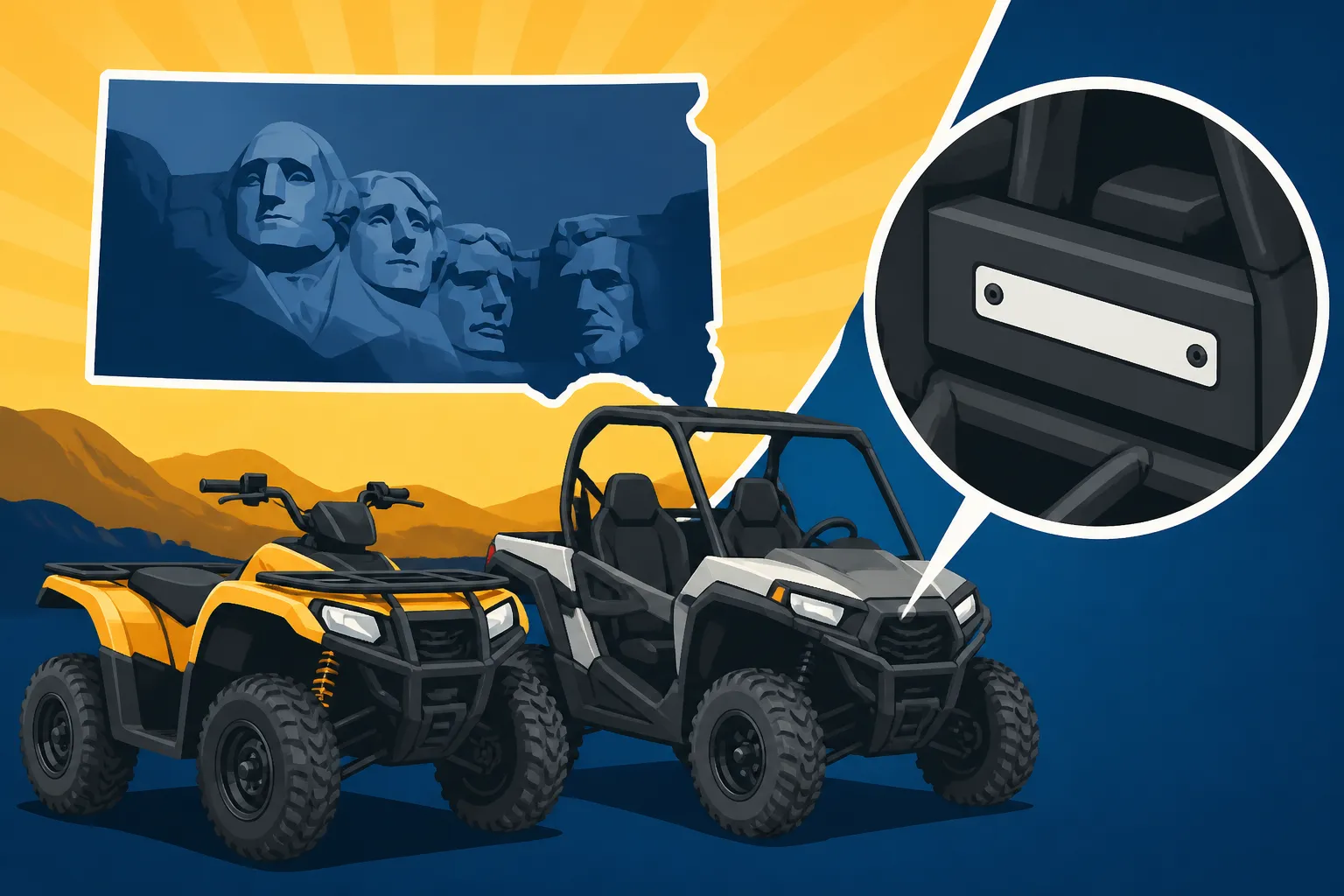
Finding the VIN on your ATV or UTV is usually straightforward, but locations can vary slightly between manufacturers and models. Generally, you’ll want to look for a metal plate or a stamped number on the frame itself. The most common places include:
- Front Frame: Often, it’s located on the lower left side of the frame, near the front wheel.
- Steering Neck: Some manufacturers stamp the VIN on the steering neck, which is the vertical tube that the handlebars attach to. You might need to turn the handlebars to one side to get a clear view.
- Engine Casing: Less common for the primary VIN, but sometimes a partial VIN or engine serial number might be found here. However, the main VIN will almost always be on the frame.
- Under the Seat or Fenders: Occasionally, you might find a sticker with the VIN under the seat or on an inner fender panel, though the official, permanent VIN will be stamped into the metal frame.
Before you start hunting, make sure the area is clean. Years of mud, dust, and grime can obscure the numbers, making them nearly impossible to read. A wire brush and some degreaser might be your best friends here. If you still can’t find it, or if it’s unreadable, consulting your owner’s manual or looking up your specific make and model online can often pinpoint the exact location. Remember, a clear and legible VIN is a non-negotiable requirement for [Titling an ATV in South Dakota], so take your time to find it.
What the Characters in Your VIN Actually Mean
Your ATV’s VIN isn’t a random string of characters; it's a coded message about your machine. This seventeen-character alphanumeric code is standardized globally and provides a wealth of information. Breaking it down can be pretty fascinating:
- Characters 1-3: World Manufacturer Identifier (WMI). These tell you who made the vehicle and where. For example, "1" might indicate the USA, and the next two characters identify the specific manufacturer, like Polaris or Can-Am.
- Characters 4-9: Vehicle Descriptor Section (VDS). This section describes the general attributes of the vehicle. It can include information like the vehicle type (ATV, UTV), engine type, engine size, brake system, and gross vehicle weight rating. This is where you'd find details confirming if it truly matches [What South Dakota Counts as an Off-Road Vehicle].
- Characters 10-17: Vehicle Identifier Section (VIS). This is the unique part for your specific machine.
- Character 10: Indicates the model year. This is a common point of confusion, as it cycles through letters and numbers (e.g., 'A' for 1980, 'Y' for 2000, '1' for 2001, etc.). Knowing this can help you verify the age of a machine, especially when [Buying a Used ATV in South Dakota].
- Character 11: Identifies the manufacturing plant.
- Characters 12-17: These are the unique sequential production number assigned to your individual machine. No two vehicles will have the same serial number within the same model year and plant.
While you don't need to be a VIN decoding expert to title your ATV, understanding this structure is incredibly empowering. It allows you to cross-reference information on a title or bill of sale and confirm that you're dealing with the correct machine. When you're [Checking a VIN Before a South Dakota Purchase], knowing how to read these characters can expose discrepancies that a seller might try to hide.
| VIN Section | Characters | Information Provided |
|---|---|---|
| WMI | 1-3 | Manufacturer (e.g., Polaris, Can-Am), Country of Origin |
| VDS | 4-9 | Vehicle Type (ATV/UTV), Engine Type, Model Series, Body Style |
| VIS (Model Year) | 10 | Year the machine was manufactured |
| VIS (Plant) | 11 | Specific plant where the machine was assembled |
| VIS (Serial) | 12-17 | Unique production sequence number of the specific machine |
VIN Verification for South Dakota Titling and Transfers
When you're dealing with your ATV or UTV in South Dakota, whether you're bringing it home new, buying it used, or even inheriting it, the VIN is the star of the show for legal purposes. Without its proper verification, your journey to legal ownership and operation will be stalled. It's not just a box to tick; it's the fundamental proof of your machine's identity in the eyes of the state.
The VIN's Role in a Smooth Title Transfer
The moment you walk into your local county treasurer's office to [Titling at a South Dakota County Treasurer], the VIN on your machine becomes paramount. It's the critical piece of information that ties your specific physical ATV or UTV to the legal document of ownership – the title. The treasurer's office will meticulously check that the VIN provided on your application, and ideally on your bill of sale, perfectly matches the VIN stamped on the machine itself. Any discrepancy, even a single digit, can bring the entire process to a screeching halt.
This meticulousness is for your protection as well as the state's. It ensures that the machine you are titling is not reported stolen, that it's correctly identified in their system, and that all associated taxes and fees, like [South Dakota's 2 Technology Fee] or [South Dakota's Solid Waste and Patrol Dollars], are accurately applied. When you're completing paperwork, whether it's the official application or even a simple bill of sale, double-check and triple-check that the VIN is written down exactly as it appears on your machine. Using a reliable document service like LawDepot for your [A South Dakota Bill of Sale for an ORV] can help ensure all the necessary fields, including the VIN, are correctly accounted for and reduce the chance of transcription errors. Without this absolute accuracy, you could find yourself in a frustrating loop of resubmissions and delays, pushing past [South Dakota's Forty-Five Day Title Deadline].
What Happens If Your VIN is Damaged or Missing
This is where things can get incredibly complicated and frustrating. Imagine you’ve just purchased a fantastic used ATV, only to discover the VIN is so rusted or scratched that it's unreadable, or worse, it appears to be missing entirely. In South Dakota, as in any state, a damaged, defaced, or missing VIN is a major red flag. It immediately raises suspicions of theft or illegal activity, and the county treasurer's office will not process a title for such a machine.
If your VIN is unreadable, you'll likely face a lengthy and involved process. You would typically need to have the machine inspected by law enforcement or a state-authorized VIN inspector to verify its legitimate origins. In some extreme cases, if the original VIN cannot be verified or restored, the state might issue a new, state-assigned VIN. This isn't a simple rubber stamp process; it involves affidavits, detailed inspections, and a thorough investigation into the machine's history. The goal is to ensure the machine isn't stolen and can be legally identified.
This situation underscores the importance of [Checking a VIN Before a South Dakota Purchase]. Always verify the VIN's clarity and presence before you hand over any money. If a seller is hesitant or can't produce a clear VIN, consider it a significant warning sign. While the process for a damaged VIN is designed to prevent fraud, it places a heavy burden on the owner. It’s a pain point that can be entirely avoided with careful due diligence at the point of acquisition.
Protecting Your ATV's VIN and Avoiding Pitfalls
Your ATV or UTV is an investment, a source of recreation, and for some, even a vital tool for work. Protecting its Vehicle Identification Number isn't just about following the rules; it's about safeguarding that investment and ensuring a smooth ownership experience. Proactive steps and smart habits can help you steer clear of some truly aggravating issues down the line.
Proactive Steps to Safeguard Your Machine's Identity
The best defense is a good offense, and that holds true for your ATV's VIN. Taking a few simple, proactive steps can help ensure its integrity and readability for years to come:
- Keep it Clean: Regularly clean the area where the VIN is stamped. Dirt, mud, and road grime can accumulate and eventually lead to rust, obscuring the numbers. A quick spray and wipe after a ride, especially in wet conditions, can make a big difference.
- Document it: As soon as you purchase your ATV, take clear photos of the VIN from multiple angles. Store these photos securely, perhaps on your phone and backed up to cloud storage. You should also write down the VIN and keep it in a safe place, separate from your machine. This documentation can be invaluable if the VIN ever becomes unreadable or if your machine is stolen. When [Selling an ORV in South Dakota], having this clear documentation makes the transfer much smoother for the buyer.
- Prevent Tampering: While less common for casual riders, professional thieves sometimes attempt to alter or remove VINs to hide a machine's true identity. Implement robust security measures for your ATV, such as chaining it to an immovable object, using steering locks, and parking it in a secured garage or shed. The harder it is to steal, the less likely a thief will attempt to tamper with its identifying marks.
- Cross-Reference Always: Whenever you deal with paperwork for your ATV – be it an insurance policy, a service record, or a bill of sale – always cross-reference the VIN on the document with the one on your actual machine. Inconsistencies could lead to issues with your insurance coverage or complicate future title transfers. When preparing documents like a bill of sale, consider using a template from a platform like LawDepot to ensure all critical details, including the VIN, are captured accurately and professionally.
Due Diligence When Buying a Used ATV or UTV
This is arguably the most crucial area where VIN awareness can save you from a world of hurt. Buying a used ATV or UTV privately often means you're taking on more risk. However, thorough due diligence around the VIN can drastically mitigate that risk.
- Verify the VIN in Person: Never, ever take a seller’s word for it or rely solely on photos. Insist on inspecting the machine in person and physically verifying the VIN. Ensure it is clearly legible, appears unaltered, and matches the VIN on the title document. If the VIN on the title doesn't match the machine, walk away. Period.
- Run a VIN Check (If Possible): While I cannot provide live access to databases, there are services that, for a fee, can run a VIN check, similar to how you would for a car. These checks can reveal critical information like accident history, salvage titles, or if the machine has been reported stolen. This is particularly important for avoiding the severe consequences of [South Dakota Fines for an Untitled ATV] if the machine has a problematic history.
- Beware of Red Flags: Be highly suspicious if a seller:
- Is hesitant to show you the VIN or the title.
- Claims the title is "lost" or "in the mail" without a credible explanation.
- Has a title with mismatched names or information that doesn't align with their story.
- Presents a VIN that looks scratched, ground down, or clearly tampered with.
- Offers an unusually low price for a machine that seems too good to be true.
Buying a machine with a tampered or stolen VIN can lead to legal complications, forfeiture of the machine without compensation, and the loss of your hard-earned money. It’s far better to err on the side of caution and pass on a suspicious deal. When drafting your purchase agreement for a private sale, incorporating language that specifies the VIN and confirms its clean status can be vital. Services like LawDepot can provide legally sound templates for such agreements, adding an extra layer of protection and ensuring all parties are clear on the details surrounding the machine's identity.
Disclaimer
This article is for general informational purposes only and does not constitute professional advice. Laws, prices and regulations vary by location and change over time. Consult a qualified professional for guidance on your specific situation.