Why Out-of-State Owners Pay $100 Extra in South Dakota
It can be incredibly frustrating to discover unexpected fees when you're just trying to enjoy your off-road vehicle in a new state. If you're an out-of-state owner looking to title an ATV or UTV in South Dakota, you might be wondering why there's an extra $100 charge tacked onto your bill. This guide is here to demystify that additional cost, explain who it applies to, and help you understand the reasoning behind South Dakota's approach for non-resident ORV owners.
Understanding South Dakota's Approach to Out-of-State ATV & UTV Owners
South Dakota, with its wide-open spaces and incredible Black Hills trails, is a magnet for off-road enthusiasts. Many folks from neighboring states and even further afield bring their ATVs and UTVs here to ride. However, the state has a distinct system for how it manages vehicle titles, especially when it comes to those not residing within its borders. It's not about making things difficult; it's about a specific regulatory framework that generates revenue and manages vehicle identification.
The Philosophy Behind the Fee
At its heart, the $100 non-resident titling fee is a way for South Dakota to level the playing field, so to speak, and capture some revenue from individuals who might primarily use the state's resources without contributing to its tax base in the same way a resident would. While it might feel like an unwelcome surprise, think of it as an administrative cost associated with extending state services (like vehicle titling and record-keeping) to those who don't call South Dakota home. The state provides public lands, roads, and trails that require maintenance, and this fee contributes to the overall pool of funds that support such infrastructure and services. It’s part of a broader financial strategy for the state to manage its resources and serve both its residents and the many visitors who come to enjoy what South Dakota has to offer. It's distinct from things like sales tax or annual registration fees; this is a one-time fee tied directly to the act of securing a title for an off-road vehicle when you're not a resident.
Who Exactly is Considered "Out-of-State"?
This is where it can get a little nuanced, and it’s a question that trips up many people. You might think, "Well, I don't live there, so I'm out-of-state," and you'd be right in the general sense. However, for the purposes of titling your ATV or UTV in South Dakota, being considered "out-of-state" hinges on your legal residency. If your primary, official residence (where you vote, get your mail, and generally live most of the year) is outside of South Dakota, then you're considered an out-of-state owner for titling purposes. This means that if you own property in South Dakota but primarily reside in another state, you'd still fall under the non-resident category for this particular fee. The state's Department of Revenue and the county treasurers look for clear evidence of South Dakota residency, typically a physical address that matches your driver's license or other official documents. Without that, you'll be classified as a non-resident. It's about establishing genuine ties to the state, not just owning a recreational vehicle that you plan to use here. For more details on this, you might look into [What an Out-of-State Owner Pays to Title in South Dakota].
The Mechanics of the $100 Non-Resident Fee
The $100 fee isn't some arbitrary charge; it's a specific component of the titling process for non-residents. Understanding when and how it applies can save you headaches and ensure a smoother experience when you head to the county treasurer's office.
When the Fee Applies (and When it Doesn't)
The $100 fee applies directly to the titling of an off-road vehicle (ATV, UTV, etc.) by an out-of-state owner. This is crucial: it's not a registration fee, nor is it a usage fee that you pay annually. It's a one-time fee levied at the point of obtaining your South Dakota title. So, if you're a non-resident purchasing a new or used ATV and plan to title it in South Dakota, you will encounter this charge. Similarly, if you already own an ORV titled in another state and decide you want a South Dakota title for it (perhaps for easier use in the state or for other personal reasons), the $100 fee would apply when you go through the titling process.
However, there are scenarios where this fee doesn't apply. For example, if you are a South Dakota resident, this fee is irrelevant to your titling process. You would pay the standard titling fees, excise tax, and other applicable charges, but not the $100 non-resident fee. Another common misunderstanding is confusing this titling fee with the [South Dakota's Nonresident ORV Permit]. While both are for non-residents and relate to off-road vehicles, the permit is an annual permit allowing you to ride on designated trails, whereas the $100 fee is a one-time titling cost. They are separate and serve different purposes, though many non-residents might end up paying both if they title their machine in South Dakota and plan to ride the trails.
Why a Mail-Forwarding Address Doesn't Work
South Dakota has seen its share of creative attempts to circumvent fees, and using a mail-forwarding address is one of them. For the purpose of titling your ATV or UTV, the state requires proof of actual, physical residency. A P.O. Box or a mail-forwarding service address simply won't cut it. The authorities are looking for a bona fide street address where you physically reside. This is because official documents, tax assessments, and jurisdictional responsibilities are tied to physical locations. If you attempt to use a mail-forwarding address, the county treasurer's office will almost certainly identify it as such and still apply the $100 non-resident fee, if not outright refuse the titling based on insufficient residency proof. The state's intention is clear: if you truly live here, prove it with a physical address that can be verified. This specific issue is why [Why a Mail-Forwarding Address Triggers South Dakota's Fee] is a common point of discussion. They want to ensure that those benefiting from resident rates are genuinely contributing to the state's local economy and tax base through their primary residence.
The Paperwork and Process Implications
When you, as an out-of-state owner, approach a [Titling at a South Dakota County Treasurer] office to title your ATV or UTV, be prepared for specific requirements. You'll need all the standard documentation, such as the Manufacturer's Statement of Origin (MSO) for new vehicles, or a properly assigned title and a bill of sale for a used machine. You'll also be subject to [South Dakota's 4 Percent Excise Tax] and other standard fees. The $100 non-resident fee will simply be added to this total. It's not a separate application, but rather an additional line item on your titling costs.
It's highly advisable to bring along your driver's license from your home state, the original title (if applicable), a completed [South Dakota ATV Title Paperwork] form, and a valid [A South Dakota Bill of Sale for an ORV] if you purchased the machine privately. The county treasurer will review your identification and the provided address to determine your residency status. If your driver's license and other proofs clearly indicate an out-of-state address, the $100 fee will be applied without further question. You should also be aware of the [Forty-Five Days to Get to the Window] deadline to avoid additional penalties.
Here's a simplified look at potential titling costs for a non-resident:
| Cost Type | Resident Owner | Non-Resident Owner | Notes |
|---|---|---|---|
| Title Fee | Standard fee (e.g., $10) | Standard fee (e.g., $10) | Same for everyone. |
| Excise Tax | 4% of purchase price | 4% of purchase price | Applied to the sale price of the vehicle. |
| Technology Fee | Standard fee (e.g., $2) | Standard fee (e.g., $2) | General administrative fee. |
| Non-Resident Fee | N/A | $100.00 | This is the specific extra charge for out-of-state owners. |
| Solid Waste/Patrol | Small fixed fees (e.g., $2) | Small fixed fees (e.g., $2) | Contributes to state services. |
| Late Title Penalties | Applies | Applies | If you miss the 45-day deadline. |
Remember that exact standard fees can change, so it's always best to verify the current figures with a [Where to Title an ATV in South Dakota] county treasurer's office or the South Dakota Department of Revenue. The $100 non-resident fee, however, is a consistent additional cost for out-of-state owners. For managing your personal legal documents, like a bill of sale or other agreements, resources like LawDepot can offer useful templates to ensure you have everything in order before your visit to the treasurer.
Navigating the System as a Non-Resident
Being an out-of-state owner doesn't mean you can't enjoy everything South Dakota has to offer with your ATV or UTV. It just means you need to be aware of the specific rules and plan accordingly.
Planning for Your South Dakota Adventure
If you're buying an ATV or UTV and plan to primarily use it in South Dakota, even as a non-resident, titling it in the state can sometimes simplify things for future sales or if you eventually become a resident. However, this commitment comes with the $100 titling fee. Before you make the drive to the county treasurer, gather all your documents meticulously. Ensure you have the original title (if used), bill of sale (consider using a template from a service like LawDepot for clarity), and your current driver's license. Double-check your address information. If you're coming from out-of-state, confirming all the necessary paperwork for [South Dakota ATV Title Cost] ahead of time can prevent a wasted trip. A quick call to the county treasurer's office you plan to visit can clarify any last-minute questions and confirm the precise documentation they will require from you as a non-resident. This proactive approach can save you significant time and frustration.
Considering the Nonresident ORV Permit
It's easy to confuse the $100 titling fee with the [South Dakota's Nonresident ORV Permit], but they are distinct. The permit is a separate annual purchase that allows non-residents to legally ride their ATVs and UTVs on designated public trails in South Dakota. You might choose to title your machine in your home state and then purchase only the South Dakota Nonresident ORV Permit if you primarily intend to visit for riding trips. In this scenario, you wouldn't pay the $100 titling fee, as you wouldn't be titling the vehicle in South Dakota.
However, if you've decided to title your ORV in South Dakota as a non-resident, then you would pay the $100 titling fee and you would still need to purchase the Nonresident ORV Permit annually if you plan to ride on the public motorized trails. The title simply registers ownership; the permit grants riding access. It's a two-tiered system for non-residents wanting to fully integrate their machine into South Dakota's off-road scene. Understanding both requirements is key to a hassle-free experience. If you're looking for legal document templates for any sales or transfers, even for an ORV, LawDepot is a useful resource for getting your ducks in a row.
The Bigger Picture: Where Your $100 Goes
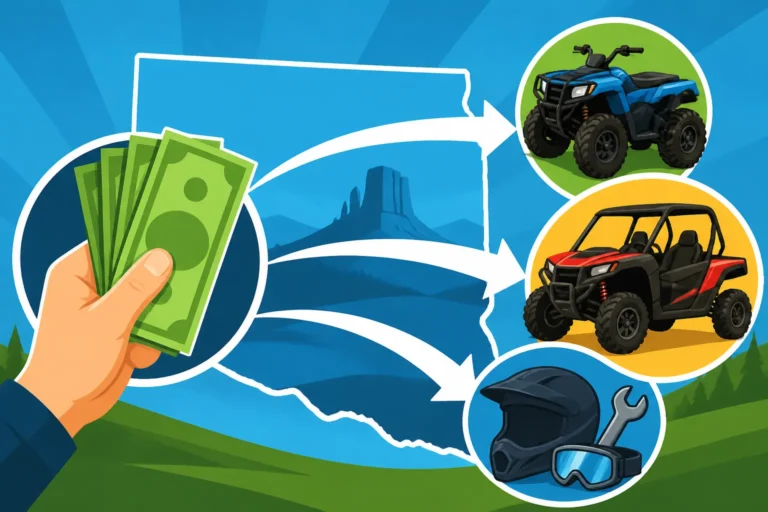
It's natural to question where your money goes, especially when it's an extra fee. The $100 non-resident titling fee, like other fees collected by the state, isn't just deposited into a general fund. It's earmarked to support various services and infrastructure that ultimately benefit everyone who uses the state's recreational lands.
Funding Local Services and Infrastructure
The funds generated from the $100 non-resident titling fee contribute to the overall financial health of South Dakota's infrastructure and services. While it's not exclusively dedicated to ORV trails, it becomes part of the state's general revenue. This revenue is then distributed to support a wide array of public services, including maintaining roads, supporting law enforcement (such as the highway patrol, who might respond to incidents involving ORVs), and funding administrative functions within the Department of Revenue and county treasurer offices that process these titles.
Think of it this way: the more people use the state's services, the more resources are needed to manage and maintain them. This fee acknowledges that non-residents, while not paying property or income taxes in South Dakota, are still utilizing state-provided facilities and administrative processes for their vehicles. It helps to cover the costs associated with record-keeping, database management, and the overall bureaucracy involved in titling vehicles, ensuring that the system remains efficient for both residents and visitors.
Supporting the South Dakota ORV Community
While the $100 fee isn't solely for trail maintenance, it indirectly contributes to the ecosystem that supports the ORV community in South Dakota. Money that flows into the state's coffers helps fund departments that oversee outdoor recreation, conservation efforts, and the overall management of public lands. Even if the funds aren't directly tagged "for trails," a healthy state budget allows for continued investment in areas that indirectly benefit riders, such as improved signage, enforcement, and general upkeep of natural areas. This ensures that the state can continue to offer the fantastic riding opportunities that draw so many people to places like the Black Hills. So, while it may sting a little to pay an extra $100, know that it plays a small part in keeping the wheels turning for the wider community and the services that make South Dakota a great place to ride.
Disclaimer
This article is for general informational purposes only and does not constitute professional advice. Laws, prices and regulations vary by location and change over time. Consult a qualified professional for guidance on your specific situation.