Why South Dakota Counties May Only Opt Out
The rules for riding ATVs and UTVs in South Dakota can feel like a tangled mess, especially when you're trying to figure out where you can legally drive your machine off the pavement. One of the biggest head-scratchers for many riders involves the infamous "ditch riding" laws. This guide aims to clear up a common point of confusion: why South Dakota counties are only allowed to opt out of the state's ditch riding allowance, rather than crafting their own unique sets of rules.
Understanding South Dakota's Ditch Riding Default
When it comes to cruising the grassy areas alongside public roads, South Dakota stands out from many other states. Instead of starting with a blanket ban and then listing exceptions, South Dakota's approach for ATVs and UTVs is the opposite: ditch riding is generally allowed by default. This can be a huge relief for ranchers, farmers, and recreational riders alike who rely on these machines for work or simply to get from point A to point B without having to trailer up.
The state recognizes that these machines are a vital part of life in many rural communities, and often, the most direct path between properties or to local businesses involves navigating the unpaved right-of-way. This doesn't mean it's a free-for-all, however. There are still statewide regulations that riders must adhere to, designed to ensure safety and prevent property damage. Understanding this default allowance is the crucial first step before diving into how counties can alter this arrangement.
The Statewide Allowance for Off-Road Vehicles
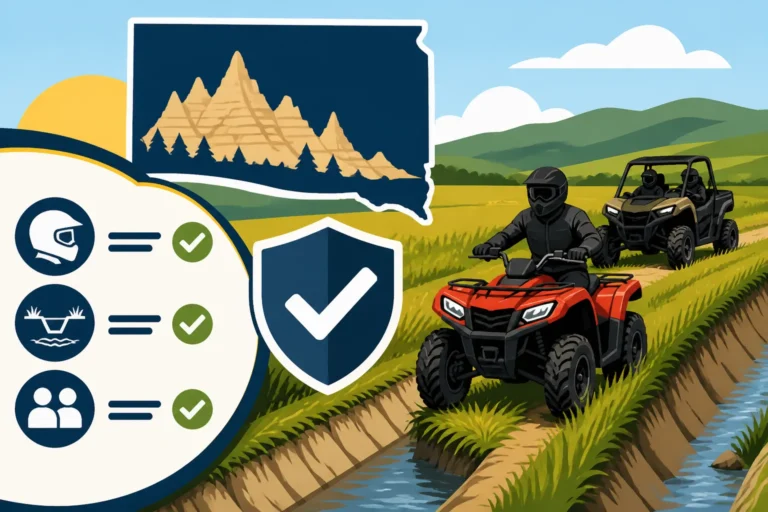
South Dakota law generally permits the operation of off-road vehicles (ORVs), which include ATVs and UTVs, within the right-of-way of public highways. This "right-of-way" typically extends beyond the paved or graveled portion of the road, encompassing the shoulder, the ditch, and often up to the fence line in rural areas. It's a fundamental aspect of the state's approach to ORV use, particularly for those who live and work in agricultural areas or frequent vast stretches of prairie. The idea is to provide practical access for landowners, utility workers, and recreational riders who might otherwise have no viable route.
This allowance is a significant benefit for people who use their machines for practical purposes, like checking fences, herding livestock, or accessing hunting grounds. For recreational riders, it opens up possibilities for connecting trails or simply enjoying a ride without the need for constant trailer loading and unloading. However, it's important to differentiate this allowance from actual "street legal" status. While you can ride in the ditch, you're generally not permitted on the paved portion of state highways unless your machine is specifically plated and meets all requirements for a motorcycle, including engine size. We'll delve deeper into the full scope of [South Dakota Ditch Riding Rules Explained] later in this guide.
The Specifics of the South Dakota Ditch Riding Rule
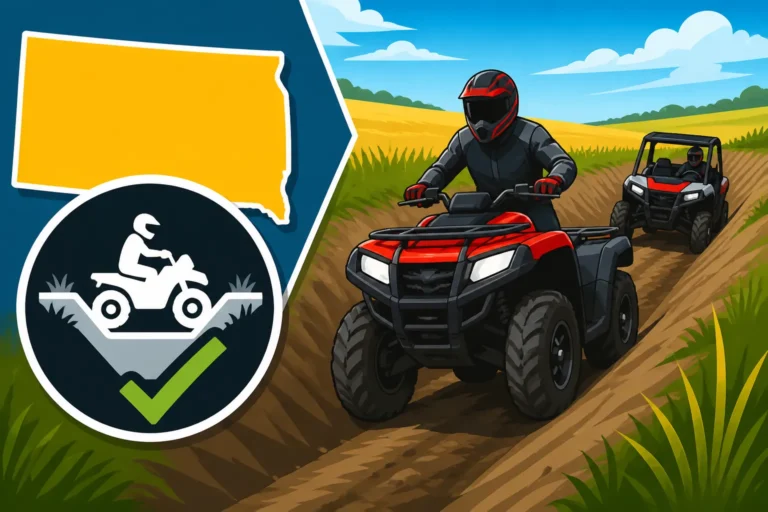
Even with the general allowance, the state has clear guidelines on how and where within the right-of-way you can operate an ORV. Generally, you're expected to stay on the "outer edge" of the right-of-way. This means as far from the traveled portion of the road as safely possible, usually in the ditch bottom or on the back-slope, away from traffic. This isn't just a suggestion; it's a safety measure designed to minimize interactions with faster-moving vehicular traffic on the main road.
Additionally, there are regulations regarding speed, yielding to other vehicles, and the need to operate in a safe and prudent manner. You can't just tear through someone's lawn in the name of ditch riding. The rules aim to balance the rider's access with public safety and private property rights. For example, while you can ride a ditch beside a state route, you're still expected to obey speed limits appropriate for the environment and be mindful of pedestrians, mailboxes, and driveways. The core principle is that ditch riding is a privilege, not an absolute right, and it comes with responsibilities. For instance, you should be familiar with [South Dakota Minimum Age for Ditch Riding] before you or a younger rider heads out.
The Power and Limits of County Control
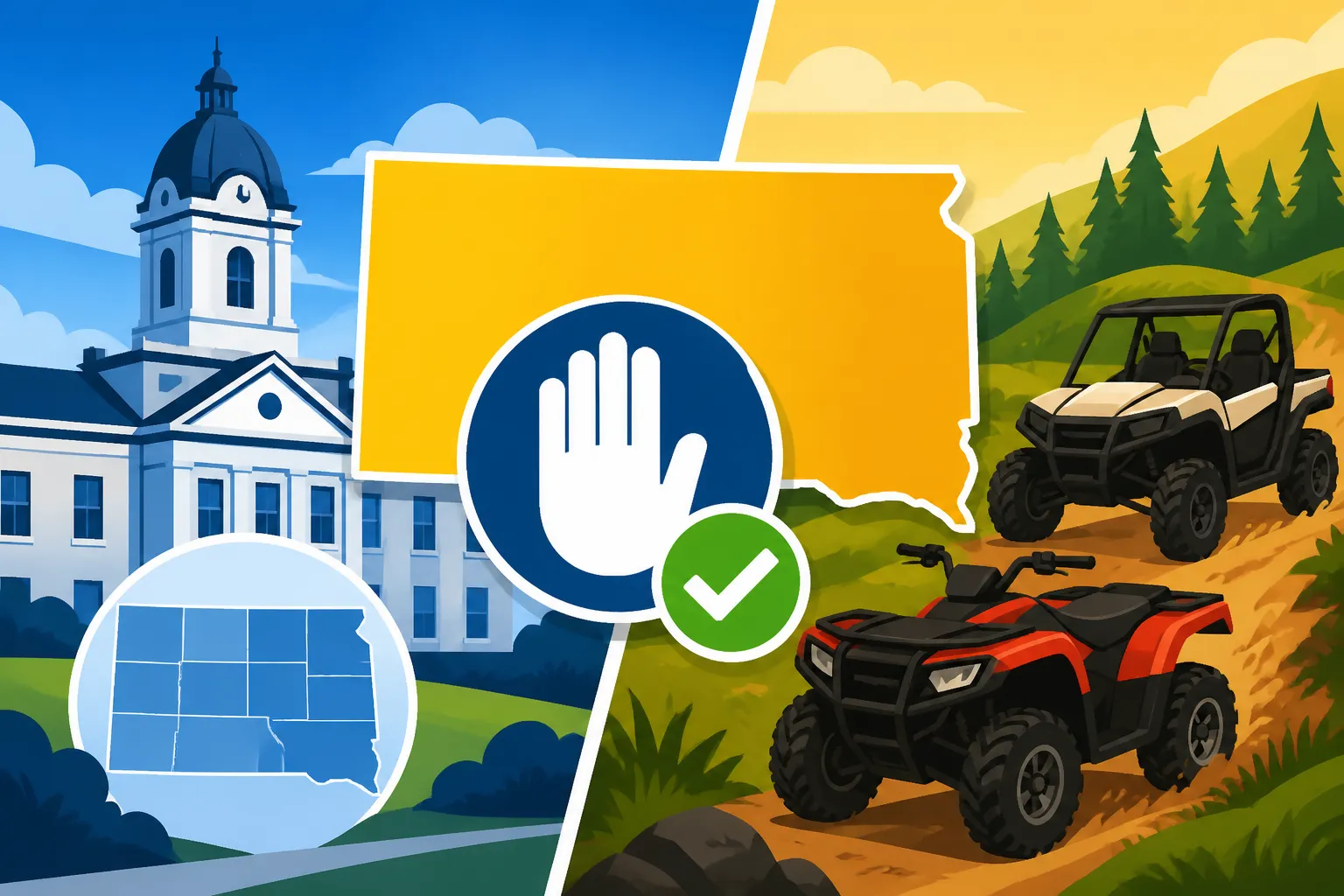
This is where the "opt-out" clause comes into play and causes a lot of confusion. Many people assume that local governments have the power to create their own unique set of regulations for off-road vehicle use, similar to how they might set zoning laws or local speed limits. However, when it comes to ditch riding, South Dakota's state legislature has established a very specific framework. Counties don't have the authority to invent new rules; their power is limited to either allowing the state's default ditch riding or opting out of it entirely.
This preemption by the state prevents a patchwork of conflicting and confusing local ordinances. Imagine trying to ride through several counties, each with its own specific speed limits, equipment requirements, or time restrictions for ditch riding. It would be a nightmare to navigate. By restricting counties to an "opt-out" option, the state maintains a more consistent regulatory environment, making it easier for riders to understand what's expected of them as they traverse different parts of South Dakota. This clarity, while sometimes frustrating for counties that want more granular control, ultimately benefits riders by providing a predictable legal landscape.
Why Counties Can Only Opt Out, Not Create New Rules
The concept of state preemption is central here. In essence, the state has decided to occupy the regulatory field for ditch riding, allowing counties only a binary choice: either they allow it according to state law, or they ban it outright within their borders. A county cannot, for instance, say, "You can ride in our ditches, but only on Tuesdays and Thursdays, and only if your machine has bright orange flags and a bell." They also can't decide that only UTVs, but not ATVs, are allowed, or impose their own unique insurance requirements for ditch use.
This limitation is designed to prevent a confusing mosaic of rules across South Dakota's 66 counties. If every county could craft its own specific regulations, riders would face an impossible task of staying compliant as they crossed county lines. This "opt-out" model provides a simplified, albeit less flexible, approach to local control. It means that if a county decides to restrict ditch riding, the restriction is total—it's either allowed or it's not. The state maintains the specifics of how an ORV can be operated in the right-of-way where it is allowed.
The Process of a County Opting Out
For a county to officially opt out of the state's general ditch riding allowance, it's not as simple as a county commissioner making an announcement. There's a formal, legal process involved, usually beginning with discussions at county commission meetings. These discussions are typically spurred by local concerns, such as safety issues, property damage complaints from residents whose land borders the right-of-way, or environmental worries. When a county decides to move forward, it generally involves drafting a resolution or ordinance, holding public hearings to gather community input, and then voting on the measure.
Once a county commission votes to opt out, the county is legally obligated to properly notify the public. This notification often involves placing clear, conspicuous regulatory signs at all major points of entry into the county and along the affected roadways, indicating that ditch riding is prohibited. You might see signs stating "No ORV Ditch Riding Beyond This Point" or similar wording. An example could be Lawrence County, with its high population density and recreational tourism around Deadwood and Spearfish, deciding that the volume of ditch riding traffic poses too great a risk to residents or the environment. It's a deliberate process, ensuring public awareness and proper legal standing for the ban. Knowing [How a South Dakota County Opts Out of Ditch Riding] can help you understand the gravity of such a decision.
What Happens When a County Opts Out
When a South Dakota county exercises its right to opt out, it effectively bans recreational or general ditch riding within its jurisdictional boundaries. This doesn't mean all ORV use is prohibited on county land, but it significantly changes how and where you can operate your ATV or UTV. It's crucial for riders to understand the implications of an opt-out decision, not only to avoid legal trouble but also to ensure they're riding responsibly and respecting local ordinances.
The key takeaway is that the freedom to ride in ditches that exists by default across much of the state suddenly disappears within that particular county. You can no longer assume that the grassy areas alongside county roads are fair game. This change can be particularly impactful for riders who frequently travel through multiple counties, as a route that was once permissible could now lead to a citation if it crosses into an opt-out zone.
Where Riding Becomes Prohibited
If a South Dakota county opts out, general ditch riding on public rights-of-way within that county becomes prohibited. This means that you can no longer use the ditches for recreational travel, to connect to trails, or as a general means of conveyance, even if you're following all other state-level ditch riding rules like staying on the outer edge. The ban typically applies to county, township, and usually state highways that pass through the county's jurisdiction. Essentially, if you're not on private land with permission, or specifically exempted for agricultural or utility work, you're expected to keep your ORV off the ditches in an opt-out county.
For example, if you're planning a scenic ride through a few counties and one of them has opted out, your continuous ditch ride will be interrupted. You would need to trailer your machine, find an alternative route on private land (with permission), or switch to a legally plated machine on the paved roads if it meets [South Dakota Street Legal ATV Requirements]. Failure to adhere to these local bans can result in significant penalties, including fines. Riders should be aware that law enforcement in opt-out counties will enforce these regulations, and ignorance of the local ordinance is rarely an acceptable defense. You don't want to find yourself with [What a Meade County Road Ticket Costs a Rider] just because you weren't aware of a county's decision.
What Remains Legal Even in an Opt-Out County
Even if a county decides to opt out of ditch riding, there are still critical aspects of ORV operation that remain permissible, primarily due to state law. The most important distinction is between "ditch riding" and "crossing a highway." While a county can ban recreational riding along a ditch, state law generally preserves the right to cross a public highway. This is vital for farmers, ranchers, and anyone needing to move their machine from one side of a road to another to access fields, private property, or designated trails.
Therefore, even in an opt-out county, you typically retain the right to cross a highway at approximately a ninety-degree angle, after yielding to all traffic and taking necessary precautions. This ensures that essential activities aren't completely hindered. Furthermore, [Agricultural and Utility Vehicles Exempted] often have specific allowances. Farmers and utility workers using their ORVs for legitimate work purposes may still be permitted to operate in ditches or on roads, even in an opt-out county, as their use is often considered essential and falls under a different regulatory category than recreational riding. It's crucial for riders to understand these nuanced exceptions and not assume a blanket ban on all ORV movement. [Why No County Can Close a Highway Crossing] highlights this important limitation on county authority.
Navigating Ditch Riding Regulations as a Rider
As an ATV or UTV enthusiast in South Dakota, staying informed about ditch riding regulations is paramount. The difference between a fantastic day of riding and an expensive citation can often come down to knowing which counties have opted out and which haven't. It's not always intuitive, especially when you're traversing different regions of the state, from the open prairies to the rugged Black Hills. A little planning and awareness can go a long way in ensuring your rides are enjoyable and legal.
The burden of knowing the local rules generally falls on the rider. While counties are required to post signs where they've opted out, these signs can sometimes be missed, especially if you're entering a county from a less-traveled route. Therefore, developing a proactive approach to understanding these regulations is a smart move for any responsible ORV operator. This might involve checking official county resources or consulting maps that detail local ordinances before you even load up your machine.
Identifying Opt-Out Counties
Before embarking on any extensive ride that might involve ditch travel, your first step should always be to identify which counties along your planned route have opted out of ditch riding. This isn't always easy, as there isn't one central, continuously updated state map detailing every county's stance. Your best bet is to check individual county websites, look for news releases from county commissions, or contact local sheriff's offices or county treasurers' offices for the most current information. These local authorities are usually the best source for definitive answers.
When you're actually out riding, keep a keen eye out for regulatory signs. Counties that have opted out are required to post clear signage at their borders and along roadways within the county. These signs typically say something to the effect of "No ORV Ditch Riding" or "ATV/UTV Operation Prohibited in Right-of-Way." Missing these signs, unfortunately, won't exempt you from the law. A quick search online for "[South Dakota Counties That Ban Ditch Riding]" could also yield some useful, albeit potentially outdated, results. Always cross-reference with direct county sources when possible. [Reading the Regulatory Sign at a Ditch Entrance] is a skill worth developing.
Best Practices for Ditch Riding (Where Permitted)
For those areas where ditch riding is permitted, adhering to statewide best practices and safety guidelines is crucial. Remember, the general rule is to ride on the outer edge of the right-of-way, as far from the main traveled portion of the road as safely possible. This means staying in the ditch bottom or on the back-slope, not on the shoulder or near the pavement. Maintaining a safe speed, being constantly aware of traffic on the road, and yielding to all vehicles and pedestrians are non-negotiable. Always operate your machine in a manner that won't damage public property or private land.
Visibility is also key. Consider adding bright flags or reflective materials to your ATV/UTV, especially if you're riding in areas with tall grass or limited sightlines. Equipping your machine with robust aftermarket accessories, perhaps from a brand like SuperATV, can also enhance safety and compliance. For instance, specific mirrors or lighting kits could improve your visibility to others and your view of your surroundings. Moreover, always be prepared for changing conditions, such as dust, mud, or encountering farm equipment. [Riding the Bottom of a Highway Ditch] means you need to be prepared for uneven terrain.
Understanding Exceptions and Special Cases
While the general rule for ditch riding is either allowed by default or explicitly opted out by a county, there are specific exceptions that every rider should be aware of. As mentioned, [Agricultural and Utility Vehicles Exempted] from some restrictions, meaning farmers, ranchers, and utility workers often have different allowances when operating their ORVs for work-related tasks. This isn't a loophole for recreational riders; it's a specific provision for essential services. These vehicles might be permitted to travel on parts of the right-of-way or even roads that are otherwise closed to recreational ORVs.
Another crucial area to understand involves certain protected lands or pathways. For instance, [Why Snowmobile Trail Ditches Stay Closed] even when they run alongside a road where other ditch riding might be allowed. Similarly, areas designated as bicycle paths or certain federal lands might have their own specific rules prohibiting ORVs, regardless of the general county stance on ditch riding. Always check for specific signage or consult land management agencies if you plan to ride near or on these types of areas, as their regulations can supersede general ditch riding allowances.
The Broader Context of South Dakota Road Use
Ditch riding, while a significant aspect of ORV use in South Dakota, is distinct from the broader concept of making your ATV or UTV fully street legal for general road use. It's a common misconception that if you can ride in the ditch, you can also hop onto the paved road whenever you feel like it. The reality is far more complex, with specific requirements and regulations governing full road legality that go well beyond the conditions for ditch access.
Understanding this distinction is vital for any rider. Attempting to use a non-street-legal ORV on a paved road, even for a short distance, can lead to serious legal consequences and safety risks. South Dakota has a tiered approach to ORV use on public thoroughfares, with ditch riding being one category and full street legality being another, much more demanding one.
Distinguishing Ditch Riding from Street Legal Use
Let's be absolutely clear: ditch riding and operating a "street legal" ATV/UTV are two entirely different animals in South Dakota. Ditch riding leverages a specific state allowance for using the unpaved right-of-way. Making your machine truly street legal, however, means it meets a comprehensive set of requirements that would allow it to be plated and driven on public roads just like a car or motorcycle. This includes specific engine displacement rules; for example, a quad needs to be at least 200cc, and it needs a plate.
To become street legal, your ATV or UTV must be equipped with specific safety features such as headlights, brake lights, taillights, a horn, a rear-view mirror, and often turn signals. Many riders turn to aftermarket providers like SuperATV to find the necessary conversion kits and accessories to meet these stringent requirements. Without fulfilling all of these criteria, and successfully titling and registering your machine, you cannot legally operate it on paved state highways. Just because you can ride in the ditch doesn't mean you can pop up onto the asphalt when the ditch gets a bit too rough. For a deep dive, check out [Are ATVs Street Legal in South Dakota?] and [South Dakota Street Legal ATV Requirements].
The Role of Law Enforcement and Penalties
South Dakota law enforcement, including county sheriffs and state troopers, is well-versed in the nuances of ORV laws. They patrol both paved roads and observe ditch riding activities. If you're caught operating an ORV illegally—whether it's riding in a ditch in an opt-out county or attempting to use a non-street-legal machine on a paved road—you can expect a citation. Law enforcement officers are trained to look for key indicators like proper plates, required safety equipment, and adherence to ditch riding rules.
A typical roadside stop might involve a trooper checking your machine for a valid plate (if on the road), verifying your driver's license (if operating a plated machine), and observing your position within the right-of-way (if in a ditch). Penalties can range from fines to, in some cases, impoundment of your vehicle, especially for repeat offenses or dangerous operation. The financial cost of a citation, combined with court fees and potential insurance hikes, can quickly outweigh the convenience of ignoring the rules. So, remember that "[What a South Dakota Trooper Checks Roadside]" is more than just a casual glance.
Planning Your Rides Across South Dakota
For any ATV or UTV enthusiast, the joy of riding in South Dakota often comes from the vast, open landscapes and the ability to explore. However, to truly enjoy these experiences without legal headaches, careful planning is essential. This is especially true given the variations in ditch riding allowances and the distinct differences between recreational ditch use and full street legality. A successful ride isn't just about having a well-maintained machine from a place like SuperATV; it's also about having a well-researched route.
Thinking ahead about where you'll be riding, understanding the local jurisdiction, and preparing for any potential changes in regulations can save you a lot of grief. This foresight becomes even more critical when you consider the geographic diversity of South Dakota, from the rugged Black Hills to the wide-open spaces east of the Missouri River. Each area can present its own set of challenges and regulatory considerations.
Mapping Your Route with Ditch Laws in Mind
Before you even load your ATV or UTV onto a trailer, sit down with a good map of South Dakota. Identify the counties you plan to traverse and, as discussed, research their current stance on ditch riding. A good approach is to mark potential "no-go" zones on your map. Plan alternate routes or points where you'll need to trailer your machine if you hit an opt-out county. Remember, ignoring a county's opt-out ordinance is not an option; ignorance of the law is never a valid excuse.
Utilize online resources provided by the counties themselves, or make a few phone calls to county treasurers or sheriff's offices. Even local chambers of commerce or tourism boards might have helpful information for visitors. It's far better to spend an hour planning at home than to spend an hour pulled over by law enforcement in a county where you thought ditch riding was allowed. Consider a scenario like [Riding a Ditch Beside a State Route] in a county that has opted out; that seemingly innocent stretch of grass becomes a legal hazard.
The Black Hills vs. East River Considerations
South Dakota presents two distinctly different riding environments: the Black Hills region and the "East River" area (east of the Missouri River). The Black Hills are renowned for their extensive network of motorized trails, forest service roads, and scenic beauty. Here, while ditch riding might still be an option in some areas, many riders focus more on the designated trail systems that require a Black Hills Motorized Trail Permit. The terrain is often more rugged, and the focus is on trail exploration.
East of the Missouri, the landscape opens up to vast prairies, agricultural lands, and smaller towns. Here, ditch riding often serves a more practical purpose for locals, connecting properties or accessing fields. While there are some designated OHV areas, they are less prevalent than in the Hills. As such, the default ditch riding allowance (and potential opt-outs) takes on a greater significance for many riders in the East River area. The culture of riding and the specific regulations you'll encounter can vary significantly between these two broad regions.
| Feature | Black Hills Region | East River Region |
|---|---|---|
| Primary Riding | Designated motorized trails, Forest Service roads | Ditch riding (where permitted), agricultural access |
| Opt-Out Focus | Less common, more focus on trail permits | More critical, check county ordinances carefully |
| Terrain | Mountainous, forested, rocky | Flat, prairie, agricultural, river breaks |
| Trail Permits | Often required for designated trails | Less common, more reliance on ditch riding status |
| Machine Use | Recreation, tourism, hunting | Agriculture, recreation, utility work |
Community Impact and Future Outlook
The decision for a South Dakota county to opt out of ditch riding is rarely made lightly. It's often the result of complex community discussions, balancing the needs and desires of various stakeholders. While riders cherish the freedom and convenience of ditch access, local residents, landowners, and public safety officials often raise legitimate concerns that drive these policy changes. Understanding the reasons behind these decisions can foster a more respectful and sustainable riding culture.
Furthermore, the landscape of ORV regulation is not static. As populations grow, land use changes, and recreational activities evolve, so too might the discussions around ditch riding and other ORV laws. Riders have a role to play in advocating for responsible access and ensuring that their voices are heard in these ongoing conversations.
Why Counties Choose to Opt Out
Counties don't typically opt out of ditch riding on a whim; there are often significant local pressures and concerns that lead to such decisions. Safety is a primary driver. Increased ORV traffic in ditches can sometimes lead to accidents with road vehicles or pedestrians, especially in areas with higher population density or blind spots. Noise complaints from residents living along busy rights-of-way are also common, impacting quality of life. Property damage, such as ruts in fields near the right-of-way or damage to mailboxes and signage, can also be a significant issue.
Environmental concerns, such as erosion or disturbance of sensitive habitats, might also play a role. Ultimately, a county commission must weigh the recreational and practical benefits of ditch riding against these potential negative impacts on public safety, resident well-being, and local infrastructure. The "opt-out" mechanism provides them a way to address these local issues, even if it limits the riding options for ORV owners.
Advocacy and Rider Responsibility
Given that counties have the power to restrict ditch riding, it falls upon the riding community to act as responsible advocates for continued access. This means not just obeying the laws, but actively promoting safe and ethical riding practices. When you ride responsibly, stay on the outer edge, respect private property boundaries, and keep noise to a minimum, you contribute positively to the perception of ORV users.
If discussions about an opt-out ordinance arise in a particular county, riders and ORV organizations should engage constructively with local government. This could involve attending public hearings, presenting data on economic benefits (such as tourism), or proposing solutions to address concerns, rather than simply opposing any restrictions. By demonstrating a commitment to safety and community well-being, riders can help influence future policies and preserve riding opportunities in South Dakota. Ultimately, the future of ditch riding access hinges on a balanced approach and a strong commitment to responsibility from all parties involved.
Disclaimer
This article is for general informational purposes only and does not constitute professional advice. Laws, prices and regulations vary by location and change over time. Consult a qualified professional for guidance on your specific situation.