What South Dakota Requires to Plate an ATV
So, you’ve got an ATV or UTV, and you're dreaming of taking it beyond the trails, maybe using it to run errands, access hunting land, or just cruise a gravel road in South Dakota. It's a common aspiration for many riders, and the frustration of being confined to off-road areas can be really limiting. This comprehensive guide is here to demystify the process of making your off-road vehicle street legal in South Dakota, detailing every requirement from engine size to equipment, driver rules, and where you can actually ride once you've got that coveted plate.
The South Dakota Motorcycle Plate: What "Plating an ATV" Really Means
When we talk about "plating" an ATV or UTV in South Dakota, it’s not quite like getting a car plate. There’s a specific nuance here that often catches new owners by surprise. Your off-road machine, if it meets the criteria, will actually be titled and registered as a motorcycle. This isn't just a quirk; it profoundly affects what you need to do and how your machine is classified under state law.
The Motorcycle Plate Reality
Imagine pulling up to the county treasurer's office with your shiny new side-by-side, expecting to get an "ATV plate." What you'll actually receive, once all the paperwork is in order and your machine qualifies, is a motorcycle license plate. South Dakota classifies ATVs and UTVs that meet certain road-legal criteria under its motorcycle statutes for registration purposes. This means that while your machine might be a four-wheeler or a multi-passenger UTV, the state sees it as a form of motorcycle when it comes to road use. This classification is key because it dictates the equipment, driver's license, and other operational rules you must follow. It’s not about transforming your ATV into a Harley, but rather about adhering to the legal framework that allows it to share public roadways. The state isn't trying to confuse you; it's simply fitting these unique vehicles into an existing regulatory structure designed for two-wheeled motorized transport, expanding it to include your four or more wheeled machine.
Beyond Titling: Road-Legal vs. ORV
It's crucial to understand the difference between simply having a title for your off-road vehicle (ORV) and actually making it road-legal. Many ATVs and UTVs are titled in South Dakota solely for ownership records and excise tax purposes, but this title does not automatically grant them permission to operate on public roads. An ORV title simply proves you own the machine, much like a title for a boat or a snowmobile. Achieving "road-legal" status goes a significant step further. It requires meeting specific equipment standards, often going beyond what came stock on your machine, and then successfully registering it for highway use, which, as we discussed, means getting a motorcycle plate. Think of it this way: a fishing boat has a title, but that doesn't mean it can drive down Main Street. Similarly, an ATV needs that extra layer of compliance and registration to become road-ready. This distinction is paramount, as operating a merely-titled ORV on public roads can lead to hefty fines and legal trouble.
Engine Size and Type: The Core Requirement for a Plate
Before you even start thinking about mirrors or brake lights, your ATV or UTV must first meet a fundamental requirement: its engine size. South Dakota has clear rules regarding the minimum engine displacement for an off-road vehicle to be considered eligible for a motorcycle plate. This isn't just a bureaucratic hurdle; it's a safety consideration, ensuring that machines on public roads have adequate power to keep up with traffic and handle various road conditions.
The 200cc Threshold for Quads
For most ATVs and UTVs—quads, side-by-sides, and similar four-wheeled or more machines—the key magic number is 200 cubic centimeters (cc). If your machine’s engine displacement is less than 200cc, it simply cannot be plated for road use in South Dakota. This rule is firm and doesn't allow for exceptions, no matter how much aftermarket equipment you add. So, if you're eyeing a smaller recreational ATV for your child, or a compact utility vehicle with an engine under this threshold, understand that it will forever be restricted to off-road use, private property, or designated trails where a plate isn't required for general operation. This is why when you see discussions about [Two Hundred Cubic Centimeters and a Plate] in South Dakota, it’s almost always referring to this minimum. It's designed to ensure that vehicles sharing roads can maintain a reasonable speed and presence, avoiding hazards associated with underpowered machines in traffic.
The 120cc Rule for Two-Wheel Machines
While our focus here is primarily on ATVs and UTVs, it's worth noting that South Dakota also has a similar engine displacement rule for two-wheeled motorcycles to receive a plate. A dirt bike, for instance, generally needs to be 120cc or greater to be street legal. This offers a bit of context and highlights the state's consistent approach to motorized vehicle classification. For your quad or side-by-side, however, the [Why a Quad Under 200cc Cannot Get a South Dakota Plate] rule remains the critical factor. It's a specific requirement for the type of vehicle you're operating, setting a clear boundary for eligibility before any other modifications or paperwork come into play.
Electric Machines: How They Fit In
With the rise of electric ATVs and UTVs, many riders wonder how these battery-powered machines fit into the engine size regulations. Since they don't have a combustion engine with a cubic centimeter displacement, South Dakota assesses electric off-road vehicles based on their equivalent power output. While the precise conversion can sometimes be a point of clarification with your county treasurer, the general principle is that the electric motor must provide power output comparable to a 200cc gasoline engine to qualify for a street-legal plate. This ensures that electric machines can meet the same performance and safety expectations as their gas-powered counterparts when operating on public roads. If you're considering an electric machine, it’s always wise to check the manufacturer's specifications for equivalent horsepower or inquire directly with the Department of Revenue or your local county treasurer for the most current interpretation of these rules for electric vehicles.
Mandatory Equipment for Road-Legal ATVs
Once your ATV or UTV meets the engine size requirement, the next significant hurdle is outfitting it with the necessary safety equipment. This isn't optional; these are state-mandated items designed to ensure your machine is visible, controllable, and can communicate with other road users. Many stock ATVs and UTVs don't come with all of these features, meaning you'll likely need to invest in aftermarket parts. This is where brands like SuperATV come in handy, offering a wide array of street-legal conversion kits and individual components designed specifically for off-road vehicles.
Mirrors: Seeing What's Behind You
Just like any other vehicle on the road, your street-legal ATV or UTV needs mirrors. South Dakota law requires at least one rear-view mirror, mounted to provide the operator with an unobstructed view of the highway to the rear of the vehicle. For most riders, having two mirrors – one on each side – offers a much better field of vision and enhances safety, though only one is strictly mandated. When considering options, you'll find various types from side-mount to windshield-mount mirrors. It's crucial that the mirror provides a stable, clear image and doesn't vibrate excessively, especially on rougher gravel roads. Companies like SuperATV offer robust mirror kits that are specifically designed to withstand the vibrations and elements that off-road vehicles encounter, ensuring they meet legal requirements and provide reliable rear visibility. [Fitting a Mirror Before a Road Ride] is one of the most basic yet critical modifications you'll make.
Horns: Making Your Presence Known
A functional horn is another non-negotiable item for any street-legal vehicle, and your ATV or UTV is no exception. This isn't just for emergencies; it's a vital communication tool, allowing you to alert other drivers or pedestrians to your presence. The horn must be audible under normal conditions for a distance of at least 200 feet. This typically means an electric horn, not just a bicycle bell. If your machine didn't come with a horn, or if it's inadequate, you'll need to install one. There are many aftermarket horn kits available that are relatively easy to install and designed to integrate seamlessly with your machine's electrical system. For instance, SuperATV offers compact, loud horns perfect for street-legal conversion. When you're [Fitting a Horn Before a Road Ride], make sure it's easily accessible while you're operating the vehicle.
Lighting: Headlights, Taillights, and Brake Lights
Visibility is paramount on public roads, especially after dark or in inclement weather. South Dakota law dictates comprehensive lighting requirements for street-legal ATVs and UTVs.
You must have:
- At least one headlight: Capable of projecting a white light to the front of the vehicle, visible from at least 500 feet. Many machines come with decent headlights, but ensure they meet this visibility standard.
- At least one taillight: Displaying a red light to the rear, visible from at least 500 feet.
- At least one brake light: Activating when the brakes are applied, displaying a red light to the rear, brighter than the taillight, and visible from at least 500 feet. [Brake Lights on a Plated Quad] are essential for signaling your intentions to traffic behind you.
- Reflectors: Often, red reflectors on the rear are required, even if integrated into the taillight assembly.
Many stock ATVs and UTVs will have basic headlights and taillights, but the brake light functionality might be missing or insufficient for road use. Aftermarket light kits, often including turn signals (though not strictly mandated for ATVs in South Dakota, they are highly recommended for safety), are widely available. Ensure all lights are properly wired, functioning, and securely mounted to withstand vibrations.
Tires and Brakes: Safety Essentials
While less frequently modified for street legality compared to lights and mirrors, the condition and type of your tires and brakes are still critical. Your tires must be in good condition, without excessive wear or damage, and appropriate for road use. Extremely aggressive off-road treads might be legal, but they can wear quickly and handle poorly on pavement. Your braking system must be fully functional and capable of bringing your vehicle to a safe stop. This includes front and rear brakes (if equipped) and ensuring no fluid leaks or excessive wear on pads or rotors. While South Dakota doesn't typically specify road-specific tires for ATVs, common sense and safety should guide your choices. It's always a good idea to ensure your machine's general mechanical fitness, including steering and suspension, is up to par for the demands of road travel.
Here's a quick summary of key equipment requirements:
| Equipment Type | South Dakota Requirement | Typical Stock ATV/UTV Status | Aftermarket Need (Example) |
|---|---|---|---|
| Rear-view Mirror | At least one, clear view to rear | Often absent or inadequate | SuperATV side mirrors |
| Horn | Audible from 200 feet | Often absent | SuperATV horn kit |
| Headlight(s) | White, visible from 500 feet | Usually present | Upgrade for brightness/pattern |
| Taillight(s) | Red, visible from 500 feet | Usually present | Ensure proper brightness |
| Brake Light(s) | Red, brighter than taillight, activates with brake | Often absent or combined | Integrated tail/brake light kit |
| Tires | Good condition, appropriate for use | Off-road specific | Consider DOT-approved for pavement |
| Brakes | Fully functional, safe stopping power | Usually present | Maintenance/inspection |
Driver and Operator Requirements for Street-Legal ATVs
Even with a fully equipped, plated ATV, the human element—the driver—must also meet certain qualifications. South Dakota has specific rules regarding who can operate these machines on public roads, covering everything from licensing to protective gear. These regulations are in place to protect not only the rider but also other motorists and pedestrians.
Driver's License Rules
Operating a street-legal ATV or UTV on a public road in South Dakota requires a valid driver's license. This means you need at least a Class 2 motorcycle endorsement on your South Dakota driver's license, or a valid motorcycle license from another state if you're a visitor. You cannot simply use your standard car driver's license; the motorcycle endorsement is crucial. This is because the state categorizes these plated machines as motorcycles for road use, and thus, the licensing requirements align. [South Dakota Driver's License Rules for ATVs] are clear on this point. If you only have a basic driver's license, you'll need to go through the process of obtaining a motorcycle endorsement, which typically involves a written test and a skills test. This ensures that operators have demonstrated a basic understanding of motorcycle laws and the unique skills required to safely operate a two- or multi-wheeled vehicle on public roads.
Helmet and Eye Protection Mandates
South Dakota has specific helmet and eye protection laws, particularly important for ATV and UTV riders. For anyone under the age of 18, wearing a helmet is mandatory when operating or riding on a motorcycle (which includes your plated ATV/UTV) on public roads. Once you turn 18, the helmet requirement is lifted for adults. However, for all riders, regardless of age, eye protection is required. This could be a face shield attached to a helmet, goggles, or a windscreen on your UTV. It’s critical to remember that [South Dakota Helmet Law for ATV Riders] does exempt adults, but protective eyewear is still a must for everyone. Even if you're an adult and legally not required to wear a helmet, it's always a good idea for safety, especially given the open nature of most ATVs and UTVs. A stray rock or an unexpected bump could easily turn into a serious injury without proper head and eye protection.
Age Restrictions for Road Use
Beyond licensing and protective gear, there are age considerations for operating a street-legal ATV or UTV on South Dakota roads. As previously mentioned regarding helmets, the age of 18 is a significant threshold. While a 16-year-old with a valid motorcycle endorsement can generally operate a plated machine on public roads, the helmet rule still applies. Younger riders, typically those under 16, are generally restricted from operating ATVs and UTVs on public roadways, even if plated, unless they are engaged in specific agricultural or utility tasks and meet other exemptions. Always check the current regulations for minor operators, as these can be complex and are often subject to specific supervision requirements or location-based restrictions. For general recreational road use, the adult age of 18 is often the point where most restrictions ease up, assuming a valid license and eye protection are still in place.
Navigating the Application and Titling Process
Once your ATV or UTV is properly equipped and you meet the driver requirements, the final step is to officially register and plate your machine. This involves a visit to your local county treasurer's office, where you'll submit paperwork and pay fees. It's a process that requires attention to detail and ensuring all documents are in order.
Required Paperwork and Fees
Getting your ATV or UTV plated in South Dakota involves a few key pieces of paperwork and several fees. You’ll need:
- The original title: This is essential to prove ownership. If you just bought it, ensure the title is properly signed over to you.
- A bill of sale: This documents the purchase price, which is critical for calculating the excise tax.
- Completed [South Dakota's Title and Registration Application]: Your county treasurer's office will have this form.
- Proof of identity: Typically your driver's license.
When it comes to fees, you'll encounter several:
- Excise Tax: South Dakota charges a [South Dakota's 4 Percent Excise Tax] on the purchase price (or current market value if gifted/inherited). This is a significant cost to factor in.
- Title Fee: A standard fee for the physical title document.
- License Plate Fee: This annual fee varies based on the machine's weight and age.
- [South Dakota's $2 Technology Fee]: This is a relatively new fee added to most motor vehicle transactions.
- Lien Notation Fee: If you financed your machine, there's a small fee to note the lienholder on the title.
- Solid Waste and Highway Patrol Fees: Small statutory fees are often bundled into the overall registration cost.
It’s always a good idea to call your specific county treasurer's office ahead of time to confirm the exact fees and necessary documents, as some minor details can vary.
Visiting Your County Treasurer
The main hub for all titling and registration in South Dakota is your local county treasurer's office. This is where you'll bring all your paperwork, your proof of identity, and where you'll pay all the necessary fees. The process can often be completed in one visit, assuming everything is in order. When you arrive, be prepared to present your vehicle's original title, the bill of sale, and your filled-out application. The treasurer's staff will review your documents, calculate your excise tax and other fees, and then process your registration. Once complete, you'll walk out with your motorcycle plate, registration card, and a temporary sticker. Your official title will usually be mailed to you within a few weeks. [Titling at a South Dakota County Treasurer] is a straightforward process, but being prepared can save you a lot of time and frustration.
Keeping Your Plate Current
Like any other registered vehicle, your street-legal ATV or UTV will require annual renewal of its registration and plate. You'll receive a renewal notice in the mail from your county treasurer, typically a month or two before your current registration expires. Renewals can often be done by mail or online, but if there are any changes to your vehicle or personal information, or if you prefer, you can always visit the county treasurer's office in person. It’s crucial to keep your registration current to avoid penalties for operating an unregistered vehicle. The annual fees will generally include the license plate fee, and the small solid waste and highway patrol fees. As long as you maintain your insurance (though not specifically mandated for all plated ATVs, it's always recommended) and keep your contact information updated, keeping your plate current should be a seamless process.
Beyond the Plate: Where You Can (and Can't) Ride
Having a street-legal plate on your ATV or UTV opens up new possibilities, but it doesn't grant you carte blanche to ride anywhere. South Dakota has specific rules about where plated off-road vehicles can operate, and understanding these limitations is just as important as knowing how to get the plate in the first place.
Ditch Riding Rules
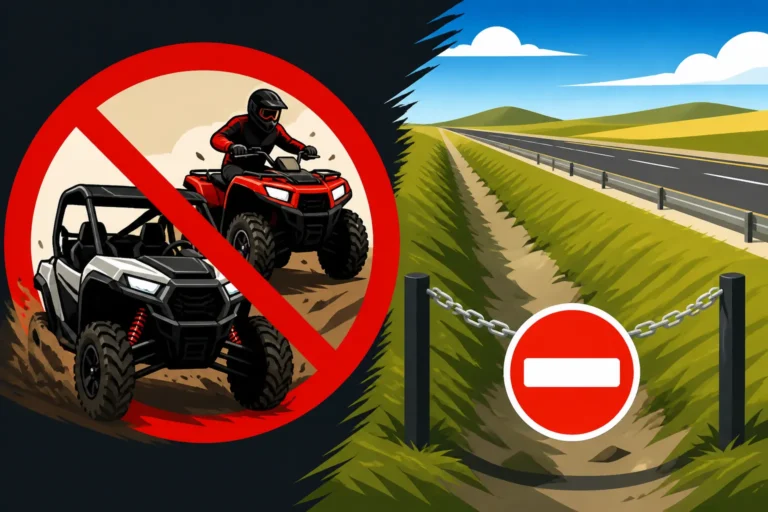
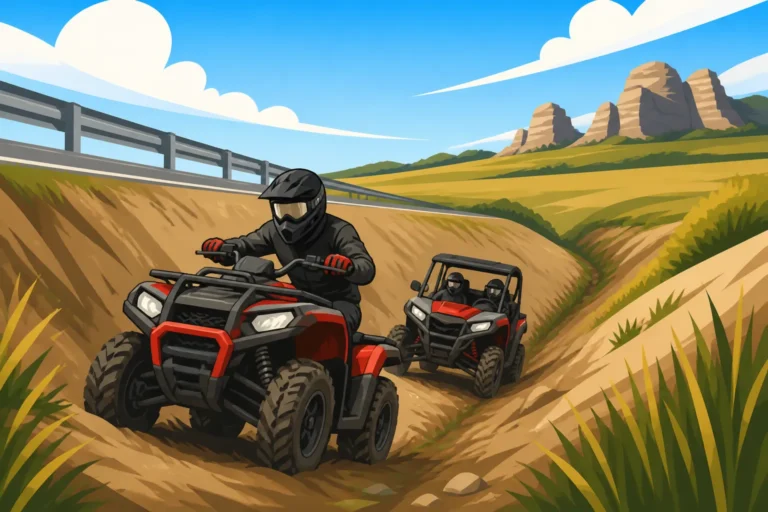
A popular topic among South Dakota riders is ditch riding. For plated ATVs and UTVs, the rules for ditch riding are specific. Generally, it is legal to operate on the extreme right-hand side of the road, on the shoulder, or in the ditch bottom of a public highway. However, this is only where such operation is not prohibited by a specific county ordinance or regulatory sign. Some counties have opted out of ditch riding, and others have specific restrictions. The general rule is that [South Dakota Ditch Riding Rules Explained] allow for it, but local exceptions apply. You can't ride in the ditch of an interstate highway, within the median, or within designated multi-use trails like snowmobile or bike trails even if they parallel a road. Furthermore, you must travel in the same direction as the adjacent traffic lane. Always be on the lookout for regulatory signs posted by counties, indicating areas where ditch riding is explicitly forbidden.
Crossing Highways and Interstates
While your plated ATV or UTV gains access to certain public roads, crossing major highways and interstates comes with its own set of rules. A plated machine is generally allowed to cross a public highway at an intersection, or at a point where a trail or private access meets the road, provided it's done safely and perpendicular to the flow of traffic. However, you cannot ride along an interstate highway or its ramps. Interstates are strictly off-limits for ATVs and UTVs, regardless of whether they are plated. This ban is due to safety concerns related to speed, vehicle size, and the flow of high-speed traffic. So, while you might be able to use your plated machine to travel a county road or a section line, don't expect to hop on I-90 for a quick trip.
Private Land and Designated Trails
Even with a plate, a significant portion of ATV and UTV riding still occurs on private land or designated trail systems. Your plate allows you to legally travel to these areas on public roads. For private land, you always need the landowner's explicit permission. Without it, you are trespassing, which can lead to legal consequences. For designated trail systems, like those found in the Black Hills National Forest, your South Dakota motorcycle plate may allow you to ride on certain forest roads, but it typically does not exempt you from needing a [South Dakota's Motorized Trail Permit]. This permit is a separate fee-based decal required for riding on designated federal and state off-road trails. So, a plate gets you to the trailhead, but a trail permit gets you on the trail. Always check the specific rules of the riding area you plan to visit, as they often have their own unique requirements regarding permits, width restrictions, and open/closed seasons. Remember, a plate is for public road use, while a trail permit is for public trail use, and they are not interchangeable.
Disclaimer
This article is for general informational purposes only and does not constitute professional advice. Laws, prices and regulations vary by location and change over time. Consult a qualified professional for guidance on your specific situation.