Why Snowmobile Trail Ditches Stay Closed
It's a common sight for ATV and UTV riders across South Dakota: miles of ditches stretching alongside highways and county roads, often looking like perfect, inviting pathways. You see that wide-open space, the gravel or dirt just begging for tires, and it's easy to assume, "Hey, this looks like a great place to ride!" But here's the kicker – not all ditches are created equal in the eyes of the law, especially when you encounter those that run adjacent to designated snowmobile trails. This guide is here to unravel the often-confusing rules surrounding ditch riding in the Mount Rushmore State and explain precisely why those particular ditches remain off-limits to your off-road machine, saving you from a potential ticket and ensuring you understand the specific nuances that make these areas distinct.
The Allure and the Trap of the Open Ditch
For many riders, the idea of ditch riding holds a certain appeal. It feels like a natural extension of off-road exploration, offering a sense of freedom and a way to cover ground without necessarily being on a designated trail. You might have seen others doing it, or perhaps you've heard whispers that "ditches are fair game" in South Dakota. This widespread perception, however, often overlooks critical distinctions in the law, distinctions that can lead to frustration and penalties if misunderstood. It's not just about finding a patch of dirt; it's about understanding the specific legal framework that governs every inch of rideable terrain.
The Appeal of Easy Access
Imagine you're driving your truck, trailer in tow, with your prized side-by-side or ATV, perhaps equipped with some rugged SuperATV components, heading to a known riding area. You glance over and see a seemingly empty ditch running parallel to the highway for miles. It looks smooth, clear, and offers an uninterrupted path. For a moment, it might seem like a perfect shortcut or an impromptu riding spot, especially if the designated trails are a bit further down the road. The immediate accessibility, without the need to navigate complex trail systems or specific staging areas, is incredibly tempting. This perceived ease of access is a huge part of why riders often question why some ditches are open and others are strictly off-limits. It feels intuitive to think, "If it's not paved, it's fair game," but South Dakota's laws are much more nuanced than that simple assumption.
The Illusion of Open Space
That feeling of wide-open space in a ditch can be incredibly deceptive. While some ditches in South Dakota are indeed legal to ride in, under specific conditions and unless a county has opted out, others are permanently closed to ATV and UTV traffic. The biggest illusion is that "empty space equals legal space." This isn't just about avoiding private property; it's about respecting specific designations made by state and local authorities. A ditch adjacent to a field might be open, but that same-looking ditch alongside a state highway that happens to be a designated snowmobile route becomes a no-go zone. This often catches riders off guard because the physical appearance of the terrain doesn't always broadcast its legal status. Without clear signage or prior knowledge, it's a genuine challenge to discern where you can and cannot legally ride, leading to the kind of specific frustration this guide aims to address.
South Dakota's Ditch Riding Rules: A Closer Look
South Dakota has a rather unique approach to ditch riding, one that grants a certain level of freedom but also imposes very specific restrictions. It's not a blanket "yes" or "no," which is often where the confusion for riders, especially those new to the state or just passing through, truly begins. Understanding these core rules is fundamental before we dive into the specific case of snowmobile trail ditches. The state tries to balance recreational access with safety and property rights, and that balance means a patchwork of regulations.
The General Ditch Riding Law
In South Dakota, the default rule is that you can generally ride an ATV or UTV in the bottom of a highway ditch or on the back-slope of the ditch. This permission extends to both state and county roads, but it comes with significant caveats. You're typically allowed in the ditch right-of-way, which is usually the area beyond the paved or graveled shoulder and up to the fence line or property boundary. However, you must always yield to traffic on the main roadway, and you're generally expected to stay as far to the right as possible, away from moving vehicles. The intention behind this law is to provide access for riders without putting them directly on the road, but it's not without its own set of responsibilities and implicit rules. For a deeper dive into these general rules, check out [South Dakota's Ditch Riding Rule].
The "Opt-Out" Clause for Counties
Here's where things get tricky and why checking local ordinances is paramount: while the state permits ditch riding as a general rule, individual counties in South Dakota have the authority to "opt out" of this provision. This means a county can pass a resolution or ordinance that prohibits ATV and UTV riding in all public ditches within its jurisdiction. When a county opts out, they are required to post regulatory signs at key entry points, indicating that ditch riding is forbidden. This creates a highly localized landscape of legality; what's perfectly fine in one county could earn you a hefty fine just across the border. Imagine planning a multi-county ride and having to know the specific ditch riding status of each one – it's a logistical challenge. Understanding [How a South Dakota County Opts Out of Ditch Riding] is crucial for any rider.
Crossing Rules vs. Riding Rules
It's vital to distinguish between riding in a ditch and crossing a highway. Even if a particular ditch is closed to continuous riding, South Dakota law typically allows ATVs and UTVs to cross a highway in the ditch when moving from one legal riding area to another, or to access private property. This crossing must be done at a right angle, with caution, and without impeding traffic. Think of it like crossing a street on foot; you wouldn't walk down the middle of the road, but you can cross it safely. The allowance for crossing is a practical necessity for riders, as it would be nearly impossible to navigate many areas without it. However, this crossing privilege does not grant you the right to simply start riding down the ditch once you've crossed. The distinction is subtle but legally significant, and it's a common area of misunderstanding that can lead to unintended violations.
The Specific Exclusion: Why Snowmobile Trail Ditches Are Different
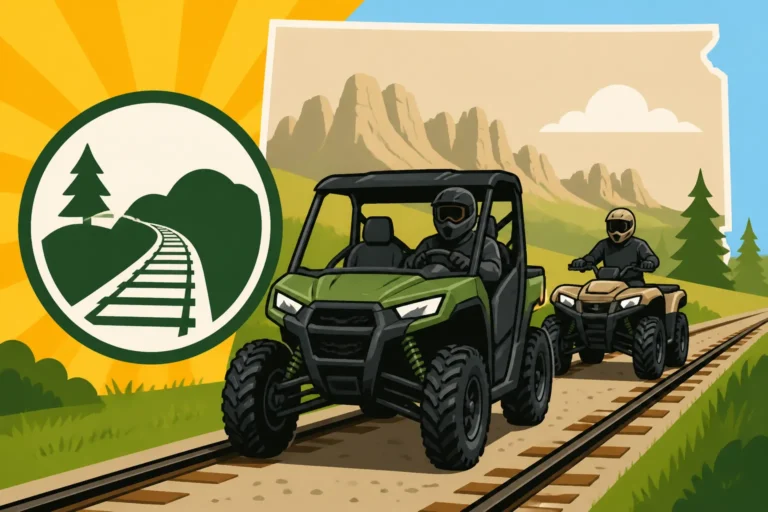
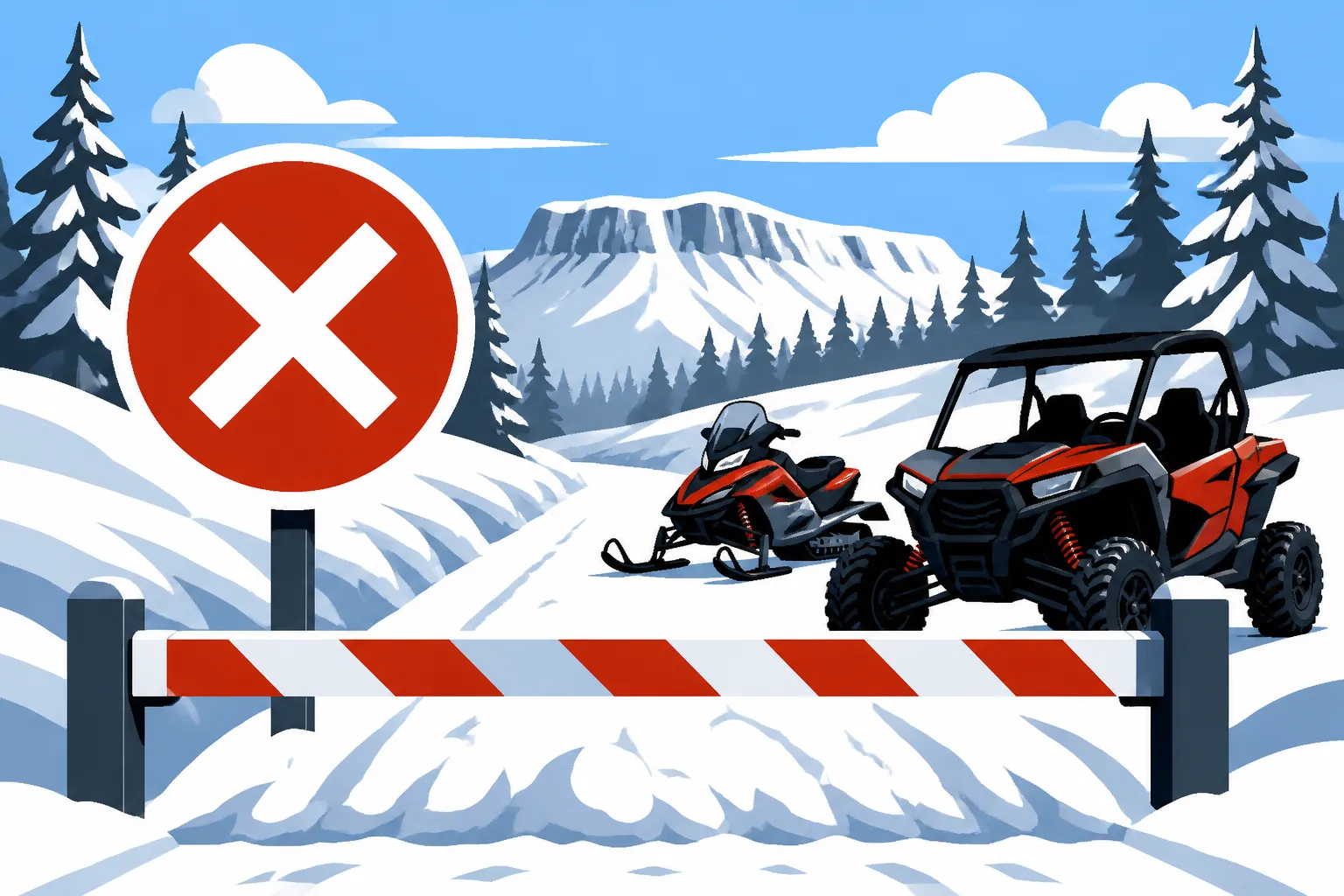
Now, let's get to the heart of the matter: those particular ditches that run alongside designated snowmobile trails. Even in counties where general ditch riding might be permitted, these specific corridors are almost universally off-limits to ATVs and UTVs. This isn't an arbitrary rule; it's rooted in the very purpose, maintenance, and safety considerations surrounding these dedicated winter routes. It's a classic example of specialized infrastructure serving a specialized recreational use, and why attempting to blend uses often creates more problems than it solves.
Dedicated Use
The primary reason snowmobile trail ditches stay closed to ATVs and UTVs is quite simply dedicated use. These ditches, or the paths they parallel, are specifically designated, groomed, and maintained for snowmobile traffic during the winter months. They are part of an established snowmobile trail system, often managed by the South Dakota Game, Fish and Parks (GFP) in conjunction with local snowmobile clubs and landowners. The funding, permits, and volunteer efforts that go into creating and maintaining these trails are all geared towards snowmobiling. Introducing ATVs and UTVs into these corridors, even when there's no snow on the ground, would conflict with their intended purpose and the agreements that make them possible. This is a lot like how a hiking trail is designed for foot traffic; you wouldn't expect to ride your ATV down it, even if it looks wide enough, because it serves a different primary purpose.
Safety Concerns
Safety is a huge, often underestimated, factor. When these ditches are part of an active snowmobile trail, there's an inherent risk of collision if other types of vehicles are present. Imagine a snowmobiler, traveling at speed, expecting a clear path, suddenly encountering an ATV. Even outside the snow season, the designation itself points to potential hazards. These paths might be designed with specific turns, dips, or crossings that are safe for snowmobiles but potentially dangerous for a four-wheeled vehicle. Furthermore, the presence of ATVs and UTVs can damage the underlying trail bed, creating ruts and uneven terrain that become hazardous for snowmobiles once winter arrives. This is not just about avoiding immediate accidents but also about preventing long-term damage that could compromise the safety of all users. SuperATV, for instance, builds robust machines, but even the best equipment can't overcome a fundamental conflict in trail design and intended use.
Environmental Impact and Preservation
Beyond safety and dedicated use, there's an environmental component. Snowmobile trails are often routed through sensitive natural areas, and the agreements for their existence might include specific environmental stipulations. ATVs and UTVs, with their different weight, tire patterns, and operational characteristics, can have a different environmental impact, especially on soft ground or sensitive vegetation, compared to snowmobiles gliding over snow. Allowing off-road vehicles onto these paths could lead to erosion, habitat disturbance, or damage to plant life, particularly during wetter seasons. This could, in turn, jeopardize the agreements with landowners or land management agencies that allow the snowmobile trails to exist in the first place. Preserving these designated areas for their intended purpose is crucial for long-term recreational access and environmental stewardship.
Understanding the "Snowmobile Trail" Designation
It's one thing to say a ditch is part of a snowmobile trail, but what does that really mean from a rider's perspective? How can you identify these areas, and what's the broader context that makes them unique? Knowing this helps you understand the reasoning behind the restrictions, rather than just feeling like you're arbitrarily being told "no." These trails are more than just lines on a map; they're part of a seasonal network with specific management and funding.
Seasonal Operations
The most important aspect of a snowmobile trail designation is its seasonal nature. These trails are typically active only during the winter months, roughly from December 15th through March 31st, depending on snow conditions and specific local regulations. Outside of this window, the trails might look like any other dirt path or ditch. However, their designation remains, even if there's no snow on the ground. The reason for the closure to ATVs and UTVs, even in the off-season, ties back to dedicated use and preservation. Landowners often grant access for snowmobiling with the understanding that the land will be used only for that purpose and only during the designated season. Opening it to other vehicles year-round would violate these agreements and could lead to the closure of entire sections of the snowmobile trail system.
Funding and Maintenance
South Dakota's snowmobile trails are often a collaborative effort, involving state agencies like GFP, local snowmobile clubs, and private landowners. Funding often comes from snowmobile registration fees, permit sales, and grants, all specifically earmarked for snowmobile trail development and maintenance. This money pays for grooming equipment, signage, bridge repairs, and brush clearing, all tailored to snowmobile use. If ATVs and UTVs were allowed, the wear and tear would be different, requiring different types of maintenance and potentially siphoning funds away from the dedicated snowmobile program. It's a system designed to support a specific recreational activity, and introducing other activities without specific provisions would complicate funding and management significantly.
Signs and Markers
How do you know if a ditch is part of a snowmobile trail? This is a crucial question for riders. Designated snowmobile trails are typically marked with specific signage. You might see signs indicating "Snowmobile Trail" or "No Motorized Vehicles Except Snowmobiles" at trailheads, road crossings, or where the trail enters or leaves a specific area. These signs are often colored (like orange or blue markers) and feature a snowmobile pictogram. While these signs are more prevalent during the snowmobile season, their presence indicates the underlying designation of the land. If you encounter such a sign, even on a warm summer day, assume the ditch or path it marks is part of that dedicated snowmobile network and therefore off-limits to your ATV or UTV. If you're ever in doubt, the safest bet is to consult the official South Dakota GFP trail maps or contact a local ranger district.
Here's a quick comparison of ditch types:
| Ditch Type | Status for ATVs/UTVs | Key Characteristics | Common Locations |
|---|---|---|---|
| General Roadside Ditch | Generally permitted (unless county opts out) | Alongside state/county roads, usually unmaintained | Rural highways, gravel roads |
| Snowmobile Trail Ditch | Strictly prohibited | Designated for snowmobiles, often groomed in winter | Adjacent to active snowmobile routes, marked by signs |
| County "Opt-Out" Ditch | Prohibited | In counties that have banned ditch riding, will be signed | Specific counties (e.g., Minnehaha, Lincoln) |
| Private Property Ditch | Prohibited (without permission) | Part of private land, often unmarked | Anywhere bordering private fields or homes |
| Interstate Ditch | Prohibited | Adjacent to interstates, part of federal right-of-way | Along I-90, I-29 |
Consequences of Riding in Restricted Areas
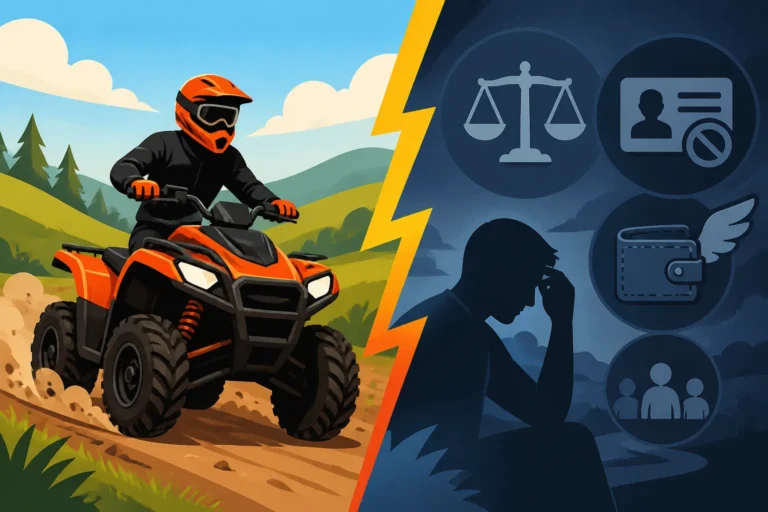
Ignoring these rules, whether intentionally or out of ignorance, can lead to a range of unpleasant consequences. It's not just about a minor slap on the wrist; the penalties can be significant, both financially and in terms of your riding privileges. No one wants their day of riding cut short by a law enforcement officer, and understanding the stakes can encourage responsible decision-making.
Legal Penalties
Riding an ATV or UTV in a designated snowmobile trail ditch, or any ditch where riding is prohibited (such as in an opt-out county), can result in various legal penalties. The most common consequence is a citation and fine. These fines can vary depending on the specific statute violated and the county, but they are often comparable to minor traffic violations, sometimes ranging into hundreds of dollars. In some cases, repeated offenses or riding in particularly sensitive areas could lead to more severe charges, especially if property damage or environmental harm occurs. A law enforcement officer, such as a South Dakota Highway Patrol trooper or a local sheriff's deputy, can issue these citations. They are well aware of the local ordinances and state statutes. [What a South Dakota Trooper Checks Roadside] often includes whether you're in a legal riding area. It's simply not worth the risk.
Safety Risks
Beyond the legal ramifications, there are inherent safety risks when riding in unauthorized ditches. As mentioned earlier, snowmobile trail ditches are not designed for ATVs or UTVs. They might have hidden obstacles, sharp turns, or sudden changes in elevation that are manageable for a snowmobile but could easily cause an accident for a heavier, wider, or less agile off-road vehicle. Think about the difference in traction between a snowmobile track and ATV tires on certain surfaces. You could also encounter fences, culverts, or other hazards that aren't marked for ATV traffic. Furthermore, riding in an area designated for snowmobiles, even in the off-season, might lead to unexpected encounters with maintenance crews or even early-season snowmobilers if conditions permit, creating collision hazards. Even with top-notch safety gear and robust suspension from brands like SuperATV, unexpected terrain can lead to spills and injuries.
Impact on Future Access
Perhaps one of the most significant, though often overlooked, consequences of riding in prohibited areas is the negative impact on future recreational access for all riders. When ATVs and UTVs are found on snowmobile trails or in other restricted areas, it erodes trust with landowners, land managers, and other user groups. Landowners who have generously granted access for snowmobiles might revoke that permission if they find other vehicles creating issues. This can lead to entire sections of trails being closed, not just for the offending riders, but for everyone. It also makes it harder for ATV and UTV advocacy groups to negotiate for new riding areas or expanded access, as incidents of non-compliance fuel arguments against allowing more off-road vehicle use. Respecting the rules, even when they seem inconvenient, is vital for protecting and expanding the riding opportunities we all cherish.
Finding Legal Riding Alternatives in South Dakota
Given the restrictions, especially concerning snowmobile trail ditches, it's natural to wonder: where can you legally ride your ATV or UTV in South Dakota? Fortunately, the state offers some fantastic opportunities for off-road enthusiasts, provided you know where to look and have the proper permits or licenses. There's a rich landscape of trails and roads, if you just follow the map!
Designated OHV Areas
South Dakota boasts a few excellent designated Off-Highway Vehicle (OHV) areas that are specifically managed for ATV and UTV use. These are often open year-round, or for an extended season, and provide a controlled environment for riders of all skill levels. Two prime examples are [Oahe Downstream OHV Area in South Dakota] near Pierre and Revheim Bay OHV Area. These areas typically have a mix of terrain, from challenging climbs to open fields, and are designed with rider safety and enjoyment in mind. They are clearly marked, and you don't have to worry about accidentally straying into a prohibited zone. These areas are fantastic for a focused day of riding without the ambiguity of roadside ditches.
Black Hills National Forest Roads and Trails
For many, the Black Hills National Forest is the ultimate destination for ATV and UTV riding in South Dakota. This vast expanse offers thousands of miles of roads and designated trails, with varying widths and difficulty levels. You can find everything from wide, graded forest roads suitable for larger side-by-sides to narrower trails perfect for ATVs. To ride the designated motorized trails in the Black Hills, you generally need a [South Dakota Motorized Trail Permit] in addition to any required registration. It's crucial to always consult a current Motor Vehicle Use Map (MVUM) for the specific area you plan to ride, as these maps clearly delineate which roads and trails are open to which types of vehicles and during what seasons. For more information, see [The Black Hills National Forest in South Dakota]. The sheer variety and beauty of the Black Hills make it a premier destination.
Permitted Road Use for Plated Machines
Another significant avenue for legal riding is to make your ATV or UTV street legal and obtain a motorcycle license plate. South Dakota has provisions that allow ATVs and UTVs to be licensed as motorcycles if they meet certain equipment requirements (like mirrors, horn, headlights, brake lights, and specific engine displacement rules). With a valid plate, you can legally operate your machine on most public roads (excluding interstates and certain highways, or roads where ATVs/UTVs are specifically prohibited by local ordinance). This opens up a whole new world of exploration, allowing you to connect trails, access fuel and services in towns, and enjoy scenic drives. While this doesn't apply to ditches, it significantly expands your legal riding options beyond designated trails. To understand the requirements, you might want to look into [Are ATVs Street Legal in South Dakota?]. It’s an investment, but for many, the freedom it offers is well worth it.
Disclaimer
This article is for general informational purposes only and does not constitute professional advice. Laws, prices and regulations vary by location and change over time. Consult a qualified professional for guidance on your specific situation.