South Dakota Trespass Rules for Riders
One of the biggest headaches for ATV and UTV riders in South Dakota isn't just tricky terrain or unpredictable weather; it's the constant worry about where you're actually allowed to ride. The lines between public and private land can feel incredibly blurry, and the last thing anyone wants is to accidentally trespass, facing fines or, even worse, damaging a landowner relationship. This guide is here to untangle the South Dakota trespass rules, giving you a clear roadmap for responsible and legal riding.
Understanding "No Trespassing" in South Dakota: The Basics for Riders
Riding an ATV or UTV in the wide-open spaces of South Dakota is an incredible experience, but that feeling of freedom can quickly turn to anxiety when you're unsure if the ground beneath your tires is fair game. Many riders, especially those new to the state or just passing through, often assume that if a gate is open or a fence is down, it means "come on in." Unfortunately, that's a dangerous assumption to make, and it can lead to serious legal trouble and a lot of ill will with local landowners. In South Dakota, the default rule of thumb for private property is simple: if you don't have explicit permission, stay off.
The Importance of Posted Signs and Fences
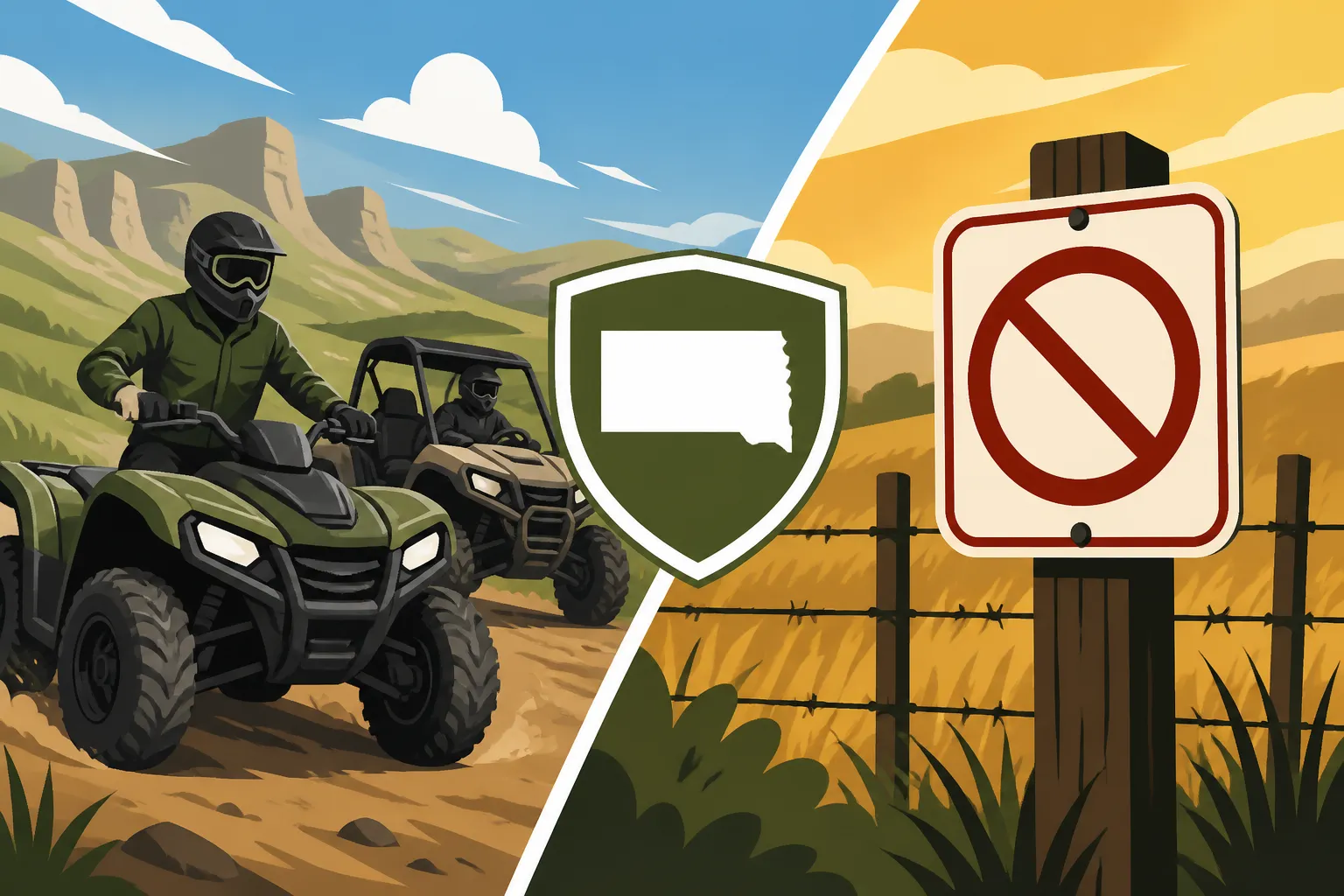
While it's always best to assume land is private unless proven otherwise, South Dakota law provides clarity on what constitutes legal notice of private property. Generally, "no trespassing" signs, fences, or other enclosures are all clear indicators that the land is private and entry is prohibited without permission. Think about it from a landowner's perspective: they might have livestock, crops, or even just a quiet piece of land they want to protect. A sign or a sturdy fence isn't just a suggestion; it's a legal warning. Ignoring these signs, or cutting fences to gain access, can escalate a simple trespass into a more serious offense. Even if you see tracks from other riders, it doesn't mean it's legal. Those riders might have permission, or they might be trespassing themselves. Always verify, never assume.
It’s not always about explicit signs, either. A clearly tilled field, a private driveway leading to a residence, or a pasture with visible livestock are all strong clues that you’re looking at private property, even if there isn’t a neon sign flashing "Stay Out." Common sense and respect go a long way here. If you're out exploring and come across any of these indicators, it's time to turn around or find a way to respectfully ask for permission. Don't push your luck, because the consequences for ignoring these basic rules can be costly.
Implicit vs. Explicit Permission
Many riders wonder if they can assume permission if they've ridden a certain area before without issue, or if a landowner hasn't actively told them to leave. In South Dakota, when it comes to riding ATVs and UTVs on private land, you need explicit permission. "Implicit permission," where you assume it's okay because no one has stopped you, simply doesn't cut it legally. Explicit permission means the landowner has directly given you permission to be there, either verbally or, ideally, in writing. This could be a conversation with a rancher, a signed agreement, or even a clear "yes" when you knock on their door.
This is especially true for hunters or recreational riders who might be familiar with a piece of land. Just because you hunted deer there last season, or rode snowmobiles through a particular field in winter, doesn't mean you have carte blanche for your UTV in the summer. Different activities or different seasons might have different rules from the landowner. It's always best practice to seek fresh permission for each activity and season, or at least confirm that previous permission still stands. This not only keeps you in the clear legally but also builds good relationships with the people who own the land you enjoy. Remember, securing [South Dakota Landowner Permission Rules] is key.
Navigating Public vs. Private Land: Where Can You Ride?
South Dakota offers some incredible riding opportunities, particularly in areas like the Black Hills National Forest. These are designated public lands where riding is generally permitted on marked trails and roads, provided you have the necessary permits and your machine meets the requirements. However, outside these clearly defined areas, discerning public from private can be surprisingly difficult, especially for those vast stretches of prairie and agricultural land. It's not uncommon for public roads to intersect or run alongside private property, making it crucial to know exactly where you are.
Section Lines and Unopened Roads: A Gray Area
One of the most common points of confusion for riders, particularly in the eastern and central parts of South Dakota, revolves around section lines and "unopened" roads. On maps, you might see perfectly straight lines forming a grid, often corresponding to section lines that were laid out during the state's early surveying. Many people mistakenly believe that all these section lines are public rights-of-way, accessible to everyone, regardless of whether they are maintained as roads. While some section lines are public roads, many others are not, especially if they haven't been opened, maintained, or used by the public for a certain period.
Even if a section line has been legally established as a public right-of-way, it doesn't necessarily mean you can ride your ATV or UTV on it. Local counties often have specific ordinances governing the use of these routes, and many remain "unopened" for motorized travel. Often, what appears to be an unopened section line might actually be a private access road or simply part of a landowner's field. Riding on these without clear understanding can lead you directly into a trespassing situation. It's critical to research local county ordinances and land ownership maps, and when in doubt, default to seeking permission or staying off. You can't just assume that [Can You Ride an Unopened South Dakota Section Line?] is always a "yes."
Riding on Ranches and Agricultural Lands
South Dakota is a state built on agriculture, with countless acres dedicated to ranching, farming, and other rural pursuits. Many of these lands are privately owned and actively used for livelihood. This means that when you're riding in rural areas, you're almost certainly going to encounter private agricultural property. For many ranchers, their land is their workplace, and unsolicited ATV or UTV traffic can pose significant risks to livestock, crops, and even equipment.
If you have a relationship with a rancher or farmer, always make sure to get their explicit permission before riding on their property. This means [Getting a Rancher's Permission in South Dakota] for specific dates, times, and routes. Never assume that because you know the owner, you can just show up and ride. They might have a calving pasture, a newly seeded field, or machinery in use that makes riding dangerous or destructive. Some landowners are open to allowing respectful riders, especially if you offer to help with a task or if you're a responsible hunter. Others will strictly prohibit any recreational riding. The key is communication and respect. Without that direct permission, riding on agricultural land is a clear act of trespassing, regardless of how "open" or unused the land may appear. You might even consider equipping your machine with durable tires and underbody protection from a brand like SuperATV if you are given permission to ride on rough ranch roads, to ensure you don't cause accidental damage to their property (or yours).
The Consequences of Trespassing: What Riders Face
It's easy to dismiss trespassing as a minor infraction, something that might just get you a stern warning. However, in South Dakota, trespassing with an ATV or UTV can carry significant legal consequences, not to mention the potential for civil liability. Landowners have a right to protect their property, and local law enforcement takes these rules seriously. Beyond the immediate legal troubles, there's also the damage to the relationship between riders and landowners, which can lead to more restrictive access for everyone in the long run.
Fines, Penalties, and Machine Impoundment
In South Dakota, criminal trespass can be classified as a Class 2 Misdemeanor, especially if you disregard clear "no trespassing" signs or enter areas with specific restrictions. A Class 2 Misdemeanor can result in fines and even potential jail time, though jail time is typically reserved for repeat or egregious offenders. However, even a first-time offense can result in a hefty fine, which can quickly add up when you factor in court costs and legal fees. Imagine being out for a fun ride, only to have your day — and your wallet — ruined by a preventable mistake. [What a Class 2 Misdemeanor Costs a Rider] can be a significant blow.
Beyond fines, there's also the possibility of your machine being impounded. If law enforcement determines you were illegally operating your ATV or UTV on private property, they have the authority to seize the vehicle. Getting it back will involve impound fees, storage fees, and potentially other administrative costs, all on top of any fines. This can leave you stranded, out of pocket, and without your ride for an extended period. It’s a harsh reality, but it’s one that emphasizes the importance of knowing exactly where you're allowed to be.
Building Relationships with Landowners
The legal consequences are one thing, but perhaps even more important in the long run is the impact that trespassing has on the broader riding community. When a few individuals trespass, it creates a negative perception of all ATV and UTV riders, making landowners less likely to grant permission to anyone. This is why [Getting a Rancher's Permission in South Dakota] and fostering good relationships is so vital. A positive interaction can open up new riding opportunities, while a negative one can lead to "no trespassing" signs going up where none existed before, effectively closing off areas for everyone.
Respectful communication is the foundation of these relationships. If you're considering riding near private land, make the effort to introduce yourself, explain your intentions, and ask for permission. Be prepared to respect a "no," and if permission is granted, stick to agreed-upon routes, close all gates, and leave no trace. Offering to help with a task, like checking a fence line or moving a few bales, can also go a long way in building trust. A thoughtful rider, perhaps one who has invested in quality gear and accessories from SuperATV, showing they care about their machine and the land, is much more likely to be welcomed than someone who acts carelessly. These interactions aren't just about accessing land; they're about being a good neighbor and a responsible member of the riding community.
How to Ensure You're Riding Legally
The thought of unintentionally trespassing can take the fun out of any ride. The good news is that with a little preparation and a commitment to responsible riding, you can virtually eliminate this risk. It’s all about doing your homework, communicating effectively, and respecting the land and its owners. This approach not only keeps you on the right side of the law but also helps foster a more positive environment for all riders in South Dakota.
Always Ask: The Golden Rule
This cannot be stressed enough: when in doubt, always ask for permission. This "golden rule" is the single most effective way to avoid trespassing. If you're looking at a parcel of land and you're not absolutely certain it's public land with open riding access, then you should treat it as private and seek permission from the owner. This might mean stopping at a farmhouse, making a phone call, or sending a polite email. Be specific about your intentions: "I'd like to ride my UTV from point A to point B on your property on Saturday afternoon. Would that be alright?"
If you do secure permission, confirm any specific conditions or restrictions. Are there certain areas to avoid? Are gates to be left open or closed? What time should you be done riding? Getting these details straight upfront prevents misunderstandings later. If the owner prefers you don't ride, respect their decision without argument. Their land, their rules. This simple act of asking shows respect and goes a long way in building a positive reputation for riders. Remember, good communication is an investment in future riding opportunities.
Using Maps and Resources
Modern technology provides excellent tools for identifying land ownership, which can be invaluable for riders. County plat maps, online GIS (Geographic Information System) portals, and dedicated land ownership apps can help you identify property lines and determine who owns a particular parcel of land. Many of these resources are publicly available and can be accessed from your computer or even on your phone while out in the field. Before heading out, plan your route and cross-reference it with these maps to ensure you're sticking to public rights-of-way or land for which you have explicit permission.
For public lands, especially federal lands like the Black Hills National Forest, consult official Motor Vehicle Use Maps (MVUMs). These maps clearly designate which roads and trails are open to motorized vehicles, what types of vehicles are allowed, and any seasonal closures. Never assume that because a trail looks well-used, it's legal. MVUMs are the definitive source for legal riding on Forest Service land. Always [Carrying the Black Hills Travel Map on Every Ride] or having a digital version readily accessible will be your best friend. Combine these resources with a GPS device or a mapping app on your phone, and you'll have a robust system for staying on track and avoiding any inadvertent trespass.
Disclaimer
This article is for general informational purposes only and does not constitute professional advice. Laws, prices and regulations vary by location and change over time. Consult a qualified professional for guidance on your specific situation.