South Dakota Rules for Riding in Hunting Season
Hunting season in South Dakota is an incredible time, full of anticipation, strategy, and the rugged beauty of the landscape. But for many hunters, the question of how to best utilize their ATV or UTV often comes with a tangle of confusion and conflicting information. You’ve invested in a machine to help you scout, carry gear, and retrieve game, and the last thing you want is a run-in with a game warden because you misunderstood the rules. This guide will cut through the uncertainty, outlining exactly what you can and cannot do with your off-road vehicle during hunting season across South Dakota's diverse terrain.
Navigating South Dakota's Hunting Season with Your ATV or UTV
The roar of an ATV engine or the quiet hum of an electric UTV can be a hunter's best friend or worst enemy, depending entirely on how and where it's used during the hunting season. South Dakota has specific regulations designed to manage wildlife, maintain fair chase, and ensure safety for everyone enjoying the outdoors. Understanding these rules isn't just about avoiding a fine; it's about respecting the land, the wildlife, and your fellow hunters. Many folks get frustrated because rules that apply during the general riding season might shift or be entirely different when hunting licenses are active.
General Principles for Hunters and Riders
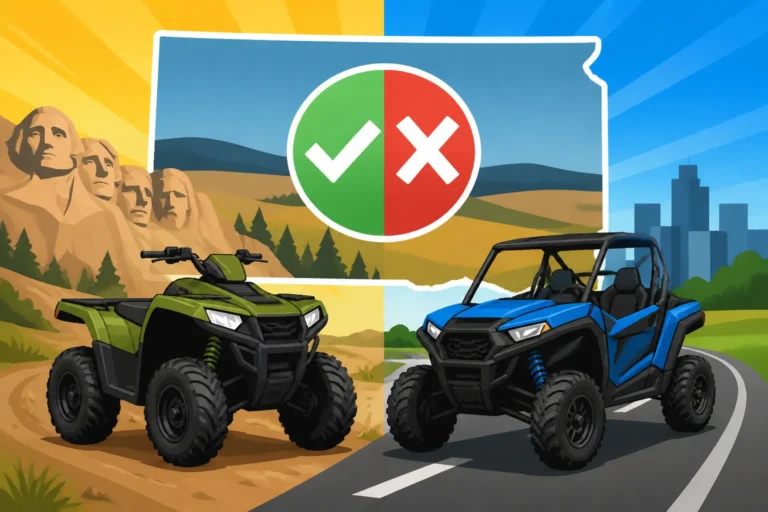
First and foremost, the core principle is usually about minimizing disturbance to wildlife and ensuring that the use of a motorized vehicle doesn't give a hunter an unfair advantage. This often translates into restrictions on pursuing game with a vehicle, or using a vehicle to "flush" animals. You can use your ATV or UTV to get to a hunting spot, to transport stands, blinds, and other gear, and often for game retrieval. However, the exact limitations depend heavily on the type of land you're on, whether it's public or private, and even the specific game animal you're pursuing. It’s a common misconception that if you have a street-legal ATV, you can drive it anywhere during hunting season – that's simply not true, as hunting regulations often override general vehicle codes for certain activities.
Understanding Your Machine's Role in a Hunt
Think of your ATV or UTV as a tool in your hunting arsenal, similar to your rifle or bow, but with its own set of operating instructions. It's fantastic for hauling that heavy cooler, transporting a pop-up blind deep into the woods, or getting your scent-free clothing away from the truck. For those long treks across open prairie or up steep Black Hills inclines, a reliable machine from a brand like SuperATV can save your back and precious time. However, it's generally prohibited to use your machine to actively chase or herd game. For instance, if you spot a deer while driving your UTV down a forest road, you can't just floor it and try to cut it off. The vehicle is for access and transport, not for direct engagement with game animals. [South Dakota Rules for Carrying a Firearm on an ATV] also come into play here, ensuring safe transport of your hunting weapons.
Key Equipment Considerations
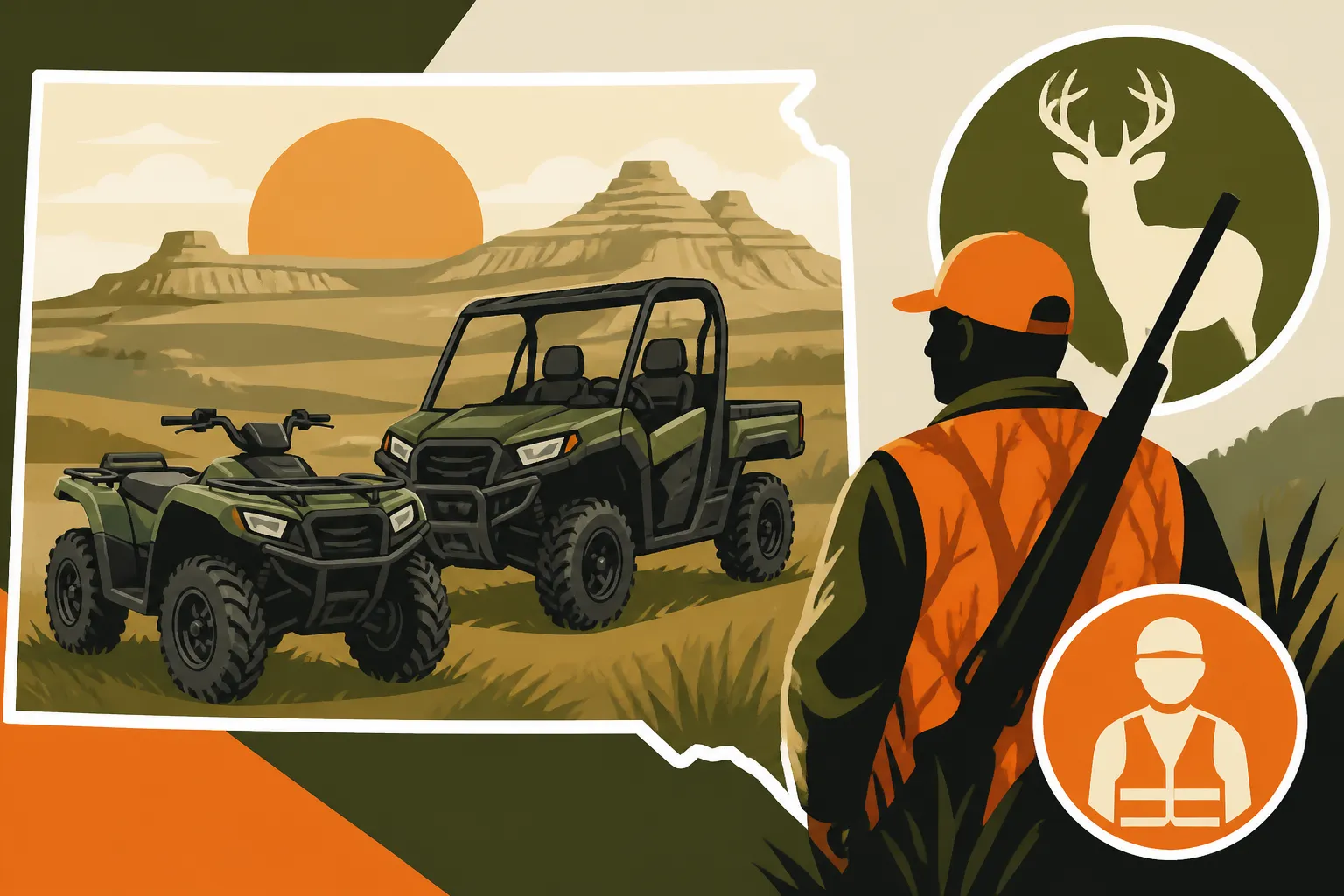
Beyond the legalities of where and how you can ride, there are practical equipment considerations for hunting season. Visibility is key, especially if you're riding a road or trail that might also be used by other hunters or vehicles. Many hunters add orange flags or wear blaze orange while riding their machines. Ensuring your machine is in top mechanical condition, with good tires and brakes, is even more critical when you're potentially far from help, perhaps with a downed animal in tow. Think about what kind of ground you’ll be covering: rocky trails might call for stronger skid plates, while muddy lowlands need aggressive tire treads. A winch, easily installed on many machines, including those with custom parts from SuperATV, can be a lifesaver if you get stuck or need to move a heavy animal.
Rules for ATV/UTV Use on Public Lands During Hunting Season
Public lands are a shared resource, and during hunting season, they become a bustling hub of activity. Because of the diverse range of users—hikers, mountain bikers, wildlife watchers, and multiple types of hunters—the regulations for ATV and UTV use are often stricter and more clearly defined than on private property. It’s absolutely essential to know if you're on federal land, state land, or other publicly managed areas, as each will have its own specific set of rules.
National Forest Lands: Black Hills Specifics
In areas like the Black Hills National Forest, motorized travel is generally restricted to designated roads and trails. This is a year-round rule, but it becomes even more critical during hunting season. You must consult a Motor Vehicle Use Map (MVUM) for the specific area you plan to hunt. These maps clearly show which roads and trails are open to motorized vehicles, which are closed, and which have seasonal restrictions. [South Dakota Rules for Riding Federal Land] cover these areas. You cannot simply drive cross-country off a designated trail to reach a stand or retrieve an animal. If you’re caught doing so, you could face hefty fines and potentially lose hunting privileges. Some areas might have seasonal closures that align with sensitive wildlife periods or muddy conditions, so always check the most current MVUM and any local forest service alerts before you head out. Don't assume a trail you rode in the summer is still open in the fall.
South Dakota Game, Fish and Parks (GFP) Lands
South Dakota's Game, Fish and Parks (GFP) manages various lands, including Walk-In Areas (WIAs), Game Production Areas (GPAs), and state parks. The rules for ATV and UTV use on these lands during hunting season are quite clear: motorized vehicles are generally prohibited off designated roads and parking areas. [Riding GFP Land on a Machine] means sticking to established routes. You cannot drive your ATV into a WIA or GPA to drop off a hunter, retrieve an animal, or scout. These areas are designed for foot traffic to minimize disturbance and provide quality hunting experiences. There might be rare exceptions for individuals with specific disability permits, but for the vast majority of hunters, your off-road vehicle must stay on public access roads or in designated parking lots. This can be a source of frustration for hunters who want to use their machine to cover ground, but it’s a rule designed to preserve the hunting experience for everyone.
Bureau of Land Management (BLM) Areas
While South Dakota doesn't have the vast tracts of BLM land found in some western states, there are still some parcels, particularly in the western part of the state. Similar to National Forest lands, BLM areas generally restrict motorized vehicle use to existing roads and trails. The emphasis is on "existing," meaning routes that are clearly defined and have been used historically, rather than creating new trails. Always check with the local BLM field office for specific rules and maps for the area you intend to hunt. The underlying principle across all federal and state lands is conservation and responsible use, so plan your access points and retrieval strategies carefully, keeping your machine on approved paths.
| Public Land Type | General ATV/UTV Use During Hunting Season | Game Retrieval | Key Rule to Remember |
|---|---|---|---|
| National Forest Lands | Restricted to designated roads/trails per MVUM | Limited to designated routes | Always check current MVUM for open routes and closures |
| GFP Lands (WIAs, GPAs) | Generally prohibited off designated roads/parking areas | Foot retrieval only (usually) | Motorized vehicles not allowed in hunting areas |
| Bureau of Land Management | Restricted to existing roads and trails | Limited to existing routes | Verify local BLM regulations and maps |
ATV/UTV Use on Private Property for Hunting Purposes
Private land offers a different set of opportunities and responsibilities when it comes to using your ATV or UTV during hunting season. While you generally have more freedom than on public land, this freedom comes with a critical prerequisite: explicit permission from the landowner. Without it, you are trespassing, regardless of whether you’re hunting or just riding. This is where most hunters find the greatest flexibility, but also where misunderstandings can lead to serious issues.
The Absolute Necessity of Landowner Permission
Let's be crystal clear: if you are hunting on private land, you must have permission from the landowner. This isn't just a courtesy; it's the law. This permission should cover both your right to hunt and your right to use an ATV or UTV on their property. [South Dakota Landowner Permission Rules] are critical to understand. Never assume that permission to hunt extends to unlimited motorized vehicle use. A landowner might be perfectly happy for you to hunt but might have specific concerns about tearing up fields, disturbing livestock, or creating excessive noise with your machine. Always have a direct conversation, outlining exactly how and where you intend to use your ATV or UTV. Getting this permission in writing, or at least a clear understanding, can prevent major headaches.
For example, a rancher might grant you permission to ride a two-track road to a particular deer stand but explicitly forbid you from driving across a newly planted winter wheat field, even if it seems like a shortcut. Using your machine respectfully and sticking to agreed-upon routes helps maintain a good relationship with the landowner, which is invaluable for future hunting opportunities.
Retrieving Game with Your Off-Road Vehicle
This is one of the primary reasons many hunters invest in an ATV or UTV. After a successful hunt, especially with a large animal like a deer or elk, hauling it out by hand can be an exhausting, back-breaking ordeal. On private land, with the landowner's permission, using your machine for game retrieval is generally allowed and highly practical. [South Dakota Rules for Retrieving Game by ATV] permit this, assuming you are on private property with consent, or on public land where motorized retrieval on designated routes is allowed.
Imagine downing a large buck deep in a draw. Instead of spending hours dragging it out, you can often use your UTV, perhaps with a utility trailer or a specialized game hauler from a company like SuperATV, to transport it efficiently. This not only saves you physical exertion but also helps preserve the quality of the meat by getting the animal processed more quickly. However, even during retrieval, be mindful of your impact on the land. Avoid creating ruts in wet fields or damaging delicate vegetation. If you’ve discussed your retrieval plan with the landowner, they might even suggest the best routes to minimize impact.
Respecting Boundaries and Posted Land
When hunting on private land, it's absolutely crucial to know and respect property boundaries. It's easy for lines to blur, especially in rolling hills or dense timber, but inadvertently crossing onto an adjacent property without permission is trespassing. Always consult maps, GPS, and look for fences or boundary markers. Just because you have permission from one landowner doesn't mean you can ride onto their neighbor's land. If the adjacent property is posted with "No Trespassing" signs, those apply to you and your ATV just as much as anyone else. A quick pre-hunt scout, possibly on your ATV (with permission), can help you familiarize yourself with the terrain and the exact property lines. Always be considerate, and remember that maintaining good relationships with all landowners in the area benefits the entire hunting community.
Avoiding Penalties and Ensuring a Successful Hunt
Nobody wants a hunting trip ruined by a citation or, worse, a confiscated machine. Understanding and adhering to South Dakota's ATV/UTV rules during hunting season is paramount for a safe, enjoyable, and legal experience. A little preparation and common sense go a long way in ensuring your focus stays on the hunt, not on legal worries.
Common Violations and Their Consequences
Ignorance of the law is rarely an excuse in the eyes of a game warden or a county sheriff. Here are some of the most common ways hunters run afoul of the rules when using ATVs or UTVs during hunting season:
- Riding off-trail on public land: As discussed, this is a big one. Federal and state lands have clear rules about designated motorized routes. A violation can lead to significant fines and potentially a ban from specific areas. [South Dakota Fines for Riding Off a Route] can be substantial.
- Trespassing on private property: Using your ATV on private land without explicit permission is a surefire way to earn a citation, an angry landowner, and potentially criminal charges.
- Harassing or pursuing game with a vehicle: Actively chasing or herding wildlife with your ATV or UTV is illegal and unethical. This is a severe violation of fair chase principles.
- Improper firearm transport: While you can carry firearms on your ATV, they must be unloaded and often cased, especially on public roads or trails, depending on specific local rules and game management units. Check [South Dakota Rules for Carrying a Firearm on an ATV] for full details.
- Operating an unregistered or unpermitted vehicle: Even if you’re only using your machine on private land, if you ever cross or use a public road or designated trail, your machine needs to meet registration and permit requirements. This often includes the [Black Hills Motorized Trail Permit Cost] for federal lands.
Penalties can range from civil citations and fines to criminal charges, forfeiture of your machine, or loss of hunting privileges. It's simply not worth the risk.
Best Practices for Responsible ATV/UTV Use
Beyond just following the letter of the law, adopting a mindset of responsible use will greatly enhance your hunting experience and help preserve access for everyone.
- Plan your route: Before you leave home, study maps (MVUMs for public land, plat maps for private). Know exactly where you can and cannot ride.
- Communicate with landowners: If on private land, have a clear, documented agreement about ATV use.
- Drive cautiously: Especially during hunting season, visibility can be poor, and other hunters (on foot or in vehicles) might be present. Be aware of your surroundings and yield to others.
- Minimize impact: Avoid driving through wet, muddy areas if possible. Stick to existing tracks and trails to prevent erosion and habitat damage.
- Be quiet: While not always legally mandated, using a quieter exhaust system or an electric UTV can significantly reduce your disturbance to wildlife and other hunters. Many aftermarket parts, including those from SuperATV, focus on performance and sometimes sound reduction.
- Carry essential gear: Always have a first-aid kit, communication device, maps, extra fuel, and basic repair tools. A flat tire deep in the backcountry is no fun.
Essential Pre-Hunt Checks
Just like you check your rifle scope or bow strings, give your ATV or UTV a thorough once-over before heading out for hunting season.
- Tires and Brakes: Ensure tires are properly inflated and have good tread. Test your brakes thoroughly.
- Fluids: Check engine oil, coolant, and brake fluid levels.
- Lights: Headlights, taillights, and brake lights should all be functioning, especially if you plan to be out around dawn or dusk. [South Dakota Equipment List for Road Use] details requirements if you plan any road travel.
- Battery: A dead battery can strand you. Ensure it's charged and connections are clean and tight.
- Safety Gear: Helmets, goggles, and appropriate protective clothing are crucial, even for short trips.
- Permits and Registration: Double-check that all your vehicle registrations and any required trail permits (like the Black Hills Motorized Trail Permit) are current and properly displayed. Ensure you've addressed [What a South Dakota Nonresident Permit Requires] if you're from out of state.
By taking these steps, you can ensure your ATV or UTV remains a valuable asset to your hunting strategy, allowing you to focus on the thrill of the chase and the beauty of South Dakota's wild spaces, rather than worrying about rules and regulations.
Disclaimer
This article is for general informational purposes only and does not constitute professional advice. Laws, prices and regulations vary by location and change over time. Consult a qualified professional for guidance on your specific situation.