South Dakota Rules for Night Riding on a Trail
There's something uniquely exhilarating about hitting the trails after the sun dips below the horizon in South Dakota. The quiet, the cooler air, the way your headlights cut through the darkness – it’s a whole different kind of adventure. However, the thrill of night riding comes with its own set of responsibilities and rules you absolutely need to understand. This guide will walk you through the essential South Dakota regulations and critical safety considerations for night riding on ATV and UTV trails, helping you prepare for a safe and legal off-road experience after dark.
The Essentials of Night Riding Legality on South Dakota Trails
When the sun sets, the rules of the trail don't necessarily change, but their application and importance certainly intensify. Before you even think about firing up your machine for a night run, you need to understand the fundamental legalities governing trail access and operation in the dark. Ignoring these can not only put you in a bind with law enforcement but also seriously jeopardize your safety and that of others.
Understanding Trail Operating Hours and Closures
It's easy to assume that if a trail is open during the day, it's open at night. Unfortunately, that's not always the case, and making such an assumption can lead to a rude awakening. Many designated riding areas and trail systems, particularly those managed by state or local entities, have specific operating hours. For instance, some smaller county parks or dedicated OHV areas might close at dusk, with gates locking and no entry permitted until dawn. You might find yourself locked in or cited for being on the property outside of permitted hours.
Even on larger federal lands, like portions of the Black Hills National Forest, while many roads and trails don't have explicit "night closing" times, specific sections might be subject to seasonal closures. These closures can be due to wildlife migrations, fire danger, or to prevent damage during wet conditions, and they apply around the clock. Imagine heading deep into a trail system at night, only to discover a closure you missed, forcing a difficult and potentially dangerous U-turn in the dark. It’s absolutely crucial to check the specific regulations for the trail system you plan to ride. Websites for the U.S. Forest Service, South Dakota Game, Fish and Parks (GFP), or county recreation departments are your go-to sources for the most current information. Always consult current [South Dakota Trail Maps and MVUMs] (Motor Vehicle Use Maps) before you leave, as these documents clearly delineate legal routes and any time-based restrictions.
Equipment Mandates for Night Operation
This is where your machine really needs to shine, literally. Riding an ATV or UTV at night without proper, functional lighting is not only incredibly dangerous but also strictly illegal. South Dakota, like most states, has clear requirements for vehicles operating after dark, even off-road.
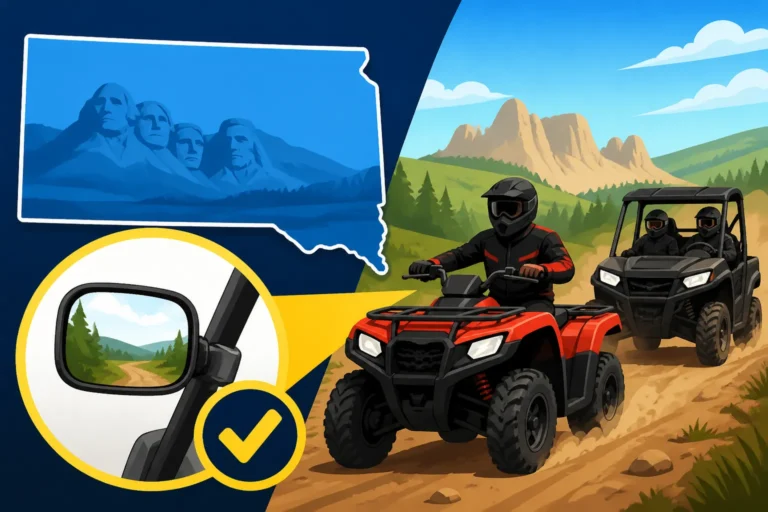
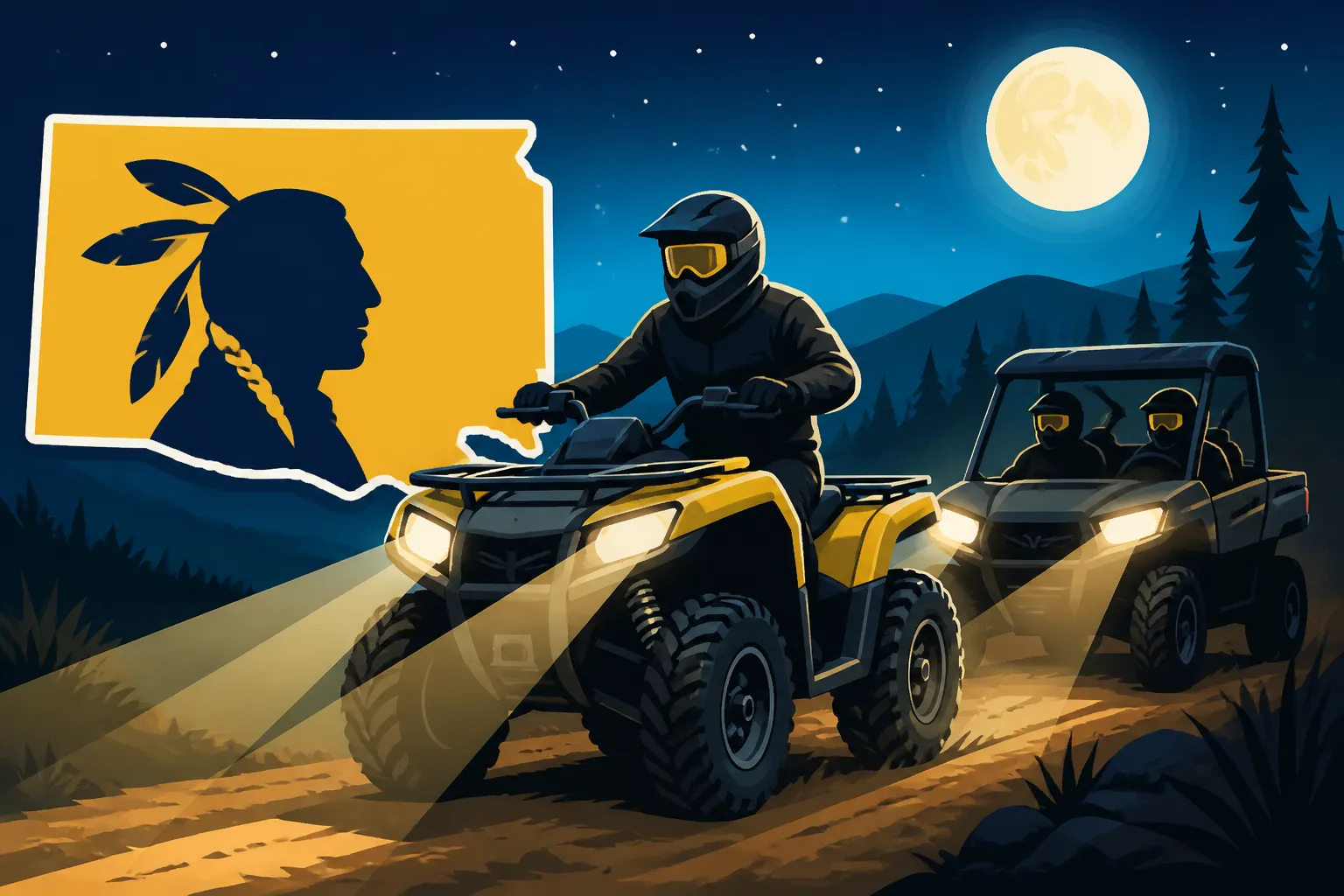
First and foremost, you need a working headlight system capable of illuminating the trail ahead. This typically means at least one white headlight, visible from a certain distance, though many riders opt for two or even upgrade to more powerful LED setups. The key is to have enough illumination to clearly see obstacles, terrain changes, and trail markers well in advance. Consider reputable aftermarket solutions from brands like SuperATV if your stock lighting feels insufficient for serious night riding. These upgrades can make a world of difference in visibility. Beyond lighting the way forward, you must have a red taillight visible from the rear, often integrated with a brake light that illuminates when you apply the brakes. These are vital for other riders to see you, especially if you're riding in a group or on a multi-use trail where you might encounter slower-moving traffic.
Additionally, many machines are required to have reflectors visible from the sides. While often overlooked, these subtle pieces of equipment can greatly enhance your visibility to others in low-light conditions. Ensure all your lights are clean, unobstructed, and in proper working order before every night ride. Carrying spare fuses and even a small auxiliary light source, like a headlamp, is a smart backup plan, as a failed headlight in the middle of nowhere after dark is a predicament you want to avoid at all costs. While some of these requirements might echo general [South Dakota Equipment List for Road Use], it's important to remember that trail-specific nuances often apply, especially regarding additional off-road lighting that may not be street-legal but is invaluable in the wilderness.
Safety Considerations Beyond Legal Requirements
While meeting the legal requirements for night riding is non-negotiable, true safety goes far beyond simply having working headlights. The darkness fundamentally alters the riding experience, introducing new challenges that demand heightened awareness, specialized gear, and a robust approach to preparedness. Neglecting these aspects can quickly turn an exciting night out into a perilous situation.
Enhanced Visibility for Rider and Machine
When you're riding at night, it's not just about seeing where you're going; it's equally about being seen by others. This is particularly true if you're riding with a group, where dust can quickly obscure machines, or on trails that might be shared with hikers, mountain bikers, or even wildlife. Investing in high-visibility gear for yourself is paramount. Think reflective vests, jackets, or even patches on your helmet and riding pack. Many modern riding helmets come with reflective elements, but adding extra reflective tape can significantly increase your profile in the beam of another rider's lights.
For your machine, beyond the mandated headlights and taillights, consider auxiliary lighting. While not always legally required for trails, powerful LED light bars or floodlights can vastly improve your field of vision, particularly to the sides of the main headlight beam. Many riders utilize rock lights or underglow kits, not just for aesthetics, but because they illuminate the ground immediately around the machine, helping with tricky terrain at low speeds. Just be mindful of aiming and brightness; you don't want to blind oncoming riders. For an added layer of safety, especially if you're in an area where dust is prevalent or you anticipate slow, technical riding, a whip flag with an LED light can make your presence known from a distance, even if your machine is obscured by terrain or dust. Brands like SuperATV offer a wide range of these auxiliary lighting solutions that can significantly enhance your night riding safety.
Navigating the Dark: Speed, Terrain, and Awareness
The biggest mistake a night rider can make is to approach the trail with the same speed and confidence they would in broad daylight. Darkness plays tricks on your eyes, distorting depth perception, flattening terrain, and making obstacles much harder to spot until you're right on top of them. You absolutely must reduce your speed significantly. What looks like a small puddle by day can be a deep rut by night; a gentle slope can appear as a sudden drop-off.
Your awareness needs to be heightened. Scan the trail constantly, not just directly ahead, but to the sides for potential hazards like overhanging branches, rocks, or washouts. Shadows can conceal treacherous obstacles, and the light from your machine can create confusing illusions. Beyond the terrain, night brings out nocturnal wildlife. Deer, elk, coyotes, and other animals are far more active after dark and can dart onto the trail without warning. A collision with a large animal at speed in the dark is incredibly dangerous. Riding with others, a common practice for night rides, provides an extra layer of safety. The combined light from multiple machines improves overall visibility, and having a buddy means help is immediately available if you encounter a breakdown, get stuck, or have an accident. Always ride within your comfort zone and skill level, and never push the limits when visibility is compromised.
Emergency Preparedness for Night Rides
Breakdowns and emergencies are always a possibility on the trail, but they become far more serious when compounded by darkness and potentially colder night temperatures. Your emergency kit for a night ride needs to be more comprehensive than for a day trip. First, extra light sources are non-negotiable. This means not just a powerful headlamp for each rider, but also spare batteries or a portable power bank to recharge phones and other devices. Losing your main machine lights with no backup can quickly escalate a minor issue into a major ordeal.
Your standard first aid kit should be readily accessible and well-stocked, as treating injuries in the dark is inherently more difficult. Basic tools, a tire repair kit, and a small air pump are essential for common mechanical issues. More importantly, consider communication. While cell service might be spotty or nonexistent in many parts of the Black Hills National Forest or other remote South Dakota trails, a satellite messenger or a two-way radio can be a lifesaver. These devices can summon help even when you're far out of cell range. [Carrying Fuel on a South Dakota Ride] is also more critical at night, as misjudging distances or getting lost consumes more fuel, and running out after dark is a serious problem. Furthermore, pack emergency blankets, extra water, and high-energy snacks. Even on a mild evening, temperatures can drop surprisingly fast after dark, and being stranded overnight without adequate supplies can quickly lead to hypothermia. Always tell someone your planned route and estimated return time before embarking on a night ride.
| Consideration | Day Riding | Night Riding |
|---|---|---|
| Visibility | Excellent natural light, clear sightlines | Limited to headlight beam, shadows, glare |
| Pace | Faster speeds often possible | Slower, more cautious speeds advised |
| Wildlife Encounter | Visible, but often less active | Highly active, harder to spot, greater risk |
| Required Gear | Basic safety gear, adequate lighting a bonus | Mandated, robust lighting; reflective gear vital |
| Terrain Perception | Clear depth and detail | Distorted, flattened, hidden obstacles |
| Risk Level | Moderate | Higher due to reduced visibility and emergencies |
| Emergency Prep | Standard kit, less focus on light/warmth | Extensive kit, backup lights, warmth, comms |
Specific South Dakota Trail Regulations and Enforcement
Beyond the general safety guidelines, South Dakota has specific regulations that apply to off-road vehicles, and understanding how these intersect with night riding is critical. Enforcement officers, whether they are local sheriffs, state park rangers, or Forest Service personnel, are trained to look for compliance with these rules, day or night.
Permit Requirements for Night Trail Use
To legally ride on most designated motorized trails in South Dakota, you'll need a [Black Hills Motorized Trail Permit Cost]. This permit is a general access permit for your machine, and typically, it does not differentiate between day or night use. If the trail system itself is open for riding during the hours you intend to be out, and you have the valid permit affixed to your machine, you're generally good on that front. However, remember the critical distinction: the permit grants access to the trail, not carte blanche to ignore specific operating hours or other rules of that particular area.
For example, riding within the Black Hills National Forest generally requires this permit, but if you're on a trail managed by South Dakota Game, Fish and Parks, such as the [Oahe Downstream OHV Area] near Pierre or the [Revheim Bay OHV Area], you'll need to confirm their specific permit or access fee structure. While these GFP areas might not require the Black Hills permit, they could have their own entry fees or permits, which you should acquire beforehand. The key takeaway is that your permit allows you onto authorized federal or state land, but it does not supersede any specific time-of-day restrictions or closures that individual parks or trail systems might enforce. Always check with the managing authority of your chosen riding location, whether it's [Riding a National Forest in South Dakota] or a smaller local park.
Sound Limits and Spark Arresters at Night
Noise pollution is a significant concern for land managers and residents, and it becomes particularly amplified after dark. South Dakota has specific [South Dakota Sound Limits on Forest Trails] that apply to off-road vehicles operating on public lands. These limits are in effect 24/7, and operating an excessively loud machine, especially late at night, is a surefire way to draw unwanted attention from law enforcement and upset nearby campers or landowners. It's not uncommon for officers to patrol trailheads or popular camping spots near trail systems specifically looking for noise violations after hours.
Equally important are [South Dakota Spark Arrester Rules]. Every ATV and UTV operating on public land in South Dakota must be equipped with a U.S. Forest Service-approved spark arrester. This device prevents hot carbon particles from escaping your exhaust and potentially igniting dry vegetation, a risk that becomes even more critical in the dry conditions often found in summer and fall, especially at night when fires can spread undetected. This rule is non-negotiable and strictly enforced, particularly in the Black Hills, which is prone to wildfires. Adhering to these regulations is not just about avoiding a ticket; it's about being a responsible land user and protecting the natural beauty and safety of South Dakota's outdoor spaces for everyone.
Choosing Your Night Riding Location Wisely
Not all trails are created equal when it comes to night riding. Just because a map shows a trail doesn't mean it's suitable, or even legal, for after-dark adventures. Making an informed decision about where you ride at night is as crucial as preparing how you ride.
Designated OHV Areas vs. Multi-Use Trails
Your best bet for a safe and legal night ride is often within a designated Off-Highway Vehicle (OHV) area. These areas, like [Oahe Downstream OHV Area] or [Revheim Bay OHV Area], are specifically designed and managed for motorized recreation. While you still need to check their specific operating hours, some may even host special night riding events or have more permissive rules for after-dark use. The trails are typically well-marked, often patrolled, and designed to handle the wear and tear of ATVs and UTVs. They also tend to attract other riders, which, as discussed, can add a layer of safety in numbers.
Contrast this with multi-use trails, which might be open to hikers, mountain bikers, or even horseback riders. While motorized vehicles might be permitted on these trails during the day, night riding can create conflicts. The sudden appearance of bright headlights and engine noise can startle other users, particularly those not expecting motorized traffic after dark. It's often safer and more respectful to stick to areas where motorized night use is clearly encouraged or at least explicitly permitted. While South Dakota boasts [3,600 Miles of South Dakota Forest Road] that might seem open, many of these are shared, and exercising extra caution and courtesy at night is paramount. Always be aware of who else might be using the trail, especially after the sun goes down, and remember that [South Dakota Rules for Riding Off a Route] are strictly enforced, day or night.
Local Ordinances and Curfews
Even if a federal or state trail seems generally open for night riding, you must consider the local context. Many towns, municipalities, or even specific campgrounds bordering trail systems have noise ordinances or curfews. While you might be legally riding on a forest trail, roaring back into a staging area or campsite at 11 PM with a loud exhaust could put you in violation of a local rule. This is particularly relevant if your chosen riding spot is near a residential area or a popular family campground where people are trying to sleep.
Respecting these local ordinances is not just about avoiding a citation; it's about maintaining positive relationships between the riding community and local residents. Negative experiences can lead to stricter regulations, closures, and decreased access for everyone. Always research not only the trail rules but also any local laws that might affect your staging, travel to the trailhead, or even [Camping Near South Dakota Trails] after dark. A quick call to a local sheriff's office or the town's administrative office can clear up any doubts. Knowing these nuances is part of being a responsible rider, ensuring that the privilege of night riding remains available for years to come.
Disclaimer
This article is for general informational purposes only and does not constitute professional advice. Laws, prices and regulations vary by location and change over time. Consult a qualified professional for guidance on your specific situation.