Two Hundred Cubic Centimeters and a Plate
It can feel incredibly frustrating when you want to take your ATV or UTV beyond the trails and use it to run errands, grab supplies, or simply enjoy a cruise down a quiet gravel road in South Dakota, only to be met with a maze of rules and regulations. Many riders assume that once you get an off-road vehicle, it's just for off-road use, but that's not always the case here. This guide will walk you through the specific requirements, especially the crucial engine size rule, to help you understand what it takes to legally plate your machine for road use in the Mount Rushmore State.
Decoding South Dakota's Engine Size Rule for Road Plates
South Dakota has a very specific rule when it comes to getting a license plate for your ATV or UTV, and it largely revolves around engine size. It’s not just about having lights and a horn; it’s about meeting a fundamental classification that dictates whether your machine can even be considered for road use. This often catches folks off guard, especially if they're coming from states with different regulations.
The 200cc Threshold for Four-Wheel Machines
For most ATVs and UTVs—what the state generally considers "off-road vehicles" (ORVs)—there's a hard and fast rule: your engine must be 200 cubic centimeters (cc) or larger to be eligible for a license plate. This isn't a suggestion; it's a requirement. If your quad or side-by-side has an engine smaller than 200cc, it simply cannot be plated for road use in South Dakota, no matter how many mirrors or turn signals you add.
Think about it this way: the state isn't trying to make it harder for you; they're creating a distinction based on what they consider capable enough for shared road infrastructure. A smaller machine might not be able to keep up with traffic flow or handle certain road conditions as safely as a larger one. This rule directly impacts owners of youth ATVs, smaller utility quads, or some older models that might fall under this threshold. It means that while a 150cc quad might be perfectly fine for farm work or casual trail riding, it won't be joining you on the asphalt. This is a key reason [Why a Quad Under 200cc Cannot Get a South Dakota Plate].
The 120cc Rule for Two-Wheel Dirt Bikes
While our main focus is on ATVs and UTVs, it's helpful to understand that a similar engine size rule applies to two-wheeled off-road motorcycles, commonly known as dirt bikes. For a dirt bike to be plated and legally ridden on South Dakota roads, its engine must be 120cc or larger. This parallels the 200cc rule for four-wheelers, showing a consistent legislative approach to differentiate between recreational trail machines and those deemed suitable for road sharing.
This distinction highlights that the state views different types of off-road vehicles through slightly different lenses, likely due to factors like stability, maneuverability, and typical usage patterns. If you're a multi-machine owner or considering adding a dirt bike to your fleet, knowing [Why a Dirt Bike Needs 120cc to Be Plated] helps you plan your purchases and ensures you're not caught off guard by plating limitations.
How Electric Machines Fit (or Don't) into the Rule
The world of off-road vehicles is rapidly evolving, with electric ATVs and UTVs becoming more common. This introduces a unique challenge for rules traditionally based on "cubic centimeters." Since electric motors don't have displacement measured in CCs, how do these machines factor into South Dakota's plating requirements?
Generally, electric vehicles are evaluated based on their power output, often measured in horsepower or kilowatts, to determine an equivalent classification. However, without specific state guidance on an "electric CC equivalent," it can be tricky. Some jurisdictions might use a general power-to-weight ratio, or they might have specific legislation for electric ORVs that circumvents the CC rule. It’s critical to check with the South Dakota Department of Revenue or your local county treasurer's office directly for the most current information regarding [Electric ATVs Under the South Dakota Rule]. Don't assume that because there's no "engine size" in the traditional sense, your electric machine automatically qualifies or is exempt from similar power-based requirements for plating.
What It Takes to Get That Plate Beyond Engine Size
So, you've got a machine that meets the 200cc minimum. Great! But that's just the first hurdle. South Dakota requires a host of additional equipment and a specific process to get that coveted license plate, transforming your trail machine into a road-legal vehicle. This isn't just about ticking boxes; it's about ensuring safety for you and others on public roads.
Essential Equipment for Road Readiness
Before you even think about visiting the county treasurer's office, your ATV or UTV needs to be properly equipped. These aren't optional accessories; they are legal necessities designed to make your machine visible and controllable on the road.
First and foremost, you'll need functional headlights and brake lights. These are non-negotiable for visibility, especially during dawn, dusk, or in less-than-ideal weather conditions. The lights must be bright enough to meet state standards. Next, a horn is required to alert other drivers or pedestrians to your presence. Imagine trying to navigate a parking lot without one – it's a critical safety feature. Finally, you need mirrors. At least one rear-view mirror is mandatory, but many riders opt for two (one on each side) for better situational awareness. Companies like SuperATV offer a range of robust mirrors and lighting kits designed to withstand the rigors of off-road use while meeting road-legal requirements, making it easier to upgrade your machine. Ensuring all these components are securely installed and working perfectly is crucial for passing any potential inspection, and more importantly, for your safety.
The Application Process at the County Treasurer
Once your machine is properly equipped, the next step is to head to your local [Titling at a South Dakota County Treasurer]. This isn't a trip to the Department of Motor Vehicles as you might imagine in other states; titles and registrations for ATVs are handled at the county level. You'll need to bring several key documents with you:
- The Original Title: This is paramount. If you bought it new, it's likely from the manufacturer. If used, it should be the previous owner's properly assigned title. The treasurer will only accept the original document, not a copy or photo. [Why the Treasurer Will Only Take the Original Title]
- Bill of Sale: If you purchased the machine, a bill of sale detailing the purchase price is essential for calculating the excise tax. Even if it was a gift, a statement of value might be required. [A South Dakota Bill of Sale for an ORV]
- Identification: Your valid driver's license will be necessary.
- Application Form: The treasurer's office will have the necessary application form, often called the South Dakota Title and Registration Application.
Be prepared for the fees involved, which typically include the title transfer fee, a technology fee, and the state's 4 percent excise tax on the purchase price. [South Dakota ATV Title Cost] and [South Dakota ATV Excise Tax Rate] are factors you'll need to consider. The treasurer's staff will guide you through the paperwork, but having all your ducks in a row beforehand will make the process much smoother.
Why the Plate is a Motorcycle Plate
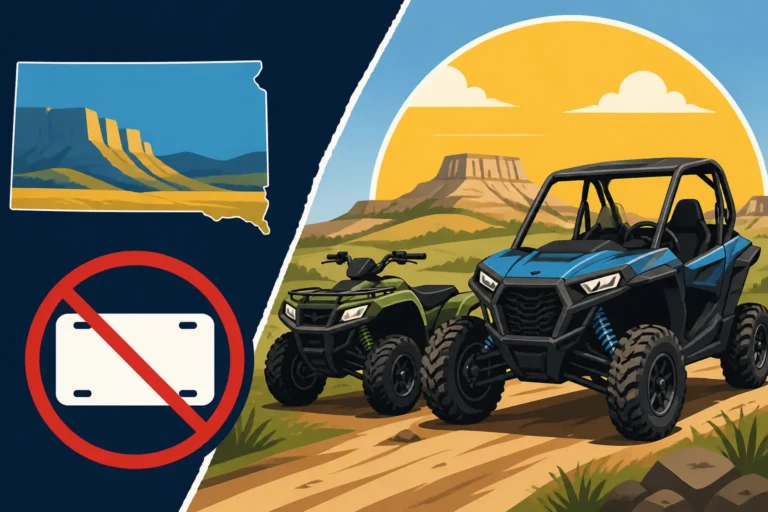
This is another point of common confusion for riders. When your ATV or UTV meets all the criteria for road legality in South Dakota, it doesn't get a unique "ATV" license plate. Instead, it's issued a motorcycle license plate. This is a critical distinction that clarifies its legal standing on the road.
The implications are straightforward: legally, your plated ATV or UTV is classified and treated much like a motorcycle when it comes to road use regulations. This means that while it retains its off-road capabilities, on the pavement, it must adhere to many of the same rules as a street bike. This classification helps law enforcement and other drivers understand how your vehicle fits into the existing traffic laws. Understanding [Why South Dakota Plates Are Motorcycle Plates] helps you manage expectations and ensures you're not surprised by how your machine is identified once it's road-legal.
The Realities of Riding a Plated ATV on South Dakota Roads
Having a license plate doesn't give you carte blanche to ride anywhere. South Dakota has specific regulations about where and how you can operate your plated ATV or UTV on public roads. It's vital to understand these limitations to avoid fines and ensure your safety.
Where You Can (and Can't) Ride
Even with a plate, there are distinct boundaries for your road-legal ATV or UTV. The most common form of road use for ORVs in South Dakota is often on gravel roads and within the highway right-of-way, specifically in the ditch. [South Dakota Ditch Riding Rules Explained] details the general allowance for ditch riding, but it's important to remember that individual counties have the option to ban it within their borders. Always look for regulatory signs that indicate if a specific county has opted out.
You can typically use your plated machine to cross highways and operate on section lines or other unpaved public roads. However, interstates are strictly off-limits, even for plated ATVs. Major state highways might also have restrictions beyond simply staying in the ditch. The key is to exercise caution, observe all posted signage, and be aware that a plated machine still has limitations not applicable to a standard car or truck. Knowing these rules is crucial for safe and legal riding, especially when planning a route that mixes trails and roads.
Driver's License and Helmet Requirements
When you're riding your plated ATV or UTV on South Dakota roads, the standard rules of the road apply, including those related to driver's licenses and helmet use.
For a plated ATV or UTV, the driver must possess a valid driver's license. There isn't a special "off-road license" you need; your standard car driver's license is sufficient. However, one of the interesting aspects is [The Driver's License Exception for South Dakota Riders], which sometimes allows younger riders to operate certain plated vehicles under specific conditions, though typically a standard license is expected for general road use.
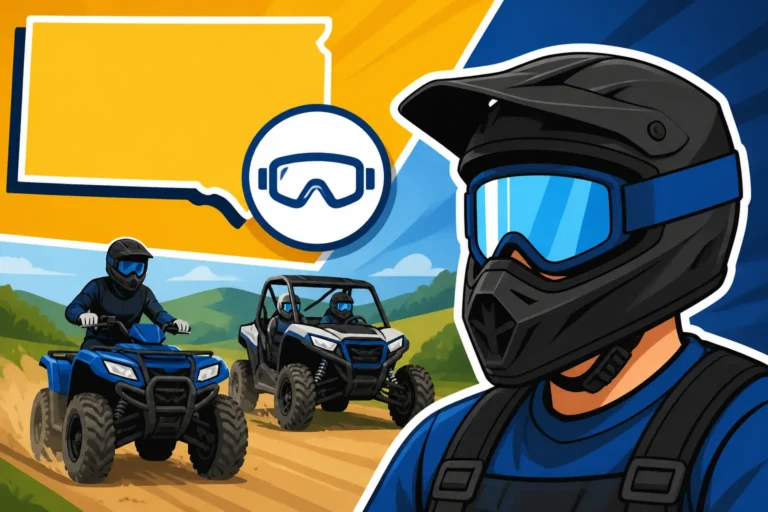
Regarding helmets, South Dakota has a tiered approach. Riders under the age of 18 are generally required to wear a helmet when operating an ATV or UTV on public roads. For adult riders (18 and older), helmets are not mandated by state law for plated machines, although wearing one is always a smart safety choice. Regardless of age, eye protection is required for all riders, such as goggles or a face shield, unless the machine is equipped with a windscreen. [South Dakota Helmet Rules for ATV Riders] further clarifies these distinctions.
Avoiding Common Misconceptions and Fines
One of the biggest misconceptions is that once you have a plate, your ATV is just like any other vehicle on the road. This isn't true. It's a "street-legal ORV," which still has unique restrictions. Forgetting these distinctions can lead to citations. Riding on an interstate, for instance, is a clear violation. Riding in a ditch in a county that has opted out of ditch riding is another common misstep.
Always carry your registration and proof of insurance (if required for road use by your policy). Troopers and local law enforcement are familiar with these rules and will not hesitate to issue fines for non-compliance. [What a South Dakota Trooper Checks Roadside] can include your plate, decals, and proper equipment. Penalties for riding an unplated machine where a plate is required, or failing to have the correct safety gear, can range from monetary fines to more serious consequences, especially if an accident occurs. Ignorance of the law is never an excuse, so taking the time to understand your responsibilities as a plated ATV operator is paramount.
Choosing the Right Machine and Gearing Up for South Dakota Roads
The decision to plate an ATV or UTV for road use in South Dakota naturally leads to considerations about the machine itself and how best to equip it. Whether you're buying new, looking at used options, or accessorizing your current ride, there are practical steps to ensure a smooth transition to road legality.
New vs. Used Machines: What to Look For
When you're in the market for an ATV or UTV with the intention of plating it for road use in South Dakota, your approach will differ slightly whether you're looking at a brand new machine or a used one.
For a new machine, the primary concern is ensuring it meets the 200cc minimum engine size. Most dealers selling new ATVs in South Dakota are well-versed in these rules and can confirm if a particular model is eligible for plating. They might even offer packages that include the necessary road-legal equipment (lights, horn, mirrors) already installed. This can simplify the process significantly.
When considering a used machine, your diligence needs to be a bit higher. Again, confirm the engine size. Beyond that, meticulously check the machine's title. A clean title, properly signed over from the previous owner, is absolutely essential for the title transfer and plating process. Avoid machines without a title, as it can be a lengthy and frustrating process to get one, often making it not worth the hassle. [Checking a VIN Before a South Dakota Purchase] is also critical for used machines to ensure it hasn't been stolen or salvaged without proper documentation. Always insist on a clear [A South Dakota Bill of Sale for an ORV] that accurately reflects the sale price.
Essential Accessories for Plated Road Use
While South Dakota has minimum requirements for road-legal equipment, enhancing your machine beyond the bare necessities can significantly improve safety and comfort for road use. Beyond the mandatory headlights, brake lights, horn, and mirrors, consider adding:
- Turn Signals: While not strictly required for plating, turn signals are a huge safety advantage on the road, making your intentions clear to other drivers. Many aftermarket kits, including those from SuperATV, offer integrated turn signal solutions that are easy to install.
- Larger, More Stable Mirrors: The minimum required mirror might be small. Upgrading to larger, vibration-dampened mirrors provides a much better view of traffic behind you, which is invaluable on faster roads.
- Windshield: For longer road stretches, a windshield can greatly reduce wind fatigue, protect against road debris, and improve comfort, especially at higher speeds.
- Tire Choice: If you plan on a significant amount of road riding, consider dual-sport or harder-compound tires. Aggressive knobby tires wear out quickly on pavement and can handle differently, especially in corners. A tire that offers a good balance between off-road traction and on-road durability will be a wise investment.
Investing in quality components from reputable brands like SuperATV can ensure these additions are durable and reliable, standing up to both road vibrations and the occasional off-road excursion.
The Nonresident Perspective
For those visiting South Dakota with their own ATV or UTV, the road-legal rules can be a bit different. If your machine is legally plated for road use in your home state, South Dakota generally honors that out-of-state registration. This means you can typically ride your plated machine on South Dakota roads according to South Dakota's rules, without needing a separate South Dakota plate.
However, this doesn't exempt you from South Dakota's operational rules for ATVs on roads. You still must adhere to the ditch riding rules, speed limits, and equipment requirements while riding within the state. For example, if your home state allows you to ride on an interstate with your ATV, you still cannot do so in South Dakota. [Does South Dakota Honor Out-of-State Registration?] is a common question, and the answer is usually "yes" for plated machines, but always subject to South Dakota's specific rules of use. If your out-of-state machine isn't plated for road use, or if you primarily intend to ride trails, you would likely need to look into [South Dakota's Nonresident ORV Permit].
South Dakota ATV Plating Requirements at a Glance
| Requirement | Detail |
|---|---|
| Engine Size | Minimum 200cc for four-wheel ATVs/UTVs |
| Headlights | Must be functional and meet state standards |
| Brake Lights | Must be functional and activate when brakes are applied |
| Horn | Functional audible warning device required |
| Mirrors | At least one functional rear-view mirror |
| Driver's License | Valid driver's license required for operator |
| Helmet (Under 18) | Mandatory for riders under 18 years old |
| Eye Protection | Required for all riders (goggles, face shield, or windscreen) |
| Plate Type | Issued as a motorcycle license plate |
| Registration | Handled at county treasurer's office |
| Excise Tax | 4% of purchase price (unless exempted) |
Disclaimer
This article is for general informational purposes only and does not constitute professional advice. Laws, prices and regulations vary by location and change over time. Consult a qualified professional for guidance on your specific situation.