Riding Revheim Bay’s Track
Revheim Bay can look like a simple stop on a South Dakota riding trip, but a short track still calls for a little planning. Riders need to know what the area offers, how to stay within its boundaries, and what to check before unloading. This guide covers the practical details for making a visit near Lake Oahe safer and less guesswork-heavy.
What to expect at Revheim Bay
A compact riding area near Lake Oahe
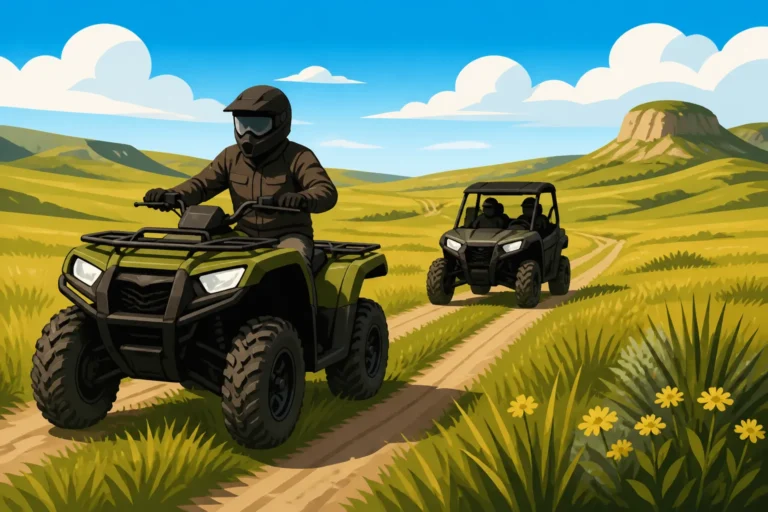
Revheim Bay is an off-highway vehicle riding area near Pierre, along Lake Oahe. It is a different kind of outing from a long ride through the Black Hills: the main draw is a designated riding area and a track, rather than miles of connected forest roads. If you are planning a full-day trip, set expectations accordingly. A short track can be enjoyable for practice or a quick ride, but it is not the same as an all-day trail network.
The area is commonly described as roughly 400 acres, with a landscape of bluff and shale. That figure describes the general size of the area, not a promise that every acre is open for riding. A public recreation area can include boundaries, terrain, or sections that are not part of the riding route. Check signs at the entrance and follow any marked restrictions rather than treating open-looking ground as automatically rideable. For a broader overview, see [Revheim Bay OHV Area in South Dakota].
The track is short, so plan the visit around what it offers
The track is often described as about a mile long. That can suit riders who want a contained place to ride, get familiar with a machine, or spend time practicing at a manageable scale. It also means you should not arrive expecting a long-distance route. The experience may be more about repeating a loop and reading the terrain than covering a lot of ground.
A compact track can still challenge a rider. Surface changes, turns, elevation, loose material, and the condition of the route can affect how it feels on the day. Ride at a pace that gives you room to react, especially if you are unfamiliar with the site. For more on the scale and character of the route, What 1 Mile of Track at Revheim Bay Offers is a useful related read.
| Planning question | Practical takeaway |
|---|---|
| Is this a long trail network? | No. Plan for a compact riding-area visit rather than an all-day route. |
| How long is the track? | It is commonly described as about one mile; confirm local signs and route information. |
| Is the whole area open to vehicles? | Do not assume so. Stay on authorized routes and observe posted boundaries. |
| What should I check before unloading? | Access, posted rules, surface conditions, weather, and whether your machine is suitable. |
| Is the track right for every rider? | Not necessarily. Match your speed and route choice to your skill and the day’s conditions. |
Prepare before you leave home
Check access, rules, and conditions
Before driving to Revheim Bay, confirm that the riding area is open and accessible, and check for posted notices or closures when you arrive. Wind, rain, snow, and freeze-thaw conditions can change how a surface rides. Loose or wet material may affect traction and stopping distance, while a dry day can bring dust and reduced visibility behind other machines. If the track is unfamiliar, give yourself time to walk or observe a section before riding it.
Use reliable maps as a planning aid, but do not let a phone map override signs on the ground. Tools such as onX Offroad can help you orient yourself and understand the general location of an area, but map layers are not a substitute for official directions, current closures, or marked boundaries. A useful companion topic is Unmarked Boundaries at an Open Area, especially if the terrain makes it difficult to tell where riding is allowed.
Bring the right machine and basic gear
Choose a machine that fits the track and the riders in your group. A large side-by-side may feel different from a small ATV on a compact route, and a machine’s width can affect where it can safely travel. Check the vehicle’s condition before leaving: tires, brakes, throttle, steering, lights, and fuel are basic items worth inspecting. If you are bringing a trailer, secure the machine properly and allow extra time to unload without blocking other visitors.
Riders should wear a helmet and suitable protective gear, including eye protection. Bring water, a phone, and any personal items you may need if the visit takes longer than expected. Pack for the weather rather than assuming the conditions at home will match those near the lake. A simple checklist can prevent the irritating last-minute discovery that a helmet, tie-down, or essential tool is still in the garage.
Ride the track thoughtfully
Start slowly and leave room for other riders
When you first enter the track, take a conservative lap or inspect the route from a safe place. Look for changes in surface, tight turns, ruts, loose material, and places where visibility is limited. The first lap is not the time to match another rider’s pace. A rider who knows the track may be comfortable carrying speed through a section that feels unfamiliar to you.
Keep enough space between machines to respond if the rider ahead slows, stops, or loses traction. Dust can make that gap especially important. If your group includes riders with different experience levels, agree on a simple plan before starting: where to regroup, how to signal a stop, and what everyone should do if the group becomes separated. On a short course, repeated passes can make traffic patterns less predictable, so stay alert and avoid stopping where another rider may not see you.
Keep to authorized areas and respect the site
Stay on the designated route and follow signs, barriers, and any instructions posted at the site. Riding off-route can damage vegetation or unstable ground, create erosion, and put riders in places where others are not expecting traffic. If a section is closed or its status is unclear, do not use a phone map or tire tracks as permission to enter. Ask the appropriate land manager or use official site information to resolve the question.
It can be tempting to explore an appealing side route, particularly when the area looks open and quiet. Resist that urge unless the route is clearly authorized. For more context on riding in a state-managed recreation area, see Riding a GFP Area Without a Plate and Riding a GFP Area Without a Park License. Those topics address specific questions, but riders should still check the rules that apply to their machine and the location before setting out.
Make the outing work for your group
Set expectations for children and newer riders
Revheim Bay may appeal to families because a compact riding area can feel easier to manage than a long route far from the starting point. Still, compact does not automatically mean easy or risk-free. A short track can include terrain that challenges a beginner, and repeated laps can lead to fatigue or overconfidence. Let newer riders set a comfortable pace, and take breaks before concentration starts to slip.
Before the first lap, explain where the group will stop and what to do if someone needs help. Keep children within your supervision plan and make sure each rider understands basic hand signals or another way to communicate over engine noise. Avoid placing a new rider in the middle of faster traffic without a clear plan. When experience levels vary, separate practice time from faster riding so everyone can learn without feeling pressured.
Use a simple visit plan
A little structure makes a short outing smoother. Decide where you will park and unload, who will check the posted information, and how your group will handle breaks. Bring a map or navigation app for orientation, but keep your attention on the route when riding. If you use onX Offroad, treat it as a planning reference and confirm the actual route and restrictions on-site.
Before leaving, check that all riders and machines are accounted for, collect your belongings, and leave the staging area clear for others. If conditions have changed during the visit, adjust the plan rather than trying to squeeze in one more lap. A helpful last check is to review South Dakota Trail Conditions Before You Ride and South Dakota Trail Maps and MVUMs for broader trip-planning context, while remembering that information for other riding systems may not describe Revheim Bay’s local rules.
A visit to Revheim Bay works best when you treat it as a compact riding stop, not a sprawling trail adventure. Confirm access, respect the marked area, choose a sensible pace, and prepare for the weather and surface you encounter. For details about the specific riding area, South Dakota's Revheim Bay Track and Riding Revheim Bay's Track provide related reading to help you plan.
Disclaimer
This article is for general informational purposes only and does not constitute professional advice. Laws, prices and regulations vary by location and change over time. Consult a qualified professional for guidance on your specific situation.