South Dakota ATV Title Help
Trying to figure out how to properly title your ATV or UTV in South Dakota can feel like navigating a maze, full of confusing forms and deadlines that seem designed to trip you up. Nobody wants to deal with penalties or legal headaches when all you want to do is hit the trails or get work done on the ranch. This comprehensive guide will walk you through everything you need to know about titling your off-road vehicle in the Mount Rushmore State, ensuring you're legally squared away and ready for adventure.
Understanding the South Dakota ATV Title: What It Is and Why It Matters
Let's be honest, paperwork for anything fun usually feels like a drag. But when it comes to your ATV or UTV in South Dakota, understanding its title is absolutely crucial. Many folks new to the state, or even long-time residents, often wonder if their off-road vehicle truly needs a title like a car or truck. The short answer is: yes, it very likely does, and trying to bypass this essential step can lead to a lot of headaches down the road.
Defining an Off-Road Vehicle in South Dakota
First things first, what exactly does South Dakota consider an "off-road vehicle" that requires a title? It's not always as straightforward as it seems. The state's definition is pretty broad and aims to cover most recreational vehicles that aren't primarily designed for highway use. This typically includes your standard ATVs, quadricycles, and side-by-sides (UTVs). These machines are built for rugged terrain, whether that's the Black Hills trails or the prairie two-tracks. You might be surprised to learn that even some electric machines fall under this umbrella if they meet certain criteria, especially regarding their intended use and design. [How South Dakota Defines an Off-Road Vehicle] can shed more light on the specifics.
Now, there are some exceptions. For example, some specialized farm vehicles might not require a title if their use is strictly for agricultural purposes on private land. Similarly, certain golf carts or low-speed vehicles designed for neighborhood travel often have different rules. The key distinction often comes down to whether the vehicle is primarily used off-highway for recreation or utility, rather than for street-legal transportation.
Why a Title Isn't Just a Piece of Paper
So, you've got your awesome ATV, maybe you bought it used from a neighbor or brand new from a dealer in Rapid City. Why can't you just ride it? An ATV title in South Dakota is more than just a piece of paper; it's the official document that establishes legal ownership of your machine. Think of it as your off-road vehicle's birth certificate and deed rolled into one. Without a valid title in your name, you effectively can't prove that the ATV belongs to you.
This becomes incredibly important for several reasons. If your ATV is ever stolen, law enforcement will use the title information to help recover it and confirm you are the rightful owner. If you ever decide to sell your machine, a clean title is absolutely essential for a smooth transaction. Imagine trying to sell a truck without its title – it's virtually impossible, and the same goes for your ATV. Furthermore, if you plan to finance your ATV, any lender will require the title to secure their lien. It's the foundation of legal ownership and protection for your investment, providing peace of mind whether you're shredding trails or just storing it in the garage.
Your Step-by-Step Guide to Titling an ATV in South Dakota
Navigating the actual titling process can feel a bit daunting, but it doesn't have to be. Once you understand the sequence of steps and gather the necessary paperwork, it's quite manageable. The good news is that for most people, the process will involve a visit to your local County Treasurer's office, which handles these transactions directly. [Titling at a South Dakota County Treasurer] is a great resource to understand their role.
Gathering Your Essential Paperwork
Before you even think about heading to the County Treasurer's office, make sure you have all your ducks in a row. Missing even one piece of documentation can lead to a frustrating second trip. The specific forms and documents you'll need can vary slightly depending on whether you bought your ATV new from a dealer, used from a private seller, or if you're bringing it in from out of state.
Typically, you'll need the following:
- Manufacturer's Statement of Origin (MSO) or Previous Title: If you bought your ATV new, the dealer will provide an MSO. If you bought it used, the seller should hand over the original title, properly signed over to you. Make absolutely sure the seller's signature matches the name on the title, and check for any lien releases if applicable.
- Bill of Sale: For private sales, a bill of sale is critical. This document details the transaction, including the buyer's and seller's names, the purchase price, and the ATV's identifying information, like the VIN. While South Dakota has requirements, a well-drafted bill of sale, perhaps using a template from a service like LawDepot, can protect both parties. Make sure it explicitly states the date of sale and the purchase price, as this will be used to calculate your excise tax. [A South Dakota Bill of Sale for an ORV] has more details.
- Odometer Disclosure Statement: For most off-road vehicles, an odometer disclosure is typically required if the vehicle is self-propelled and has an odometer. This statement records the mileage at the time of sale.
- Application for Title and Registration: This is the core form you'll fill out at the County Treasurer's office. It will ask for all the details about your ATV and your personal information. [South Dakota's Title and Registration Application] outlines what to expect.
- Proof of Identity: Bring your valid driver's license or state-issued ID.
- Payment for Fees and Taxes: Have your payment method ready for the title fee, excise tax, and any other applicable charges.
It's always a good idea to call your specific County Treasurer's office before you go, just to confirm their exact requirements and current operating hours. This pre-call can save you a lot of time and hassle.
The Titling Visit to Your County Treasurer
Once you have all your paperwork in order, it's time to head to the County Treasurer. This is where the magic happens, or at least, where your ATV gets its official identity in your name. The process typically involves a few key steps:
- Submission of Documents: You'll present all your gathered documents to the clerk. They will review everything to ensure it's complete and correct.
- Verification and VIN Check: The clerk will verify the Vehicle Identification Number (VIN) on your paperwork against the physical VIN on your ATV (though you might not bring the ATV itself, sometimes a photo or an officer's verification is needed for out-of-state vehicles or specific situations). This is a crucial step to prevent fraud and ensure the title matches the machine. [Checking a VIN Before a South Dakota Purchase] can offer guidance.
- Calculation of Fees and Taxes: This is where the financial side comes in. The clerk will calculate the title fee, the 4% excise tax based on your purchase price (or fair market value if a gift or trade), and any other applicable fees, such as the technology fee or lien notation fee if you have a loan. [South Dakota ATV Excise Tax Rate] explains the tax calculation.
- Payment: You'll pay all the necessary fees and taxes. Remember, South Dakota has a [Forty-Five Day Title Deadline] from the date of purchase. If you miss this window, late penalties can start to accrue, adding to your cost.
- Temporary Registration/Decal: In some cases, you might receive a temporary registration or decal on the spot, allowing you to legally operate your ATV while you await the physical title.
- Receiving Your Title: Your new title will typically be mailed to you directly from the state's Motor Vehicles Division after processing. The timeframe can vary, but generally, you can expect it within a few weeks. Keep any temporary documents safe until your official title arrives.
It's a process that requires attention to detail, but by being prepared, you can make your visit to the County Treasurer a smooth and efficient experience.
Common Titling Hurdles and How to Overcome Them
Life happens, and sometimes the titling process isn't as straightforward as buying a brand new ATV from a dealer with a clear MSO. Many people face unique challenges, from lost documents to inherited machines, that can make titling feel like an uphill battle. But don't despair – there are usually solutions.
What to Do If You've Lost Your Title
One of the most common issues people face is a lost or misplaced title. Maybe it got lost in a move, or perhaps the previous owner never provided it. If you're the current registered owner of the ATV, getting a duplicate title is usually quite simple. You'll need to visit your County Treasurer's office, fill out a specific application for a duplicate title, and pay a small fee. [South Dakota's $10 Duplicate Title] outlines the cost. They will then process your request, and a new title will be mailed to you.
However, if you bought an ATV and the previous owner can't find the title, things get a bit trickier. You'll need to work with that previous owner to either obtain a duplicate title in their name first, or you might need to pursue a bonded title if direct replacement isn't possible. This often requires additional paperwork and potentially a bond to protect against any unknown prior claims of ownership. It’s always best practice to ensure you receive the original, properly signed-over title at the time of purchase. Never buy an ATV without a title unless you are absolutely sure of the seller and understand the legal implications, as it can be very difficult to title an ATV that has no papers.
Titling an Inherited or Gifted Machine
Receiving an ATV as a gift or through an inheritance can be wonderful, but it still requires proper titling to transfer ownership into your name. For an inherited machine, you'll generally need the original title, a copy of the death certificate, and a document proving you are the legal heir (e.g., a court order, small estate affidavit, or a will designating you as the recipient). The process is similar for a gifted machine, requiring the original title and a clear bill of sale (even if for $0 or "gift") indicating the transfer of ownership.
In both these scenarios, while you might not pay sales tax on the transfer (since no money exchanged hands), you will still likely be responsible for the 4% excise tax based on the ATV's fair market value. The County Treasurer will have methods to determine this value. Having a clear record, perhaps by using a gift bill of sale template from LawDepot, can simplify the process and demonstrate the nature of the transfer to the County Treasurer. [Titling an Inherited Machine in South Dakota] provides a deeper dive into this specific situation.
Handling Liens and Out-of-State Titles
If your ATV has a loan on it, the lender will typically hold the original title or have their lien noted on it. When you purchase an ATV with an existing lien, you must ensure the lien is released before the title can be transferred into your name free and clear. This usually involves the seller providing a lien release document from their lender. If you take out a new loan to buy your ATV, your lender will handle the lien notation, and you'll typically pay a [South Dakota's $10 Lien Notation] fee. [Titling a Machine With a Lien in South Dakota] explains this in more detail.
For those moving to South Dakota or purchasing an ATV from outside the state, the process involves bringing your out-of-state title to the County Treasurer. They will process it for a new South Dakota title. Be prepared for a VIN inspection, which may require you to bring the ATV itself or provide proof of inspection from law enforcement. You'll also be subject to the South Dakota excise tax, even if you paid sales tax in another state, though some states have reciprocity agreements. Always confirm this with the County Treasurer.
Fees, Taxes, and Deadlines: The Financial Side of Titling Your South Dakota ATV
Nobody likes unexpected costs, especially when it comes to something you're excited to ride. Understanding the financial obligations and critical deadlines associated with titling your ATV in South Dakota is key to avoiding penalties and budgeting properly. The state ensures that the funds collected from these fees and taxes go towards various public services, making it a necessary part of responsible ownership.
Breaking Down the Costs
When you head to the County Treasurer to title your ATV, you can expect to pay several fees and taxes. These aren't just arbitrary charges; they contribute to the state's infrastructure and services. Here's a general breakdown:
- Title Fee: This is the basic cost for issuing a new title in your name. It's a flat fee, usually a modest amount, but it's mandatory for every title transaction.
- Excise Tax: This is often the largest cost. South Dakota assesses a [South Dakota's 4 Percent Excise Tax] on the purchase price of the ATV, or its fair market value if it was a gift, trade, or otherwise acquired without a direct purchase price. This tax is similar to a sales tax and is a significant source of revenue for the state. If you purchase from a dealer, they often collect this at the point of sale.
- Technology Fee: A relatively recent addition, [South Dakota's $2 Technology Fee] is applied to title transactions. This fee helps fund technological upgrades within the Motor Vehicle Division, improving efficiency for everyone.
- Lien Notation Fee: If you're financing your ATV, a fee is charged to officially record the lender's lien on the title. [South Dakota's $10 Lien Notation] is typically the charge for this service.
- Solid Waste and Highway Patrol Dollars: You might notice tiny amounts on your receipt that contribute to solid waste management and the Highway Patrol. These small allocations from your title fees help fund important state services.
- Nonresident Fee: If you are an out-of-state owner seeking a South Dakota title and primarily use a mail-forwarding address in the state, you might be subject to an additional fee. This is designed to ensure vehicles are properly tied to legitimate residency for tax and service purposes. [Why Out-of-State Owners Pay $100 Extra in South Dakota] elaborates on this specific charge.
It's important to remember that these fees can stack up, so it's always wise to budget for them when planning your ATV purchase. [South Dakota ATV Title Cost] offers a comprehensive view of these charges.
Critical Deadlines and Penalties
Time is money, and in South Dakota titling, that adage rings especially true. The state sets clear deadlines for titling your ATV, and failing to meet them can result in additional costs that you definitely want to avoid.
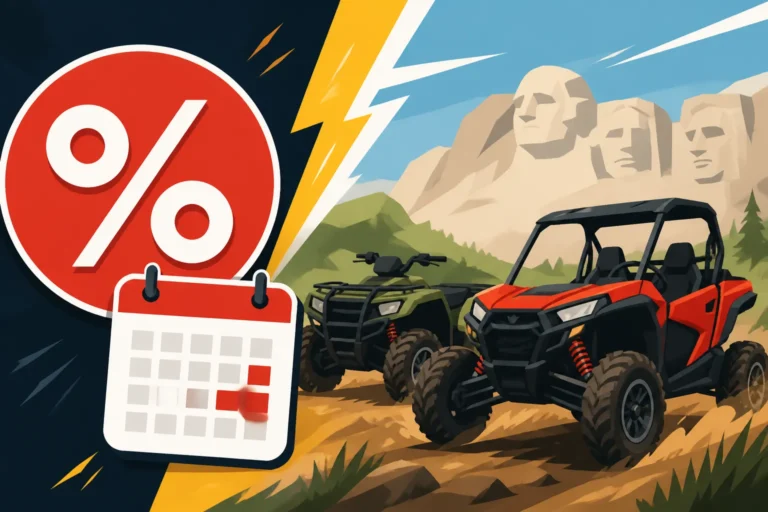
The most crucial deadline is the forty-five-day window from the date of purchase. You have 45 days from the date you bought or acquired your ATV to submit your title application to the County Treasurer. This isn't just a suggestion; it's a firm deadline. [South Dakota's Forty-Five Day Title Deadline] emphasizes its importance.
What happens if you miss this deadline?
- After 45 Days: If you title your ATV between 46 and 60 days after purchase, you will incur a penalty of [South Dakota's 1 Percent a Month Penalty] of the excise tax due. This percentage applies for each month or portion of a month you are late.
- After 60 Days: Once you pass the 60-day mark, the penalty becomes even steeper. You'll be hit with an additional [South Dakota's 10 Percent Penalty at Sixty Days] on top of the excise tax. These penalties are designed to encourage prompt titling and ensure the state receives its due taxes in a timely manner. Nobody wants to pay more than they have to, so mark your calendar as soon as you make that ATV purchase!
In essence, understanding the financial landscape and respecting the deadlines are integral parts of responsible ATV ownership in South Dakota. By being prepared and acting promptly, you can ensure your titling process is smooth, cost-effective, and gets you one step closer to enjoying the great outdoors.
Disclaimer
This article is for general informational purposes only and does not constitute professional advice. Laws, prices and regulations vary by location and change over time. Consult a qualified professional for guidance on your specific situation.