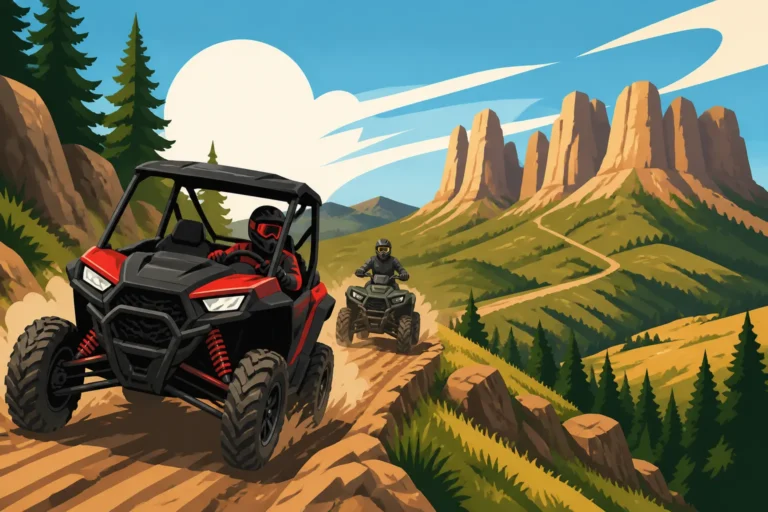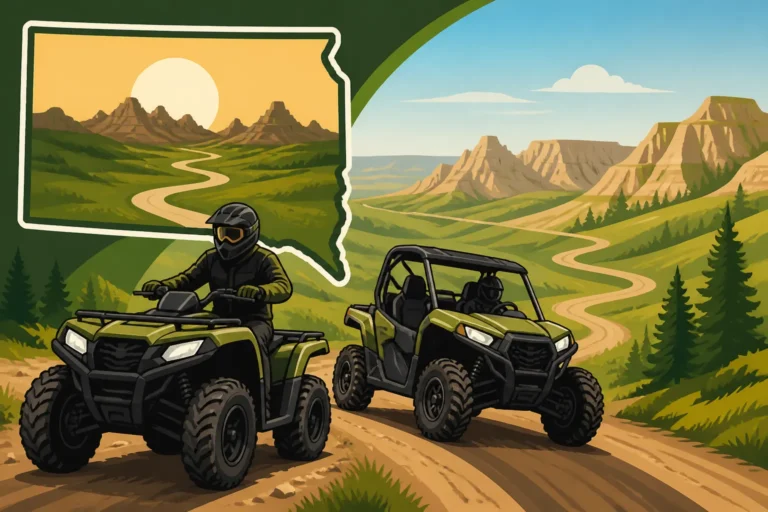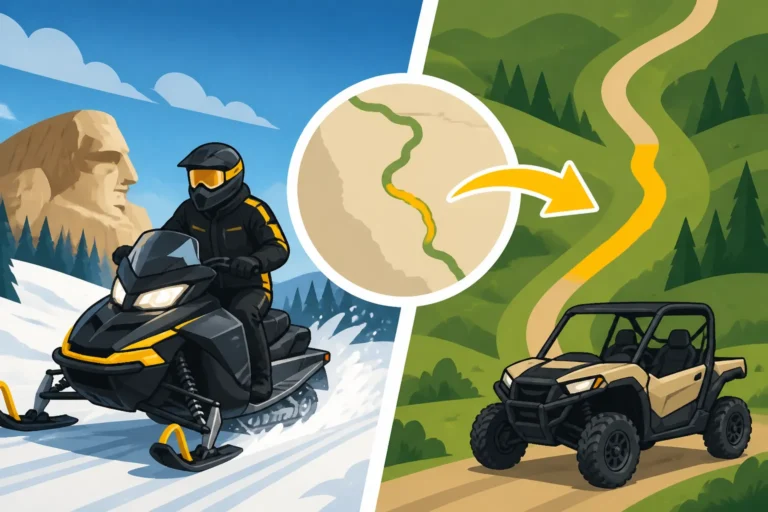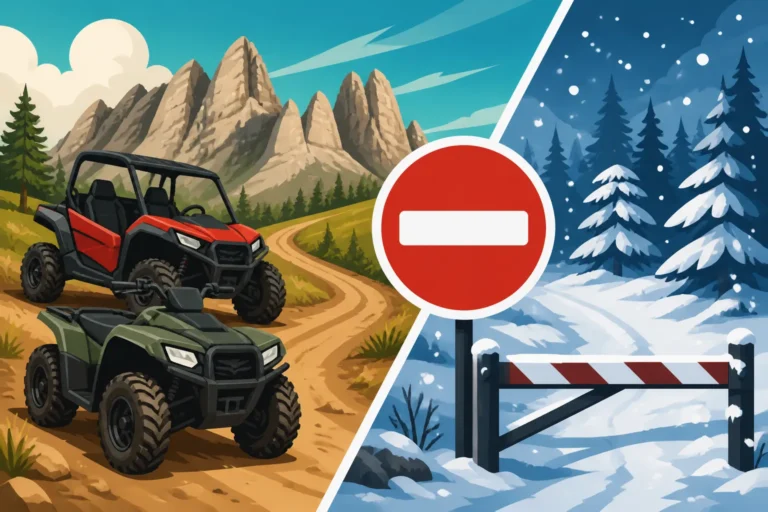
South Dakota Riding in Autumn
Autumn riding in South Dakota can mean crisp mornings, dusty afternoons, early darkness, and a trail closure that changes your plan just when you arrive. This guide helps you choose a suitable riding area, check access before hauling your machine, prepare for fast-changing fall weather, and ride considerately during hunting season and busy weekends.
Plan Around Seasonal Access and Changing Conditions
Check the riding area before choosing a route
South Dakota’s fall riding opportunities are not all governed by the same calendar. In the Black Hills, some motorized trails operate within seasonal windows, while roads, designated riding areas, private property, and other public lands can have different access rules. A route that was open on your summer trip may have a seasonal closure or a temporary restriction by the time you return in autumn.
Start by identifying the specific land manager and the type of route you intend to ride. A forest road, a designated motorized trail, and a public riding area may look close together on a map but can have different rules. The [Black Hills National Forest in South Dakota] is a useful place to begin researching the area, but check current official maps and notices for the roads and trails you actually plan to use. A general map view is not enough to confirm that a route is open to your machine.
Seasonal windows are especially important late in the year. Some Black Hills trails have published opening and closing periods, including routes that are open from May 15 to December 15 and others with a later start date. Those dates are a planning reference, not a promise that every route is open on every day within the window. Weather, maintenance, fire danger, or other local conditions can prompt a closure. Review [South Dakota Trail Closures to Check First] before setting out, and confirm access again if conditions change.
Use maps as planning tools, not permission slips
A map can help you understand distance, connections, terrain, and potential turnarounds. It cannot always tell you whether the route is open today, whether your vehicle class is allowed, or whether a line on the screen represents a legal motorized route. Keep the official land manager’s map or Motor Vehicle Use Map available alongside any navigation app. [South Dakota Trail Maps and MVUMs] explains why those official documents matter when you are choosing routes.
Apps such as onX Offroad can be useful for organizing a route and keeping track of where you are, especially when a group has multiple machines or riders unfamiliar with the area. Still, treat app information as a navigation aid rather than the final word on access. Compare your planned route with current official maps, closure notices, signs at the trailhead, and any restrictions posted along the way. If those sources do not agree, pause and confirm the route with the land manager rather than assuming the app is right.
Before leaving home, save or download maps for offline use. Cell service can be unreliable in parts of the Black Hills, and a route plan stored only online may disappear when you need it most. Make sure everyone in the group knows the intended route, the planned turnaround point, and what to do if someone becomes separated. A paper map or a clearly written backup plan can make a stressful navigation problem much easier to solve.
Choose Routes That Fit Fall Riding
Match the terrain to the day’s conditions
Autumn can make a familiar route feel different. A dry road may become slick after rain; fallen leaves can conceal loose rock, ruts, or a drainage channel; and a north-facing section can stay damp or icy after a cold night. On higher ground in the Black Hills, conditions can also differ from those in a nearby town. Don’t assume that a sunny forecast at your lodging means every road is dry and comfortable.
For a group with mixed experience, build a route around the least experienced rider and the conditions you can see. Start with a shorter, familiar loop rather than committing to a long point-to-point ride. Leave room to turn around if the surface gets rougher, visibility drops, or a machine develops a problem. A route that looks modest on a screen can take longer than expected when riders are stopping to check directions or moving slowly over wet, uneven ground.
Use local conditions to choose your start time and route direction. If the morning is cold and damp, consider waiting until the surface and visibility improve instead of rushing onto a shaded road. If rain is moving in, choose a route with straightforward exits rather than one that leaves you far from a road or staging area. [Riding a Hills Forest Road in Fog] is worth reviewing if you expect low visibility, because fog can make it harder to see curves, intersections, other riders, and changing road surfaces.
Build in an early turnaround and a weather backup
Shorter autumn daylight changes the shape of a good ride plan. The route itself may take the same amount of time as it did in July, but a late start, slow progress, or an unexpected stop can leave you riding home in fading light. Set a turnaround time before leaving, and make it earlier than the moment you think you will absolutely have to head back. That buffer gives you room for a wrong turn, a slow section, or a quick repair without turning the last part of the ride into a race against sunset.
Tell the group what the plan is, not just where you hope to go. Agree on the route, break locations, expected return time, and a point where you will turn around even if you have not reached the intended destination. If riders are spread out, decide in advance how the group will regroup after a junction or an unexpected stop. These simple agreements help prevent a common fall problem: one rider assumes the group is continuing while another turns back because the light is fading.
Have a backup that does not depend on reaching a particular trail. If a closure, storm, or muddy section makes your original plan unsuitable, be willing to switch to a shorter legal route or call the ride. The [South Dakota Trails Closed in Spring] link is focused on another season, but it can help illustrate why access is tied to land-management conditions rather than a rider’s preferred schedule. In autumn, use the same habit: check the conditions that apply to your actual date and location instead of relying on last season’s experience.
| Fall condition | What it can change | A practical response |
|---|---|---|
| Cold morning | Traction, comfort, and how quickly riders warm up | Layer clothing and reassess shaded surfaces before committing to a long loop |
| Rain or damp ground | Mud, braking distance, and route difficulty | Avoid pushing into a route that is becoming slippery; turn around early if needed |
| Fog or low cloud | Visibility at curves, junctions, and road crossings | Slow down, increase spacing, use lights appropriately, and shorten the route if visibility stays poor |
| Early sunset | Available time for the ride and return | Set a firm turnaround time and carry lights as backup equipment |
| Seasonal closure | Whether a road or trail is open to motorized use | Check current agency notices and follow posted signs |
Prepare Your Machine and Group for Cooler Weather
Inspect the machine before the trailer leaves home
A pre-ride check is less glamorous than picking a route, but it can save a long walk or an expensive recovery. Check tire condition and pressure, brakes, steering, controls, lights, fuel, and the machine’s general condition. Look for loose parts, damaged cables, leaks, or anything that could become a bigger issue when the ride takes you away from a staging area. If the machine has been sitting since summer, give it a careful inspection rather than assuming it is ready because it ran well on the last trip.
Pay particular attention to equipment you may rely on in the dark or in poor visibility. Test headlights and brake lights before the ride, even if you plan to return well before sunset. Pack a basic tool kit suited to your machine, a tire repair option, and a way to communicate with the group if you become separated. The best kit is one riders know how to use; bringing tools that no one understands can create a false sense of security.
If you are riding a UTV, account for how the vehicle will handle the surface and the people inside it. Passengers should know where to sit, how to use the seat belts, and what to do if the machine stops or needs to turn around. Keep loose items secured so they do not shift on rough ground. For ATVs, make sure each rider has a machine suited to their ability and that no one feels pressured to keep up with a faster rider.
Dress for the whole ride, not the parking lot
A sunny afternoon can feel comfortable while you are unloading, then cold once you are moving through shade or climbing into exposed areas. Wear layers that let you adjust as the temperature changes. Gloves, eye protection, and weather-resistant outer layers are particularly helpful when the ride is windy or dusty. Carry an extra layer in a secure place, even if the forecast seems mild. The rider who is comfortable at the trailhead may be chilled after a long, slow section or an unexpected stop.
Autumn also brings more variable visibility. Dust can hang over a dry road, while fog, low cloud, or fading daylight can reduce the distance at which you see other traffic and obstacles. Keep enough space between machines to avoid riding blind in another vehicle’s dust. Don’t assume the rider ahead will spot every hazard first. If you cannot see clearly, slow down and increase following distance rather than trying to maintain the group’s pace.
Keep water and basic food in the vehicle, along with a charged phone or other communication device. A short ride can stretch out when a route is slower than expected or someone needs help. If you use onX Offroad or another app for navigation, check that your phone is charged and the relevant map is available offline. A portable battery may help, but it does not replace a paper map, a clear plan, or telling someone outside the group where you intend to ride.
Ride Considerately During Hunting Season
Expect other users and adjust your behavior
Autumn brings more than changing weather. Hunters, hikers, campers, local residents, and other motorized riders may be using the same broader area. Slow down near trailheads, road junctions, campsites, and places where people may be parked or walking. Keep noise and dust in mind, particularly near homes, livestock, or areas where people are trying to enjoy a quiet day outdoors.
Do not assume that seeing a two-track means you can ride it. Confirm that motorized travel is allowed on the specific route and that your machine meets any applicable requirements. Stay on designated routes, respect gates and posted closures, and ask permission before crossing private land. A route that appears to connect two public roads may cross private property or land with separate access conditions. When permission is needed, get it from the landowner before riding rather than trying to sort it out at a gate.
Give wildlife and other trail users plenty of space. Avoid sudden turns or stops that could surprise someone coming around a blind corner. If you meet hikers or horses, slow down well in advance and follow the applicable local guidance for passing. Group riders should make sure the last machine knows a person or animal is ahead, especially when dust or terrain limits visibility. Basic courtesy matters: a rider who eases off the throttle and waits safely can prevent a close call and leave a better impression of motorized recreation.
Be visible without assuming visibility makes every route safe
Hunters may be active in some areas in autumn, so think carefully about how visible you are and where you ride. Bright outer layers can make riders easier to distinguish from the landscape, particularly in wooded or brushy areas. Check local land-management rules and any posted requirements, and use additional caution wherever hunting activity is known or suspected. Visibility is a safety measure, not a substitute for staying on a legal route or respecting closures.
Before starting, check whether the intended area has notices related to hunting, special use, or temporary access changes. If you encounter a closure sign or a marked area you do not understand, do not ride past it to find out what it means. Stop somewhere safe, check your map and the relevant land manager’s information, and choose a confirmed route instead. The [South Dakota Trail Etiquette With Tourists] guidance is useful beyond tourist season: sharing space thoughtfully is part of responsible riding all year.
It also helps to keep the group compact and predictable. Don’t leave large gaps that invite other users to mistake the group as finished, and don’t bunch together so tightly that riders cannot stop safely. At a junction, pull off only where it is safe and legal to do so, then make sure everyone knows which direction to take. If a rider is unfamiliar with the area, assign a more experienced person to lead and another to stay toward the back, so no one is left navigating alone.
Make a Practical South Dakota Autumn Ride Plan
Check the essentials in a repeatable order
A reliable planning routine reduces last-minute confusion. First, choose the general area and identify who manages it. Next, verify that your intended route is open to motorized use and appropriate for your machine. Then check the forecast and local notices, including fire-related restrictions or other temporary closures. Finally, share the plan with your group and someone who is not riding. This sequence is more useful than picking a scenic route first and trying to justify it afterward.
Use this checklist before loading:
- Confirm the specific road, trail, or riding area is open on your planned date.
- Check the official map and current notices for closures, seasonal limits, and machine restrictions.
- Confirm what permit, plate, or other documentation applies to your machine and route.
- Review the weather, expected daylight, and conditions at higher elevations or in shaded areas.
- Choose a route with a reasonable turnaround point and an alternate plan.
- Inspect the machine, carry basic supplies, and make sure the group knows the plan.
- Tell someone outside the group where you are going and when you expect to return.
Permits and access requirements can depend on where you ride and the machine’s status. A plated machine may not remove every requirement for a designated trail, and a requirement for one public area may not apply in another. Read the rules for the specific land and route rather than relying on a friend’s recollection or a sticker seen on another machine. If you are uncertain, contact the responsible agency before the trip.
Know when to shorten or cancel the ride
A good fall ride is not measured by how many miles you complete. If rain has made the surface unexpectedly slick, fog has reduced visibility, or the group is moving slower than planned, shorten the route. If someone is cold, tired, or uncomfortable with the terrain, stop and reassess before the situation gets worse. Turning around early can feel disappointing, especially after a long drive to the Black Hills, but it is better than pushing into a difficult return in darkness or poor weather.
Use a few clear decision points rather than waiting for a serious problem. For example, agree that the group will turn back if it reaches a certain time, encounters a closure, loses reliable visibility, or finds that the route is more difficult than expected. That removes pressure from a single rider to argue for stopping. It also gives less experienced riders confidence that they can speak up without being blamed for changing the plan.
Autumn riding in South Dakota can be rewarding precisely because conditions are less predictable: cooler air, changing colors, and quieter stretches of route can make for a memorable day. Enjoy those benefits without treating the season as an extension of summer. Check access, carry a backup plan, leave room in the schedule, and make decisions based on the conditions in front of you. The [South Dakota Trail Conditions Before You Ride] resource can be part of that routine, alongside official maps and notices from the land manager.
Disclaimer
This article is for general informational purposes only and does not constitute professional advice. Laws, prices and regulations vary by location and change over time. Consult a qualified professional for guidance on your specific situation.