Tire Choice for Hills Rock and Gravel
Choosing ATV or UTV tires for the Black Hills can feel like a compromise: loose gravel rewards a tire that bites, while sharp rock can punish one that’s too soft or lightly built. The right setup depends on your machine, the routes you plan to ride, and how you balance traction, comfort, and durability. Here’s how to make a practical choice before you leave the trailhead.
Understand the surfaces you’ll encounter
Loose gravel, hardpack, and forest roads
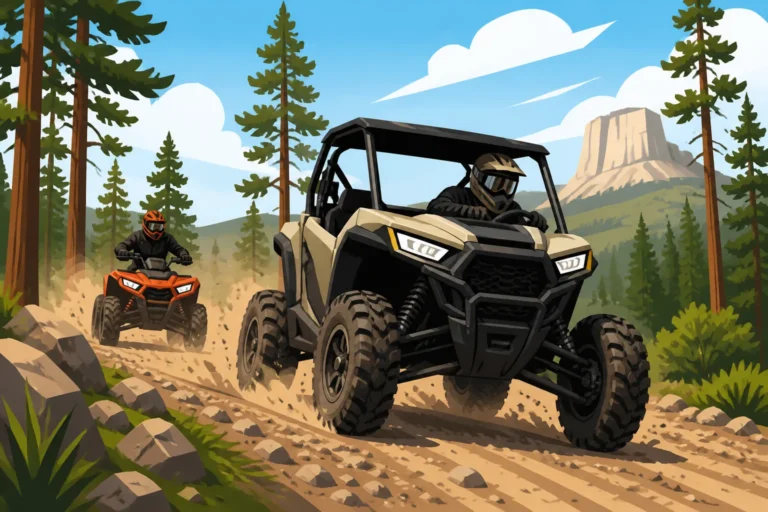
A lot of a South Dakota ride may involve firm forest roads mixed with loose gravel, rather than a continuous stretch of technical rock. On these surfaces, a tire with a moderate tread pattern can provide useful grip without making the machine feel unnecessarily rough or wander on hardpack. Very aggressive lugs aren’t automatically better: they can feel less settled on firm roads and may wear faster when much of the ride is on gravel.
Gravel also changes with traffic and weather. A road that feels firm in one section may have a loose layer over a hard base around a bend or on a descent. Keep your speed appropriate for the surface, especially where visibility is limited. A tire that offers good traction can’t prevent a slide if you brake or turn abruptly on loose material.
For riders who prefer calmer handling and spend more time on forest roads than difficult trails, a moderate all-terrain tread is often a sensible starting point. Look for a design intended for the kind of mix you expect, rather than choosing solely by the deepest tread blocks or most rugged-looking sidewall.
Rock ledges, embedded stone, and sharp edges
Rocky trail sections put different demands on a tire. The tread has to find grip over uneven surfaces, but the casing and sidewall also need to tolerate contact with rocks. A tire that performs well on smooth gravel may feel less reassuring when climbing over irregular stone or easing past a sharp edge.
The most useful question isn’t just, “How much tread does it have?” Consider the tire’s construction, its intended use, and whether its dimensions and load rating suit your ATV or UTV. A more robust tire may offer a helpful durability margin, but it can also add weight and change how the machine responds. Check the machine and tire manufacturers’ guidance before choosing a heavier or more aggressive setup.
On a rocky climb, traction depends on more than the tire. Picking a suitable line, keeping a steady pace, and avoiding needless wheelspin can reduce strain on both the tire and drivetrain. For an idea of the terrain you may face, see Rock Ledges on a Hills Trail and South Dakota Trail Difficulty Ratings.
Match tire design to your machine and riding style
ATV tires and UTV tires have different jobs
An ATV’s weight, footprint, and handling are different from those of a side-by-side. A tire that works well on one vehicle may not be an appropriate choice for the other, even if the tread looks similar. Start with the owner’s manual and the tire specifications for your machine. Confirm the permitted size, load capacity, and any other requirements before buying.
UTVs can place greater demands on tires because of their higher weight and the possibility of carrying passengers, cargo, or recovery equipment. If the vehicle is often loaded, account for that when comparing tire options. Don’t assume that a tire with a tough appearance has enough load capacity; confirm the specifications rather than guessing from the tread pattern.
For either machine, keep the full set consistent unless the manufacturer specifically allows another arrangement. Mixing tires with different sizes or substantially different tread designs can affect handling and traction. If replacing only one tire, check compatibility with the tires already on the machine and ask a qualified tire professional when you’re unsure.
Tread, casing, and sidewall trade-offs
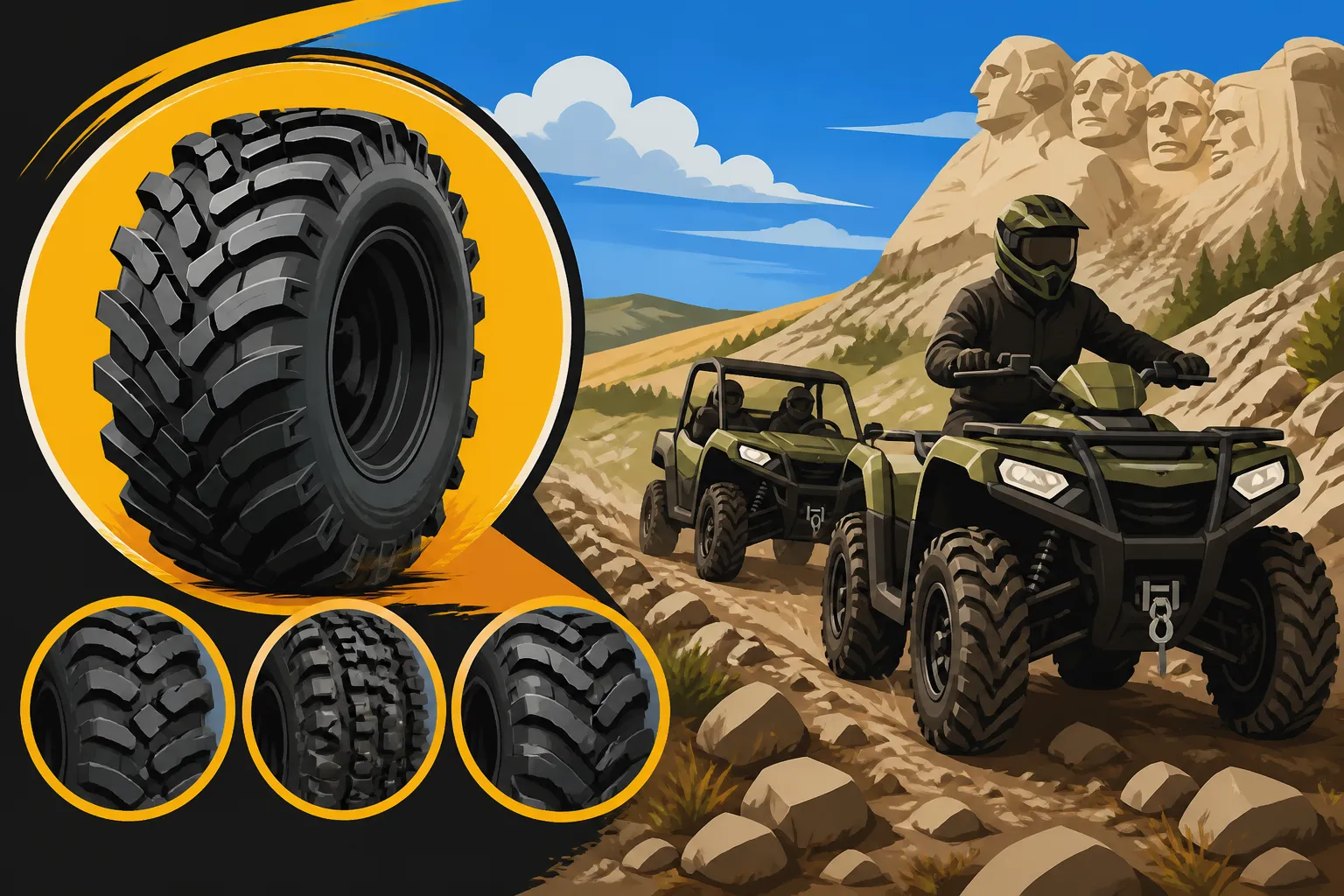
Tread pattern affects how a tire grips and clears material. A more open pattern can be helpful in loose or mixed terrain, while a less aggressive design may feel more composed on firm gravel and hardpack. Neither pattern is ideal for every rider. Think about the proportion of your trips spent on rocky trails, loose surfaces, and connecting roads.
Casing and sidewall construction matter when riding among rocks. A sturdier build may reduce the chance of damage from impacts, but it can also add weight and affect ride feel. Consider your priorities: a rider who sticks to established forest roads may value a smooth, predictable ride, while someone who regularly encounters rougher terrain may put more emphasis on durability.
Finally, consider how much you want to modify the machine. Larger or heavier tires can affect clearance, steering effort, acceleration, and braking. Before changing tire size, make sure it is appropriate for the vehicle and does not create interference or other fitment problems. More aggressive tires are not a substitute for careful route selection.
Choose a setup for Black Hills conditions
Make the route part of the tire decision
The phrase “Black Hills riding” covers a range of surfaces. One outing might be mostly forest road and gravel; another may include rougher sections, rock, or changing conditions after rain. Before selecting tires, think about the routes you actually expect to ride, the machine’s width, and your experience level. The overview in Ponderosa Forest and Loose Gravel can help frame how loose surfaces may feel, while South Dakota Trail Width Limits is worth reviewing if you ride a wider machine.
A route-planning tool such as onX Offroad can help you review possible routes and plan a ride, but don’t treat a map as a guarantee of current trail conditions. Check authoritative local information before heading out, and be prepared to change plans if conditions or closures make a route unsuitable. South Dakota Trail Conditions Before You Ride is a useful next step when planning.
Weather can change the feel of a familiar route. After a storm, mud may cover rocks or wash loose material into a trail; a dry stretch can mean more dust and shifting gravel. The notes in Mud After a Hills Thunderstorm offer a reminder to factor recent weather into your decision. If you use onX Offroad to compare route options, pair that planning with current local notices and the judgment to turn around when the surface feels beyond your comfort level.
Use a simple comparison before you buy
The table below is a starting point, not a substitute for your owner’s manual or the tire maker’s specifications. Your machine, load, and exact route all matter.
| Typical riding mix | Tire traits to consider | Trade-off to keep in mind |
|---|---|---|
| Mostly firm forest roads and gravel | Moderate tread with predictable handling on hard surfaces | May offer less bite in rough, loose sections |
| Mixed gravel and occasional rocky trail | Versatile all-terrain tread and suitable casing strength | A compromise rather than the best tire for every surface |
| Frequent rocky sections | Durability and construction suited to rough terrain | More aggressive or heavier options can change ride feel |
| Regular passenger or cargo loads in a UTV | Appropriate load capacity and vehicle fit | A tough-looking tread alone does not confirm capacity |
| Changing conditions after rain | A tread pattern suited to mixed surfaces and cautious riding | No tire makes slick or muddy conditions risk-free |
When comparing options, read the manufacturer’s specifications for tire size, load capacity, intended use, and construction. Check fitment against your vehicle’s requirements, not just the dimensions listed in an online discussion. If you’re uncertain, a dealer or tire professional familiar with off-road machines can help you compare compatible choices.
Set up and care for your tires before the ride
Use the right pressure and inspect before leaving
There isn’t one tire pressure that works for every ATV or UTV. Follow the vehicle and tire manufacturers’ recommendations, and account for the machine’s load and the type of riding you’ll do. Avoid copying a pressure from another rider without checking whether their tires, vehicle, and conditions are comparable. If pressure adjustments are allowed by the manufacturer, make changes cautiously and stay within its guidance.
Before heading out, inspect each tire for cuts, punctures, exposed cords, damaged sidewalls, and objects lodged in the tread. Check that the tires are properly seated and that the wheels and valve areas appear sound. A small issue noticed at home is much easier to address than a problem discovered on a remote trail.
Bring repair and recovery equipment appropriate to your vehicle and experience, and learn how to use it before you need it. A spare tire or repair kit is only useful if it suits the machine and you know what to do with it. If you ride with others, agree on a plan for a breakdown and make sure someone knows your intended route.
Adjust your riding to the terrain
Even a well-chosen tire has limits. On loose gravel, make smooth steering and braking inputs. On rocky sections, slow down enough to choose a line and avoid striking sharp edges with unnecessary force. If the machine starts to lose traction, spinning the tires harder may worsen the situation; ease off and reassess your line rather than treating more throttle as a universal fix.
Pay attention to how the tires behave as conditions change. A setup that feels comfortable on a dry road may not feel as composed on wet rock or churned-up mud. Keep enough distance from other riders to manage dust and sudden stops, and don’t let a group’s pace pressure you into riding beyond your ability.
If your plans include unfamiliar routes, use onX Offroad or another planning resource to prepare, but make the final call based on current notices and what you see on the ground. The best tire choice is the one that suits your machine and riding style while leaving you enough margin to ride conservatively when the trail gets rough.
Disclaimer
This article is for general informational purposes only and does not constitute professional advice. Laws, prices and regulations vary by location and change over time. Consult a qualified professional for guidance on your specific situation.