What Custer State Park Entry Adds to Your Day
When you plan an ATV or UTV day near Custer State Park, it is easy to assume that paying to enter means you can ride wherever the machine can go. It does not. Park entry adds access to the park’s roads and scenery in a vehicle that is legal to use there; it does not automatically grant off-road riding permission or replace trail requirements elsewhere.
What Custer State Park entry adds to your ride
Access to the park’s roads and scenery
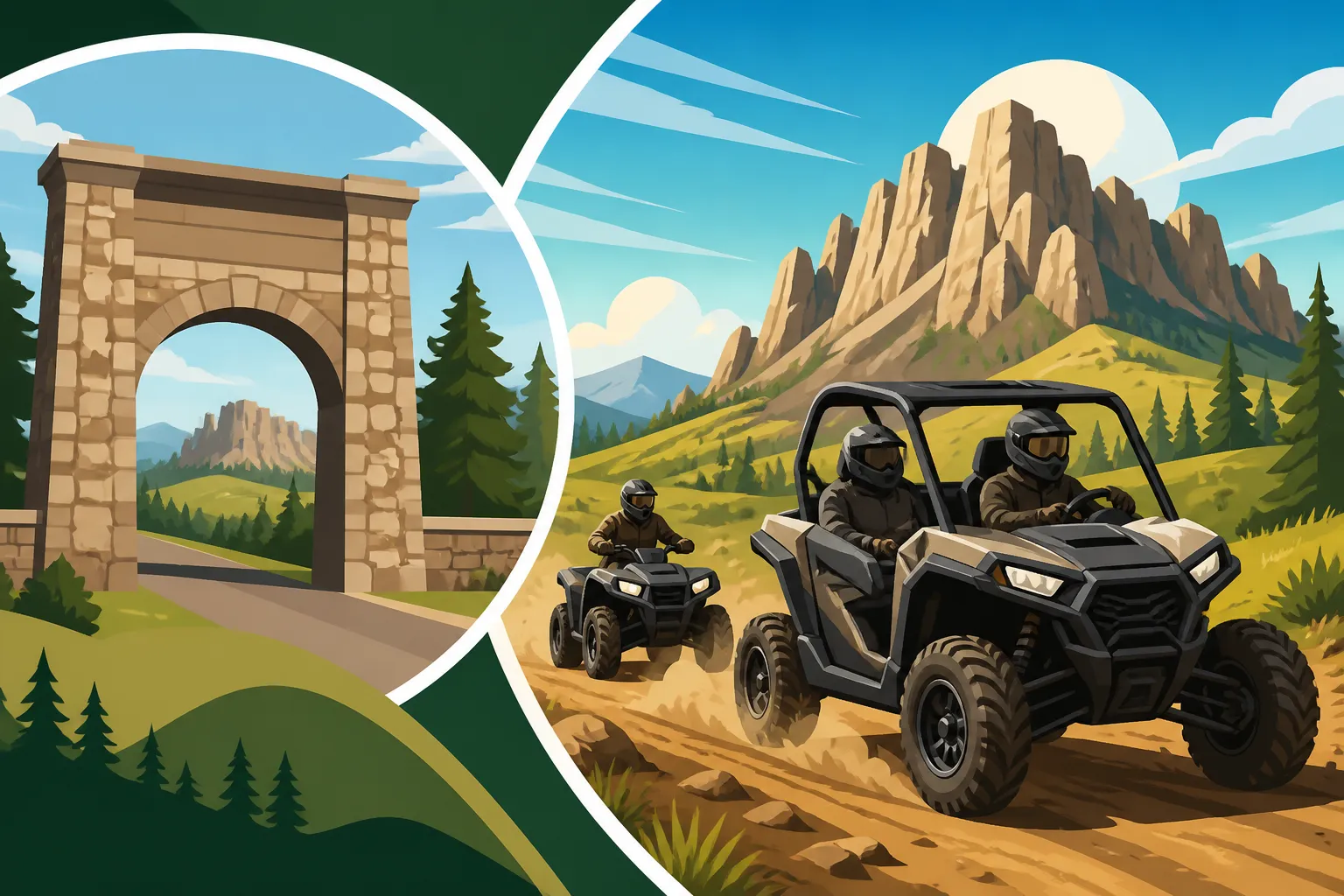
A park entrance license lets you enter Custer State Park in an eligible vehicle and travel on roads open to public traffic. For a visitor whose machine is properly plated and allowed on those roads, that can turn a trail-focused outing into a broader Black Hills day: ride a legal route, stop at overlooks, and explore the park by road.
The park’s appeal is more than a short scenic detour. Wildlife Loop Road is known for open grassland and wildlife viewing, while Needles Highway and Iron Mountain Road offer striking scenery and winding drives. Sylvan Lake is another popular stop. Each route has its own driving conditions, so plan time for slow travel, traffic, stops, and the possibility of wildlife on or beside the road.
The key distinction is that the entrance license is about entering the park. It is not an ATV trail permit and does not make an otherwise unapproved machine legal for park roads. Before treating the park as part of your route, confirm that your machine’s registration, plate, equipment, and intended road use meet the applicable requirements. For background, see [Custer State Park and a Plated Machine] and [Riding Into Custer State Park With a Plate].
Entry does not mean off-road access
A paid entrance license should not be read as permission to ride across grass, pull off onto an unmarked two-track, or use a hiking or bicycle route on an ATV. Stay on roads that are open to your vehicle, obey posted signs, and use designated parking or stopping areas. The park entrance charge and permission to operate a machine are separate questions.
This distinction matters when a ride combines public land, forest roads, and a state park. A route that is open to motorized use outside the park may not continue through the park, and a trail permit valid for another riding area does not automatically apply to Custer State Park. If your plan involves riding beyond paved or park roads, check the rules for each land manager and route separately.
| What you pay or check | What it is for | What it does not provide by itself |
|---|---|---|
| Custer State Park entrance license | Entry to the park in an eligible vehicle under park rules | Permission to ride off-road or on a closed route |
| ATV or UTV plate and road equipment | Legal operation on roads where that machine is allowed | Park entry or permission to use every road |
| Motorized trail permit | Riding on the specific trails or areas covered by the permit | Entry to Custer State Park or access to unrelated trails |
| Route and closure checks | Confirmation that the intended roads or trails are open and appropriate | A substitute for registration, permits, or posted restrictions |
For a closer look at the difference between a park entrance license and road legality, read [Why Custer State Park Charges an Entrance License Too] and [South Dakota Rules for Riding Custer State Park].
Check whether your ATV or UTV can use the route
Start with the machine, not the map
Before adding the park to your ride, work out whether your particular ATV or UTV can legally travel on the roads you have in mind. Do not assume that a machine is road-legal simply because it has lights, a windshield, or a plate from another state. Requirements can involve registration, equipment, licensing, and the type of road being used.
That check is especially important if you are visiting from outside South Dakota. A home-state plate may help establish that the machine is registered, but you should still confirm how South Dakota treats it and whether the route permits that machine. The same applies to rentals: ask the outfitter where the rented machine may be driven, whether its paperwork is in order, and whether park entry is included or handled separately.
If your vehicle is not allowed on the park roads you planned to use, do not improvise a route through the park. Keep the ATV or UTV on land and roads where it is expressly permitted, and visit the park in a vehicle approved for its roads if you want to see the scenic routes. The details in [South Dakota Street Legal ATV Requirements] and [Out-of-State Plates on South Dakota Roads] can help you identify what to verify.
Keep park roads separate from motorized trail systems
The Black Hills region has many places to ride, but they are not one continuous, unrestricted ATV area. Forest roads, designated motorized trails, state park roads, private land, and other public lands can each have different rules. A legal route on one side of a boundary does not guarantee that the same machine can continue across it.
This is where route planning can save an otherwise frustrating day. Use an up-to-date official map or land-manager information to identify boundaries, permitted uses, and closures. onX Offroad can help you review mapped routes and orient yourself, but treat a digital route as a planning aid rather than proof that a road is open to your machine. Check posted signs and current official notices before riding.
If your trip is focused on designated forest trails rather than sightseeing inside the park, research the relevant permit and trail rules separately. [South Dakota's Motorized Trail Permit] explains the permit side of riding, while [South Dakota Trail Maps and MVUMs] is a useful starting point for understanding motorized routes and map information.
Plan a day that combines park visits and riding
Build in time for the slower park portion
A park visit can take longer than the route looks on a map. Scenic roads invite stops, wildlife can slow traffic, and popular areas such as Sylvan Lake may take extra time for parking and walking around. If you are also planning a trail ride near Hill City, Custer, or the surrounding Black Hills, allow enough daylight for both parts instead of trying to squeeze them into a tight schedule.
One practical approach is to make the park visit the scenic portion of the day and choose a separate, clearly permitted riding area for the ATV portion. That keeps you from relying on a questionable shortcut or confusing park roads with motorized trails. If you are traveling with people who want different experiences, this can also make the day easier: one group can explore park stops while another follows a route that is appropriate for the machine.
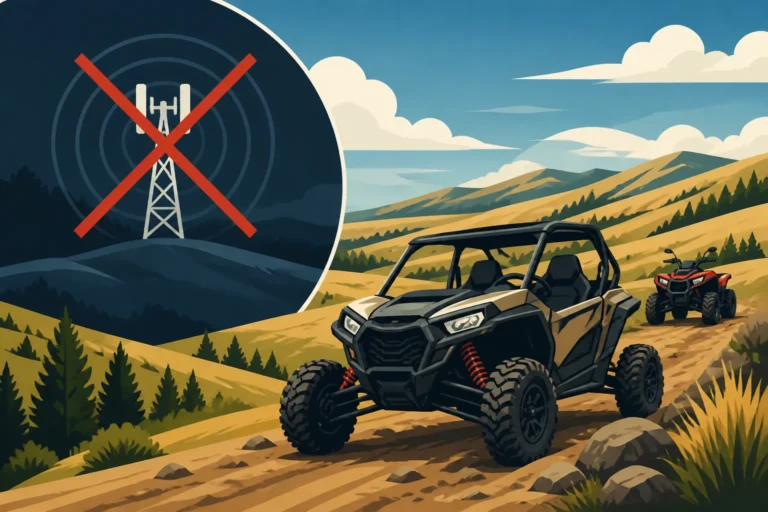
Before leaving your lodging or staging area, check the route, expected travel time, fuel needs, and any closures. onX Offroad may be useful for reviewing a planned ride, but pair it with official information and on-the-ground signs. Cell service can be unreliable in parts of the Hills, so save or carry the information you need before you head out.
Budget for entry separately from riding costs
Treat park entry as its own part of the day’s budget. The amount and license options can change, so check the official park information before you go rather than relying on an old receipt, a friend’s recollection, or a rental listing. Also ask whether the entrance license is tied to a particular vehicle or visit, and whether your planned stops require anything beyond park entry.
Keep riding-related costs separate too. Depending on where you ride, you may need a trail permit, a legal plate, or other documentation. A park entrance license does not replace those requirements, and a trail permit does not automatically cover entry to the park. For visitors combining multiple areas, make a simple checklist before departure:
- Confirm the ATV or UTV is permitted on the intended roads.
- Check registration, plate, and required equipment.
- Verify park entry requirements and current license options.
- Confirm any separate trail permit needed for other riding areas.
- Review route boundaries, seasonal closures, and posted restrictions.
- Carry proof of required documentation and follow signs at each boundary.
This small amount of preparation can prevent the unpleasant surprise of arriving at a park entrance with the wrong vehicle or discovering halfway through the day that a planned connection is not open to motorized use. For help understanding the difference between a road-legal machine and a trail-ready route, see [What South Dakota Requires to Plate an ATV] and [Where the Black Hills Permit Stops Being Required].
A practical way to decide whether park entry is worth it
Entry makes sense when the park is part of the experience
The entrance license can be worthwhile if your day includes the park’s scenery, wildlife viewing, or a drive along its open roads in a vehicle allowed there. It adds a distinctly different experience from spending the entire day on forest roads or designated ATV trails. For many visitors, the value is the change of pace: a scenic drive, a stop near Sylvan Lake, and the chance to see the park’s landscape without treating every hour as a ride.
It may be less useful if your only goal is uninterrupted off-road riding. In that case, plan around a designated riding area and its specific access rules rather than paying for park entry as though it were a trail pass. You can still visit Custer State Park separately in a suitable vehicle, but keep the two activities clear in your itinerary.
Use a simple go-or-no-go check
Before you commit, ask three questions: Is the machine allowed on the park road I want to use? Is the road open, and does the route stay on roads rather than unauthorized trails? Have I checked the park’s entry requirements and any separate riding permits? If any answer is uncertain, pause and verify it before setting out.
For navigation, onX Offroad can help you compare planned routes and understand where mapped roads and trails appear to run. It should not override a closure sign, park rule, or land-manager notice. If an app route and a posted restriction disagree, follow the posted restriction and seek clarification from the appropriate park or land office.
In practical terms, Custer State Park entry adds a chance to experience the park by an eligible vehicle; it does not add a blanket right to ride an ATV or UTV off-road. Plan the park portion as a road visit, plan the motorized trail portion under the rules for that riding area, and verify the machine and route before you go.
Disclaimer
This article is for general informational purposes only and does not constitute professional advice. Laws, prices and regulations vary by location and change over time. Consult a qualified professional for guidance on your specific situation.