Where to Camp Near a Hills Trailhead
Finding a campsite near a Black Hills ATV trailhead can save a lot of towing and backtracking, but a nearby campground does not automatically mean you can ride straight from your site to the trail. This guide explains how to choose a practical base, check motorized access, plan for permits and trail conditions, and avoid common camping and riding mix-ups.
Choose a camping base around your riding plans
The Black Hills cover a wide area, so “near the trails” can mean very different things depending on where you plan to ride. Picking a general base first—such as the Rapid City, Nemo, Hill City, Deadwood, or Custer area—can make it easier to compare campsites, trailheads, fuel stops, and the amount of towing your trip will involve.
Match the campground area to your trail area
If your plans center on the northern Black Hills, look at lodging and camping options around Deadwood, Spearfish, Sturgis, and Nemo. For the central Hills, compare options near Rapid City, Pactola Reservoir, Sheridan Lake, and Hill City. Custer and the southern Hills may suit riders who want to explore trails in that part of the forest, but don’t assume that a campsite close to a town or park is also close to a legal motorized route.
The best base is not always the campsite that looks closest on a map. A campground may be near a forest road but still require you to haul your ATV or UTV to a designated staging area. A road that appears to connect the campground to a trail may be closed to your machine, may not be a designated motorized route, or may have restrictions that don’t show up in a basic road map. Plan around the actual legal route, not just the straight-line distance.
To narrow down your riding region before booking, compare routes and access in South Dakota ATV Trails Near Rapid City and South Dakota ATV Trails Near Deadwood. These location guides can help you think through whether a central base or a northern base makes more sense for your itinerary.
Compare developed campgrounds, private parks, and dispersed camping
Developed campgrounds can be a comfortable choice when you want restrooms, a defined site, and a predictable place to park your tow vehicle and trailer. In the Black Hills, options around places such as Pactola Reservoir, Sheridan Lake, and Roubaix Lake may be worth investigating for trips in nearby areas. Their suitability depends on the campground’s current rules, your machine and trailer setup, and the trailhead you intend to use. Being close to a forest recreation area does not by itself mean you can ride an ATV or UTV from your campsite.
Private campgrounds near towns can work well when you want access to groceries, restaurants, showers, or a place to regroup after a dusty ride. They may also offer different site layouts for large trailers or multiple machines. Before reserving, ask about trailer parking, machine storage, quiet hours, and whether the campground permits loading or unloading in the site. A campground may welcome visitors who ride but still require them to trailer machines to legal riding access.
Dispersed camping can offer more solitude, but it requires more preparation. Check whether camping is allowed at the exact spot, what restrictions apply to vehicle access, and whether there are seasonal closures or fire rules. Don’t assume that a pullout beside a forest road is an approved campsite, or that a place where you can camp is also a place where you can ride off-route. For an overview of campsite planning near riding areas, start with Camping Near South Dakota Trails.
Compare your options before booking
A quick comparison can help you choose based on the needs of your group rather than on a campsite’s marketing description.
| Camping option | Often suits | Questions to ask before booking |
|---|---|---|
| Developed public campground | Riders who want a defined site and basic facilities | Is there room for your trailer, and what are the rules for machine use inside the campground? |
| Private campground | Visitors who want nearby services or a convenient base | Can you park a trailer and store machines at your site? Is a separate trailhead shuttle or tow required? |
| Dispersed camping | Self-sufficient campers seeking a quieter setting | Is camping permitted at the exact location, and what access, fire, and seasonal restrictions apply? |
| Campground farther from the trail area | Groups prioritizing amenities or a particular town | How much extra towing will the location add each riding day? |
Confirm that the ride from camp is actually legal
One of the most frustrating trip surprises is learning that the trail you can see on a map is not a route you’re allowed to ride. Treat the campsite and the riding route as two separate planning questions: first confirm that the campsite works for your group, then verify how your machine can legally reach the trail system.
Check the official motorized map before relying on a route
Use the Black Hills National Forest’s Motor Vehicle Use Map, often called the MVUM, to check which roads and trails are designated for motorized use and what vehicle or seasonal restrictions apply. A general road map, campground map, or navigation app can help you get oriented, but it should not replace the official motorized map when you’re deciding whether a route is open to your ATV or UTV.
onX Offroad can be useful during the planning stage for comparing a campsite’s general location with nearby roads, access points, and trail areas. Still, verify the route against the official map and posted signs before riding. Map layers can be helpful for planning, but a line on a screen is not permission to travel a route. Keep South Dakota Trail Maps and MVUMs in your planning checklist, and don’t treat an apparent connection between camp and trail as a confirmed legal link.
This check matters especially when a campground sits near a forest road. Some roads are open to certain vehicle types but not others, while some routes have seasonal limits or restrictions based on width. A side-by-side that is wider than a trail’s limit may not be allowed even when a narrower machine can use it. Measure your machine as required for trail rules, and match that measurement to the route designation rather than guessing from how narrow the trail looks.
Plan to trailer to a staging area when needed
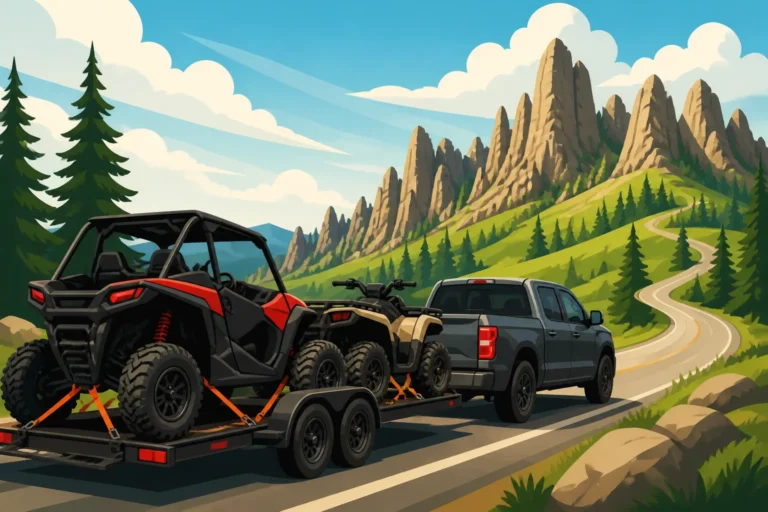
For many trips, the least complicated plan is to camp where it suits your group and trailer to an authorized trailhead each day. That may feel less convenient than riding directly out of camp, but it can prevent an accidental violation and help you avoid wearing out your group on a long, uncertain connection route.
Before you leave home, identify the staging lot you plan to use, check whether it can accommodate your tow vehicle and trailer, and consider how busy it may be when you arrive. If you’re riding during a popular weekend or event period, arriving early can help you find suitable parking. Read Parking a Trailer at a Hills Trailhead for practical planning considerations, and have an alternate staging location in mind if your first choice is full or unavailable.
Also check the rules for overnight parking separately from daytime staging. A trailhead or parking area may allow a vehicle to park while its occupants ride without allowing overnight camping or leaving a trailer there overnight. Likewise, a campground’s parking rules do not necessarily authorize trailhead-style staging at the campsite. When the rules aren’t clear, ask the campground operator or the responsible land manager before you set up.
Prepare for permits, seasonal access, and changing conditions
Camping arrangements are only one part of a ride plan. Permits, trail status, weather, and fire restrictions can affect whether your planned riding day is possible. Checking these details before packing can spare you a long drive to a closed route or an unpleasant scramble to find a required permit.
Sort out permits before the first ride
A campsite reservation does not serve as a riding permit. Confirm what permit or registration applies to your machine and the kind of route you intend to ride. Requirements can differ between designated motorized trails, roads, private property, and other riding areas, so don’t assume that one decal or plate automatically covers every place on your itinerary.
Make a permit plan for each machine, not just each person. Keep the relevant documents and permit information accessible, and follow the current instructions for where a decal must be displayed. If you’re traveling from out of state, check the rules that apply to your registration and intended routes before leaving. South Dakota Trail Permits Explained is a useful place to start, and One Permit Per Machine, Not Per Rider highlights a planning detail that can otherwise catch a group off guard.
If you’re renting, ask the outfitter whether the machine already has the required permit for your planned routes. Don’t rely on a verbal assumption when a quick confirmation can prevent confusion at the trailhead. If you own the machine, check the permit requirements and purchase options early enough that you’re not trying to solve everything while loading up for the trip.
Check trail status and closures close to departure
A trail that was open during your planning session may not be open when you arrive. Seasonal dates, snow, wet conditions, fire danger, maintenance, and other closures can change where riding is allowed. Check trail conditions before you drive to the staging area and again before setting out, especially after a storm or during a dry spell.
onX Offroad can help you keep your planned route and nearby alternatives organized, but use official notices and signs for closure decisions. A route shown as accessible in a planning app is not a reason to pass a gate, ignore a closure sign, or ride around a barrier. If a trail is closed, choose a confirmed open alternative rather than trying to work around the restriction.
Build flexibility into your trip. If your group is staying several nights, identify a backup ride area and a non-riding activity for a day when weather or closures interfere. Save South Dakota Trail Conditions Before You Ride and South Dakota Trail Closures to Check First as part of your pre-trip routine. A little flexibility is much easier than discovering that the only route you planned to ride is unavailable.
Treat camping and fire rules as part of the same plan
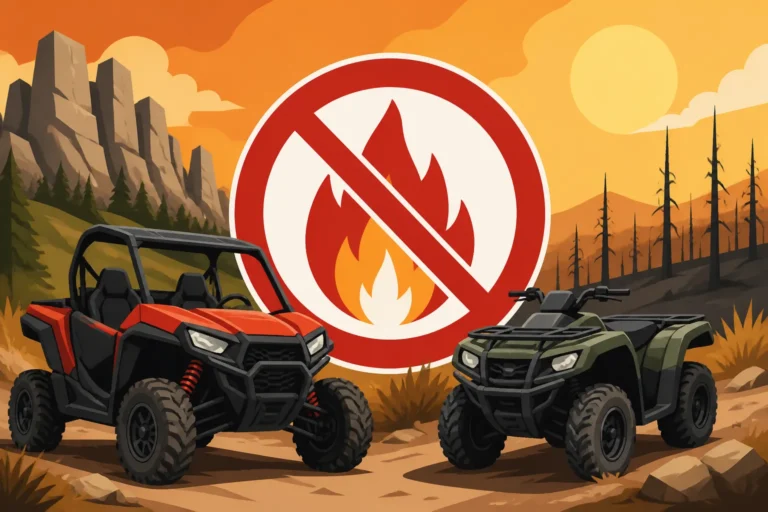
Fire restrictions can affect campfires, charcoal cooking, or other activities, and the rules may change with conditions. Check the restrictions that apply to your specific campground or dispersed site before you arrive. Follow posted instructions and use only approved fire areas when fires are allowed. If restrictions prohibit a fire, don’t assume a small fire or a portable setup is exempt.
Keep camp and riding areas clean. Secure food and trash, avoid leaving fuel or oily maintenance materials where they can spill, and pack out what you bring in. Dust, mud, and riding gear can also become a campsite nuisance: keep dirty equipment contained, respect quiet hours, and avoid unnecessary engine noise around other campers.
If your riding plan includes public land, stay on designated routes and respect posted boundaries. A campsite does not grant permission to cross private property, use an unmarked shortcut, or ride beyond an open route. [South Dakota Rules for Riding Federal Land] can help you understand why checking the land manager’s rules matters alongside choosing a campsite.
Make the campsite work for your ATV or UTV group
A campsite can be close to good riding and still be a poor fit if there’s nowhere to turn a trailer, no room for your group, or no simple way to keep gear organized. Think through the practical details before you reserve, particularly if several machines or families are traveling together.
Ask campground questions that match your equipment
When you contact a campground, describe your setup clearly. Mention the length of your tow vehicle and trailer, the number of machines, and whether you need space to park everything together. A site that fits a tent or small camper may not provide room to maneuver a long trailer, and backing into a tight site after a full day on the road can be a miserable start to a vacation.
Ask whether machines may be parked at the site and whether they can be unloaded there. Also ask about any rules for moving machines within the campground. Some places may allow limited movement for access while prohibiting recreational riding inside the campground. A direct answer is better than discovering the boundary after you’ve unloaded.
If you’re traveling with children or a large group, ask about the distance between sites, restroom access, and whether the campground has quiet-hour or visitor rules that affect your plans. If your route begins early, make sure your group can load and leave without disturbing other campers. A calm, organized departure is much easier when helmets, fuel, trail maps, and food are laid out the night before.
Build a simple day-by-day routine
A dependable routine helps keep a ride from turning into a search for missing gear or a last-minute map check. The evening before each ride, confirm the planned trail and its current status, check weather and fire restrictions, and decide what time you need to leave camp. Set aside the required permits, keys, helmets, eye protection, water, food, and basic repair supplies.
Before pulling out, check that the trailer is secured and the machines are ready for the day. After riding, give yourself time to clean up, refuel where appropriate, and secure equipment for the night. Don’t wait until everyone is tired to discover that a machine needs attention or that a piece of riding gear is still on the trailhead bench.
Use onX Offroad as one planning aid for keeping route ideas and nearby alternatives together, while continuing to check official maps and posted access information. A helpful setup is to keep a main route, a shorter option, and a backup area in your notes. That gives the group choices if weather, trail conditions, or fatigue make the original plan a poor fit.
Set expectations for the group before arrival
People often imagine different kinds of camping trips. One person may expect to ride from breakfast until dusk, while another may want a short ride followed by time at a lake or in town. Talk through daily mileage, the amount of towing, the expected trail difficulty, and how much time everyone wants at camp before you book.
If beginners or young riders are joining, choose a plan that leaves room for breaks and shorter days. Make sure the routes suit the group’s experience and machines, and avoid building an itinerary around a long trail loop simply because it looks manageable on a map. A shorter ride with a relaxed evening can be a better trip than pushing everyone through a route they don’t enjoy.
Finally, be realistic about the tradeoff between convenience and comfort. Staying closer to a trailhead may reduce towing but offer fewer services or tighter camping options. A site near a town may make meals and supplies easier but add drive time to each ride. Once you’ve checked the access rules, trail status, campground policies, and trailer logistics, you can choose the balance that suits your group.
Disclaimer
This article is for general informational purposes only and does not constitute professional advice. Laws, prices and regulations vary by location and change over time. Consult a qualified professional for guidance on your specific situation.