Why South Dakota Will Not Register an ORV
Navigating the rules for off-road vehicles (ORVs) in a new state can be incredibly confusing, and South Dakota often throws a curveball at riders. Many assume that their ATV or UTV, like any other vehicle, needs to be "registered" with the state to be legally ridden, only to find the process isn't what they expect. This guide will cut through the confusion, explaining precisely why South Dakota doesn't operate a traditional ORV registration system, what that truly means for you, and what steps you do need to take to stay on the right side of the law.
Understanding South Dakota's Unique Approach to ORVs
It's easy to assume that all states handle off-road vehicles the same way, but South Dakota has a distinctly different system than many. This often leads to a lot of head-scratching, especially for folks who are used to seeing license plates and annual sticker renewals on their quads or side-by-sides back home. The key to understanding South Dakota's system is to grasp the fundamental difference between proving ownership and gaining permission to operate.
The Distinction Between Titling and Registration
In most vehicle-related contexts, "titling" refers to the legal document that establishes who owns a vehicle. Think of it as the deed to your house, but for your ATV. It proves that you are the rightful owner, protecting your investment and simplifying transactions like selling the machine later on. Without a title, proving ownership can become a tangled mess, making sales, insurance claims, or even recovering a stolen machine incredibly difficult.
"Registration," on the other hand, typically grants permission for a vehicle to operate on public roads, trails, or other designated areas. This usually involves paying an annual fee, receiving a license plate or a decal, and demonstrating that the vehicle meets certain operational standards. For cars, this is straightforward: you title it to prove you own it, and you register it to drive it on public roads. South Dakota separates these concepts for ORVs in a way that often surprises people. The state mandates titling for ORVs as a clear record of ownership, but it doesn't generally require a broad "registration" for all ORV operation across the board.
Why the "No Registration" Rule Exists
The reason behind South Dakota's decision to forgo a general ORV registration lies in a specific legislative philosophy. Instead of creating a system that demands annual fees and plates for every ORV, regardless of how it's used, the state chose a more streamlined approach for ownership. The primary goal is to ensure that every ORV has a clear chain of ownership, much like any other significant asset. This makes it easier to track vehicles, transfer them when sold, and deal with issues like theft.
This approach differentiates ORVs from traditional street-legal vehicles, which do require registration for road use. By not implementing a universal registration system for ORVs, the state aims to reduce administrative burdens for owners who might only use their machines on private land or in specific designated areas. It simplifies the process by focusing on the core act of ownership. This isn't to say there are no fees or permits involved when using public lands, but rather that the state doesn't have a blanket "register your ORV here" requirement akin to what you'd find for passenger cars or motorcycles.
What South Dakota Actually Requires for Your ORV
While the term "registration" might not apply in the conventional sense, that doesn't mean you're off the hook entirely. South Dakota has specific requirements that ensure proper identification and, in some cases, permit specific types of operation. It's crucial to understand these nuances to avoid potential legal trouble or unexpected fees.
The Mandatory Titling Process
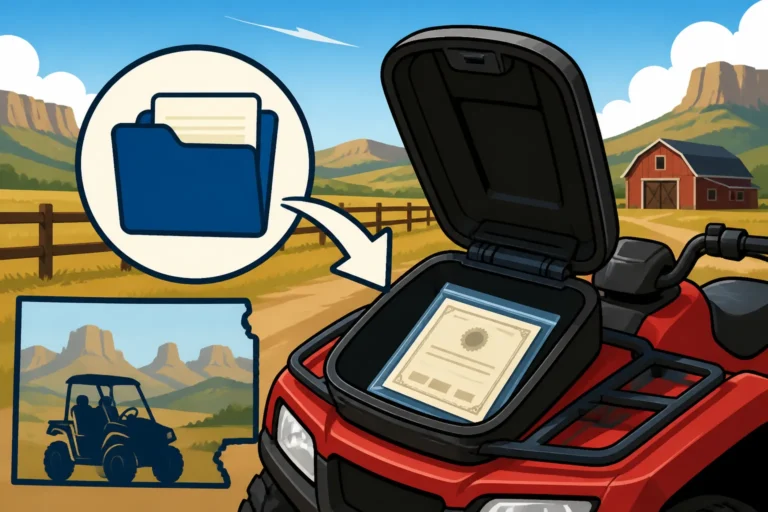
This is the bedrock of South Dakota's ORV system: every off-road vehicle must be titled. There's no getting around this, whether you bought your machine new from a dealer in Rapid City, picked it up privately in a small town, or brought it into the state. The title is your undeniable proof that you legally own the quad, side-by-side, or other eligible machine. Without a title, transferring ownership, selling your ORV, or even proving that it belongs to you if it's ever stolen becomes a bureaucratic nightmare. The state takes ownership seriously, and the title is the official record.
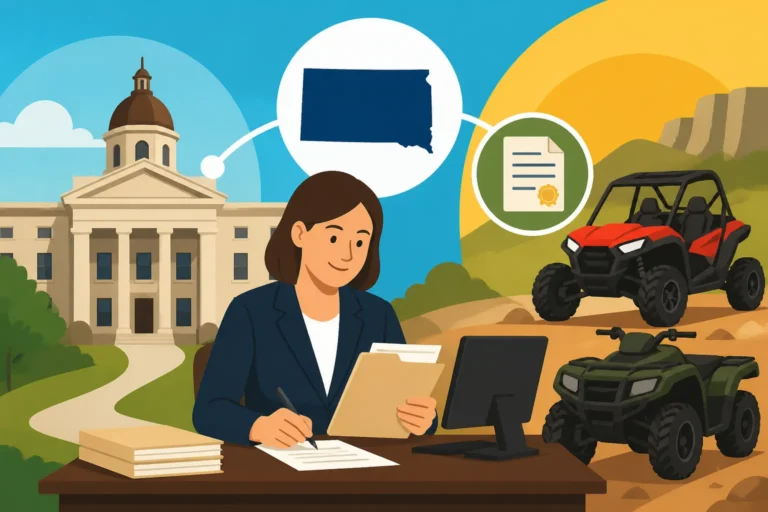
The titling process involves submitting specific paperwork and typically paying an excise tax and other fees. It usually happens through your [Titling at a South Dakota County Treasurer] office, not a central state department. This local approach can sometimes be confusing for those expecting a more centralized Department of Motor Vehicles experience, but it's how South Dakota operates. Even if your ORV never touches a public trail or road, securing that title is a non-negotiable step to establish legal ownership and protect your investment. You'll want to gather all necessary documents, including a bill of sale, and head to your local county treasurer's office to get this done promptly. You can learn more about the complete procedure in our guide, [Titling an ATV in South Dakota].
When an ORV Needs a Plate – The Motorcycle Exception
Here's where things get interesting and where the line between "ORV" and "street-legal vehicle" can blur in South Dakota. While most ORVs don't get traditional license plates, there's a significant exception: an ATV or UTV can be licensed as a motorcycle. This isn't a general ORV registration; it's a specific pathway for machines that meet certain criteria to become street-legal and operate on public roads like motorcycles. If you plan on riding your ATV on highways, gravel roads, or city streets (where permitted), you'll need to pursue this option.
To qualify for a motorcycle plate, your ORV must meet a list of specific equipment requirements, including things like headlights, taillights, brake lights, mirrors, and a horn. It also generally needs to meet a minimum engine displacement, typically 200cc for four-wheelers. Once it meets these standards and you complete the licensing process, your ORV is essentially reclassified for road use, allowing you to operate it with a valid motorcycle endorsement on your driver's license. This is a very different animal from a standard ORV title and falls under the umbrella of [Licensing an ATV as a Motorcycle in South Dakota]. Keep in mind that even with a plate, there are still rules about where you can and cannot ride, which are detailed in [South Dakota Street Legal ATV Requirements].
The Nonresident ORV Permit for Trail Access
If you're an out-of-state rider dreaming of exploring the Black Hills or other public lands in South Dakota, you'll encounter something that feels a lot like "registration" for your ORV, even if it's called a permit. South Dakota requires a [South Dakota Nonresident ORV Permit] for any ORV that isn't titled in the state and is used on public lands or trails. This isn't a general registration for all purposes, but specifically for accessing designated public riding areas.
This permit serves a vital function: it helps fund the maintenance and development of South Dakota's motorized trail systems, ensuring that visitors and locals alike have well-maintained places to ride. Think of it as a user fee that grants you access to these resources. The permit is typically a decal that you affix to your machine, indicating that you've paid your dues for trail access. It's a key requirement that many visitors overlook, leading to potential fines or confusion when they arrive. Understanding [What a South Dakota Nonresident Permit Requires] is essential for any visitor planning to ride the state's incredible trails.
| Requirement/Feature | Titling (Mandatory for SD owners) | Traditional Registration (Not for ORVs) | ORV Plating (Motorcycle Exception) | Nonresident ORV Permit (Visitors) |
|---|---|---|---|---|
| Purpose | Proves ownership | Grants general operating permission | Grants street-legal operating permission | Grants public trail access (visitors) |
| Administered By | County Treasurer | State DMV (for cars/motorcycles) | County Treasurer/State DMV | State via vendors & online |
| Annual Renewal | No (one-time) | Yes | Yes (like motorcycle) | Yes (seasonal/annual) |
| Physical Mark | Title document | License plate/sticker | Motorcycle plate/sticker | Decal |
| Primary User | All South Dakota ORV owners | All vehicle owners (cars/trucks) | Owners seeking street-legal use | Out-of-state riders on public trails |
Defining an ORV in South Dakota's Eyes
Before you even begin to worry about titles or permits, it's essential to confirm that your machine actually falls under South Dakota's definition of an off-road vehicle. The state has specific criteria that determine what counts as an ORV and, just as importantly, what doesn't. Misinterpreting these definitions could lead to confusion about what paperwork you need or what rules apply to your particular machine.
What South Dakota Counts as an Off-Road Vehicle
South Dakota's definition of an off-road vehicle generally includes self-propelled vehicles designed for off-highway use, primarily on unpaved surfaces. This typically covers the machines most people think of when they hear "ATV" or "UTV." We're talking about those rugged four-wheelers, side-by-sides, and other purpose-built machines designed to tackle trails, pastures, and rough terrain. These vehicles are distinct from snowmobiles, which have their own set of rules, and from street-legal motorcycles or cars.
The law considers factors like the machine's primary design and intended use. If it's built with knobby tires, high ground clearance, and is clearly not meant for sustained highway travel, it's likely to be classified as an ORV. Understanding [How South Dakota Defines an Off-Road Vehicle] is the first crucial step in navigating the state's unique system. This definition dictates whether you need an ORV title, or if your machine might fall into a different category with different requirements.
Vehicles Excluded from the ORV Definition
Just as important as knowing what is an ORV is knowing what isn't. South Dakota carves out several exceptions from its ORV definition, and these exclusions mean that those particular machines do not require an ORV title and are subject to different rules. For instance, common exclusions often include machines used exclusively for agricultural purposes on private land. A farmer using a side-by-side to check fences on their ranch might find their machine exempt from ORV titling requirements, provided its use remains strictly within those agricultural parameters.
Similarly, golf carts and certain industrial or construction equipment are typically excluded. These vehicles have specific functions and are not primarily designed or used for recreational off-highway riding in the same way an ATV is. [Why Farm Vehicles Sit Outside South Dakota's Definition] is a common area of confusion, but the intent is to avoid burdening agricultural operations with recreational vehicle regulations. The same goes for [Why Golf Carts Are Excluded in South Dakota]; they operate under their own set of rules, often pertaining to low-speed use in specific settings. Always double-check the specifics if you own a vehicle that blurs these lines, as misclassification can lead to issues.
The Role of the County Treasurer in ORV Titling
One of the most distinctive aspects of South Dakota's titling process for ORVs (and many other vehicles) is that it's handled at the county level, not by a centralized state Department of Motor Vehicles office. This means that instead of heading to a state-run DMV, you'll be visiting your local county treasurer's office to title your ATV or UTV. For someone new to the state or unfamiliar with this system, it can be a surprising deviation from what they might expect.
The county treasurer's office is responsible for processing titles, collecting excise taxes, and handling various other vehicle-related transactions. This decentralized approach places the administrative burden and the revenue collection directly within the county where the vehicle owner resides or where the transaction takes place. It's a system designed to keep things local and accessible, although it does mean that processes or wait times might vary slightly from one county to another. Understanding [Why a County Treasurer Handles South Dakota Titles] is key to knowing where to go and what to expect when you need to [Titling at a South Dakota County Treasurer]. They are your primary point of contact for establishing legal ownership of your ORV.
The Implications of No General Registration
The absence of a universal ORV registration system in South Dakota has several practical implications for owners, affecting everything from annual fees to how law enforcement interacts with riders. It's important not to confuse the lack of "registration" with a lack of rules or oversight; it simply means the state uses different mechanisms to manage ORV ownership and use.
No Annual Stickers or Plate Renewals (for typical ORVs)
One of the most noticeable differences for many ORV owners in South Dakota is the absence of annual registration stickers or plate renewals for their machines, unless they've opted to plate it as a motorcycle. For the vast majority of ORVs that are solely titled and used off-road or on private property, there are no yearly fees to pay to keep a "registration" current. Once you've titled your machine and paid the initial excise tax, that's generally it for recurring state-mandated fees related to its legal status as an ORV.
This can be a relief for riders who are used to paying annual fees for their machines in other states. It means less paperwork, fewer deadlines to remember, and potentially lower overall ownership costs from a government fee perspective. However, it's critical to remember that this doesn't mean there are no costs associated with riding. If you plan to use public trails, for example, you'll still need to acquire a [South Dakota's Motorized Trail Permit] if you're a nonresident, or ensure you adhere to any other relevant regulations. The lack of a general annual registration simply streamlines the ownership aspect, not necessarily the operational aspect on public lands.
Tracking and Law Enforcement Considerations
Without a visible license plate or annual registration sticker on every ORV, some riders might wonder how law enforcement tracks vehicles or verifies ownership. The answer lies primarily in the vehicle's unique VIN (Vehicle Identification Number) and the mandatory titling process. Just like any other vehicle, every ORV has a VIN stamped on its frame, and this number is directly linked to its title. When an ORV is involved in an incident, stopped by a game warden, or suspected of being stolen, law enforcement officers will rely on the VIN to identify the machine and run a check against the state's titling records.
Therefore, even without a "registration," carrying proof of ownership is paramount. This means having your title document readily available, or at least a copy, especially if you're transporting the machine or engaged in a transaction. When buying or selling, a clear [A South Dakota Bill of Sale for an ORV], perhaps utilizing a template from a service like LawDepot, becomes even more important to document the transfer of ownership. Law enforcement relies on these core documents and the VIN to determine who legitimately owns the machine and whether it's being operated legally.
Trail Access and Land Use without Registration
The absence of a general ORV registration system doesn't grant riders carte blanche to use their machines anywhere they please. In fact, restrictions on where and how ORVs can be operated are quite specific. For residents of South Dakota, if your ORV is strictly used on private land with permission, or if it meets the criteria to be plated as a motorcycle for road use, then the "no registration" rule makes sense. However, for those looking to explore the state's extensive public lands, especially the beautiful Black Hills National Forest, there are still rules to follow.
For example, accessing many designated motorized trails in the Black Hills requires a special motorized trail permit. While not a "registration" in the traditional sense, this permit acts as your permission slip to use those specific trails and contributes to their upkeep. Furthermore, riding on private property always requires the explicit permission of the landowner. Never assume that because your ORV isn't "registered," you can simply ride wherever you see fit. Always check local ordinances, land manager rules, and ensure you have the necessary permits or permissions before heading out. The legal framework ensures responsible land use, even without a universal registration mandate.
Why Out-of-State Riders Face Different Rules
Visitors to South Dakota often discover that the rules for ORVs, particularly regarding public land access, are different from what they're used to. While South Dakota residents might only need a title for their ORVs, out-of-state riders, even with their home state's registration, face distinct requirements. This is a common point of confusion, and understanding these specific mandates is crucial for a smooth and legal riding experience in the Mount Rushmore State.
The Nonresident Permit Requirement in Detail
If you're bringing your ATV or UTV into South Dakota from another state, you absolutely need to be aware of the [South Dakota Nonresident ORV Permit]. This permit is not optional; it's a mandatory requirement for any out-of-state ORV operated on designated public lands or trails within South Dakota. It doesn't matter if your machine is fully registered and street-legal in your home state; if you plan to hit the trails in the Black Hills, for example, you'll need this South Dakota-specific permit.
The permit serves as a user fee, contributing to the management, maintenance, and development of the state's motorized trail systems. It helps ensure that the trails remain accessible and enjoyable for everyone. This permit is typically a physical decal that you must prominently display on your machine. Without it, you could face fines and be turned away from trailheads. It’s important to familiarize yourself with [What a South Dakota Nonresident Permit Requires] and ensure you acquire it well in advance of your trip, as waiting until you arrive can sometimes cause delays.
Honoring Out-of-State Plates for Road Use
This is where things can get a little nuanced. If your ORV is legally licensed and plated as a street-legal vehicle in your home state, South Dakota generally does honor that registration for road use. This means if you have a street-legal ATV with a valid license plate from, say, Wyoming, and it meets South Dakota's basic equipment requirements for road-legal machines (headlights, brake lights, mirrors, etc.), you could potentially ride it on South Dakota roads where ATVs are permitted. However, it's not a blanket pass.
The key here is "street-legal." Your ORV must genuinely be compliant with both your home state's and South Dakota's standards for road use. This is very different from simply having a title or an off-road registration from your home state. Always remember that even if your out-of-state plate is honored for road use, it does not exempt you from the nonresident ORV permit requirement for riding on designated public trails. These are two separate categories of use with separate requirements. For more details on this, check out [Does South Dakota Honor Out-of-State Registration?].
The Mail-Forwarding Address Rule and Fees
South Dakota is known for its favorable tax and titling environment, which has led some nonresidents to try and title their vehicles in the state, sometimes using a mail-forwarding address. While it's certainly possible for nonresidents to title an ORV in South Dakota, the state has put measures in place to address the unique circumstances of out-of-state ownership, particularly when a physical residence isn't established. This includes a specific fee that applies when titling an ORV as a nonresident or when using a mail-forwarding service.
This additional fee is designed to cover the administrative costs associated with processing titles for owners who don't have a traditional physical address within the state. It differentiates between genuine residents and those who are simply utilizing the state's titling benefits from afar. If you're considering titling an ORV in South Dakota but reside out of state and plan to use a mail-forwarding service, be prepared for this extra cost. It's a key part of [Why a Mail-Forwarding Address Triggers South Dakota's Fee] and an important financial consideration for non-resident owners.
Essential Documents and Financial Responsibilities
Regardless of whether your ORV is "registered" in the traditional sense, there are fundamental paperwork and financial obligations that all owners must meet in South Dakota. Failing to adhere to these requirements can lead to penalties, delays, and significant headaches down the road. Being prepared with the right documents and understanding the associated costs will make the titling process much smoother.
Required Paperwork for Titling
The backbone of legally owning an ORV in South Dakota is a properly issued title, and obtaining one requires specific documentation. Whether you purchased your machine new from a dealership in Sioux Falls or bought a used quad from a private seller in the Black Hills, you'll need to gather a precise set of papers to submit to your county treasurer. This usually includes a completed title and registration application form (even if it's just for titling), the manufacturer's statement of origin (for new machines) or the previous owner's signed-over title (for used machines), and a bill of sale.
A bill of sale is particularly critical for private party transactions. It serves as official proof of purchase and includes vital details like the sale price, date of sale, and VIN. Using a reliable bill of sale template, perhaps from a service like LawDepot, can ensure you capture all necessary information and avoid future disputes. Depending on the situation, you might also need proof of identity, residency, and a VIN inspection for out-of-state vehicles. Being organized with all these documents, as detailed in [South Dakota ATV Title Paperwork], will ensure your visit to the county treasurer's office is efficient and successful.
Understanding the Excise Tax and Other Fees
While South Dakota doesn't impose a general annual registration fee for ORVs, there are still significant financial obligations when you acquire a machine. The most prominent of these is the [South Dakota's 4 Percent Excise Tax]. This tax is applied to the purchase price of your ORV, similar to a sales tax, and must be paid when you title the vehicle. It's a one-time tax, but it can represent a substantial cost, especially for newer, higher-priced machines.
In addition to the excise tax, you'll encounter a few smaller, but equally important, fees. These often include a base titling fee, a small [South Dakota's $2 Technology Fee] (which helps fund vehicle record modernization), and potentially a lien notation fee if you've financed your purchase. Each of these fees contributes to the state's ability to maintain its titling records and other related services. It's wise to budget for all these costs when planning your ORV purchase, as they are mandatory components of the [South Dakota ATV Title Cost]. These aren't hidden fees; they're standard parts of the legal titling process.
Penalties for Late Titling
South Dakota is quite strict about its titling deadlines, and failing to title your ORV within the specified timeframe can result in penalties. The state gives you a generous window, usually [South Dakota's Forty-Five Day Title Deadline], from the date of purchase to get your new or newly acquired ORV titled. This is ample time to gather your paperwork and visit the county treasurer's office. However, if you let this deadline slip, you will face escalating financial penalties.
The penalties typically start with a [South Dakota's 1 Percent a Month Penalty] of the excise tax due, accumulating for every month or partial month you're late. This can quickly add up, turning a manageable tax into a much larger bill. The penalties become even more substantial once you pass the 60-day mark, often incurring a [South Dakota's 10 Percent Penalty at Sixty Days]. These penalties are not waived lightly, as they are designed to encourage prompt compliance with titling laws. It's a clear message from the state that while they don't generally register ORVs, they absolutely expect you to title them on time. Don't procrastinate; get that title handled as soon as possible after acquiring your machine.
Disclaimer
This article is for general informational purposes only and does not constitute professional advice. Laws, prices and regulations vary by location and change over time. Consult a qualified professional for guidance on your specific situation.