South Dakota Rules for Riding Private Property
South Dakota’s public riding rules can make private-land use confusing: a trail permit, an out-of-state plate, or an open-looking gate does not automatically grant access. The key is to separate permission to ride the property from rules that still apply to the machine, the rider, and any road or public trail you enter.
Permission comes first on private property
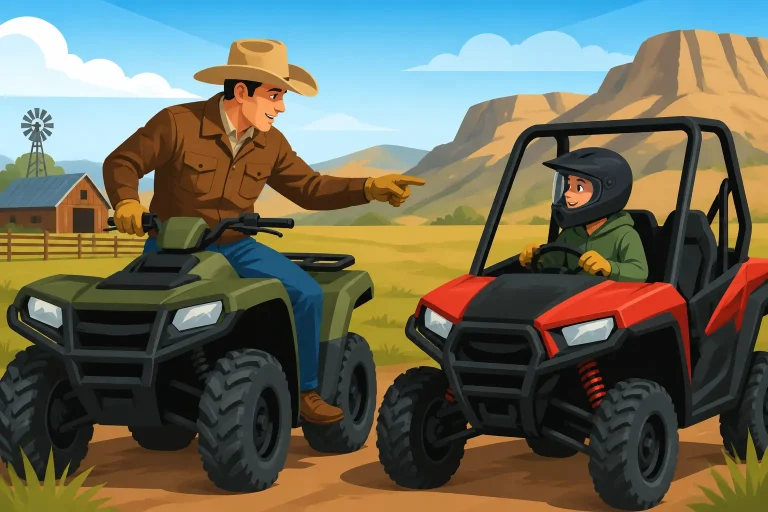
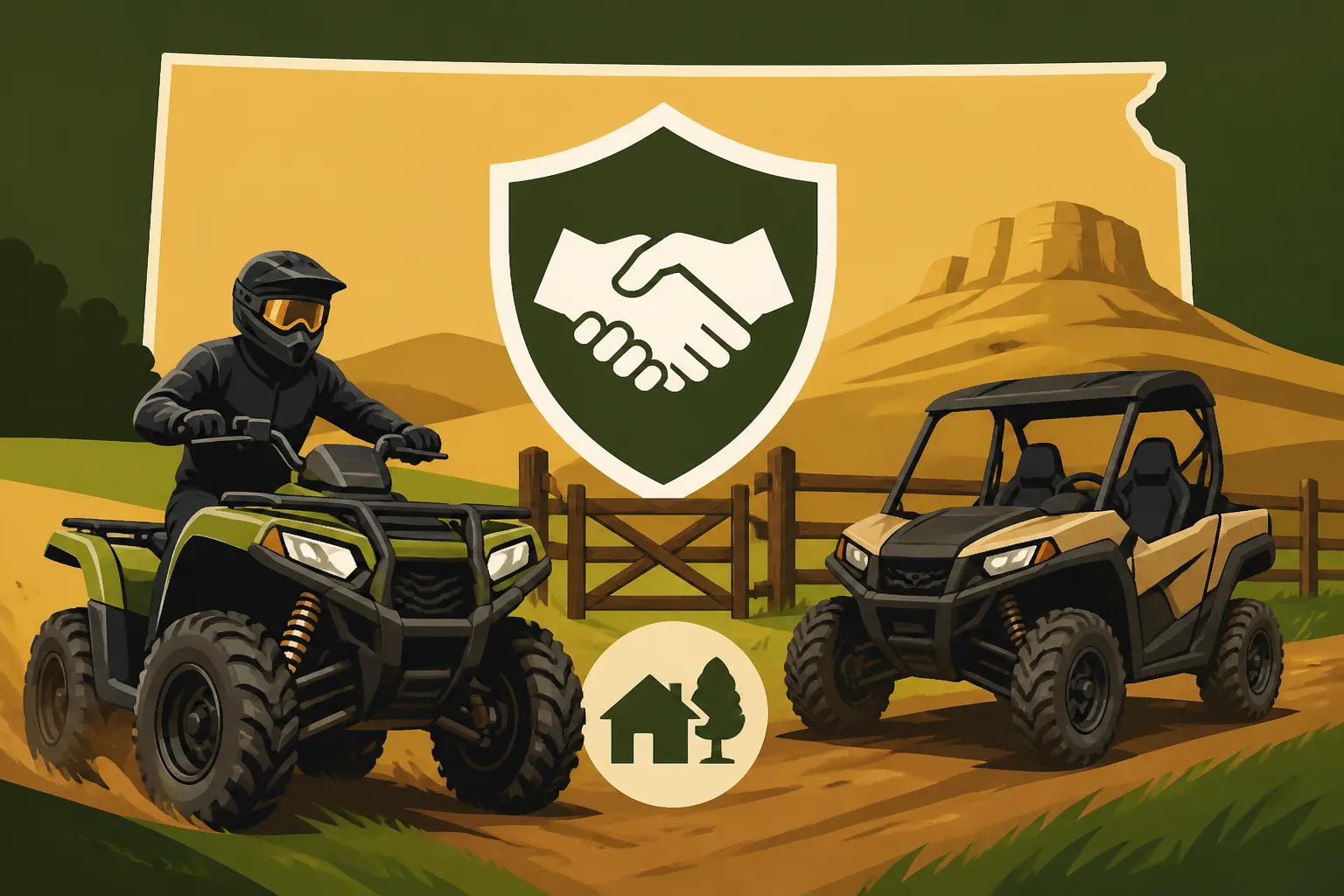
In South Dakota, a rider should have permission from the property owner or someone authorized to grant access before riding an ATV or UTV on private land. A machine being capable of crossing a field or ranch road does not make that route public. Nor does an absent fence or gate mean you may ride there.
Permission can be informal, but clear permission is safer. Confirm where you may ride, which routes are off-limits, whether passengers are allowed, and when your access ends. If the land is leased, managed, or occupied by someone other than the owner, ask who has authority to approve recreational riding. A tenant or ranch operator may control access to the land, but do not assume that every person working there can give permission.
This matters especially on large ranches, where one parcel may have several owners, operators, grazing leases, or access agreements. A familiar two-track can cross a property boundary without any obvious sign. Ask for a map or route description if the allowed area is not clear. For more on that distinction, see [South Dakota Landowner Permission Requirements] and [South Dakota Rules for Riding a Grazing Lease].
Permission is not the same as a public permit
A South Dakota trail permit and a landowner’s permission solve different problems. A permit may be required on designated public riding routes, while permission allows you to enter private property. One does not replace the other.
If you have permission to ride a private ranch, you generally do not need a public trail permit just to ride that private land. But the answer changes if your route leaves the property and enters a designated public trail system. The permit rules for those routes still apply, even if you started your ride on private ground. When Ranch-Only Riding Needs No Trail Permit explains the private-land distinction, and South Dakota Trail Permits Explained covers where public trail permits fit.
| Where you ride | What you need to confirm | Does a public trail permit automatically give access? |
|---|---|---|
| Private property | Permission from the owner or an authorized manager, plus any conditions they set | No |
| Designated public motorized trail | The current trail-access and permit requirements for that route | A permit does not authorize private-property access |
| Public road or right of way | Whether the machine and rider may use that specific road or area | No; road rules are separate |
| Grazing lease or managed land | Permission from the person with authority over that land, and any applicable public-land rules | No |
Private-property permission also does not act as a pass to cross a neighbor’s land, use a public trail, or travel along a road that is closed to your machine. Treat each property boundary and route transition as a separate access question.
Get the boundaries and conditions in writing
For occasional riding between neighbors, a conversation may be enough. For regular access, a written message or simple agreement can prevent misunderstandings. It need not be complicated. Record the property or route covered, the dates or season, the machines allowed, and any restrictions on guests or passengers.
Ask about practical conditions, too. An owner may want riders to avoid livestock, crops, water sources, gates, or particular times of day. They may set speed limits, prohibit riding after rain, or ask you to stay on established tracks. Follow those conditions even if they are stricter than statewide law.
Close gates exactly as directed, and do not move a fence, cut across a field, or create a new trail without approval. If you encounter a gate or sign that does not match what you were told, stop and check rather than assuming you can proceed. Permission to ride one route is not permission to explore the whole property.
Private land does not erase other rules
Permission answers whether you may enter the land. It does not necessarily settle every question about what you may do once there. State laws and other applicable rules can still matter, and a landowner’s conditions can be more restrictive than the legal minimum.
The details depend on the activity and location. A private field is different from a public road, a public right of way, a state recreation area, or federal land. Rules about equipment, age, helmets, alcohol, firearms, noise, and liability may have different scopes. Do not assume that a rule applying on a public road applies in exactly the same way to a private field—or that private ownership makes every rule disappear.
Keep private riding separate from road riding
A private ranch road may look and feel like an ordinary gravel road, but its ownership and public access status matter. If the route is open to public travel, or if you need to use a public road to reach the property, check the rules for that route and for your machine. The owner’s permission for a private road does not authorize riding on a public highway or shoulder.
South Dakota has separate requirements for ATVs used on roads, including rules that can depend on the vehicle and the road. Do not infer that an ATV or UTV can be driven on a public road simply because it is allowed on private land. See South Dakota Rules for Riding a Ranch Road for the ranch-road question and South Dakota Ditch Riding Rules Explained for the distinct rules that apply to highway ditches.
If your route passes through a public right of way or crosses a road, pause to identify what kind of land you are entering. A landowner’s permission covers only the land and route they control. It cannot grant permission to use a public road contrary to its rules or to ride across a different owner’s property.
Public-land permits and reciprocity are separate
An out-of-state registration or plate does not turn private land into public riding access. Likewise, a South Dakota trail permit does not grant entry to a ranch, farm, or other privately owned parcel. When a ride combines private land with public routes, check the rules for each part.
This is also why a visitor should not treat an out-of-state plate as a universal substitute for a South Dakota permit. Permit and reciprocity rules are tied to the location and type of route, not simply to whether the machine is registered somewhere. Does South Dakota Honor Out-of-State Registration? and Riding South Dakota With an Out-of-State Plate address those questions for public riding.
Federal land has its own access rules, and a route that borders a ranch may cross onto public land without an obvious change in scenery. Check the route before you ride and follow posted signs, maps, and closures. South Dakota Rules for Riding Federal Land explains why a landowner’s permission cannot authorize travel on federal land.
A practical way to confirm access
Before unloading, establish both that you may ride the property and that your planned route does not rely on an unapproved crossing. This short process can prevent a friendly invitation from turning into a boundary or permit problem.
- Identify who controls the land. Ask the owner, tenant, ranch operator, or manager who has authority to approve recreational riding. If the land is leased or managed, confirm that the person giving permission can include ATV or UTV use.
- Describe the route. Use a map, marked boundary, or clear landmarks. Ask whether the permission covers connecting tracks, creek crossings, gates, or adjoining parcels.
- Clarify the conditions. Confirm which machines and riders are allowed, whether guests may come, and whether there are limits on speed, hours, passengers, or trail use.
- Check every transition. Determine whether the planned route enters a public trail, public road, federal land, or another private parcel. Each transition may bring a separate rule or permission requirement.
- Follow signs and changes. A posted closure, locked gate, or changed instruction is a reason to stop and confirm access. Do not rely on an older invitation if the land is now managed differently.
- Carry useful records. Keep a message or written permission available, along with any permit or registration information required for the public portions of the ride.
For a ride organized by a club, outfitter, or large group, do not assume one rider’s permission covers everyone. Ask whether the owner has approved the group, the number of machines, and the event itself. Commercial or organized use may involve additional requirements beyond ordinary private recreation. Group Rides in South Dakota and When a Special Recreation Permit Is Needed can help separate a casual ride from a larger organized activity.
If access is unclear, do not ride through
A common mistake is to treat a route as public because it appears on an informal map, has tire tracks, or has been used by other riders. Those clues do not establish permission. If you cannot tell whether a trail crosses private land, contact the land manager or choose a route with confirmed access.
The same caution applies to invitations that mention a property but not its boundaries. Permission to ride at a friend’s ranch does not necessarily include neighboring land, a grazing lease, or a public trail connected to it. Confirm the route rather than relying on assumptions about customary access.
Keep the tone straightforward when asking. Explain who will ride, what kind of machine you have, when you plan to visit, and where you want to go. Ask whether the owner wants you to avoid particular areas or conditions. Respecting a refusal or a restriction helps preserve access for everyone.
What to remember before riding
For private property, the starting point is authorization from the person who controls the land. A public permit is not a substitute for that permission, and private-land permission is not a substitute for permits or rules that apply on public trails and roads.
A reliable plan is to confirm the boundary, agree on the route and conditions, and check the status of every public or neighboring parcel along the way. When the ride stays entirely on private land with permission, public trail-permit requirements generally are not the issue. The moment the route reaches a public trail, road, or other managed land, check that location’s requirements separately.
Disclaimer
This article is for general informational purposes only and does not constitute professional advice. Laws, prices and regulations vary by location and change over time. Consult a qualified professional for guidance on your specific situation.