One Permit Per Machine, Not Per Rider
A group ride can make the permit rule easy to misread: several people may ride together, but that does not mean one permit covers every ATV or UTV in the group. In South Dakota, the Black Hills motorized trail permit is tied to the machine, not the person. Knowing which machines need a permit—and where it must be displayed—helps prevent a last-minute scramble or an avoidable stop.
How the one-per-machine rule works
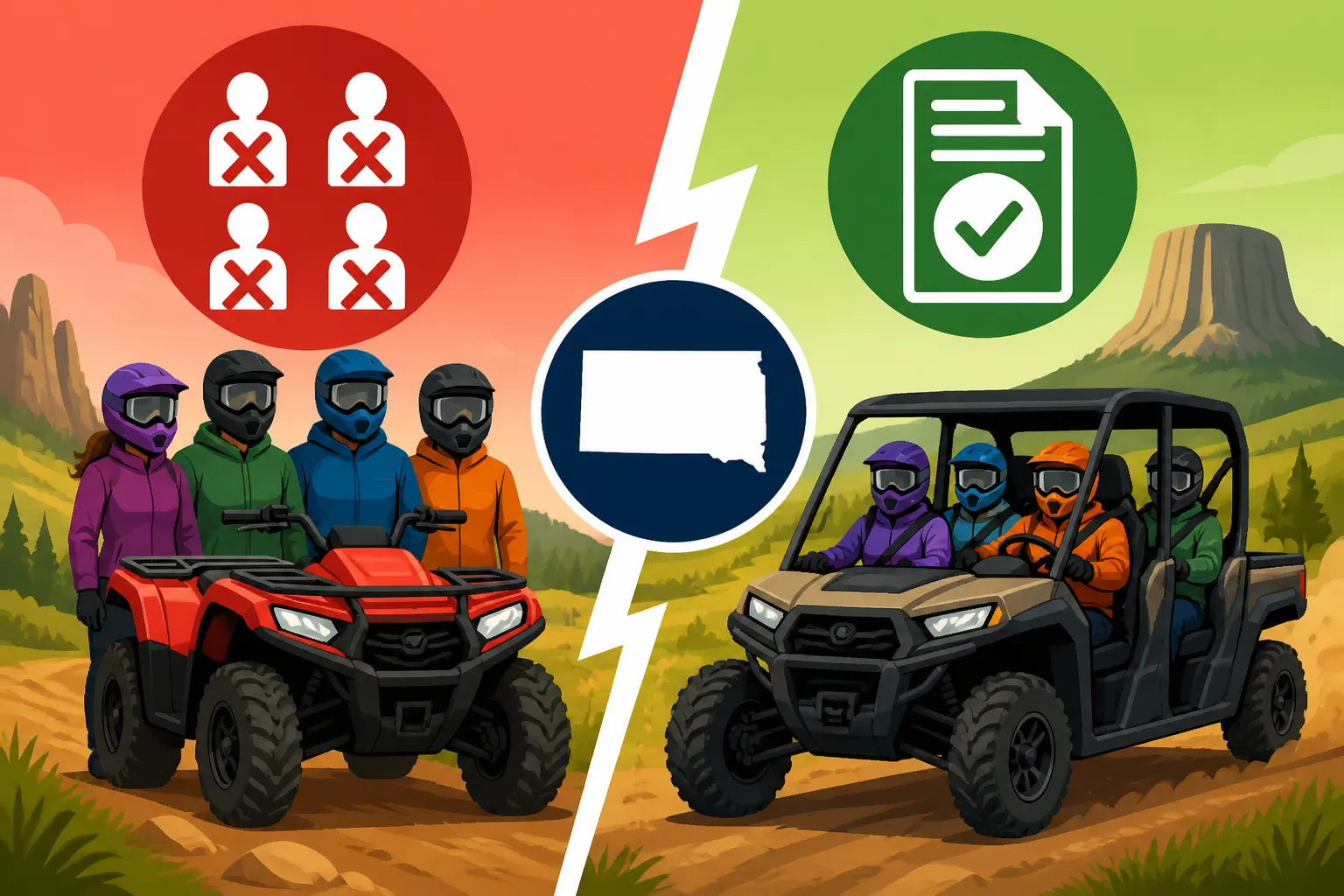
For riding on routes covered by the Black Hills motorized trail permit program, each machine needs its own permit. The permit is not a group pass, and it is not a rider pass. If three people arrive on three separate ATVs, plan on a permit for each ATV. If one person brings two machines, each machine needs its own permit if both will be ridden on covered routes.
The practical test is simple: count the machines that will be used, not the riders who will sit on them. A passenger does not need a second permit just for riding on the same permitted machine. But a passenger who drives a separate machine does need a permit for that machine.
| Riding setup | How to think about the permit |
|---|---|
| One rider on one ATV | One permit for that ATV |
| Two riders sharing one permitted UTV | One permit for that UTV |
| Two people riding two separate machines | One permit for each machine |
| One rider bringing two machines | Each machine needs its own permit if both will be used on covered routes |
| Several machines traveling as a group | Count the machines, not the group leader or riders |
This distinction matters when a group rents machines, hauls several family vehicles, or takes turns driving. Swapping drivers on the same machine does not make it a new machine or call for another permit. Adding another machine to the ride does.
The permit is also separate from permission to use a particular route. It does not make a closed trail open, authorize travel off a designated route, or replace any other applicable access requirement. Before setting out, check both the permit rules and the current route status. South Dakota Trail Permits Explained gives a broader overview of how permits fit into riding in the state, while How the Black Hills Motorized Trail Permit Works focuses on the permit program itself.
Which machines and rides need separate permits
The one-per-machine rule applies when a machine is being used on routes where the Black Hills motorized trail permit is required. It does not mean every ATV or UTV in South Dakota needs that permit for every kind of use. A machine kept on private property, for example, is not automatically subject to the same requirements as one taken onto a permit-covered trail. Access rules depend on where you ride.
For a trip, start by listing the machines and the planned riding areas. Then confirm the rules for those places. The Black Hills motorized trail system has designated routes, and the permit requirement is tied to riding in the applicable area—not simply to being somewhere in South Dakota. Rules can differ between a motorized trail, a road, private land, a state recreation area, and other public land. South Dakota Rules for Riding Federal Land can help you think through the land-access side of the question.
A road-legal plate does not necessarily answer the permit question. Registration or a plate may be relevant to road use, but it does not automatically substitute for a required trail permit on a motorized trail. Likewise, having a trail permit does not automatically make a machine street legal. Treat road requirements and trail requirements as separate checks. Why a Plate Does Not Replace a Trail Permit explains that distinction in more detail.
Out-of-state registration does not, by itself, mean you should assume a machine is exempt from the trail permit. Visitors should check how the permit rules apply to their specific machine and route before traveling. The same goes for machines that are unregistered, not street legal, or used only off-road. When a ride includes multiple kinds of land or routes, verify each part rather than relying on a single rule for the whole trip. Does South Dakota Honor Out-of-State Registration? is useful if your machine is registered elsewhere.
A machine’s size or style may affect which routes it can use, but it does not change the basic counting rule. If two permitted machines are traveling together, each machine needs its own permit where the permit is required. A wider UTV and a smaller ATV may also face different route-width limits, so check that separately from permit coverage.
Groups, families, and shared driving
For families, a useful way to plan is to put one row on a checklist for each machine. Record who is bringing it, whether it will be ridden on a permit-covered route, and who is responsible for having the permit displayed. This keeps the conversation focused on the vehicle rather than on who is driving at a particular moment.
If adults and children trade turns on one vehicle, the permit count generally follows the vehicle. However, age, supervision, helmet, and other riding rules are separate matters. A machine permit does not establish that every rider is eligible to operate the machine or use a particular route. Check those requirements independently.
For a multi-machine group, do not assume that one person’s purchase covers everyone because the permits are bought in one transaction. A purchase may involve several permits, but each needs to be associated with the correct machine and displayed as required. If you are unsure how a seller records or issues permits for multiple machines, ask before completing the purchase.
Buying, displaying, and keeping track of permits
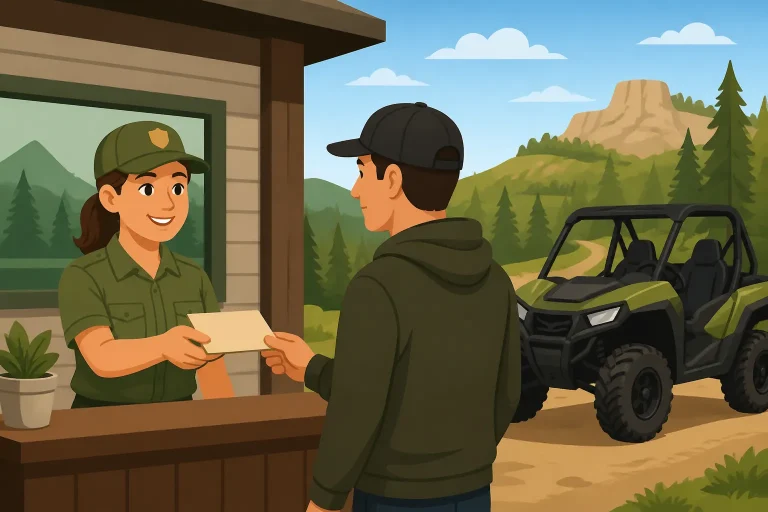
Permit formats and availability can depend on how you buy. South Dakota’s Black Hills permit is issued as a decal, so plan ahead for how it will be attached and visible on the machine. Follow the current program instructions rather than putting it wherever it is easiest to reach. Placement can matter for visibility, and a decal intended for one machine should not be treated as a spare for another. See Black Hills Trail Permit Decal Placement for placement guidance.
When buying for several machines, verify the quantity and check that you have a permit for each one before leaving the sales point or finishing an online order. Keep a simple record of which decal belongs to which ATV or UTV. This is especially helpful when machines look similar, when a family stores them together, or when several people in a group are responsible for their own equipment.
Do not assume a decal can be moved to a different machine when a vehicle is sold, replaced, or borrowed. The permit is associated with the machine, and the current program rules determine what happens after a sale or other change. Confirm the transfer or replacement process before relying on a decal already attached to a vehicle. Selling a Machine With the Permit Decal Stuck On addresses a situation that can otherwise catch a buyer or seller off guard.
If you are ordering a permit, consider delivery time and the start of your trip. A permit that has not arrived or has not been properly displayed may not solve the problem at the trailhead. Check the current purchasing options, processing expectations, and any instructions for riding while an order is pending. Where to Buy a Black Hills Trail Permit and How Long a Black Hills Permit Takes to Arrive can help with planning.
Permit validity is another detail to confirm. Some permits are offered for shorter trips and some for longer use, but the duration and expiration rules depend on the permit type and the current program terms. Do not assume that a permit bought for one trip will remain valid for a later visit, or that an annual permit lasts for a full year from the date of purchase. Check the terms for the specific permit you select. When a Black Hills Trail Permit Expires explains why the expiration date matters.
A trail permit is not the same thing as insurance, vehicle registration, or a rental agreement. Keep any separate documents you need for the machine and the ride. If the route involves roads, verify road-use requirements too; if the ride stays on designated trails, confirm the trail rules and closures. South Dakota ATV Registration for Road Use covers a different question from trail access.
A quick checklist before the group leaves
Use this short process to avoid mixing up rider count, machine count, and route access:
- List every machine that will be ridden. Include ATVs and UTVs that may be brought along as backups.
- Mark which machines will use permit-covered trails. Do not assume a permit is required or not required solely because the vehicle is in South Dakota.
- Get a separate permit for each machine that needs one. A passenger does not create a second machine, but another vehicle does.
- Check the permit type and current validity. Confirm that it covers the intended trip and has not expired.
- Display each decal as instructed. Make sure it is attached to the machine it was obtained for and can be seen as required.
- Check route access and machine fit. Confirm that the route is open and suitable for the machine’s width and type.
- Review other rules separately. A trail permit does not replace road-use requirements, landowner permission, or rider safety rules.
Rentals deserve an extra check. A rental company may include the permit, but inclusion should not be assumed. Ask whether the specific machine has the required decal before leaving, and confirm whether the permit covers the routes you intend to ride. If a group rents several vehicles, the one-per-machine rule still means every machine being used on covered trails needs the proper permit. Does a Rental Include the Trail Permit? is a useful question to settle before booking.
If someone in the group changes machines during the trip, pause and check that the new machine has its own permit when one is required. A decal on the first ATV does not become coverage for a second ATV just because the same rider is driving it. And if the group splits up, each permitted machine should remain identifiable and properly equipped without depending on another rider carrying paperwork or a decal.
The safest planning assumption is straightforward: where the Black Hills motorized trail permit is required, count one permit for every machine that will ride there. Then confirm the rules for the specific route, permit type, and machine before departure. That approach avoids treating the permit as a headcount pass and makes it easier for a group to handle compliance without slowing the ride.
Disclaimer
This article is for general informational purposes only and does not constitute professional advice. Laws, prices and regulations vary by location and change over time. Consult a qualified professional for guidance on your specific situation.