South Dakota Rules for Retrieving Game by ATV
An ATV can make it easier to bring harvested game out of rough country, but it does not create permission to ride wherever an animal falls. In South Dakota, the key questions are where you are riding, whether motorized travel is allowed there, and whether your harvest and transport follow the rules for that species. Use this practical checklist before you head out.
The short answer: retrieval is not a blanket exception
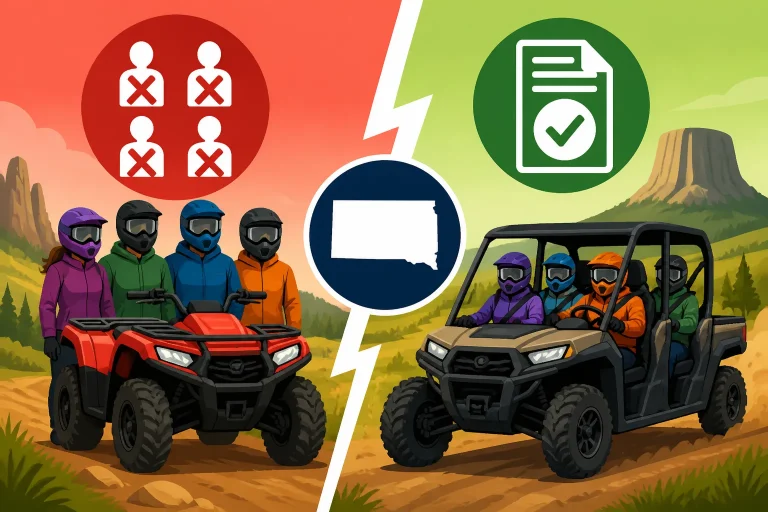
An ATV may be useful for moving game, but the fact that you are retrieving a legally harvested animal does not automatically authorize off-route travel, entry onto closed land, or crossing property without permission. Treat the ride as two separate activities: hunting and operating a motor vehicle. Each has its own rules.
Before the hunt, identify the exact area where you plan to ride and the route you will use to reach it. A legal hunting area is not necessarily open to ATVs. Public land may have designated routes, seasonal restrictions, gates, or closures. Private ground requires the landowner’s permission for vehicle access, even if you have permission to hunt there. If the planned route crosses several parcels or management areas, confirm access for each part rather than assuming one permission covers the whole trip.
For state-managed land, check the current South Dakota Game, Fish and Parks rules and notices for the specific property. For federal land, consult the applicable land manager and route map. A road shown on a map may be closed to motorized use, and a route open to ordinary vehicles may not permit an ATV. Posted signs and gates matter; do not treat a short distance across grass or brush as an acceptable shortcut.
A motorized trail permit is also not general permission to ride anywhere. The permit applies to eligible riding under its rules, not to every parcel or route in the state. Check South Dakota Trail Permits Explained and South Dakota Rules for Riding GFP Land to understand how a permit and land access fit together. A permit does not override a land closure, a route restriction, or a landowner’s decision.
| Situation | What to confirm before riding |
|---|---|
| Harvested game on private land | Permission to retrieve with an ATV, and permission for the route across the property |
| Harvested game on state-managed land | Current property rules, open routes, seasonal closures, and any vehicle restrictions |
| Harvested game on federal land | The managing agency’s motorized route map and current closure notices |
| Route crosses more than one property | Access and motorized-use permission for every segment |
| Ride uses a designated motorized trail | Whether the machine and rider need a permit, and whether the trail allows that machine |
| Game is ready to transport | Species-specific tagging, evidence-of-sex, possession, and transport requirements |
A practical plan is to decide in advance where the ATV will stop. If the animal is beyond the legal route, you may need to carry or drag it to an allowed access point, or use another lawful method. Do not assume that a recovery need makes a closed route open.
Check the rules for the land, route, and machine
The most common planning mistake is treating “public land” or “hunting land” as if it were one uniform category. Access rules can differ between properties, and a route can have restrictions that do not apply to a nearby road. In addition, a machine that is legal to operate in one setting may not be legal on another route.
Public land and designated routes
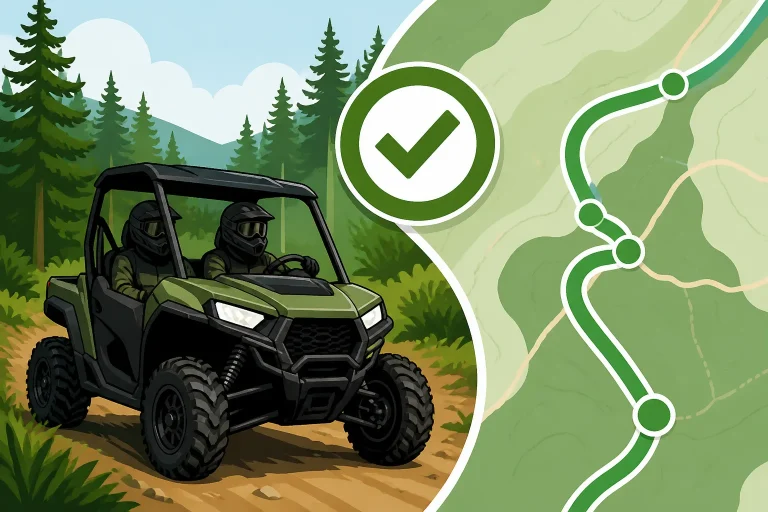
Before the season, find the official map or access information for the specific property. Look for motorized-use boundaries, designated roads and trails, seasonal closures, and signs that prohibit vehicles. A hunting map may show where hunting is allowed without showing which routes are open to an ATV. Use the correct map for each question.
Do not ride around a gate, through a closed area, or beyond a designated route to get closer to a downed animal. If a route is closed, stop at the closure and use a permitted recovery method from there. If the map and signage appear to conflict, follow the posted restriction and contact the land manager for clarification before riding.
Rules may also differ between an established road and the ground beside it. Riding alongside a road across grass, a field edge, or a drainage can still be off-route travel. Read [South Dakota Rules for Riding a Wildlife Area] for the related access issue, and confirm the regulations for the particular wildlife area you intend to hunt.
Private land and written permission
Hunting permission and vehicle permission are not always the same thing. Ask the landowner specifically whether you may use an ATV to retrieve game, which route to take, and whether you may cross fields, gates, or other parts of the property. A clear conversation before the hunt can prevent confusion when time is short and the animal is down.
If the route crosses a neighbor’s land, get permission from that owner too. A permission arrangement on one parcel does not authorize travel across another. Respect instructions about gates, livestock, crops, and where to park or turn around. The principles in South Dakota Rules for Riding Private Property apply even when the purpose is game recovery.
ATV permits, plates, and trail access
A plate, registration, or trail decal does not grant access to every road or parcel. Each serves a specific purpose, and the requirements depend on where and how you ride. Check whether your planned route is a public road, a designated motorized trail, private land, or a restricted area. Do not assume that a road-legal machine is allowed on a closed trail, or that a trail permit makes it legal to use a public road.
For a ride involving motorized trails, review South Dakota Trail Permits Explained and Does South Dakota Honor Out-of-State Registration?. If the route includes road travel, separately check the road-use rules. Hunting access and vehicle legality are related, but they are not interchangeable.
Plan for closures and changing conditions
A route that was open on a previous trip may be closed now because of weather, fire danger, maintenance, wildlife management, or another temporary restriction. Check notices close to the hunt, not only when you first plan it. Carry a current map and be ready to change the recovery plan if a route is closed.
If you cannot confirm that a route is open to your machine, do not use it as a shortcut. Contact the land manager, county office, or landowner before the ride. A short call is easier than dealing with a citation, property damage, or a conflict with a landowner after the hunt.
Protect the harvest and transport it correctly
Legal access is only part of the job. Once an animal is harvested, you still need to follow the requirements that apply to that species, license, and hunting area. Those rules can cover tagging, evidence of sex, possession, transport, and where or when a harvest must be reported. Requirements can differ, so use the current regulations for the specific hunt rather than relying on a general memory of last season’s rules.
Complete required tagging and other harvest steps before moving the animal, following the exact instructions for the license and species. Keep the documentation with the game during transport if the rules require it. If you are unsure whether a particular part must remain attached, how a tag must be secured, or what needs to be visible during transport, check the current South Dakota Game, Fish and Parks regulations or ask the agency before the hunt.
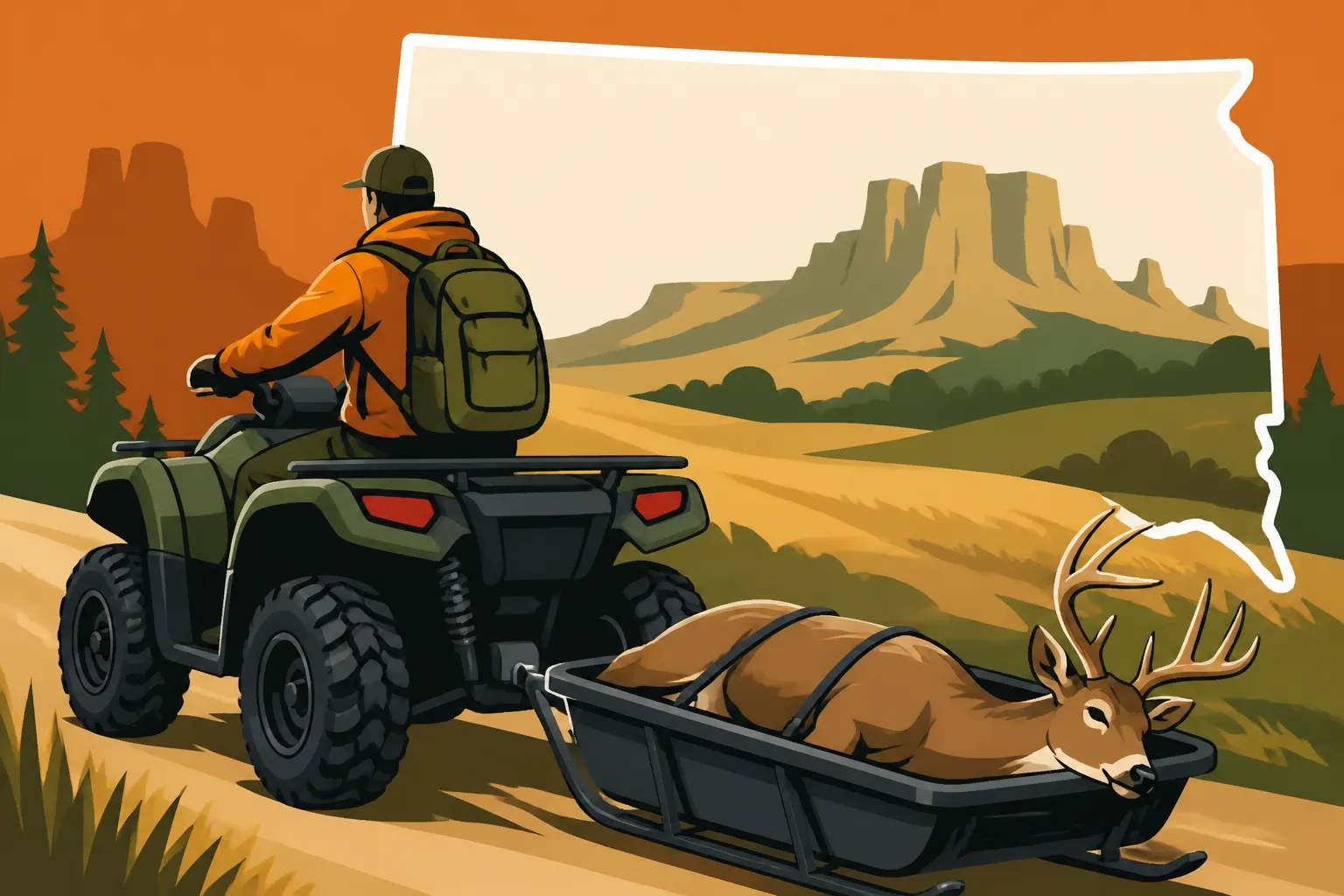
Plan the loading and transport method in advance. A small rack may not safely hold a large animal, and an improvised load can shift on uneven ground. Secure the animal so it cannot slide, fall, interfere with steering, or cover required lights or reflectors if you will use a road. Do not overload the machine or carry a passenger in a way that compromises control. A trailer may be more suitable for a larger animal, but confirm that the trailer and route are appropriate for the terrain.
Keep the ATV on the route you are authorized to use, even when a load is awkward or the machine is working hard. If the vehicle cannot safely reach the animal on an allowed route, consider breaking the load into manageable parts where regulations allow, carrying or dragging it to the route, or arranging another lawful recovery method. Avoid driving across sensitive ground simply because the machine can make it through.
Separate the firearm and the vehicle decision. Rules about carrying or using a firearm from an ATV are not the same as rules about recovering game. A legal harvest does not make every way of carrying a firearm or operating a vehicle legal. Review South Dakota Rules for Carrying a Firearm on an ATV before the hunt, and follow the requirements for unloading and securing the firearm whenever the law or your circumstances call for it.
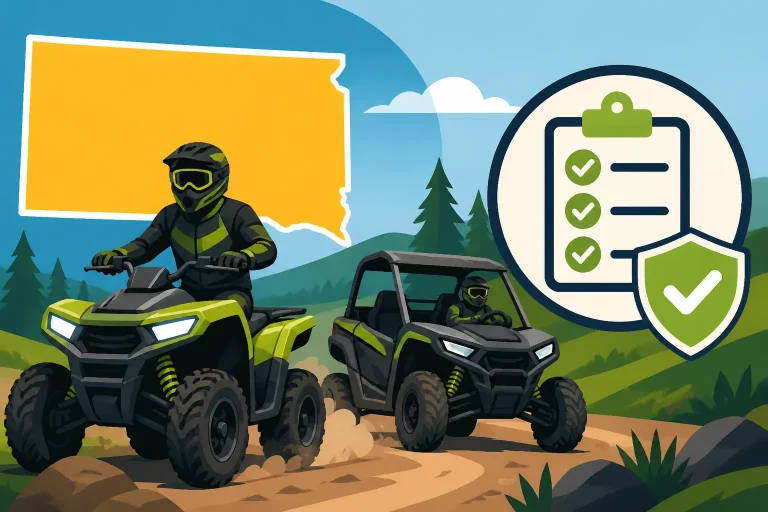
A useful pre-ride checklist:
- Confirm the harvest is legal and complete the required tag or reporting steps.
- Confirm the exact route is open to your ATV on the day of the ride.
- Get permission for motorized access on every private parcel involved.
- Check whether your machine needs a permit or other authorization for the route.
- Pack a current map, contact details for the land manager or landowner, and recovery equipment.
- Secure the animal and any gear so the load does not affect control or visibility.
- Recheck the route and closures before leaving the staging area.
A practical retrieval plan for hunting season
A good recovery plan starts before the shot. Choose legal parking and staging locations, identify nearby routes that are open to motorized use, and decide what you will do if the animal is outside the area you can reach by ATV. If you hunt with others, agree who will stay with the animal, who will operate the machine, and how you will avoid making unnecessary trips across the property.
Consider the terrain and distance honestly. A steep slope, wet soil, loose rock, snow, or thick vegetation can make an ATV unsafe even where riding is allowed. Spinning tires can damage the ground and make a difficult recovery worse. A winch, hand sled, game cart, or additional help may be more useful than trying to drive closer. If the route is narrow or shared with other users, keep the machine clear of the travel way while loading.
For a large animal, think through the full trip back to the staging area. The ATV may handle an empty ride differently from a loaded one. Avoid side slopes, sudden turns, and routes that leave no room to stop safely. If the load blocks your view or changes the machine’s balance, do not continue as though the ATV were unloaded. Make another trip or use a safer transport option.
A simple permission conversation can cover the essentials:
- May I use an ATV to retrieve an animal from this property?
- Which route should I use, and where should I park?
- Are there gates, livestock areas, crops, or wet ground I need to avoid?
- May I cross the adjoining parcel, or should I contact that owner?
- Are there any current closures or conditions that could change access?
When riding during a hunt, keep the machine’s purpose and the rules for operating it distinct. For seasonal and access considerations, see South Dakota Rules for Riding in Hunting Season. For public road use and other route-specific requirements, consult the rules that match the particular road or trail rather than assuming hunting activity creates an exception.
If you reach a boundary, closed route, or unclear sign, stop and verify access. Do not rely on another rider’s claim that “everyone does it,” a route used in past years, or an old map. If an animal is down and time matters, call the land manager or landowner for instructions instead of crossing a restriction without permission.
The safest rule is straightforward: use the ATV only where that machine is allowed, stay on an authorized route, and follow the current harvest and transport rules for the species. A little planning can save time during recovery while protecting access for future hunters.
Disclaimer
This article is for general informational purposes only and does not constitute professional advice. Laws, prices and regulations vary by location and change over time. Consult a qualified professional for guidance on your specific situation.