South Dakota UTV Rental Prices
Trying to budget for a South Dakota UTV rental can be tricky because the advertised rate may not include every part of the day. Machine size, rental length, season, fuel, deposits, permits and optional protection can all affect what you pay. This guide explains how to compare quotes, spot likely add-ons and estimate the full cost before you reserve.
What a South Dakota UTV rental price usually covers
A rental quote generally starts with the machine and the time you have it. That sounds simple, but providers may define a “day” differently, and the advertised rate may include different services from one company to another. Compare what is included, not just the largest price shown on a booking page.
A quote might cover the vehicle, a safety briefing and basic operating instructions. It may also include helmets, trail information, a permit, fuel or a guide, but none of those should be assumed. Some providers offer a machine for a set time at their location; others may bundle the ride with a guided tour or a shuttle. Read the inclusions for the specific dates and machine you are considering.
A useful first question is whether the price is for the vehicle or for each person. A UTV is usually priced as a machine, while a guided tour listing might show a per-person price. If a vehicle holds several riders, the per-person cost can look lower when the seats are filled, but only if everyone in your group can ride together and the listing’s occupancy rules allow it.
The advertised amount may also apply only to a particular machine or booking length. A two-seat UTV and a larger side-by-side are not interchangeable for every group, and providers may price them differently. Consider the capacity you need, rather than choosing by the lowest listed rate and discovering later that it does not suit your passengers or luggage.
When looking at South Dakota UTV Rental Cost per Day, use the listing as a starting point, then check what changes the total. Confirm the rental period, the machine’s seating capacity, the pickup location and any charges that apply at checkout or return.
| Cost item | What to check | Why it matters |
|---|---|---|
| Base rental rate | Is it for the machine, a person, a half day or a full rental period? | Lets you compare like with like |
| Vehicle type | How many seats are available, and what machine is assigned? | A larger or different vehicle may change the quote |
| Permit | Is the required riding permit included or paid separately? | An included permit can change the all-in comparison |
| Fuel | Is the machine supplied fueled, and what is expected at return? | Fuel policies can lead to an extra charge |
| Deposit or card hold | Is money charged or temporarily held? When is it released? | A hold can affect available spending money |
| Protection and waiver options | What do they cover, exclude or leave as your responsibility? | The least expensive quote may carry different risk |
| Taxes and booking charges | Are they shown in the displayed total? | Checkout totals can differ from the first price |
| Cancellation terms | What happens if plans change or riding conditions disrupt the trip? | Flexibility has practical value |
The clearest comparison is the final amount you expect to pay for the same number of riders, on the same dates, with the same rental duration and similar coverage. If one quote includes a permit and helmets and another does not, the first may be a better value even if its starting rate is higher.
Rental time is not always the same as riding time
Ask when the rental clock begins and ends. A booking period may include check-in, fitting helmets, completing paperwork, a briefing and returning the machine. Those steps are part of the time you have booked, even if the vehicle is not moving yet. Find out whether a late return triggers an additional charge and what happens if you are delayed by a trail closure, weather or a mechanical problem.
Tour listings need a separate check. The length of a guided activity may include the briefing and stops, not only time spent driving. A tour can also follow a set route and pace, while a self-guided rental may give you more control over the day but require you to navigate and manage your own schedule.
Per-person and per-machine quotes
Before comparing an outfitter’s booking page with an activity marketplace, find out whether each displayed figure is calculated per person or per vehicle. A per-person tour quote may include a guide and equipment, whereas a self-guided rental quote may be for one machine with a defined number of seats. These are different products, not competing prices for exactly the same thing.
If you see an offer through Viator, check the activity details, participant count, pickup instructions, inclusions and cancellation conditions on that particular listing. The platform’s displayed amount does not replace the rental company’s operating rules or the terms shown at checkout. If a detail is unclear, ask the provider before booking.
What changes the quoted rental price
The rate you see can vary for reasons that are unrelated to a hidden fee. Some are straightforward, such as booking a larger vehicle or renting for longer. Others depend on demand, dates and what the provider has available. Knowing the main variables helps you build a realistic budget and identify which choices are worth adjusting.
Machine size and seating
Start with the number of riders. A two-seat machine may fit a couple comfortably, while a family or group may need a model with more seats. Larger vehicles can cost more to rent, but splitting the vehicle cost among more riders can make the per-person total more manageable. The right comparison is both the total for the machine and the cost per rider in your actual group.
Do not base capacity on the number of people who can squeeze into the vehicle. Confirm the seating capacity and any age or passenger rules with the provider. Ask whether a child counts as a passenger for booking purposes and whether the rental company supplies appropriately sized helmets. A vehicle that technically has enough seats may still be a poor fit if passengers need extra room or you are carrying gear.
Some rentals are advertised as UTVs, side-by-sides or off-road vehicles. The label alone does not tell you the exact model, size or features. Ask what you will receive, especially if you need a particular seat count, a roof, a windshield, a winch or room for equipment. Features may vary by fleet and availability, and a requested feature should be confirmed rather than inferred from a photo.
Rental length and schedule
A longer booking can have a different rate structure from a shorter one, but extending a rental is not automatically cheaper per hour. The actual value depends on how much riding time you want, when the provider requires the machine back and whether your group can use the extra time. Compare the total booking cost with the time you will genuinely have available.
Check the start and return times carefully. A booking that appears to provide a full day may start later than you expect, or require return before the end of the day’s riding window. Ask how much time to leave for check-in and return procedures. If your travel plans involve driving to the rental location, include that in the schedule rather than treating the full rental period as trail time.
For longer plans, compare the provider’s own options with listings for South Dakota Rentals for a Multi-Day Trip. A multi-day booking may require different arrangements for overnight storage, security, fuel and where the machine can be taken. Confirm whether you are expected to return to the same location each day and whether the rental can be kept overnight.
Date, season and local demand
Demand can affect availability and the choices left when you book. Dates around busy travel periods may have fewer machines available, particularly for larger groups or less common vehicle types. If your schedule is fixed, booking early may give you more choice, even when it does not guarantee a lower rate. If your dates are flexible, ask whether changing the day or rental length affects the available options.
Do not assume a weekday, shoulder-season or last-minute booking will always be less expensive. Providers set their own schedules and rates, and weather, fleet availability, local events and cancellations can change what is offered. Compare actual quotes for your dates instead of relying on a general rule about when rentals cost less.
The Black Hills draw visitors for outdoor trips, and the busy season can put pressure on both rental fleets and lodging. If you are planning around a major event or a popular travel week, check machine availability and the cancellation terms before arranging the rest of your plans. For practical scheduling ideas, Renting in South Dakota During Rally Week may help you think through how demand affects a trip.
Included equipment and support
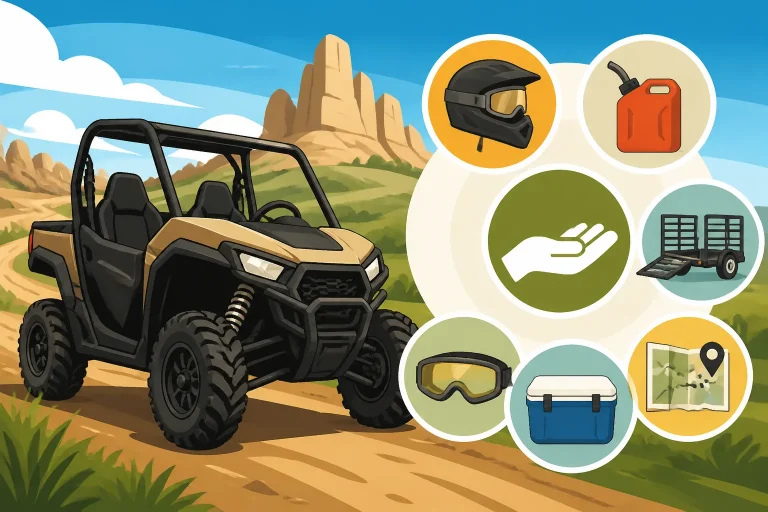
Helmets, maps, a trail permit, a safety briefing, roadside assistance and a shuttle are all possible parts of a rental package, but their inclusion varies. If you need one of these, confirm it in writing. A listing photo is not proof that a particular helmet size, map or vehicle feature will be provided.
Support can also affect the value of a quote. Ask who you contact if the machine will not start, develops a problem or becomes stuck. Find out what the provider expects you to do before moving the vehicle or arranging help. A rental that includes clear breakdown support may be worth comparing against a cheaper option where your responsibilities are broader.
Read What a South Dakota UTV Rental Includes alongside the quote if you are trying to determine what is part of the booking. The phrase “rental includes” can refer to basic equipment only, so check each item rather than treating it as an all-inclusive package.
Extra charges, deposits and protection
The base rate is only one part of your budget. Some additional costs are added at checkout, some are handled as a deposit or card hold, and others arise only if the machine is returned in a condition or at a time covered by the rental contract. Ask about each category before paying.
Taxes and booking charges
Check whether taxes and any service or booking charges are included in the price you first see. A displayed rate may show the rental amount before the final checkout calculation. If you book through a third-party platform, compare the checkout total with the details available directly from the provider, while making sure you are comparing the same machine, dates and terms.
A platform listing can be convenient for comparing activities, but the final amount and contract terms may involve more than one party. Review who takes payment, who handles changes or cancellations, and which company you contact about the machine on the day. Save the confirmation and any messages that explain what is included.
Deposits and card holds
A deposit or temporary card authorization is not always the same as a rental charge. The provider may collect a payment or place a hold to cover obligations under the rental agreement. Ask how the amount is handled, what could lead to a deduction, when a hold is released and whether your card needs to be in the renter’s name.
Even a temporary hold can reduce the amount of credit available to you during a trip. That can matter if you are also paying for lodging, meals, fuel or other activities. The provider’s exact process can vary, so check the current terms rather than relying on another renter’s experience or a general description online.
Read South Dakota Rental Deposits and Card Holds before you book if you need to plan around a deposit. At pickup, ask the staff to explain any hold you did not expect before authorizing payment.
Damage waivers, insurance and responsibility
A waiver or protection option is not necessarily the same thing as insurance, and it may not cover every kind of damage. The agreement could include exclusions, a deductible or conditions that affect coverage. Ask for the written terms and understand what remains your responsibility if the machine is damaged, rolled over, used outside permitted areas or returned with a problem.
Do not decide based only on the label “protection.” Ask what types of damage are covered, what exclusions apply, whether the option changes the deposit and what documentation you need if something happens. Clarify whether your personal insurance or a credit-card benefit applies to the rental; do not assume that it does. If coverage is important, verify it with the insurer or card issuer as well as the rental provider.
The lowest quote may exclude optional protection, while another quote might include a different level of coverage. Compare both the out-of-pocket cost and the conditions attached to it. South Dakota Rental Insurance and Waivers can help you identify the questions to ask, but the rental agreement controls the specific arrangement you accept.
Fuel, cleaning and late returns
Fuel rules can vary. A provider may hand over a fueled machine and expect it to be returned at a specified level, or handle fuel another way. Ask whether fuel is included, where you can refuel and what happens if the machine is returned below the required level. Read South Dakota Rental Fuel Policy before deciding whether you need to budget for fuel separately.
Cleaning expectations matter too, especially after a muddy or dusty ride. Ordinary dirt from normal use may be treated differently from excessive mud, damage or misuse, but the contract determines the standard. Ask what the provider considers an extra cleaning issue and whether you should avoid particular conditions if you are concerned about a cleaning charge.
Late return terms deserve attention because a small delay may have consequences under the agreement. Plan to be back with enough time for fuel, parking and the return inspection. If a trail or road issue delays you, contact the provider as soon as it is safe to do so; do not assume that an explanation automatically removes a late charge.
Permits and riding access
A rental price does not tell you where you may ride. A machine may need a permit for certain public riding areas, while access rules depend on the location and the kind of route. Ask whether the rental provider supplies any required permit or whether you need to arrange one yourself. Do not treat permission to rent a vehicle as permission to ride on every road or trail.
For a Black Hills trip, compare the rental details with South Dakota’s Motorized Trail Permit and Do You Need a Permit on a Black Hills Trail?. A permit requirement and a rental charge are separate questions: one concerns the cost of hiring a machine, while the other concerns authorization to ride in a particular place. Verify the route and current access rules before setting out.
If a provider says a permit is included, ask what area or period that permit covers and whether it applies to each machine. Keep any required decal or documentation as instructed. If you use an out-of-state plate or are visiting from elsewhere, do not assume your home registration satisfies every local requirement.
Compare rental options without comparing unlike prices
A self-guided rental and a guided tour can both put you on a UTV, but they are not the same purchase. One gives you a vehicle for a set period and may leave route planning to you. The other may include a guide, a planned route, group coordination and a scheduled start. Compare the experience you want as well as the price.
Self-guided rental
A self-guided booking can suit riders who want to set their own pace and are comfortable navigating within the provider’s rules. The quote may focus on the machine and rental period, with equipment, fuel, permits or support handled separately. Before choosing this option, ask how routes are selected, whether there are areas you must avoid and what navigation materials are supplied.
Check the pickup and return location. Some arrangements require you to transport the vehicle, while others may involve a shuttle or delivery; these details should be explicit in the booking. Confirm whether you can leave the designated route, cross private land or take the machine onto roads. Never infer access from a map, a trailhead’s proximity or another rider’s route.
If you are comparing Renting an ATV in South Dakota with a UTV booking, remember that vehicle type, capacity and rental rules can differ. An ATV is generally a single-rider machine, while a UTV has seats and steering controls more like a small side-by-side vehicle. The right choice depends on who is riding, what level of support you want and the provider’s available fleet.
Guided tour
A guided tour can be useful if you prefer a planned route or want a local guide to lead the group. The price may account for services beyond the vehicle, so compare the meeting point, tour duration, guide, equipment, group size and what happens if someone in the party cannot continue. Ask whether the tour is shared with other guests or private for your group.
A tour may provide less freedom to stop or change direction than a self-guided rental. That is not necessarily a disadvantage: a set plan can simplify the day, particularly for first-time riders. But check the pace and difficulty before paying. Make sure the route and vehicle suit the least experienced rider in your group.
Some activity platforms list tours alongside rentals. Polaris Adventures may be one place travelers encounter branded off-road experiences, while Viator may list activities from local operators. A brand or booking platform does not by itself establish what a particular South Dakota outing includes. Check the named provider, meeting point, machine, route, payment terms and cancellation policy on the specific offer.
Direct booking and third-party listings
Booking directly with an outfitter can make it easier to ask operational questions, such as what machine is available, where to meet and who handles a breakdown. A marketplace can help you compare multiple activities or manage a reservation in one place. Neither route is automatically cheaper or more flexible; the specific listing and terms decide.
If you compare a provider’s own booking page with a third-party listing, verify all of the following:
- The exact rental dates and duration.
- Whether the amount is per person or per machine.
- The vehicle type and number of seats.
- Whether the permit, helmets and fuel are included.
- Any taxes, service charges or optional add-ons.
- The deposit or card-hold process.
- Cancellation, rescheduling and weather terms.
- The address, check-in time and return deadline.
- Who to contact if the booking details differ from the experience on arrival.
A lower headline amount does not settle the comparison if it has a stricter cancellation policy, more exclusions or fewer inclusions. Likewise, a more expensive quote is not better simply because it appears more complete. Ask for the total and the relevant terms in writing.
Build a realistic trip budget
A useful budget separates predictable costs from possible charges. You can then decide what to confirm before booking and what to keep available in case plans change. Avoid treating the rental quote as the entire cost of a riding day.
Start with the rental total for your actual group. Add any mandatory charges that are not already included, such as taxes, a required permit or a booking fee. Then account for fuel, optional protection, transportation to the pickup location, food and any equipment you need to bring or rent. Keep deposits and card holds in a separate line: they may not be a final expense, but they can tie up funds temporarily.
| Budget line | Include in your estimate | Confirm before booking |
|---|---|---|
| Rental | Vehicle and booked time | Total for your group and exact dates |
| Required charges | Taxes, fees or permits not included | Whether each item is mandatory or optional |
| Fuel | Expected fuel cost or provider fuel charge | Return level and refueling expectations |
| Protection | Any waiver or coverage you choose | Limits, exclusions and remaining liability |
| Deposit or hold | Funds temporarily unavailable | Amount, payment method and release process |
| Getting there | Travel to pickup, shuttle or delivery | Whether transport is included |
| Equipment | Helmets, goggles or other gear | Sizes, condition and whether your own gear is allowed |
| Contingency | Possible delay or trip disruption | Late-return, weather and cancellation terms |
This method is more reliable than multiplying an advertised hourly or daily rate by the time you expect to ride. Your booking might not be billed in that way, and the estimate would miss add-ons and charges with different conditions.
Make a fair comparison for your group
Use the same assumptions for each quote. If you have four riders, compare the total cost for a vehicle that legally and comfortably accommodates all four, not the price of a smaller two-seat model. If one provider requires separate bookings for a larger group, include all the vehicles your group needs.
Then calculate an approximate cost per rider for your own planning. This is a comparison tool, not necessarily how the rental company bills. For example, if the machine is charged as one vehicle, the bill remains tied to the machine even if one passenger drops out. Do not assume a lower headcount reduces the price after booking.
Consider the cost of available alternatives too. A guided activity may appear higher at first but include a guide and certain equipment. A self-guided option may provide more time or independence but require you to manage more details. The better fit depends on your priorities, not on a universal rule about which one should cost less.
Budget for uncertainty without inventing a cushion
Rather than adding an arbitrary amount, identify the specific uncertainty that could affect your trip. If the provider’s fuel policy is unclear, get a clear answer. If a deposit is a concern, ask how it is handled. If weather could affect your schedule, read the cancellation and rescheduling terms. A precise question is more helpful than guessing at a general contingency figure.
Keep enough available on the payment method for any stated hold, and avoid relying on a hold being released immediately. If you have more than one booking or vehicle, check whether each can require a separate authorization. These details can matter even when the hold is eventually returned.
Account for travel time and the day’s logistics
A low rental rate can be poor value if the pickup point is far from where you are staying or the booked period leaves little time to ride. Include the drive to the location, check-in, briefing, return and any shuttle in your plan. For a group, confirm that everyone can reach the meeting point at the same time and knows what identification or payment method is required.
Ask whether you need to arrive early and what happens if one person in the group is late. A provider may not be able to extend the booking when the delay is on the renter’s side. If you are planning a multi-stop day, leave time to return the machine by the stated deadline rather than relying on the last possible minute.
How to book with fewer surprises
A careful booking is mostly about confirming details before you pay and reading the contract before you sign. A few minutes spent checking the machine, charges and return conditions can prevent a frustrating pickup or a budget gap later.
- Choose the right vehicle. Count riders and ask the provider to confirm the seat capacity, vehicle type and any required features. Do not rely only on a photo or broad category name.
- Request the complete total. Ask which taxes, fees, permits and equipment are included, and whether optional protection is already added.
- Confirm the time window. Get the check-in time, rental start, return deadline and late-return terms. Ask whether a tour’s stated duration includes briefing and stops.
- Clarify payment and deposits. Find out what is charged now, what may be held, which card is accepted and when a hold is released.
- Read fuel and damage terms. Understand the return fuel level, cleaning expectations, damage reporting process and any remaining responsibility under the waiver.
- Verify access and route rules. Ask where the vehicle may be ridden and whether the required permit is included. Confirm any restrictions on roads, trails, private land and overnight use.
- Check changes and cancellations. Read the terms for a change of date, cancellation, poor weather, trail closures and a mechanical issue.
- Save the confirmation. Keep the booking details, provider contact information and written answers accessible on the day of the ride.
Inspect the machine at pickup
Before leaving, compare the vehicle with what you booked. Check its seat count and basic features, and ask about any controls you do not understand. Photograph existing damage if the provider permits or recommends it, and make sure it is noted according to the company’s procedure. This creates a shared record of the machine’s condition at handover.
Ask how to report a warning light, breakdown, puncture or other problem. Clarify whether you should stop, call the provider or take another action. Do not try an unfamiliar repair or move a damaged vehicle in a way that could make the situation worse. Follow the rental company’s instructions and the agreement.
Check that every rider has the right protective gear and understands the basic safety briefing. If a helmet does not fit or a piece of equipment is missing, raise it before departure. A rushed start can create problems that are harder to solve once your group is away from the pickup point.
Read the agreement before you accept the machine
The booking page may summarize the deal, but the rental contract sets out operational responsibilities. Pay special attention to who may drive, passenger rules, boundaries, restricted routes, prohibited uses, damage reporting and return conditions. If a term is unclear, ask for an explanation before signing.
Do not assume that a waiver means every accident or loss is covered. Do not assume that the provider’s staff can approve an exception unless it is documented. If an answer changes the price or a significant responsibility, request written confirmation and keep it with your booking record.
If the quoted amount changes at pickup, ask the staff to identify each new item and whether it is required or optional. You can compare the updated total with your reservation before deciding. Do not authorize a payment you do not understand.
Ask these questions before reserving
A short call or message can resolve the most important unknowns. These questions are especially useful when the listing is brief:
- Is the quote for the machine or for each person?
- What exact vehicle and seat capacity should we expect?
- Is the permit included, and where is it valid?
- Are helmets and other basic equipment provided?
- What is the fuel and cleaning policy?
- Is there a deposit or card hold, and when is it released?
- What does any damage waiver cover, and what remains excluded?
- Who do we call if the machine has a problem?
- What happens if weather or a closure disrupts the booking?
- What is the return deadline, and what counts as late?
For a broader look at timing, gear and booking considerations, see South Dakota Rentals and Booking Lead Time. If you have already booked and need to understand changes or cancellations, check South Dakota Rental Cancellation Policies and follow the terms attached to your specific reservation.
Frequently Asked Questions
How much does it cost to rent a UTV in South Dakota?
There is no single rate that applies to every rental. The total depends on the machine, rental length, date, group size and included services, as well as possible taxes, fuel, permits, deposits and protection options. Ask for the complete total for your dates and compare the same type of booking.
Is a UTV rental priced per person or per vehicle?
It depends on the provider and whether you are booking a self-guided rental or a guided activity. Confirm whether the displayed amount covers one vehicle or one participant, and check the permitted number of riders before comparing options.
Are trail permits included in the rental price?
Sometimes, but you should not assume so. Ask whether a permit is included, which riding area it covers and whether the requirement applies to each machine. Verify access rules for the routes you plan to use.
Do I have to pay a deposit?
Some providers may require a deposit or card hold under their rental terms. Ask whether it is charged or temporarily authorized, what could lead to a deduction, which payment methods are accepted and when a hold is released.
Is a guided tour more expensive than renting a UTV on my own?
The two options include different things, so the headline amounts may not be directly comparable. A guided tour may include a guide and planned route; a self-guided rental may give you more independence but leave more logistics to you. Compare inclusions, duration, group size and terms before deciding.
Disclaimer
This article is for general informational purposes only and does not constitute professional advice. Laws, prices and regulations vary by location and change over time. Consult a qualified professional for guidance on your specific situation.