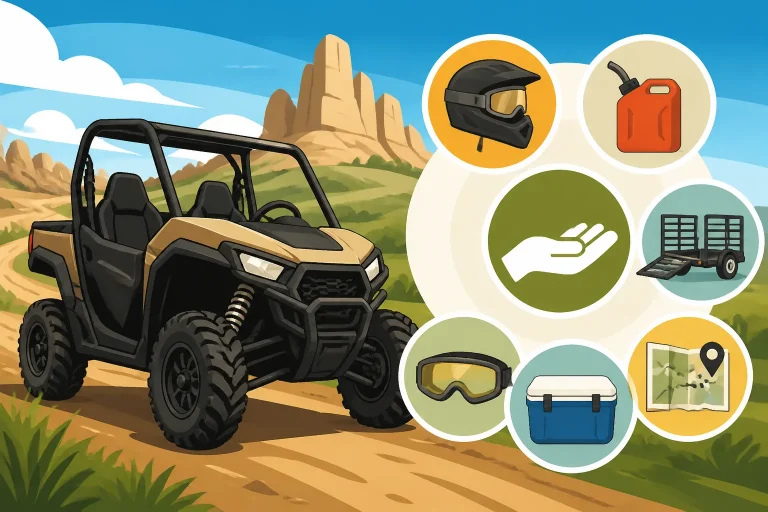
Booking a South Dakota ATV Rental
Booking a South Dakota ATV Rental
Booking an ATV or UTV in South Dakota can look simple until you compare machine sizes, pickup locations, trail access, permits, and cancellation terms. The right reservation depends on who is riding, where you want to go, and how much help you want along the way. Here’s how to compare options, ask the useful questions, and arrive ready for your ride.
Choose the Rental That Fits Your Ride
Start with the kind of day you want, not just the machine you saw in a photo. A rental can be a self-guided vehicle for exploring permitted routes, or part of a guided tour with an operator setting the pace and route. Those options suit different riders and come with different expectations.
ATVs, often called quads or four-wheelers, are generally ridden astride, with handlebars and a seat for one rider or, on some models, a passenger. UTVs and side-by-sides have seats beside one another, a steering wheel, and usually a protective roll cage. Some have room for more passengers or cargo. The exact seating, safety equipment, and operating rules depend on the machine and rental company.
| Rental choice | Often a good fit for | What to confirm before booking |
|---|---|---|
| Single-rider ATV | A rider who wants a compact machine and has experience operating one | Whether the machine is single-rider only, required experience, and whether a passenger may ride |
| Two-seat ATV | Two people who prefer an ATV-style ride | Passenger rules, rider fit, and whether both people need to meet the operator’s requirements |
| Two-seat UTV | A couple or two friends who want side-by-side seating | Seat-belt use, included gear, and whether the machine has enough room for your belongings |
| Four- or six-seat UTV | Families or groups who want to ride together | Exact seating capacity, age rules for passengers, and whether everyone fits comfortably |
| Guided tour | Newer riders or visitors who want an organized route | Tour length, group size, pace, included equipment, and what happens if weather changes |
| Self-guided rental | Riders who want more independence and can follow route rules | Authorized riding area, map or navigation support, permit coverage, and return time |
These are broad categories, not a guarantee that every rental company offers each configuration. Ask for the exact model or seating layout, especially when passenger comfort or child seating matters. A listing that says “six-seat” may describe the machine’s capacity, but you should still verify how the outfitter counts the driver, passengers, and any required child restraints.
If your group has mixed experience, a UTV may make it easier for a passenger to ride without learning to operate a separate ATV. But a larger vehicle can feel different from a car: it may be wider, taller, and less familiar on uneven ground. An ATV can be more physically demanding and requires the operator to balance and control the machine. Neither choice is automatically easier for every rider.
If you are weighing the basic differences between a rental and bringing or buying a machine, start with Renting an ATV in South Dakota. For a guided outing rather than an independent rental, compare the format in Guided ATV Tours in South Dakota.
Match the machine to the people riding
Count the actual riders before comparing listings. Include children, adults who will not drive, and anyone who may need extra room to get in and out. Check the company’s minimum age and license rules for both drivers and passengers; do not assume the rules are the same across companies or vehicle types. South Dakota Rental Age and License Rules is a useful starting point, but the rental operator’s current terms control its own booking.
Be candid about experience. A rider who has never driven an ATV may be better served by a guided tour, a basic orientation, or a machine and route the operator considers appropriate for beginners. A confident car driver is not necessarily comfortable operating a UTV on a narrow, rocky, steep, or unfamiliar route. Ask whether the company recommends prior off-road experience and whether it can provide a brief controls and safety orientation.
Also consider whether riders can comfortably reach and use the controls. If someone has mobility, balance, vision, or other access needs, contact the company before booking. Explain what support would help and ask what is realistically available at the pickup point and on the ride. Do not rely on a general accessibility claim without confirming how it applies to the specific machine and route.
Decide how much structure you want
A guided tour can reduce the work of route planning. A guide typically leads the group and provides instructions, but the exact service varies. Ask whether the outing is a guided ride on public routes, a tour on a dedicated property, or a combination. Confirm how long riders are actually operating the machine, rather than relying only on the total appointment window.
A self-guided rental gives you more control over pace and stops, but also makes you responsible for staying within the permitted area, following route signs, and returning on time. Before choosing it, find out whether the company supplies a map, GPS unit, phone-based directions, or a recommended route. Ask what to do if the route is blocked, the machine has a problem, or your group loses its way.
Compare Rental Listings and Booking Channels
Rental listings can make different experiences look alike. One company may quote a machine-only rental, while another may bundle basic gear, a route map, or permit arrangements. A low headline price does not tell you what the full day will involve, and a higher one does not automatically mean the rental includes more useful services. Compare what you receive, how long you have the machine, and what obligations you accept.
Use the provider’s own booking page or contact its staff to verify current details. Some travelers encounter rental inventory through a manufacturer-affiliated network such as Polaris Adventures or a booking marketplace such as Viator. These can help with browsing, but the actual rental may still be operated by a local business. Check who takes payment, who sets the rental terms, and whom you contact if you need to change the reservation.
A marketplace description is not a substitute for the rental contract. If information differs across a listing, confirmation email, and operator’s website, ask the operator to clarify in writing before paying. Keep the answer with your reservation.
Compare the full arrangement, not the headline
Before you select a listing, note the pickup location, start time, return deadline, included equipment, fuel expectations, permit coverage, and cancellation conditions. Check whether a listed rental period includes check-in and instruction or only the time on the machine. A “half day” can mean different things from one provider to another.
For practical comparisons, South Dakota UTV Rental Prices covers how rental costs can be structured, while What a South Dakota UTV Rental Includes helps you identify items that may or may not come with the booking. For a closer look at a specific area, Renting in Deadwood, South Dakota can help you think through location and logistics.
When comparing providers, make a small checklist rather than trying to remember details from several pages:
- Write down the exact machine type and seating capacity.
- Record the pickup location and the actual time allowed for riding.
- List the gear, instruction, fuel, and route support included.
- Note the permit arrangements and where you are allowed to ride.
- Check the payment, deposit or card hold, waiver, damage, and cancellation terms.
- Confirm the driver and passenger requirements for everyone in your group.
- Save the company’s contact details and the written answers to any questions.
This comparison helps uncover practical differences. For example, a rental near your lodging may be easier to reach but may not offer the route or support your group wants. A guided tour can be convenient but may follow a fixed pace and itinerary. A self-guided trip can offer flexibility but requires you to pay close attention to route boundaries and return instructions.
Check the total amount you may be responsible for
Ask the operator to explain the payment process before you reserve. Depending on the provider, a booking may involve an upfront payment, a deposit, a card hold, additional charges tied to fuel or damage, or separate costs for optional items. The exact approach varies, so do not assume that a card hold is the same as a charge or that every extra cost will appear in the initial listing.
For each amount, clarify when it is collected, what it covers, and how a refund or release is handled. If you are using a third-party booking platform, check whether the platform or the rental operator handles payment changes and refunds. Read South Dakota Rental Deposits and Card Holds alongside the specific terms for your reservation.
Damage coverage deserves particular attention. Ask what the rental agreement considers damage, what the renter may owe after an incident, and whether any optional waiver changes that responsibility. A waiver should not be treated as a promise that every kind of damage, misuse, or recovery expense is covered. Review the exclusions and ask about anything you do not understand. South Dakota Rental Insurance and Waivers explains the issues worth checking.
Book at the Right Time and Confirm the Details
For a popular travel date, book after you have chosen your riding area and confirmed the group’s needs. Waiting until arrival can leave you with fewer machine sizes, inconvenient pickup times, or no option for a larger group. Busy periods, holidays, and major events can affect availability, but demand varies by location and provider. Ask the operator how far ahead it recommends booking for your dates instead of relying on a general rule.
If you have flexible plans, ask whether the operator expects additional availability closer to the ride date, and what happens if you wait. Do not treat a waitlist or a “check back later” suggestion as a confirmed reservation. Your booking is secure only when the provider or platform confirms it under its stated process.
Before paying, check the date, local pickup time, time zone if booking from elsewhere, number of machines, and selected seating configuration. Make sure the confirmation reflects the right location; a company may have multiple pickup points or different offerings under similar listing names. If two separate reservations are involved, verify that their start times allow for travel and check-in.
Ask questions before you commit
A short call or message can prevent an expensive mismatch. Provide the planned date, number of riders, ages where relevant, and your approximate experience. Then ask the questions that matter to your specific group:
- What machine and seating configuration is being reserved?
- What are the driver and passenger requirements?
- Is the experience guided or self-guided?
- How much of the reserved period is actual ride time?
- What equipment, instruction, map, or navigation help is included?
- Which routes or areas may renters use?
- Is a required trail permit included, or must the renter arrange one?
- What happens if weather, a closure, or a mechanical problem affects the ride?
- What is the return deadline, and what happens if the group is delayed?
- Which charges may apply beyond the reservation payment?
- What does the cancellation policy allow, and how do changes work?
If the answer is “it depends,” ask what it depends on and who makes the decision. For instance, a provider may adjust routes because of conditions or closures. Find out whether it offers a route alternative, reschedules the ride, or handles the booking another way. A promise made by phone is easier to rely on when you also have it in writing.
Read the cancellation and weather terms
Outdoor plans can change. Review the cancellation policy before paying, including the deadline for changing or canceling, whether any payment is refundable, and what happens if the company—not you—cancels the ride. Weather, trail conditions, fire restrictions, equipment issues, or other operational decisions can affect whether a ride proceeds. The policy may treat these situations differently from a customer cancellation.
Do not assume that light rain, heat, wind, or a forecast you dislike automatically qualifies for a refund. Ask how the provider communicates a decision and when it expects to make one. If your schedule is tight, leave enough time to contact the company rather than waiting until the scheduled pickup. See South Dakota Rental Cancellation Policies for questions to consider, then use the policy attached to your own reservation as the deciding document.
Keep the booking confirmation, contract, waiver, and any messages together. If you later need to show what was promised, a saved confirmation is more useful than trying to reconstruct a phone conversation.
Prepare for Permits, Routes, and Pickup
A rental reservation does not necessarily authorize you to ride anywhere you like. The permitted area depends on the machine, the outfitter’s arrangement, land access, and route rules. Ask where the company expects you to ride and whether your booking covers any required permit. Do not assume that a rental company’s access to one area gives you permission to take the machine onto another trail, private land, or a route that is closed.
For riding in the Black Hills, confirm whether the planned route is open and appropriate for the machine. Conditions and closures can change, so follow the operator’s current instructions and any posted restrictions. If you are riding independently, understand how the allowed area is described and what signs mark its boundaries. South Dakota Trail Permits Explained gives context on permits, but ask the rental company whether a permit is included with your specific rental.
A machine that can legally travel on one type of route may still be prohibited on another. The rental company should explain its authorized riding area. Ask whether roads between the pickup point and the riding area are included, or whether the machine is transported to a trailhead. If you are offered a route map, confirm that it is current and that it matches the rental’s permitted use.
Confirm what the permit covers
Ask whether a permit is included, whether it is already attached to the machine, or whether you need to buy one separately. Also ask whether coverage applies to each machine or to the booking as a whole. Do not rely on a decal or a plate alone to infer that every riding area is covered. The rules may differ by route and land manager.
If the company says no permit is needed, ask where that applies and whether the statement is specific to the planned route. If you plan to change the route, verify the new route with the operator before you go. A permit or access arrangement for one location should not be treated as permission to ride elsewhere.
Plan your arrival and gear
Arrive early enough to complete check-in, review the agreement, receive instructions, and fit any supplied gear. Confirm the company’s recommended arrival time and late-arrival policy. If you are traveling from another town or staying in the Black Hills, leave a buffer for traffic, parking, and finding the correct entrance. A late arrival can cut into riding time or affect whether the operator can release the machine.
Ask what to wear and what protective equipment is supplied. At minimum, choose clothing that suits an outdoor ride and can handle dust, changing weather, and contact with the machine. Closed-toe footwear is a sensible practical choice, but follow the outfitter’s specific requirements. If helmets or eye protection are included, confirm the available sizes and whether you may bring your own. Do not assume that a rental’s included gear will fit every rider.
Bring identification and any required driver documentation, along with the payment method used for the reservation if the operator requires it at pickup. Review the rental company’s rules for children and passengers before arrival. If your group includes young riders, do not assume that an adult’s booking automatically makes every passenger eligible.
Understand the Contract, Safety Briefing, and Responsibility
The contract and waiver describe what you agree to do and what may happen if something goes wrong. Read them before signing, and ask staff to explain unfamiliar terms. Pay close attention to rules about authorized routes, prohibited behavior, passengers, alcohol or drug use, return time, damage, maintenance problems, and reporting an incident. A waiver does not mean you should skip the safety briefing or assume the provider will cover every expense.
Before taking the machine, ask how to report a mechanical problem, collision, rollover, or injury. Get the correct phone number and find out what to do if there is no cell service. Ask whether the operator provides a recovery plan, whether the renter may be responsible for recovery costs, and what actions are prohibited if the vehicle becomes stuck or disabled.
Check the machine before leaving
Take a careful walkaround with the rental staff. Look for visible damage and confirm that existing marks are recorded on the checkout form. Photograph the machine before riding, including any areas the staff points out. This is not a substitute for the company’s inspection process, but it can help document what was already present.
Check that the machine appears suitable for the ride and that you understand the basic controls. Ask staff to demonstrate anything unclear: starting, stopping, shifting, selecting drive modes, parking, using seat belts, or handling a winch if fitted. Never assume that two machines from the same brand operate identically.
If a control, light, belt, tire, or other component appears damaged or does not work as explained, tell staff before departure. Do not accept a machine you are not comfortable operating. Ask whether the company can inspect it, offer another vehicle, or discuss another arrangement under its policy.
Treat the briefing as essential
Listen to the route and safety briefing even if you have ridden before. The operator may explain local hazards, trail etiquette, restricted areas, speed expectations, passing, dust, wildlife, or how to respond to other trail users. A machine that feels familiar can still handle differently under load, on unfamiliar terrain, or in changing conditions.
For a group, decide who will lead and who will follow, and make sure everyone knows how to stop safely and regroup. Keep a practical distance from the machine ahead so you can see the route and respond to sudden stops. Follow the operator’s instructions about riding order and spacing. Do not race, attempt stunts, or take shortcuts outside the authorized route.
Avoid riding beyond your ability or the group’s comfort level. If someone is struggling, stop in a safe place and contact the operator if needed. Continuing onto steeper, rougher, or more remote terrain to “catch up” can turn a manageable ride into a dangerous one.
Ride Responsibly and Return the Machine Properly
During a self-guided rental, stay on the approved route and obey posted signs. Do not enter private property or closed routes, even if a track looks passable. If the map is unclear or a route appears closed, stop and contact the operator rather than guessing. A permitted route can change, and a shortcut may cross land where you do not have permission to ride.
Share the route with a companion or someone who is not riding, especially if the outing is self-guided. Tell them where you expect to go and when you expect to return. Carry the contact information provided by the outfitter and keep any map or navigation instructions accessible. Mobile coverage can be inconsistent in some outdoor areas, so do not rely on a phone being available at every point.
Pay attention to fuel and the return deadline. Ask at pickup how fuel is handled and what to do if the level gets low. A route that looks short on a map may take longer because of terrain, other users, stops, or conditions. Leave time to return without rushing. South Dakota Rental Fuel Policy outlines the types of fuel details to check, but follow the specific instructions for your machine.
If the machine is damaged, becomes stuck, or develops a problem, stop in a safe location and call the provider using its instructions. Do not attempt a repair or recovery that the operator has not authorized. Report the issue promptly, describe your location as clearly as possible, and follow directions. Continuing to ride a machine that may be unsafe can put everyone at risk and complicate the rental company’s response.
At the end of the ride, return the machine as directed and by the agreed deadline. Ask whether staff expect you to refuel, remove personal items, or complete a return inspection. If there is new damage or a concern, tell the staff and document the conversation. Keep any return receipt or confirmation, especially if the provider uses a later inspection to assess the vehicle.
If your group is running late, contact the company before the scheduled return rather than arriving after closing without notice. Ask how it wants you to handle delays. Late-return charges or other consequences depend on the contract, so do not assume an informal extension is approved.
Frequently Asked Questions
How far ahead should I book a South Dakota ATV rental?
It depends on your dates, location, group size, and machine preference. Reserve early when you need several machines or a particular seating configuration, and ask the operator how availability works for your travel dates.
Does an ATV rental include a trail permit?
Not always. Ask whether the permit is included, whether it applies to each machine, and exactly where you may ride. Verify this before paying and before changing your route.
Is a guided tour better than a self-guided rental?
A guided tour can be useful if you want route leadership and local instruction. A self-guided rental offers more independence but requires you to follow the route rules and manage navigation and timing. Choose based on your experience and the kind of day you want.
What should I verify before paying?
Confirm the machine, seating, driver and passenger requirements, rental period, pickup location, included gear, route access, permit coverage, payment terms, damage responsibility, and cancellation policy.
Disclaimer
This article is for general informational purposes only and does not constitute professional advice. Laws, prices and regulations vary by location and change over time. Consult a qualified professional for guidance on your specific situation.