Crossing a Highway on an ATV in South Dakota
There's nothing quite like exploring the vast, open landscapes and rugged trails of South Dakota on your ATV or UTV. The freedom is exhilarating, but sometimes, those incredible trails or an inviting ranch road lie just on the other side of a paved highway. We all face that moment: how do you get there without breaking the law or, worse, putting yourself in danger? This guide will walk you through everything you need to know about legally and safely crossing a highway on your ATV or UTV in South Dakota, addressing the rules, the risks, and the smart ways to navigate these essential transitions.
The Core Rules of the Road: Why Crossing is Different from Riding
It’s a common sight across the state: an ATV or UTV emerging from a field, pausing at the edge of a highway, and then quickly zipping across to the other side. This isn't just a casual maneuver; it's a specific action governed by South Dakota law, and it's absolutely crucial to understand that merely crossing a highway is a world apart from actually riding on one. Many riders get these two concepts mixed up, leading to unnecessary tickets or, more concerningly, dangerous situations.
Understanding South Dakota's Ditch Riding Rules
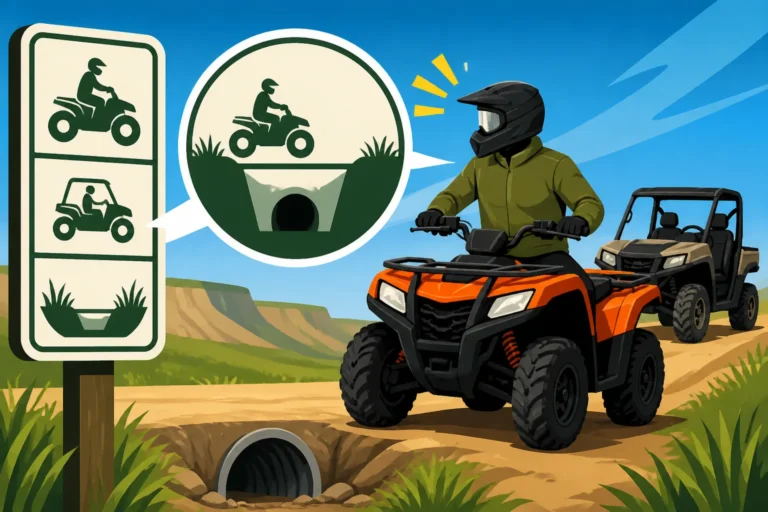
Before we dive into crossing, it’s important to touch on ditch riding because it's often confused with highway crossings. South Dakota has specific provisions that allow off-road vehicles to operate in the bottom of a highway ditch or on the back-slope, provided certain conditions are met. This can be a fantastic way to link up trails or get to a fishing spot without needing a full-blown street-legal setup. However, it's not a blanket permission slip for all roadways. Counties have the power to opt out of ditch riding, and many do, especially near populated areas or where safety concerns are high. You might be riding legally in one county's ditch and then, without realizing it, cross into another where it's explicitly forbidden. The rules often state that you must be in the "outer edge" of the right-of-way, away from the traveled portion of the highway. [South Dakota Ditch Riding Rules Explained] details these regulations more thoroughly, but the key takeaway here is that ditch riding is about traveling parallel to the highway, not about crossing it.
When you're traversing a ditch, you're generally moving with the flow of traffic, albeit separated by distance. This interaction is usually at lower speeds and with a different set of visual cues than a direct crossing. It's about being seen and staying clear of the main lanes. But when a highway appears as a barrier between you and your destination, the rules shift entirely from sustained travel to a swift, perpendicular movement.
The Crucial Distinction: Crossing vs. Operating on a Highway
So, what's the big difference? South Dakota law generally prohibits the operation of off-road vehicles on the main traveled portion of a state or federal highway. This means no cruising down the asphalt, no riding the shoulder for miles, and definitely no treating a highway like a dirt road. However, the law often makes an exception for crossing. A crossing is typically defined as the shortest, most direct route from one side of a highway to the other, usually at a ninety-degree angle, with the sole purpose of continuing your ride on the opposite side. It's a quick, efficient, and necessary evil to connect two legitimate riding areas.
Think of it like this: you wouldn't set up camp in the middle of a freeway, but you certainly drive across it at an intersection. Your ATV is treated similarly. The intent of your movement is what truly matters here. If you are clearly and quickly transiting from one permitted area to another, that's generally acceptable. If you are using the highway as a travel lane, even for a short distance parallel to traffic, that falls under the "operating on a highway" category and will likely get you into trouble. The distinction is absolutely vital for staying legal and safe.
What South Dakota Defines as a Highway for ATV Purposes
South Dakota's statutes on off-road vehicles refer to "highways" or "public highways" quite broadly, but for the most part, when we're talking about ATV interaction, we're referring to paved state and federal routes. These are your main arteries, the roads where speed limits are higher, and traffic volume is significant. Think of roads like US-16 through the Black Hills or I-90 across the state, though ATVs are completely banned from interstates even for crossing. [South Dakota's Interstate Ban] confirms this strict prohibition.
It's important to recognize that a "highway" in this context isn't just about the paved lanes; it often includes the shoulder, the median, and the adjacent ditches. So, while you might be allowed to ride in a ditch alongside a county road, the moment you decide to cross that county road, you're interacting with a defined "highway" segment. Always assume that any road with a painted center line or significant traffic flow is considered a "highway" for the purposes of these crossing rules. Local ordinances might further define or restrict these areas, so a quick check with the county treasurer's office or local law enforcement is never a bad idea if you're unsure about a specific stretch of road.
Safety First: Preparing for a South Dakota Highway Crossing
Even with legal provisions for crossing, a highway remains a dangerous place for an off-road vehicle. ATVs and UTVs are not designed for high-speed road use, and their maneuverability and visibility are significantly different from cars and trucks. Therefore, preparing for a highway crossing isn't just about knowing the law; it's about minimizing risk and maximizing your chances of a safe passage.
Essential Equipment for a Safe Crossing
While South Dakota doesn't typically require a full suite of street-legal modifications just for a highway crossing, there are some crucial items that significantly enhance your safety. First and foremost, working headlights and taillights are non-negotiable, especially if visibility is anything less than perfect, or if you're riding near dawn or dusk. Even in broad daylight, a bright LED headlight or a set of auxiliary lights can make all the difference in catching an oncoming driver's eye. Many riders, especially those exploring the Black Hills on longer trips, opt for aftermarket lighting solutions, like those offered by SuperATV, to ensure they're seen.
Beyond lights, consider a brightly colored flag mounted high on your machine. This is particularly effective if you're emerging from a ditch or behind a rise, giving drivers an earlier visual cue of your presence. A rear-view mirror, while only required for plated machines, is also incredibly helpful for checking traffic before and during your crossing. Lastly, robust tires, like those from SuperATV, designed for varied terrain, will ensure you have good traction on the pavement for that critical, quick acceleration across the lanes. Ensure your brakes are in perfect working order, as you might need to stop suddenly if an unexpected vehicle appears.
Rider Readiness and Situational Awareness
Your equipment is only as good as the operator. Before attempting any highway crossing, you need to be mentally prepared and hyper-aware of your surroundings. This means more than just a quick glance. Pull your machine to a complete stop at the very edge of the pavement, ensuring you have a clear, unobstructed view in both directions. Turn off any noisy radios or comms systems to better hear approaching vehicles. Scan far down the road; remember that vehicles traveling at highway speeds cover ground very quickly. Don't underestimate how fast that distant truck can close the gap.
If you're riding with a group, establish a clear communication plan. Who crosses first? Who acts as a spotter? Make eye contact with any approaching drivers if possible, to confirm they see you. Never assume they do. Patience is your best friend here. It's always better to wait for a completely clear window of opportunity than to rush and take a chance. [South Dakota Rules for Riding After Dark] touches on the amplified need for caution and visibility during low-light conditions, which applies equally to crossings.
The Role of Lighting and Visibility
We've mentioned lights, but let's underscore their importance for crossing. ATVs and UTVs are relatively small, and their low profile can make them hard to spot, especially against busy backgrounds or during the "golden hour" when the sun is low. Good, bright headlights and taillights are your primary defense. If you're on a UTV, consider turning on your turn signals even if you're only going straight across; it adds another flashing light source that draws attention.
Wearing bright, high-visibility clothing is also a smart move. Fluorescent greens, oranges, or yellows stand out much more than camouflage or dark colors, particularly against the asphalt. If you're riding an older machine, consider upgrading its lighting system. There are many affordable and effective LED kits available that dramatically increase your presence. Some riders even add a strobe light or an amber beacon to their machine, especially if they frequently need to cross busy roads. The more visible you are, the safer your crossing will be.
Navigating the Crossing: Step-by-Step Guidance
Once you've got your machine and your mind ready, the actual act of crossing requires precision and adherence to a specific method. This isn't the time for casual meandering or indecision.
Identifying a Safe Crossing Point
Not all points along a highway are created equal for crossing. Ideally, you want to choose a spot where you have maximum visibility in both directions, and where approaching drivers also have a long, clear view of you. Avoid crossing immediately after a blind curve, over the crest of a hill, or at the bottom of a dip where visibility is limited for both you and oncoming traffic. Intersections with stop signs or traffic lights are often the safest, as they naturally create gaps in traffic and force vehicles to slow down. If an intersection isn't available, look for a long, straight stretch of road.
Also, consider the road surface you're crossing onto. You want to avoid soft shoulders, deep gravel, or steep banks on the far side that could cause you to lose traction or get stuck mid-crossing. Look for a stable, relatively flat exit point. Sometimes, riding an extra hundred yards in a ditch to find a better crossing spot is far safer and wiser than taking the most direct, but dangerous, route.
The Proper Maneuver: Straight Across and Quick
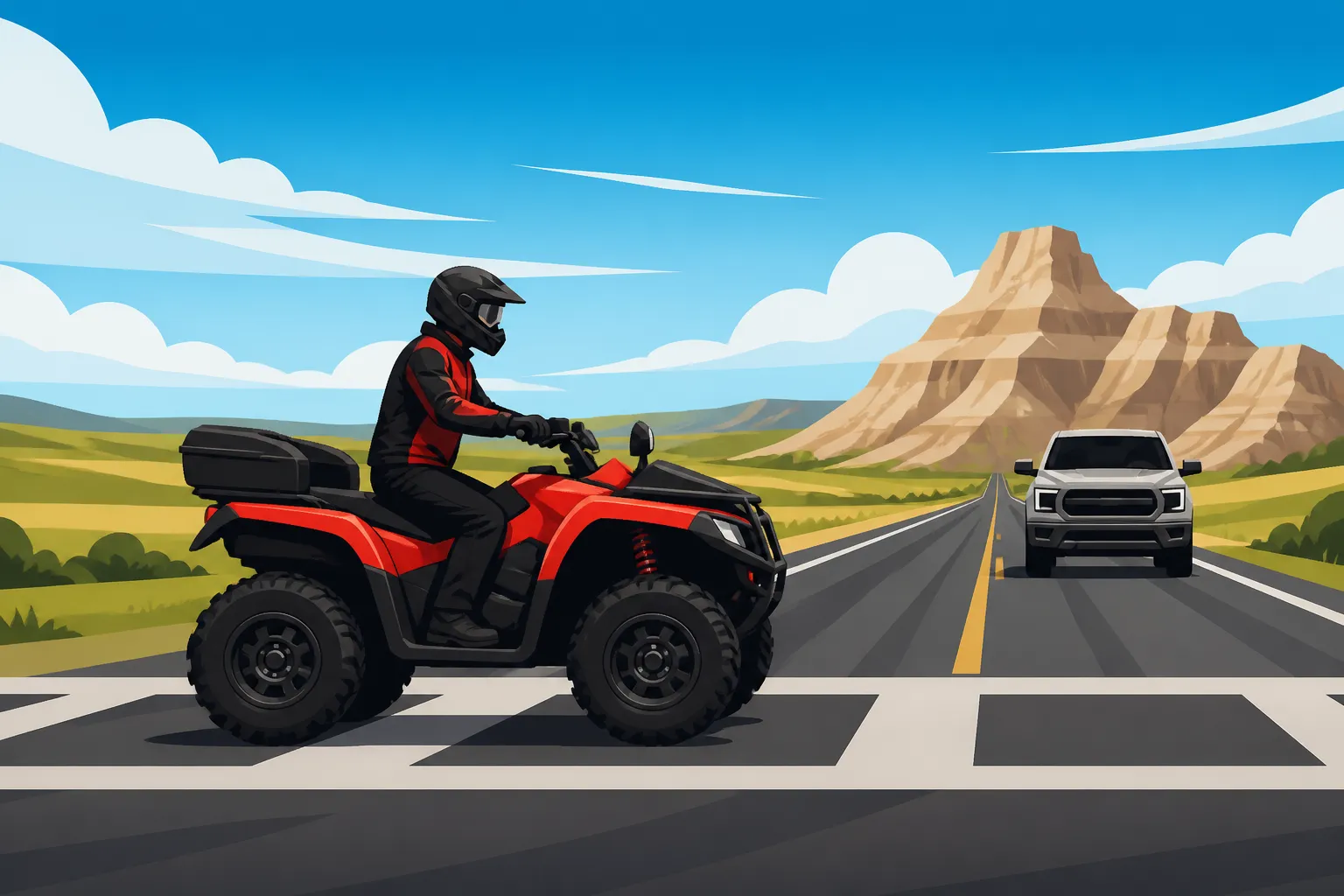
Once you've identified your safe window, the crossing itself should be swift and direct. The law allows you to cross at approximately a ninety-degree angle to the highway. This means pointing your machine straight across the lanes, not diagonally. A diagonal path keeps you on the highway for a longer duration and can be confusing for drivers as they try to anticipate your movement. You need to accelerate quickly but smoothly, maintaining control, and move from one shoulder to the other as efficiently as possible.
Keep your eyes scanning during the crossing. While your primary check is before you enter the lanes, continuous awareness is crucial. If there are multiple lanes, treat each lane as a separate decision point, but aim for a continuous, uninterrupted crossing. Do not stop in the middle of a highway, even if you feel you misjudged your window. The safest action is to continue across to the other side. This is where a machine with reliable power and good throttle response, perhaps enhanced by SuperATV performance parts, can give you that crucial edge.
Group Crossing Protocols
Riding with a group adds another layer of complexity to highway crossings. The best practice is usually to cross one machine at a time, with each rider taking their turn after the previous one has safely cleared the highway. This ensures each rider has a clear line of sight and an individual window of opportunity. However, if traffic is very light and your group is small, some groups may opt to cross in quick succession, following a designated leader. In this scenario, the leader signals "clear" and then each rider quickly follows.
No matter the method, communication is key. Use hand signals, helmet comms, or pre-arranged verbal cues to ensure everyone is on the same page. The lead rider should act as a spotter for the following riders, signaling if the gap in traffic is closing. Never let a group spread out too much during a crossing, or you risk breaking up the flow and creating confusion for drivers. Make sure all riders understand and agree to the crossing protocol before you even approach the highway.
Legal Requirements Beyond the Crossing Itself
While the act of crossing is permitted, other legal considerations come into play, even for these brief highway encounters. It's not just about the maneuver; it's about the paperwork and personal readiness.
The South Dakota Plate and Why It Matters (or Doesn't for Crossing)
Here's where it gets interesting. South Dakota offers a street-legal license plate for ATVs and UTVs, allowing them to operate on most public roads, subject to certain conditions like engine size and equipment. If your machine is plated, then crossing a highway is generally less of a concern because your machine is already legally permitted on that road segment. You'd follow the rules of a typical motor vehicle. [What South Dakota Requires to Plate an ATV] details the full requirements for obtaining a plate.
However, if your ATV or UTV is not plated – which is the case for many purely off-road machines – you are still generally permitted to cross. The key is that this crossing is a limited, specific action, not general road use. Your un-plated machine is allowed to briefly traverse the highway solely to get from one legal riding area to another. This distinction is crucial. You don't need a plate just to cross, but having one opens up far more road use possibilities. Never assume that because you can cross, you can also ride a mile down the shoulder. They are different legal acts.
Driver's License and Age Requirements for Road Use
Even for a quick highway crossing, South Dakota law usually dictates that the operator must possess a valid driver's license. This applies whether your machine is plated or not. The rationale is that you are interacting with public roadways and the same traffic laws apply to your conduct during the crossing as they would to any other vehicle. It's not an "off-road" moment; it's a "road" moment.
Age requirements are also relevant. While children can operate ATVs on private property or designated trails under supervision, the moment you interact with a public highway, even for a crossing, the driver's license rules kick in. This generally means the operator must be at least 16 years old. [South Dakota Driver's License Rules for ATVs] provides a deeper dive into these regulations. It's a safety measure: the state wants to ensure that anyone operating a vehicle on a highway, however briefly, understands basic traffic laws and demonstrates a certain level of driving competence.
Helmet and Eye Protection Laws (Even for Short Crossings)
South Dakota's helmet laws for ATV riders can be a bit nuanced. Generally, riders aged 17 and younger are required to wear a helmet when operating an ATV, regardless of where they are riding. This includes private land, trails, and certainly any interaction with public roads. Once a rider turns 18, the helmet requirement on ATVs typically lifts. [South Dakota Helmet Law for ATV Riders] outlines these age-specific rules.
However, even if you're an adult over 18 and not legally required to wear a helmet, eye protection is still mandated. This could be goggles, a face shield on a helmet, or even impact-resistant glasses. When crossing a highway, you're at increased risk of debris from passing vehicles, wind buffeting, or other elements that could impair your vision at a critical moment. It’s always best practice, regardless of age, to wear a helmet and eye protection for any ride that might involve a highway crossing. After all, safety isn't just about legal compliance; it's about protecting yourself.
Common Misconceptions and Costly Mistakes
Despite the clear rules, many riders still make mistakes when it comes to highway crossings in South Dakota. These errors often stem from misunderstandings about the law or a lapse in judgment, and they can lead to citations, fines, or even serious accidents.
Why Ditch Riding Rules Don't Apply to Crossing
This is perhaps the most common point of confusion. Many riders assume that if they can ride in the ditch, they can freely cross the highway from that ditch, treating the ditch as an extension of the road's legal riding area. While you start from the ditch (or the edge of the private land next to the ditch), the rules governing ditch riding are separate from the specific allowance to cross. Ditch riding is about staying within the ditch and parallel to the highway. Crossing is about moving perpendicular to it.
The mistake comes when riders try to use the ditch to "jump start" their crossing by accelerating down the ditch and then veering onto the highway at an angle. This can put you on the highway for too long, at an improper angle, and potentially make it difficult for oncoming traffic to predict your movements. Remember, the ditch is a safe separation for parallel travel; it's not a launchpad for an uncontrolled highway entry. Always stop, assess, and then cross directly. [South Dakota Ditch Riding Rules] provides context on the limitations of ditch use.
The Lure of the Shoulder: Why It's a No-Go
Another dangerous misconception is that the shoulder of a highway is fair game for ATVs, especially for short distances. It's understandable why this might seem logical – it's paved, often clear, and seems safer than the main lanes. However, in South Dakota, operating an unplated ATV on the shoulder of a state or federal highway is generally just as illegal as operating it in the main traffic lanes, except for the specific act of crossing.
The shoulder is typically part of the "traveled portion" of the highway from a legal standpoint, and it's reserved for emergencies, disabled vehicles, or cyclists in some areas, not for routine ATV travel. Using the shoulder to extend your "crossing" by riding it for a hundred yards before turning off is a violation. Stick to the rule: cross directly and immediately exit the pavement on the other side. This is where a clear understanding of the difference between a "crossing" and "operating" on a highway comes into play.
Penalties for Improper Highway Crossing
Violating South Dakota's rules regarding ATV operation on highways can result in various penalties. At the very least, you're likely looking at a traffic citation, which can carry a fine. Depending on the severity of the infraction, especially if you were deemed to be recklessly operating your machine or causing a hazard, the penalties could escalate. Repeat offenses can lead to higher fines, and in some serious cases, your machine could even be impounded.
Beyond the legal ramifications, the greatest penalty is always the risk of an accident. An ATV involved in a collision with a car or truck on a highway is almost always at a severe disadvantage. The safety measures and rules are in place not to restrict your fun, but to protect your life. Understanding and adhering to these regulations is a small price to pay for a safe and enjoyable riding experience. [South Dakota Fines for Illegal ATV Road Use] explains the consequences of non-compliance.
Planning Your Route: Integrating Crossings into Your Ride
While knowing how to cross is essential, a smarter approach is to integrate crossings into your overall ride plan, minimizing their necessity and maximizing your safety. Thoughtful route planning can save you a lot of grief.
Utilizing Forest Roads and Section Lines
Often, the trails you want to reach are accessible via routes that avoid major highways entirely. In areas like the Black Hills National Forest, there are thousands of miles of forest roads that allow ATV and UTV access, and these often crisscross the landscape, allowing you to bypass paved state roads. [3,600 Miles of South Dakota Forest Road] highlights the extensive network available. Similarly, many rural areas of South Dakota are crisscrossed by section lines—unpaved, often gravel or dirt roads that follow property lines. These can be excellent, low-traffic alternatives for connecting riding areas without needing to venture onto a highway.
When planning a ride, pull out a good map – a paper map, a GPS unit with appropriate mapping layers, or a reliable app – and look for these alternatives. Prioritize routes that keep you on designated ATV trails, forest roads, or low-traffic county and section-line roads. This not only makes your ride safer but often more enjoyable, as you stay immersed in the natural environment.
When to Trailer Instead of Cross
There will be times when a highway crossing is simply too dangerous or impractical. This might be due to extremely high traffic volume, poor visibility conditions (fog, heavy rain, darkness), or if the section of highway is particularly complex with multiple lanes or high-speed limits. In these situations, the smartest and safest option is to load your ATV or UTV onto a trailer and transport it to the other side of the highway, or to the next legitimate staging area.
This might add a bit of time to your trip, but it's a small inconvenience compared to the risks of an unsafe crossing. Always carry appropriate tie-downs and ramps if you anticipate needing to trailer during your ride. Many riders who explore large, diverse areas like the Black Hills consider a truck and trailer an essential part of their gear, allowing them to easily move between different riding zones without unnecessary risks.
Resources for Mapping Safe ATV Routes
Before you head out, do your homework! South Dakota offers various resources for planning your ATV adventures. The US Forest Service, particularly for the Black Hills, publishes Motor Vehicle Use Maps (MVUMs) that clearly delineate which roads and trails are open to motorized vehicles and what types. These maps are invaluable for identifying legal routes and minimizing the need for highway crossings.
The South Dakota Game, Fish and Parks (GFP) website also provides information on various OHV areas and relevant regulations. Local county treasurers and sheriff's departments can sometimes offer insights into local road and ditch riding rules. Finally, online forums and local ATV clubs are fantastic resources for "insider" knowledge on good routes and how to navigate specific areas. Take advantage of these resources to plan your ride effectively and safely. [South Dakota Trail Maps and MVUMs] is a great place to start your search.
Special Considerations for Different Machines and Scenarios
Not all ATVs and UTVs are created equal, and certain situations might require extra thought before attempting a highway crossing.
Wide Machines and Highway Crossings
If you own a wider side-by-side or a modified ATV, highway crossings present unique challenges. The wider your machine, the less margin for error you have, and the more attention you need to pay to the width of the lanes and shoulders. A wide UTV might take up more of a single lane than a compact ATV, making it even more crucial to have a completely clear window. Some aftermarket accessories from SuperATV might increase the width of your machine, so always factor this in.
The same principles of direct, swift crossing apply, but with an increased emphasis on precision and judging traffic gaps. If you routinely operate a very wide machine, you might find that trailering becomes a more frequent necessity, especially on busy, multi-lane highways where even a quick crossing could be precarious. Always be aware of your machine's dimensions and how they impact your ability to cross safely. [South Dakota Rules for a Machine Over 50 Inches] provides general guidance on wider machines.
Agricultural Exemptions and Practical Differences
South Dakota provides exemptions for certain agricultural and utility vehicles, allowing them to operate on roadways for farming or ranching purposes. If your ATV or UTV is being used exclusively for these purposes – for instance, moving livestock, checking fence lines, or hauling tools between fields – you might fall under these agricultural exemptions. In such cases, the rules for crossing a highway can be more lenient, as the machine is recognized as a working vehicle essential for agricultural operations.
However, these exemptions are strictly for bona fide agricultural use, not for recreational riding. Don't assume that just because you have a small patch of land, your recreational ride qualifies. Always confirm the specific requirements for agricultural exemptions with the local county or Department of Revenue if you believe your use case applies. Farm vehicles are usually clearly marked and often move at slower speeds, making their interaction with highways distinct from recreational machines. [Agricultural and Utility Vehicles Exempted] covers this topic in more detail.
Electric ATVs and Road Crossing Rules
Electric ATVs and UTVs are becoming more common, and their legal standing on South Dakota roads and trails is an evolving topic. For highway crossing purposes, an electric machine is generally treated the same as its gas-powered counterpart. The key factors are still whether it's plated, the operator's license status, and the rules of the crossing itself.
One practical difference for electric machines might be their acceleration characteristics. While some electric models offer instant torque and very quick acceleration, others might be slower to get up to speed. Understand your machine's performance capabilities before attempting a highway crossing, and only proceed if you are confident it can clear the lanes swiftly and safely. The quiet nature of electric vehicles also means drivers won't hear you approaching, making visibility measures like lights and bright clothing even more important. [Electric ATVs Under the South Dakota Rule] provides more context for electric vehicles.
No matter your machine, the core message remains the same: treat highway crossings with the utmost respect and caution. They are the riskiest part of any ATV or UTV ride that involves public roads, and meticulous preparation, adherence to rules, and constant awareness are your best defenses.
Highway Crossing Best Practices Summary
To tie everything together, here’s a quick overview of the best practices for safely and legally crossing a highway in South Dakota on your ATV or UTV:
| Aspect | Best Practice |
|---|---|
| Preparation | Ensure working headlights/taillights, consider bright flags, wear high-visibility gear. |
| Visibility | Maximize your visibility to others; assume you are not seen until confirmed. |
| Location | Choose a crossing point with maximum visibility for you and approaching drivers. Avoid blind spots. |
| Pre-Crossing Check | Come to a complete stop, look and listen in both directions multiple times, wait for a clear gap in traffic. |
| Maneuver | Cross directly (90-degree angle) and quickly. Do not ride along the shoulder or diagonally. |
| Group Riding | Cross one machine at a time, or in quick, communicated succession if traffic is very light. |
| Legal | Operator must have a valid driver's license. Follow age-specific helmet and eye protection laws. |
| Distinction | Understand that crossing is NOT ditch riding or general road use. |
| Alternatives | Prioritize forest roads, section lines, or trailering to avoid highway crossings when possible. |
| Awareness | Remain hyper-aware of traffic, road conditions, and your machine's capabilities throughout the entire crossing. |
Remember, the goal is to get from Point A to Point B safely and legally. With proper planning and careful execution, you can navigate South Dakota's highways and continue enjoying all the incredible riding the state has to offer.
Disclaimer
This article is for general informational purposes only and does not constitute professional advice. Laws, prices and regulations vary by location and change over time. Consult a qualified professional for guidance on your specific situation.