South Dakota Street Legal ATV Requirements
It's completely understandable to feel a bit lost when trying to figure out how to get your ATV or UTV legally on the roads in South Dakota. The rules can seem like a confusing maze of "can I?" and "can't I?", especially when you just want to take your machine down a gravel road to a favorite fishing spot or across a highway to reach a new trail. This guide is here to untangle those regulations, walking you through the specific requirements and steps you need to take to license your off-road vehicle for street use in the Mount Rushmore State.
Understanding South Dakota's Approach to Street Legal ATVs
South Dakota's rules for ATVs and UTVs on public roads aren't as straightforward as just slapping a license plate on your machine and calling it a day. Many riders assume "street legal" means they can cruise down Main Street like a car, but the reality is a bit more nuanced. The state categorizes these machines in a unique way, which dictates where and how you can ride them outside of designated trails.
The Core Concept: Not a True "Street Legal" State for ATVs
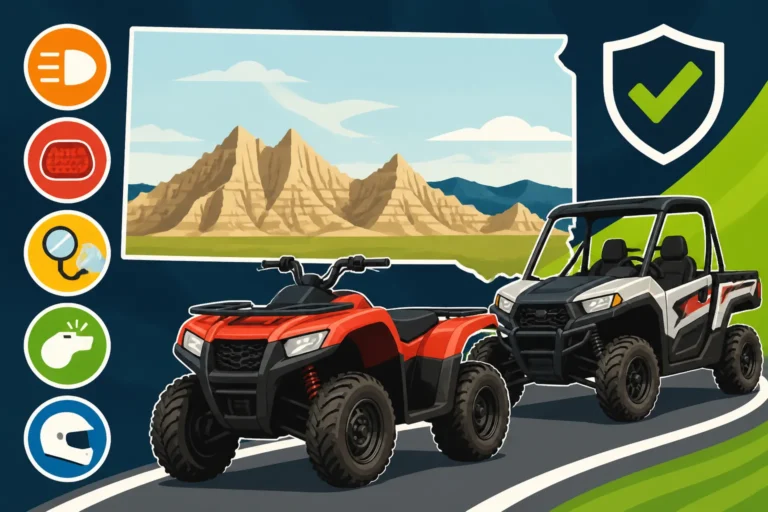
Let's clear up a common misunderstanding right off the bat: South Dakota generally doesn't consider ATVs and UTVs "street legal" in the same way it views cars or trucks. You won't be getting a standard vehicle registration for your quad. Instead, if your ATV meets certain criteria, it can be licensed as a motorcycle for limited road use. This distinction is crucial because it means your machine will need to adhere to motorcycle equipment and operational standards, not general automobile rules. It's a key part of understanding [Street Legal ATVs in South Dakota: The Short Answer].
This approach often leaves riders scratching their heads, especially if they're used to other states with more open "street legal" conversions. You might wonder why a four-wheeled vehicle is treated like a two-wheeler, and it boils down to how the state legislature has defined and regulated off-road vehicles for road access. This means you're not just adding a few accessories; you're essentially preparing your ATV to pass a different class of vehicle inspection and registration.
The engine size also plays a pivotal role in this classification. For an ATV to even qualify for this motorcycle-style licensing, it needs to have an engine displacement of at least 200 cubic centimeters. This specific threshold is a non-negotiable part of the state's definition, meaning smaller youth models or certain utility machines might not ever be eligible for road use beyond private property. It's an important detail that can catch new buyers or those with smaller machines off guard.
Differentiating Between Road Use and Trail Permits
It's really easy to confuse the two, but getting a license plate for road use is entirely different from acquiring a motorized trail permit in South Dakota. Many riders will need both depending on where they plan to ride, and it's essential not to assume one covers the other. A road plate allows you to operate on approved public roads, while a trail permit grants you access to specific, designated off-road trails, particularly within the Black Hills National Forest and other managed areas.
Think of it this way: your motorcycle plate is for getting to the trails or for specific utilitarian tasks on certain roads, while the trail permit is for the adventurous riding on the trails themselves. You can't just take your plated ATV onto a designated motorized trail without the additional permit, and conversely, a trail permit doesn't give you free rein on state highways. Each serves a distinct purpose, and misunderstanding this can lead to fines or confusion about access.
This distinction is particularly important for visitors coming from out of state who might have different registration systems back home. They often find themselves needing to purchase a temporary trail permit for their Black Hills adventures, even if their machine is perfectly street legal in their home state. Understanding the specific requirements for trail access, which are covered in depth by resources like [South Dakota Trail Permits Explained], is just as vital as knowing the road rules if you plan on exploring the state's vast riding opportunities.
Essential Equipment for Plating Your ATV in South Dakota
So, you've got a machine with an engine over 200cc, and you're ready to explore how to get it plated. The next hurdle is making sure your ATV or UTV is properly equipped to meet the state's requirements for motorcycle registration. This isn't just about personal preference or adding cool accessories; these are legal mandates designed to ensure safety and visibility on public roads.
Mandatory Lighting and Braking
When your ATV is licensed as a motorcycle, it's expected to have the same basic safety equipment. This means you'll need at least one functioning headlight that can illuminate the road ahead, a taillight that is clearly visible from the rear, and working brake lights that activate when you apply the brakes. These aren't optional extras; they're fundamental for visibility, especially during dawn, dusk, or in adverse weather conditions.
Many stock ATVs might come with basic headlights and taillights, but they might not meet the brightness or coverage requirements for road use. For instance, some factory lights are more for seeing in the immediate trail ahead rather than casting a wide, strong beam down a road. You might find yourself needing to upgrade to brighter LED lights or add supplemental lighting to ensure you're compliant and, more importantly, safe.
Turn signals are another piece of equipment often overlooked. While not always explicitly required for all road-legal machines in some states, given South Dakota's classification as a motorcycle, having functional turn signals for indicating lane changes and turns is a smart move and can be a requirement. Riders often turn to aftermarket solutions, with companies like SuperATV offering comprehensive kits that include integrated turn signals, ensuring you're visible and can communicate your intentions to other drivers effectively. This kind of upgrade isn't just about meeting the letter of the law; it's about being a predictable and safe presence on the road.
Mirrors, Horns, and Other Safety Gear
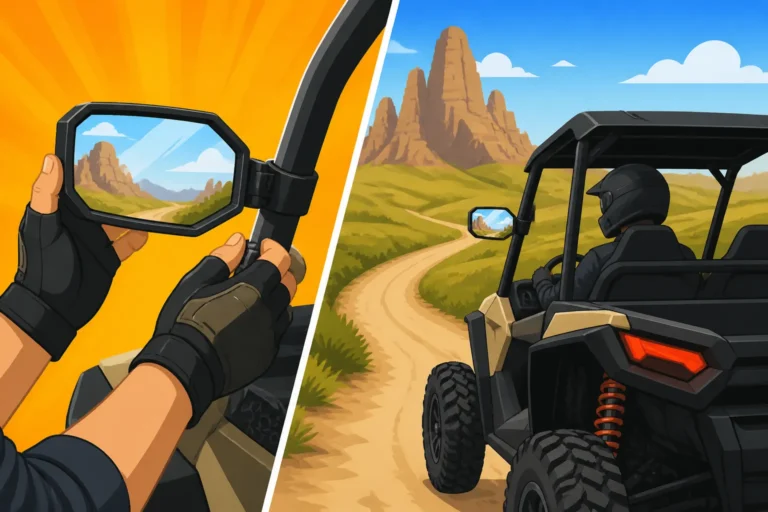
Beyond lighting, your ATV needs to be audible and provide the rider with a clear view of what's behind them. This means a functional rearview mirror is a must-have. Just imagine trying to merge onto a road or change lanes without being able to see traffic approaching from the rear – it’s incredibly dangerous. The state mandates that you have a mirror, and it needs to provide a clear view for safe operation. Details on this can be found in resources like [A Rear-View Mirror for South Dakota Road Use].
Similarly, a horn is not just a polite courtesy; it's a critical safety device. You need a horn that produces an audible signal at a distance of at least 200 feet. This isn't for honking in frustration, but for alerting pedestrians, cyclists, or other drivers to your presence when necessary to prevent an accident. A weak, reedy sound won't cut it. You need something clear and distinct. If your stock ATV doesn't have one, or if it's inadequate, you'll need to install an aftermarket horn. Understanding the specifics of [A Horn on a South Dakota Road Machine] can help ensure compliance.
While not always explicitly itemized for every single scenario, other safety considerations include ensuring your tires are appropriate for road use (not just aggressive mud tires that can be unstable on pavement) and that your braking system is in excellent working order. Your ATV must be in safe operating condition, meaning no loose components, properly functioning suspension, and secure handlebars. Thinking about road safety extends beyond just the mandated items to the overall mechanical integrity of your machine. Aftermarket providers like SuperATV offer a range of products, from mirrors to turn signal kits, that help riders bring their machines up to road-legal standards efficiently and reliably.
The 200cc Engine Threshold and Other Machine-Specifics
As mentioned earlier, the 200cc engine displacement rule is an absolute hard stop for road licensing. If your ATV or UTV's engine is smaller than 200 cubic centimeters, it simply won't qualify for a South Dakota motorcycle plate. This isn't a rule you can get around with modifications; it's a fundamental aspect of the state's vehicle definitions. This can be frustrating for owners of smaller machines, but it’s crucial to understand this limitation before you invest time and money into other upgrades. More specific information on this critical threshold is available in articles like [South Dakota ATV Engine Size for Plates].
Beyond the engine size, the vehicle itself must fit the general description of an ATV or UTV – essentially, a machine designed for off-road use but adaptable for limited road purposes. This means purpose-built race machines or highly customized vehicles might face additional scrutiny, though most standard utility and sport ATVs and UTVs will fit the bill if they meet the equipment requirements. It's about ensuring your vehicle isn't something completely out of scope for the "motorcycle" classification.
Ultimately, your machine needs to be in a condition that would reasonably pass a safety check, even though South Dakota doesn't typically have formal inspection stations for this class of vehicle. This means working brakes, proper steering, and all necessary safety features functional. You, as the owner, bear the responsibility of ensuring your ATV is roadworthy once it's plated. This self-certification aspect places a significant burden on the owner to be diligent and informed about all relevant regulations.
Driver Requirements and Operational Rules for South Dakota Roads
Having a properly equipped ATV is only half the battle. You, as the operator, also need to meet specific qualifications, and there are strict rules about how and where you can actually ride your plated machine on South Dakota's public roads. Ignoring these can lead to tickets, fines, or worse, accidents.
Driver's License and Age Considerations
This one is pretty straightforward but often overlooked by recreational riders: if you want to operate your plated ATV or UTV on a public road in South Dakota, you must possess a valid driver's license. This isn't a special "ATV license"; it's your standard Class D or equivalent driver's license. You can't just be a licensed driver; you must have the physical license on you while operating the vehicle. For a full breakdown of these requirements, check out [South Dakota Driver's License Rules for ATVs].
The age factor is also critical. While there are provisions for younger riders on private land or designated trails under supervision, the moment your ATV hits a public road, the rules shift dramatically. Generally, you need to be at least 16 years old to hold a valid driver's license in South Dakota, meaning anyone younger than that is legally barred from operating a plated ATV on public roads, even if they're experienced riders off-road.
This rule is enforced to ensure that anyone operating a motor vehicle on public thoroughfares has demonstrated a basic level of driving competency and understands traffic laws. It's not about your skill on the trails; it's about your ability to safely navigate shared roadways with cars, trucks, and other traffic. Attempting to ride on a public road without a license can lead to severe penalties, including fines and potential impoundment of your vehicle.
Helmet and Eye Protection Mandates
South Dakota has specific rules regarding helmet use, which largely align with its motorcycle laws. If you are under the age of 18, wearing an approved helmet is absolutely mandatory when riding your plated ATV or UTV on public roads. There's no wiggle room here; if you're a minor, the helmet goes on. This is a crucial safety measure designed to protect young riders, and law enforcement takes it seriously. You can learn more about this in [South Dakota Helmet Law for ATV Riders].
However, if you are 18 years of age or older, you are not legally required to wear a helmet while operating a plated ATV on South Dakota public roads. This exemption for adults is consistent with the state's motorcycle helmet laws. Despite the legal exemption, many experienced riders still choose to wear a helmet for their own safety, especially given the open nature of ATVs and UTVs and the potential for serious head injuries in an accident.
Regardless of age, all riders and passengers on a plated ATV or UTV must wear adequate eye protection when on public roads. This could be a face shield on a helmet, goggles, or safety glasses. The purpose is to protect your eyes from dust, debris, insects, and wind, all of which can severely impair your vision and lead to dangerous situations. Imagine hitting a bee at 40 mph without eye protection—it's not just uncomfortable, it's a hazard. Further details can be found in [South Dakota Eye Protection Requirement].
Understanding Ditch Riding and Highway Crossings
South Dakota has a fairly unique allowance for riding ATVs and UTVs in highway ditches, often referred to as "ditch riding." This is not a carte blanche to ride anywhere, but rather a specific set of rules allowing you to operate in the highway right-of-way, usually from the bottom of the ditch to the back slope, provided it's safe and no county has "opted out" of ditch riding. This can be incredibly useful for connecting trails or accessing private property without using the main traveled portion of the road. Dive deeper into these rules with [South Dakota Ditch Riding Rules].
However, ditch riding is not universal. Counties have the option to prohibit ditch riding on roads within their jurisdiction. When a county opts out, they are required to post clear signage indicating that ditch riding is prohibited. Always be on the lookout for these signs, as riding where it's banned can result in a citation. Furthermore, ditch riding is typically restricted on interstate highways, within municipalities, and sometimes in other specific areas. Knowing the local rules before you ride is paramount.
When it comes to crossing a highway, South Dakota does allow it under certain conditions, even if you can't ride on the highway for an extended period. This means you can legally cross a paved road or highway to get from one section of a ditch to another, or to access a trail or property on the opposite side. The key here is to do so safely and directly, yielding to all traffic and using turn signals if equipped to indicate your intentions. It’s a brief, direct maneuver, not an opportunity for extended road travel. For specific guidance, refer to [Crossing a Highway on an ATV in South Dakota].
The Titling and Registration Process for Road Use
Once you’ve got your machine equipped and you understand the operational rules, the final step is navigating the administrative process to get your motorcycle plate. This involves a trip to your local county treasurer’s office, armed with the right paperwork and ready for the associated fees.
Where to Go and What to Bring
Unlike some other vehicle registrations handled by a central state agency, ATV and UTV titling and registration for road use in South Dakota is primarily handled at your local County Treasurer's office. This is the place where all the paperwork gets processed, and where you'll ultimately receive your license plate. You can read more about this process in [Titling at a South Dakota County Treasurer]. It's a good idea to call ahead or check their county website to confirm their hours and any specific requirements, as sometimes local offices have slightly different procedures or forms available online.
When you go, you'll need to bring a few crucial documents. First and foremost, you'll need the original Certificate of Title for your ATV or UTV. If you're buying a used machine, ensure the title is properly signed over to you by the previous owner. If the machine is brand new, you'll have a Manufacturer's Statement of Origin (MSO) which serves the same purpose. You’ll also need a bill of sale, especially if you purchased the machine privately. This document verifies the purchase price, which is critical for calculating excise tax.
Finally, you’ll fill out a South Dakota Title and Registration Application. This form collects all your personal information, details about the vehicle, and is where you'll indicate that you intend to license the machine for road use as a motorcycle. Make sure all information is accurate and complete to avoid delays. Having your driver's license and proof of residency (if you're a new resident) will also be essential. A comprehensive list of what you need is available in [South Dakota ATV Title Paperwork].
Fees, Taxes, and Penalties to Expect
Get ready for a few different charges when you title and register your ATV. The main costs typically include the title fee itself, which is a set amount. Then, there's the excise tax, which is essentially a sales tax on your purchase. In South Dakota, this is generally 4% of the purchase price of your ATV. This is why a clear bill of sale stating the purchase price is so important. If you can't provide one, or if the price seems unusually low, the county treasurer might use an estimated value for tax calculation. More on this particular tax can be found in [South Dakota ATV Excise Tax Rate].
You'll also encounter a technology fee, which is a smaller, fixed charge implemented to fund improvements in the state's motor vehicle systems. On top of these, there's the license plate fee, which is often an annual cost for the motorcycle plate itself, and might include additional small fees for things like solid waste and highway patrol funding. While I can't provide exact current figures, these are the types of costs you should anticipate. It's always best to check the South Dakota Department of Revenue website or call your county treasurer's office for the most up-to-date fee schedule before you go. For a general overview of these costs, refer to [South Dakota ATV Title Cost].
It's really important to adhere to the state's deadlines. South Dakota typically gives you 45 days from the date of purchase to title and register your vehicle. If you miss this deadline, penalties start to accrue. These can include a monthly penalty on your excise tax and potentially a larger lump-sum penalty if you delay for too long. These penalties can add up quickly, so don't procrastinate! It's always better to get this paperwork done promptly to avoid unnecessary extra costs.
Receiving Your Motorcycle Plate and Decals
Once all your paperwork is in order, the fees are paid, and everything is processed, you'll be issued a license plate. Here's where that "licensed as a motorcycle" distinction becomes physically apparent: your ATV or UTV will receive a standard South Dakota motorcycle license plate, not a full-sized vehicle plate. This plate will need to be securely mounted on the rear of your machine, clearly visible. Understanding [Why South Dakota Plates Are Motorcycle Plates] helps demystify this.
In addition to the plate, you'll likely receive registration decals that need to be affixed to the plate itself, indicating the current registration year. These decals confirm your registration is current and valid. The county treasurer's office will provide instructions on where to place these. It’s important to make sure they are applied correctly and visibly, as they are a quick visual check for law enforcement that your machine is properly registered.
The entire process, from submitting your application to receiving your physical plate and decals, typically happens right there at the county treasurer's office. You won't usually have to wait weeks for a plate to be mailed to you, allowing you to get your machine legal and on the road much faster. Once you have that plate mounted and all your required equipment is installed, you'll be ready to responsibly enjoy South Dakota's roads, adhering to all the rules for plated off-road vehicles.
Disclaimer
This article is for general informational purposes only and does not constitute professional advice. Laws, prices and regulations vary by location and change over time. Consult a qualified professional for guidance on your specific situation.