South Dakota Equipment List for Road Use
It's incredibly frustrating when you want to take your ATV or UTV out for a spin, whether it's for a quick run to the store or a scenic cruise on a gravel road, but you're unsure if your machine is even legal to do so. The rules about what equipment you must have can feel like a confusing maze. This guide is here to clear up exactly what South Dakota requires to make your off-road vehicle street-legal, helping you ride confidently and stay on the right side of the law.
Understanding South Dakota's Approach to Street-Legal ATVs and UTVs
South Dakota has a very specific set of regulations when it comes to riding your off-road vehicle (ORV) on public roads. Unlike some states that might outright ban them, South Dakota offers a pathway to road legality, but it hinges entirely on equipping your machine properly and, crucially, getting it plated. Without the right gear, your machine won't qualify for a plate, and without a plate, you're generally limited to private land or designated off-road areas.
The state defines an off-road vehicle broadly, encompassing ATVs, UTVs, side-by-sides, and even some dune buggies. The key to road use isn't just about having an ORV; it's about transforming it into something that can safely share the road with traditional vehicles. This transformation means adding specific safety and signaling equipment that you might not think about for trail-only riding. It also means understanding that once it's road-legal, it's essentially treated like a motorcycle for many purposes. You'll need to know [What South Dakota Requires to Plate an ATV] to even begin this process.
It’s worth noting that simply having the right equipment isn't the only step. Your machine also has to meet certain engine displacement requirements to be eligible for plating as a motorcycle. Generally, an ATV needs to be 200cc or more to qualify for a street-legal plate. If your quad is under 200cc, it unfortunately won't meet the criteria, regardless of how many lights or mirrors you bolt on. This is a common point of confusion and frustration for many riders who own smaller machines.
The Essential Equipment Your Machine Must Have for South Dakota Roads
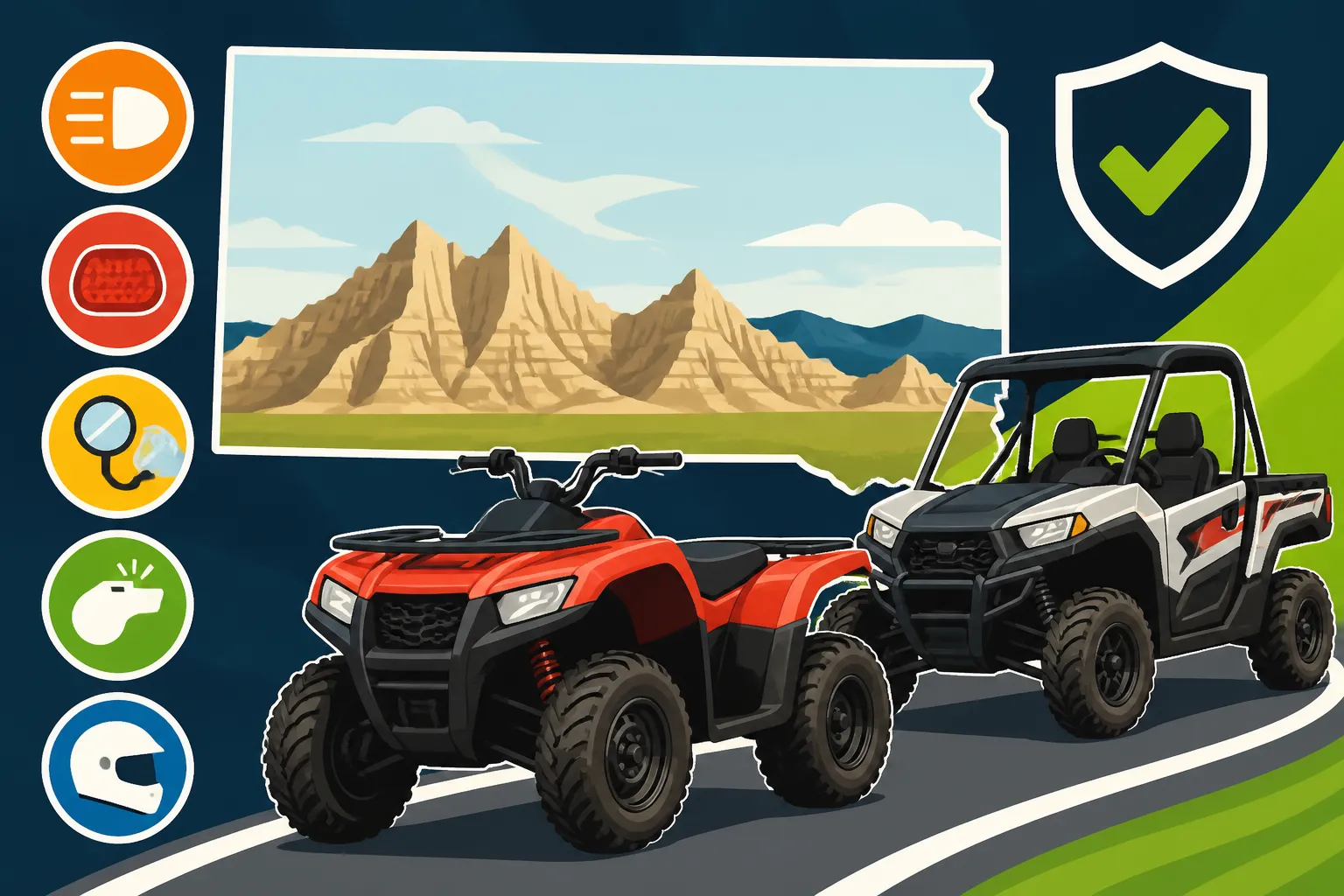
When you're aiming to get that coveted motorcycle plate for your ATV or UTV, the Department of Revenue, through your local county treasurer, will be looking for a very specific set of safety equipment. These aren't suggestions; they are non-negotiable requirements designed to make your machine visible and controllable in a road environment. Failing to have even one of these items can prevent you from getting plated and riding legally on the pavement.
Before you even head to the [Titling at a South Dakota County Treasurer] office, make sure your machine is ready. Many riders find that aftermarket conversion kits from companies like SuperATV are a convenient way to get all the necessary components in one package, especially if their machine didn't come with them from the factory.
Headlights and Tail Lights: Seeing and Being Seen
This might seem obvious, but it's crucial. Your ATV or UTV must be equipped with at least one headlight that emits a white light visible from a certain distance, typically at least 500 feet, during hours of darkness or when visibility is poor. This isn't just for you to see where you're going; it's equally, if not more, important for other drivers to see you approaching. If you plan on riding on the roads after sunset, or even during a cloudy, drizzly day, a functioning headlight is your first line of defense.
In addition to headlights, your machine needs at least one tail light that emits a red light visible from at least 500 feet to the rear. This tail light must be illuminated whenever your headlight is on. Imagine a scenario where you're riding a gravel road at dusk, and a pickup truck is approaching from behind. Your tail light is what alerts that driver to your presence, giving them time to react and slow down. Without it, you're practically invisible, a recipe for disaster.
Brake Lights: Signifying Your Stops
Just like any other road-legal vehicle, your ATV or UTV needs a functioning brake light system. This means that when you apply either your hand brake or foot brake, a red light at the rear of your machine must illuminate, signaling to drivers behind you that you are slowing down or stopping. The brake light needs to be clearly visible from at least 500 feet to the rear.
This is a critical safety feature, especially when riding in traffic or on roads where speeds are higher. Think about coming up to an intersection or encountering an unexpected obstruction on a county road. Your brake light provides an instant visual cue to anyone following, allowing them to anticipate your actions and avoid a rear-end collision. Make sure yours are bright and responsive.
A Functional Horn: Making Your Presence Known
South Dakota law requires your street-legal ORV to be equipped with a horn that is audible from at least 200 feet away. This isn't just a courtesy; it's a vital safety tool. While you might not use it constantly, a horn can be incredibly effective in emergency situations or simply to alert other road users to your presence.
Picture yourself navigating a blind curve on a winding country road, and you see a car pulling out of a driveway. A quick honk of your horn can grab their attention and prevent them from pulling into your path. If your machine didn't come with a horn, or if it's not loud enough, a simple, durable horn kit from a reputable supplier can be easily installed. This small addition can make a huge difference in your safety on the road. The requirement for a horn is specifically laid out in the [South Dakota Horn Requirement] guidelines.
Rear-View Mirror: Seeing What's Behind You
You absolutely need at least one rear-view mirror mounted on your ATV or UTV, positioned so you can clearly see the road behind your machine. This mirror must provide a clear view for at least 200 feet to the rear. While many UTVs come with a factory-installed center mirror, ATVs often require an aftermarket solution.
A rear-view mirror is essential for safe lane changes, checking for approaching vehicles before turning, or simply knowing what's happening behind you. Without it, you're forced to constantly turn your head, which can be dangerous and distracting, especially at speed. For detailed information on this, refer to the [South Dakota Mirror Requirement].
Muffler and Spark Arrester: Sound and Safety
While not always explicitly listed as "equipment for road use," a proper exhaust system is implicitly required for road legality and safe operation. Your ATV or UTV must be equipped with a muffler that is in good working order and prevents excessive or unusual noise. This means no straight pipes or illegally modified exhaust systems that can be incredibly disruptive to others and potentially draw unwanted attention from law enforcement.
Furthermore, especially for any off-road machine, a spark arrester is crucial for fire safety. While it might not be a direct "road" requirement, operating a machine on or off-road without one is often illegal and highly dangerous, particularly in dry conditions like those often experienced in the Black Hills. Many aftermarket exhaust systems, including those that might come with kits from SuperATV, will include integrated spark arresters to ensure compliance.
Smart Upgrades Beyond the Mandatory for South Dakota Road Safety
While the law specifies a minimum equipment list, thinking solely about what's "required" can sometimes lead to overlooking practical safety measures. When you're sharing the road with cars, trucks, and even larger vehicles, every bit of extra visibility and signaling helps. These aren't mandatory to get your plate, but they are highly recommended for your personal safety and to enhance your road presence.
Turn Signals: Clear Intentions Are Safe Intentions
Surprisingly, turn signals are not strictly required for an ATV or UTV to be plated as street-legal in South Dakota. You are legally allowed to use hand signals, just like a bicycle rider, to indicate your turns. However, relying solely on hand signals can be challenging, especially in colder weather with bulky gloves, or when you need both hands on the handlebars for stability.
Installing a set of bright, visible turn signals (front and rear) is a wise investment. They communicate your intentions clearly and unambiguously to other drivers, significantly reducing the risk of confusion or collision. Many aftermarket conversion kits, including those from SuperATV, come with integrated turn signal systems, making installation straightforward for those looking to upgrade. This is especially helpful if you're frequently riding on roads with more traffic or higher speeds.
Reflectors and Markings: Enhancing Your Visibility
Beyond the required headlights and tail lights, adding extra reflective tape or dedicated reflectors can dramatically improve your visibility, especially from the sides. ORVs are often smaller and lower to the ground than cars, making them harder to spot. Strategic placement of red reflectors on the rear and amber reflectors on the sides can make your machine stand out, particularly at dawn, dusk, or in foggy conditions.
Consider reflective decals for your helmet or even your riding gear. Anything that catches and reflects light from other vehicles will make you more noticeable, especially when riding in areas like the Black Hills where visibility can change quickly.
Proper Tires and Secure Loads: Staying Grounded
While not "equipment" in the traditional sense, having appropriate tires for road use is paramount. Aggressive knobby tires, while excellent for mud and trails, can wear down quickly and offer poor handling and braking performance on pavement. Consider a set of tires designed for mixed-use or even specific road conditions if you plan on significant asphalt riding. This will improve your control and safety.
Also, if you're carrying cargo on your ATV or UTV, ensure it's securely fastened and doesn't obstruct your view or interfere with the operation of your machine. Loose gear flying off your rack can be a hazard to you and others on the road.
Helmets and Eye Protection: Personal Safety First
Although South Dakota's helmet law exempts adult riders (18 and over) from wearing a helmet on a plated motorcycle or ORV, it is unequivocally one of the most important pieces of safety gear you can wear. A helmet protects your head in the event of a crash, and while you might be legally able to ride without one, it's a huge risk.
Similarly, eye protection is crucial. Whether it's a full-face helmet visor, goggles, or safety glasses, protecting your eyes from dust, debris, insects, or even small stones kicked up by other vehicles is non-negotiable for comfortable and safe riding. South Dakota does have an [South Dakota Eye Protection Requirement] for all riders, regardless of age, which mandates eye protection unless your machine has a windshield. Don't compromise on personal protective equipment.
Ensuring Compliance and Avoiding Common Pitfalls on South Dakota Roads
Once you've got your ATV or UTV equipped to meet all the state's requirements, you're well on your way to enjoying South Dakota's roads legally. However, understanding how to maintain compliance and what to expect when riding is just as important as the equipment itself.
The Plating Process and What a Trooper Checks Roadside
The process starts at your county treasurer's office. You'll need to fill out the [South Dakota's Title and Registration Application] and present your machine's title. The treasurer's office staff are usually quite helpful and can guide you through the specific paperwork needed, including proof of ownership and payment of any applicable excise tax. Once approved, you'll receive a motorcycle plate that signifies your machine's legal status for road use.
When you're out riding, a South Dakota Highway Patrol trooper might pull you over for a routine check, especially if your ATV or UTV stands out. They'll be looking for your valid plate, the required equipment (headlights, tail lights, brake lights, horn, mirror), and that everything is in good working order. They might also check for proper muffler function and spark arresters. Make sure all your lights are functional, your horn works, and your mirror is securely mounted. Having your plate visible and correctly affixed is also critical; you'll need to know [South Dakota ATV Plate Requirements].
Penalties for Non-Compliance
Riding an unplated or improperly equipped ATV or UTV on a public road in South Dakota can lead to significant penalties. Fines can vary, but generally, operating a vehicle without proper registration or required safety equipment can result in a Class 2 Misdemeanor, carrying potential fines and even jail time in some cases. More specific details can be found under [South Dakota Fines for Illegal ATV Road Use]. Beyond the legal ramifications, the biggest penalty is the increased risk of an accident when your machine isn't properly visible or controllable in a road environment.
Where to Purchase and Install Equipment
Many local ATV/UTV dealerships, powersports shops, and even online retailers like SuperATV offer a wide range of conversion kits and individual components to make your machine road-legal. If you're not comfortable with the installation yourself, most dealerships or independent repair shops can handle the upgrades for you. It's always a good idea to ensure the components you purchase meet or exceed state requirements for durability and visibility.
Consider buying reputable brands that provide clear instructions and support. While DIY is certainly an option for many riders, if you're uncertain about wiring or mounting, professional installation can ensure everything is done correctly and safely, saving you headaches down the line.
| Equipment Type | South Dakota Requirement | Purpose | Recommended Check |
|---|---|---|---|
| Headlight(s) | At least one white light, visible 500 ft (front) | See road, be seen by oncoming traffic | Brightness, aim, functional high/low |
| Tail Light(s) | At least one red light, visible 500 ft (rear) | Be seen from behind | Visible, always on with headlight |
| Brake Light(s) | Red light, visible 500 ft (rear), illuminates on braking | Signal stops to trailing vehicles | Responds to both brakes |
| Horn | Audible 200 ft away | Alert others to presence/danger | Loudness, responsiveness |
| Rear-View Mirror | At least one, view 200 ft to rear | See traffic behind | Secure, clear view |
| Muffler | Prevents excessive/unusual noise | Noise control, public disturbance prevention | No excessive noise or leaks |
| Spark Arrester | Reduces fire risk | Fire safety | Present, in good condition |
| Eye Protection | Required unless windshield present | Protect eyes from debris | Always wear or ensure windshield |
| Turn Signals | Not required (hand signals permitted) | Clear signaling of turns (highly recommended) | Functionality, visibility |
| Reflectors | Not required (additional recommended) | Enhanced side/rear visibility (highly recommended) | Clean, intact, visible |
This list provides a solid foundation for ensuring your ATV or UTV is equipped for legal and safe road use in South Dakota. Riding responsibly means not just following the law but also taking every precaution to protect yourself and others on the road.
Disclaimer
This article is for general informational purposes only and does not constitute professional advice. Laws, prices and regulations vary by location and change over time. Consult a qualified professional for guidance on your specific situation.