South Dakota Rules for Riding a Section Line
For many ATV and UTV riders across South Dakota, the mention of "section lines" sparks immediate curiosity and often, a good deal of confusion. These invisible grid lines on a map, often coinciding with old fence rows or faint prairie two-tracks, raise a common question: can I legally ride my off-road machine on them? The answer, as with many things involving land access in our beautiful state, isn't always straightforward, and understanding the nuances can save you a lot of headache, potential fines, and uncomfortable run-ins with landowners. This guide aims to clear up that confusion, detailing the rules, the exceptions, and the responsibilities that come with exploring South Dakota's vast network of section lines.
Understanding South Dakota's Section Line Laws
South Dakota's landscape is famously laid out in a grid, a legacy of the Public Land Survey System. This system divided the land into square-mile sections, creating invisible boundaries that often correspond to actual roads, trails, or simply property lines. For off-road enthusiasts, these "section lines" represent a potential network for exploration, but the legalities surrounding their use by ATVs and UTVs are critical to understand.
What Exactly is a Section Line in South Dakota?
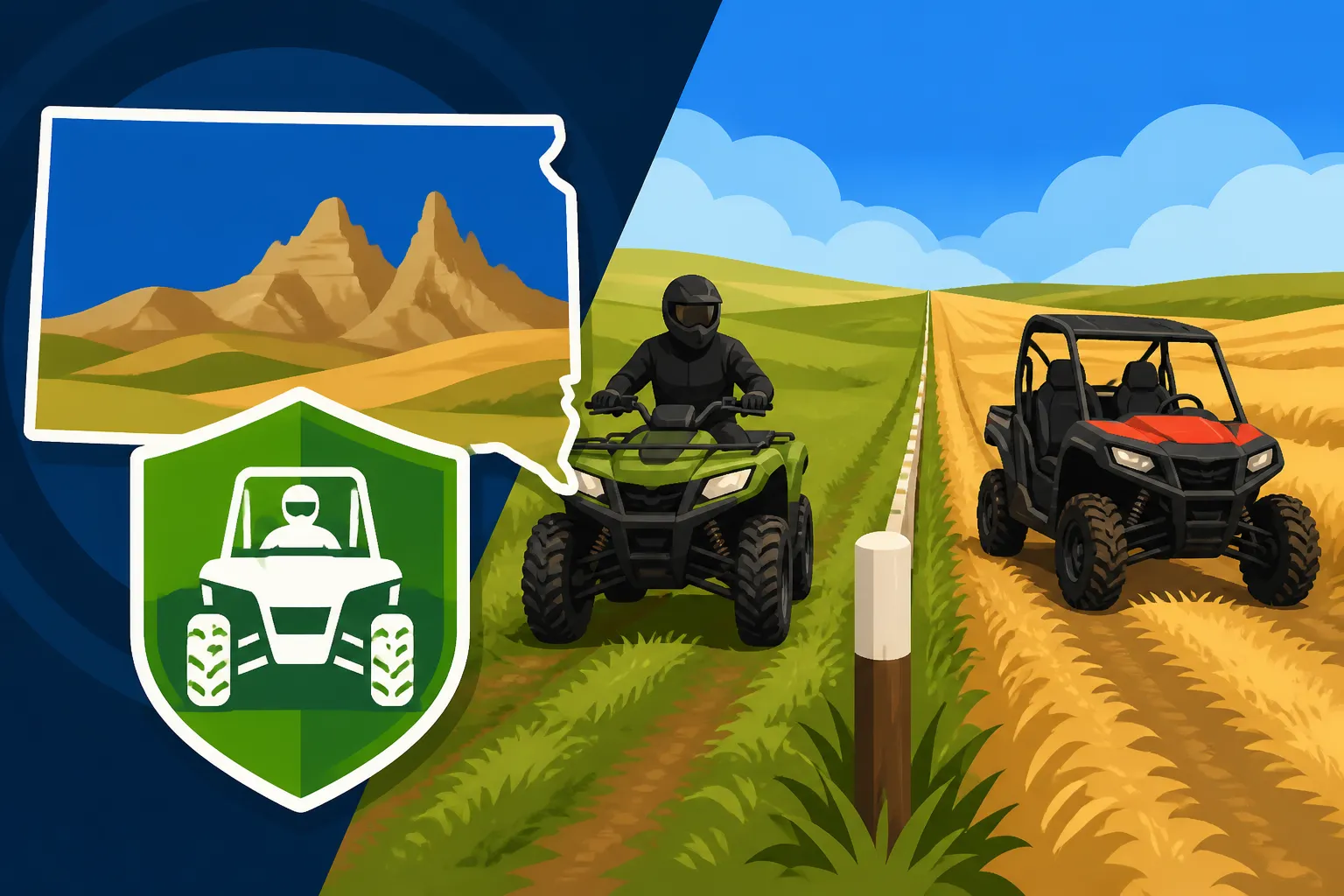
In South Dakota, a section line is more than just a line on a map; it's generally considered a public right-of-way. Imagine a vast checkerboard laid across the state. Each square on that checkerboard is a "section" of land, roughly one square mile. The lines between these sections are the section lines. Legally, the public has a right-of-way along these lines, typically extending 33 feet on either side of the actual property boundary, totaling 66 feet wide. This public right-of-way exists whether or not there's a physical road, fence, or even a discernible path present. Historically, these were set aside for future roads or access.
The crucial point here is that while it's a public right-of-way, it doesn't automatically mean it's a developed or even passable road. Many section lines across the state remain completely unimproved – nothing more than prairie grass, crops, or rugged terrain. This creates the primary point of contention and confusion for riders. Just because you can legally traverse the right-of-way doesn't mean you should without further consideration, especially regarding the land it bisects.
The General Rule: Are ATVs Allowed?
Generally speaking, ATVs and UTVs are allowed on unimproved section lines in South Dakota, provided those section lines are open and not specifically designated as closed by a county. This stems from the interpretation that these section lines are public rights-of-way. However, this general allowance comes with a significant caveat: your machine must meet certain requirements if it's operating on any public right-of-way, even an unimproved one. We're talking about lights, mirrors, and sometimes a horn, much like you'd need for [South Dakota Street Legal ATV Requirements].
Think of it this way: if you're riding a gravel road that's also a section line, you're expected to follow all the rules for road use. If you're on a faint two-track that technically sits on a section line, you're still on a public right-of-way. The primary goal of the state's section line laws is to ensure access, but that access comes with responsibilities. Most importantly, it's about respecting the land and those who live and work near these lines. When riding these areas, remember you're often bordering, or even going through, actively farmed or ranched private land.
The "Improved" vs. "Unimproved" Distinction
The distinction between improved and unimproved section lines is paramount when considering ATV and UTV use. An "improved" section line is one that has been developed into a road – whether it's paved, graveled, or maintained as a dirt road. On these improved section lines, your ATV or UTV is treated like any other vehicle using the public road. This means your machine must be street-legal, plated, and you, as the operator, must possess a valid driver's license. For a deeper dive into what that entails, check out [Equipment a South Dakota Road Machine Needs].
"Unimproved" section lines, on the other hand, are the ones that cause the most head-scratching. These are the lines where no road has been constructed, and the public right-of-way might just be open prairie, crop land, or dense brush. While the public technically retains a right-of-way across these lines, local counties have the authority to "vacate" or "close" unimproved section lines, effectively removing public access for motorized vehicles. This is a critical point: while the default is "open," a county can change that. If you're pondering [Can You Ride an Unopened South Dakota Section Line?], the answer truly depends on county action and specific signage. Always be on the lookout for signs indicating closure, and assume that if there are any doubts, it's best to err on the side of caution or seek local clarification.
| Section Line Type | Physical Description | ATV/UTV Status | Key Considerations |
|---|---|---|---|
| Improved | Paved, graveled, or regularly maintained dirt road | Treated as public road | Machine must be street-legal, plated, driver licensed. |
| Unimproved | Prairie grass, crops, faint two-track, no developed road | Generally allowed by default | Counties can close them. Machine may need street-legal features. Landowner permission highly recommended for clarity. |
| Closed | Clearly marked with "No Trespassing" or "Road Closed" signs, or legally vacated by county action | Prohibited | Riding is trespassing. Subject to significant fines and penalties. |
Navigating Access: What Riders Need to Know
Riding South Dakota's section lines offers a unique way to experience the state's vast open spaces, but it demands a heightened sense of responsibility and awareness. It's not just about what the law allows but also about what common sense and good neighborliness dictate.
The Importance of Landowner Permission
While South Dakota law generally considers section lines public rights-of-way, the practical reality on the ground often involves private property. Many unimproved section lines cut directly through private farms and ranches, sometimes even through active agricultural fields. Imagine a farmer who relies on their crops for their livelihood seeing an ATV cut through their planted cornfield, even if it's on a "section line." This is where good intentions can quickly sour into legal issues. This is why obtaining [South Dakota Landowner Permission Rules] is not just a suggestion but often a necessity, especially on unimproved or rarely traveled section lines.
Even if a section line isn't officially "closed" by the county, riding through private land without explicit permission from the landowner can still lead to accusations of trespassing or property damage. A simple conversation with the landowner can prevent a lot of grief. They can tell you if the line is passable, if there are any specific hazards, or if they have concerns about livestock or crops. This act of courtesy goes a long way in fostering good relationships between riders and rural residents. Always seek clear, preferably written, permission if you plan to traverse a section line that visibly impacts private property, even if you believe it's a public right-of-way.
Identifying Legally Rideable Section Lines
So, how do you know which section lines are okay to ride and which aren't? This is perhaps the trickiest part. The first step is to recognize that not all section lines are created equal. As discussed, improved ones are roads. Unimproved ones are where you need to do your homework.
Here's how to approach it:
- Check County Ordinances: South Dakota counties have the authority to close specific section lines to motorized traffic. Before heading out, contact the County Auditor's office in the county you plan to ride. They can provide information on any section lines that have been officially vacated or closed. This is your most reliable source for definitive legal status.
- Look for Physical Signs: Always, always look for signage. "No Trespassing," "Road Closed," or "Private Property" signs mean exactly that. Even if a map shows a section line, if there are clear signs, respect them. This ties directly into [South Dakota Trespass Rules for Riders].
- Use Maps and Satellite Imagery: Good topographical maps and satellite imagery can show you if a section line is actually developed into a road or if it's just a faint [South Dakota Rules for Riding a Prairie Two-Track]. However, remember that maps don't always reflect current closure status.
- Observe the Terrain: Is it clearly a travel path, even if rough? Or is it indistinguishable from the surrounding private land? If it's the latter, that's a red flag to seek permission or choose another route.
- When in Doubt, Ask or Don't Go: If you can't get definitive information or permission, it's always best to choose a different route. Getting a [South Dakota Fines for Illegal ATV Road Use] citation or facing a property damage claim is never worth the risk.
Avoiding Trespass and Potential Fines
The consequences of accidentally or intentionally trespassing on private land or riding on a closed section line can be severe. In South Dakota, trespassing can range from a civil matter to a misdemeanor offense, depending on the circumstances, and it can lead to fines, court appearances, and even confiscation of your machine in extreme cases.
Here are some practical tips to avoid issues:
- Respect Fences and Gates: Even if you believe you are on a public right-of-way, if there's a fence, treat it as a boundary. If there's a gate, it's there for a reason – likely to contain livestock. Never cut fences or leave gates open. If a section line passes through a gated area, that's a strong indicator you need permission.
- Stay Within the Right-of-Way: If you are on an unimproved section line, make every effort to stay within the assumed 66-foot public right-of-way. While difficult to eyeball precisely on open prairie, deviating far from the presumed line into a cultivated field or fenced pasture is clear trespassing.
- Minimize Impact: Even if allowed, drive responsibly. Avoid creating new ruts, splashing mud onto fences or crops, or disturbing livestock. These actions, even if not strictly illegal, can alienate landowners and contribute to more section lines being closed to motorized traffic in the future.
- Carry Identification and Documentation: Always have your driver's license (if required for your machine), proof of ownership, and any permits (like the [South Dakota Nonresident ORV Permit]) with you. This shows you're a responsible rider if questioned.
- Be Aware of Agricultural Activities: If you see active farming operations or grazing livestock, give them a wide berth. These are working lands, and your presence, even if technically legal, can be disruptive or even dangerous. Just like when you're [Riding a Ditch Beside a State Route], you need to be aware of surrounding activities.
Equipment and Safety Considerations for Section Line Riding
Riding section lines, particularly the unimproved ones, often blends elements of road riding with true off-road exploration. This unique environment requires a thoughtful approach to machine preparation and rider safety. You're not just cruising down a perfectly graded path; you could encounter everything from deep ruts and washouts to hidden rocks and tall grass.
Required Equipment for Road and Section Line Use
Since section lines, even unimproved ones, are legally considered public rights-of-way, your ATV or UTV might need to conform to certain equipment standards. If the section line is maintained as a road, then your machine definitely needs to be street legal. This means it needs:
- Headlights and Taillights: Operational during dusk, dawn, or low visibility.
- Brake Lights: Functioning properly.
- Mirrors: At least one rearview mirror, typically on the left side, for visibility.
- Horn: An audible warning device.
- Muffler: To ensure noise levels are within legal limits.
- Tires: Approved for highway use if you're regularly on improved sections.
While unimproved section lines might feel more like trails, the legal designation as a public right-of-way means it's wise to have these basic safety features, even if the enforcement isn't as strict as on a paved road. It's about being prepared for any situation and demonstrating responsible riding. For a complete list of what's required, review [South Dakota Street Legal ATV Requirements] and [Equipment a South Dakota Road Machine Needs]. Remember, even on a remote section line, you're still sharing the space, implicitly or explicitly, with others, and safety is paramount.
Safety Practices and Responsible Riding
Riding on section lines, especially in the more remote parts of South Dakota, requires a keen sense of awareness and preparedness. Unlike designated trail systems, these routes are often unmarked, unmaintained, and can change quickly with weather and agricultural activity.
- Ride with a Buddy: The vastness of South Dakota's prairie can be deceptive. Breaking down or getting stuck alone far from civilization can turn serious quickly. Riding with at least one other person significantly increases safety.
- Carry Communication: Cell service can be spotty or nonexistent in many rural areas. Carry a satellite communicator or a two-way radio if riding in groups.
- Inform Someone of Your Route: Always let someone know where you're going and when you expect to return.
- Be Aware of Weather: Prairie weather can change dramatically in minutes, from clear skies to severe thunderstorms or sudden cold snaps. Monitor forecasts and be prepared for changing conditions, especially when riding a [South Dakota Gravel Road After Rain].
- Pack Essentials: Bring extra fuel, a basic tool kit, a first-aid kit, water, snacks, and appropriate clothing layers.
- Respect Wildlife and Livestock: Section lines often pass through areas rich in wildlife or active grazing lands. Maintain a safe distance, avoid startling animals, and never pursue them.
- Leave No Trace: Pack out everything you pack in. Do not litter, create new trails, or damage natural resources. This preserves access for everyone and shows respect for the land. Consider carrying a [Checking a Forest Notice Before You Load Up] before heading out for any general warnings or restrictions that might be in effect.
Preparing Your Machine for Prairie Two-Tracks
Many unimproved section lines are essentially [South Dakota Rules for Riding a Prairie Two-Track] – narrow, often grassy paths worn down by infrequent vehicle use. These aren't manicured trails, and your machine needs to be ready for the challenge.
- Tire Choice: Aggressive tires with good side bite are invaluable for maintaining traction on grassy or muddy sections. Stock tires might struggle.
- Ground Clearance: Prairie two-tracks can be deeply rutted or have tall grass that can snag undercarriages. Consider a lift kit if your machine sits low, or if you regularly face significant obstacles. Companies like SuperATV offer robust lift kits and heavy-duty suspension components that can greatly enhance your machine's ability to navigate these challenging conditions without damage.
- Skid Plates: Investing in good quality skid plates (underneath, A-arm, and CV boot guards) is highly recommended. Rocks, stumps, and hidden debris can cause expensive damage.
- Winch: A winch can be a lifesaver if you get stuck in mud or high-centered on an obstacle, especially when riding solo or in less-traveled areas.
- Visibility: Especially if riding during hunting season, consider adding orange flagging or accessories to your machine. Always check local regulations, but wearing blaze orange yourself is always a good idea in rural settings during fall.
- Maintenance: Ensure your machine is in top mechanical condition. Check fluid levels, tire pressure, brakes, and lights before every ride. A breakdown far from help is a bad day. For those who frequently tackle demanding terrain, upgrading key components, such as axles or heavy-duty steering rods from brands like SuperATV, can provide extra peace of mind against unexpected failures.
Riding South Dakota's section lines offers an incredible opportunity to explore the state's diverse landscapes. By understanding the laws, respecting landowners, and preparing your machine and yourself, you can enjoy these unique routes responsibly and safely.
Disclaimer
This article is for general informational purposes only and does not constitute professional advice. Laws, prices and regulations vary by location and change over time. Consult a qualified professional for guidance on your specific situation.