South Dakota Rules for a Machine Over 50 Inches
You've just invested in that beefy side-by-side or a wider ATV, dreaming of tearing up trails and exploring the vast landscapes of South Dakota. But then a little voice, or maybe a friend, mentions something about "50-inch rules," and suddenly those dreams hit a snag. It's a common dilemma: what exactly are the rules for a machine over 50 inches wide in South Dakota, especially when it comes to trails and public roads? This guide will break down everything you need to know to ride legally and responsibly, helping you understand where your wider rig belongs without running afoul of local regulations.
Understanding South Dakota's Trail Width Restrictions for ATVs and UTVs
One of the biggest surprises for new ATV and UTV owners, especially those with wider machines, is discovering that not all trails are created equal in South Dakota. Many riders assume if they have a permit, they can go anywhere, but trail width is a huge factor, particularly in popular areas like the Black Hills National Forest. Ignoring these restrictions doesn't just put you at risk of a hefty fine; it can also damage sensitive ecosystems and erode the goodwill of land managers and other trail users. It’s a frustration born from diverse machine offerings and a lack of clear initial guidance for many buyers.
The "50-Inch Rule" on National Forest Trails
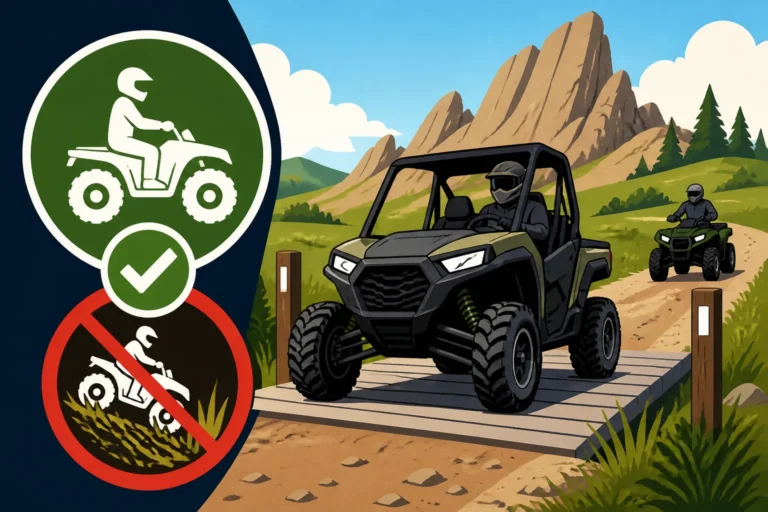
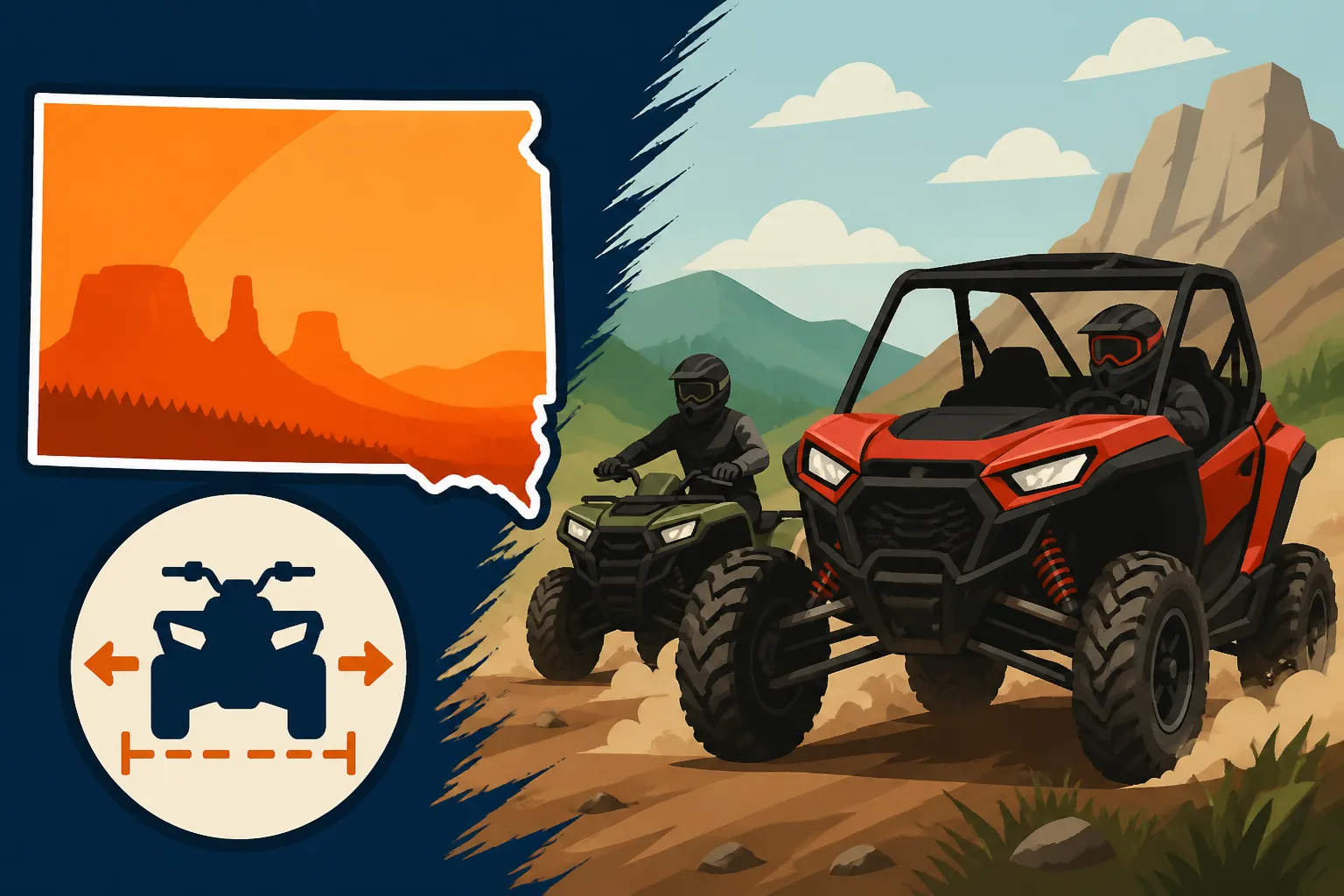
For many years, and still prominently today, the "50-inch rule" has been a standard for numerous motorized trails, particularly those managed by the U.S. Forest Service. This rule means that the width of your vehicle, measured from the outermost part of your tires, cannot exceed 50 inches. This regulation largely stems from the historical design of trails, which were often built for smaller, traditional ATVs or even motorcycles. The intent is to prevent wider vehicles from widening the trail, causing erosion, damaging vegetation, and making the trail impassable for the machines it was originally designed for. Imagine trying to squeeze a wider side-by-side down a path originally cut for a dirt bike; it simply doesn't work without tearing up the edges.
This rule directly impacts a vast number of modern UTVs and even some larger, sport-oriented ATVs that naturally come wider than 50 inches from the factory. Even if your machine is just an inch or two over, you are still considered in violation if you're on a 50-inch restricted trail. It's a strict measurement, and there's usually no leeway given by enforcement officers. Many riders, after investing in a new machine, suddenly realize a significant portion of the most scenic trails are off-limits to them. It's a common pain point that requires careful planning to overcome.
Identifying Wider Trails and Forest Roads
While the 50-inch rule is prevalent, it doesn't mean all trails are closed to wider machines. The good news is that the Black Hills National Forest, and other riding areas, do offer trails and, more commonly, forest roads that can accommodate wider ATVs and UTVs. It’s critical, however, to know exactly where these wider routes are. You can't just assume. The key to successful, legal riding with a wider machine lies in diligently checking Motor Vehicle Use Maps (MVUMs). These maps are the official guide to where motorized vehicles are permitted and what restrictions apply, including width. Look for trails designated as open to "all vehicles" or specifically marked with wider allowances, such as 62 inches or even larger for full-size roads.
In the Black Hills, for example, while many trails are restricted, there are still [347 Miles Under 62 Inches] and many hundreds of miles of forest roads where wider machines are perfectly welcome. These roads often connect different trail systems or offer scenic drives through the forest. They might not be the technical, narrow single-track experiences some riders crave, but they provide ample opportunities for exploration and enjoyment for larger machines. Always make sure to carry a current MVUM, whether physical or digital, and consult it frequently. Remember, these maps often distinguish between designated "trails" and "roads," with roads generally having fewer width restrictions. [South Dakota Trail Maps and MVUMs] are your best friend here.
Measuring Your Machine's Width Accurately
Before you even think about hitting a trail, you absolutely must know the exact width of your machine. This isn't just a suggestion; it's a necessity to avoid fines and potential damage to your vehicle or the trail. The measurement you need is from the outermost part of the tire on one side to the outermost part of the tire on the other side. This includes any bulging sidewall, wheel spacers, or aftermarket accessories that extend beyond the main frame or body of the vehicle. It might seem obvious, but many riders make the mistake of measuring from fender to fender or simply trusting the manufacturer's spec, which often doesn't account for tire bulge or optional accessories.
Many riders turn to aftermarket accessories from brands like SuperATV to customize their machines with wider tires, lift kits, or A-arms, all of which can drastically alter the overall width. While these modifications can enhance performance and aesthetics, they also require a re-measurement of your machine's total width. Don't eyeball it; use a tape measure across the widest point of your tires, including any mud flaps or other appendages that protrude furthest. It's a simple step, but one that can save you a lot of grief and ensure you comply with the rules. Remember that even a slight overage can lead to a citation if a ranger measures your vehicle at a trailhead. For specific guidance, review [Measuring Outside Tire to Outside Tire] before your next ride.
Road Use and Wider Machines in South Dakota
While trail width restrictions are a primary concern for owners of machines over 50 inches, navigating public roads with these vehicles presents a different set of challenges and rules. South Dakota has specific requirements for ATVs and UTVs to be considered street-legal, and while width isn't usually a disqualifier for road use itself (as opposed to trail use), it certainly plays a role in the practicalities and perception of legality. Understanding these distinctions is crucial for anyone hoping to travel from their camp to a trailhead, or simply explore the scenic backroads.
Engine Size and Road Plating for Wider ATVs/UTVs
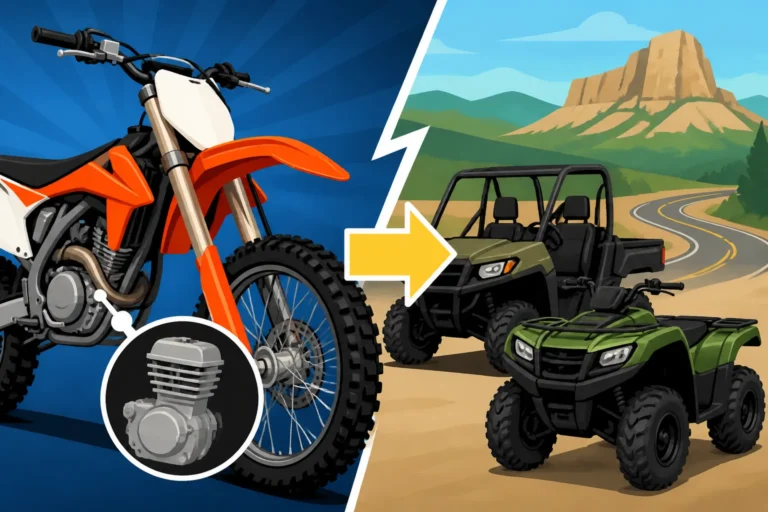
One of the foundational requirements for an ATV or UTV to be ridden on public roads in South Dakota is related to its engine size. To legally obtain a street-legal plate, your machine generally needs an engine displacement of at least 200 cubic centimeters (cc). This rule is designed to ensure vehicles on public roads have adequate power and stability for traffic. For most modern wider ATVs and virtually all UTVs, meeting this 200cc threshold is rarely an issue, as these machines typically come with significantly larger engines anyway. So, if you're worried your wider UTV might be too large for a plate, it's usually the opposite problem – ensuring it can get a plate.
However, simply having a powerful engine isn't enough. The engine size is just one piece of the puzzle. Once your machine meets the minimum displacement, it must then pass additional equipment inspections to qualify for a South Dakota motorcycle plate. Many wider machines, especially UTVs, are already designed with safety features in mind that make them adaptable for road use. But it's essential to understand that South Dakota doesn't distinguish plate requirements based on width; rather, it focuses on engine size and proper safety equipment for the "motorcycle" classification. For a full breakdown, check out [What South Dakota Requires to Plate an ATV] and [South Dakota's 200cc Motorcycle Licensing Rule].
Equipment Requirements for Street-Legal Wider Machines
To plate your wider ATV or UTV and legally drive it on South Dakota roads, your machine needs to be outfitted with specific safety equipment. This isn't optional; it's a legal mandate to ensure your vehicle is safe for shared roadways and visible to other drivers. The list of required items is fairly standard for road-legal vehicles but can sometimes be overlooked by off-road enthusiasts. These requirements include working headlights and taillights, brake lights, a horn, and at least one rearview mirror. For wider machines, having proper mirror placement is especially important to maintain visibility of traffic behind you, given the potentially broader profile.
Beyond these basics, your tires must be street-legal (no strictly off-road-only tires that lack DOT approval), and your exhaust system needs to meet noise regulations and typically requires a spark arrestor. Remember, while a wider stance might feel more stable, it doesn't exempt you from these equipment rules. It’s crucial to ensure every single item is in working order before you attempt to get your machine plated or take it on public roads. Failing to have any of these can lead to a citation, even if you have a valid plate. Investing in quality, road-compliant accessories, potentially from a brand like SuperATV, can help ensure your wider machine meets these critical requirements. For a comprehensive list, consult [South Dakota Equipment List for Road Use].
Ditch Riding Rules and Vehicle Width
South Dakota has a unique approach to ATV and UTV use on public rights-of-way, commonly known as "ditch riding." For many residents and visitors, this offers a practical way to travel between properties or access trails without loading their machine onto a trailer. However, even with ditch riding, understanding the nuances for a wider machine is important. Generally, if your machine is plated and street-legal, it can typically operate in the ditch of any highway where the county has not opted out of ditch riding. But even if unplated, most ATVs and UTVs can use highway ditches, provided they meet age restrictions and specific operating conditions.
The width of your machine doesn't inherently make ditch riding illegal, but it can certainly affect the practicalities and safety. Some ditches might be narrower or have more obstacles, making it challenging for a wider UTV to navigate safely without inadvertently entering the main roadway or damaging the ditch itself. Always be aware of your surroundings, especially when riding a larger machine. The rules generally state you must ride as close to the outer edge of the right-of-way as practical, and only in the ditch bottom. A wider machine might find this more difficult in certain areas. It’s also crucial to remember that ditches along interstates are always off-limits, regardless of your machine's width or plate status. Familiarize yourself with all the specifics by reviewing [South Dakota Ditch Riding Rules Explained].
Navigating Permits, Penalties, and Practicalities for Wider Machines
So, you've got your wider machine, you know about the trail width limitations, and you understand the basics of road legality. But there are still crucial aspects to consider, particularly regarding permits, the consequences of non-compliance, and some practical advice for maximizing your riding experience in South Dakota with a wider ATV or UTV. The goal is always to enjoy the ride safely and legally, which sometimes requires a bit more foresight for those of us with machines that stretch beyond the standard 50 inches.
Black Hills Motorized Trail Permits and Wider Machines
No matter the width of your ATV or UTV, if you plan to ride on designated motorized trails in the Black Hills National Forest, you will need a Black Hills Motorized Trail Permit. This permit is a separate requirement from any street-legal plate you might have. It's a user fee designed to help maintain the trail system, and it applies to everyone, whether you're a South Dakota resident or visiting from out of state. It's important to clarify that this permit allows you access to the trail system, but it does not magically override any width restrictions for specific trails. A permit for a wider machine only grants you legal access to the trails and forest roads that can accommodate its width.
For owners of machines over 50 inches, this means you still need to purchase the permit, but your riding opportunities on the actual trails will be limited to those specifically marked as wider than 50 inches on the MVUMs. You cannot simply buy the permit and assume you can ride a 50-inch restricted trail. The permit is per machine, not per rider, and ensures that funds are available for the upkeep of the incredible trail network that South Dakota offers. This is why it's so important to pair your permit knowledge with a thorough understanding of trail maps. For details on purchasing and cost, check out [Black Hills Motorized Trail Permit Cost] and [Why South Dakota Charges Everyone the Same].
| Trail Type/Road | Typical Width Limit | Suitable for Machines Over 50 Inches | Requires Trail Permit (Black Hills) |
|---|---|---|---|
| Single-track ATV Trails | 50 inches | No | Yes |
| Wider ATV/UTV Trails | 62 inches or more | Yes (if within limit) | Yes |
| Forest Service Roads | Varies, often open to all | Yes (check MVUM for specifics) | Yes (if used for trail access) |
| Highway Ditches | Varies, not restricted by width specifically | Yes (with caution) | No (if unplated) / Yes (if plated) |
| Paved Public Roads | N/A (requires street-legal plate) | Yes (if street-legal) | No |
Fines and Consequences for Riding Restricted Trails
The rules regarding vehicle width on South Dakota's trails are not just suggestions; they are enforceable laws. If you are caught riding a machine that exceeds the posted width limit on a restricted trail, you could face fines and other penalties. Law enforcement officers, including Forest Rangers, regularly patrol the trail systems, and they are equipped to measure vehicles on the spot. The fine amount can vary, but it's typically a Class 2 Misdemeanor, which can carry a significant monetary penalty and potentially even court costs. Beyond the immediate financial hit, there's also the risk of losing riding privileges or contributing to a negative perception of motorized recreation, which can lead to further restrictions in the future.
Imagine planning a fantastic trip to the Black Hills, only to have it cut short by a ticket because your new UTV was 52 inches wide on a 50-inch trail. It’s a frustrating situation that is entirely avoidable with proper research and planning. The key takeaway here is that "ignorance of the law is no excuse." Always verify the width limits for the specific trails you intend to ride using the most current MVUMs. Don't rely on word-of-mouth or outdated maps. Respecting these rules is paramount to ensuring continued access for all riders. For more on the consequences, see [South Dakota Fines for Riding a Closed Trail].
Strategic Considerations for Owners of Wide Machines
Owning a wider ATV or UTV in South Dakota doesn't mean your riding options are severely limited; it just means you need a different strategy. First and foremost, meticulous planning is essential. Before any trip, sit down with the latest MVUMs and plot out your routes, specifically looking for trails and roads marked as open to your machine's width. Focus on areas known for wider vehicle access, such as the numerous forest roads in the Black Hills. [Where to Ride an ATV in South Dakota] will provide excellent starting points for your research.
Secondly, consider your transport. For many owners of wider machines, trailering to specific staging areas that access wider trails or forest roads is the most practical solution. Attempting to use ditches or plated roads just to get to a restricted trailhead might not be ideal or even legal. Lastly, if your machine is just slightly over the 50-inch mark, research if there are any manufacturer-approved options to reduce its width, though this is less common for UTVs. Some riders might explore aftermarket options like narrower A-arms or different wheel offsets, but always ensure these modifications are safe and don't compromise the integrity of your vehicle. While aftermarket parts from brands like SuperATV can significantly enhance your machine's capabilities, always double-check how they might impact your overall width when planning to ride restricted trails. Planning ahead ensures you spend more time riding and less time worrying about regulations.
Disclaimer
This article is for general informational purposes only and does not constitute professional advice. Laws, prices and regulations vary by location and change over time. Consult a qualified professional for guidance on your specific situation.