Why a Quad Under 200cc Cannot Get a South Dakota Plate
It can be incredibly frustrating to dream of hitting the open roads of South Dakota on your ATV, only to discover that your trusty machine, perhaps a smaller quad you love, simply doesn't qualify for a license plate. Many riders face the disappointment of learning that South Dakota has specific engine size requirements that leave smaller ATVs out of the running for street-legal status. This guide will help you understand exactly why machines under 200cc can't be plated here and what your options are.
Understanding South Dakota's Engine Size Rule for Plates
South Dakota has a clear, albeit often misunderstood, rule regarding the minimum engine size for an off-road vehicle to qualify for a street-legal license plate. The heart of the matter lies in how the state categorizes and plates these machines. Essentially, if you want to ride your ATV on public roads in South Dakota, it generally needs to be plated as a motorcycle. And when it comes to motorcycles, there are specific engine displacement thresholds.
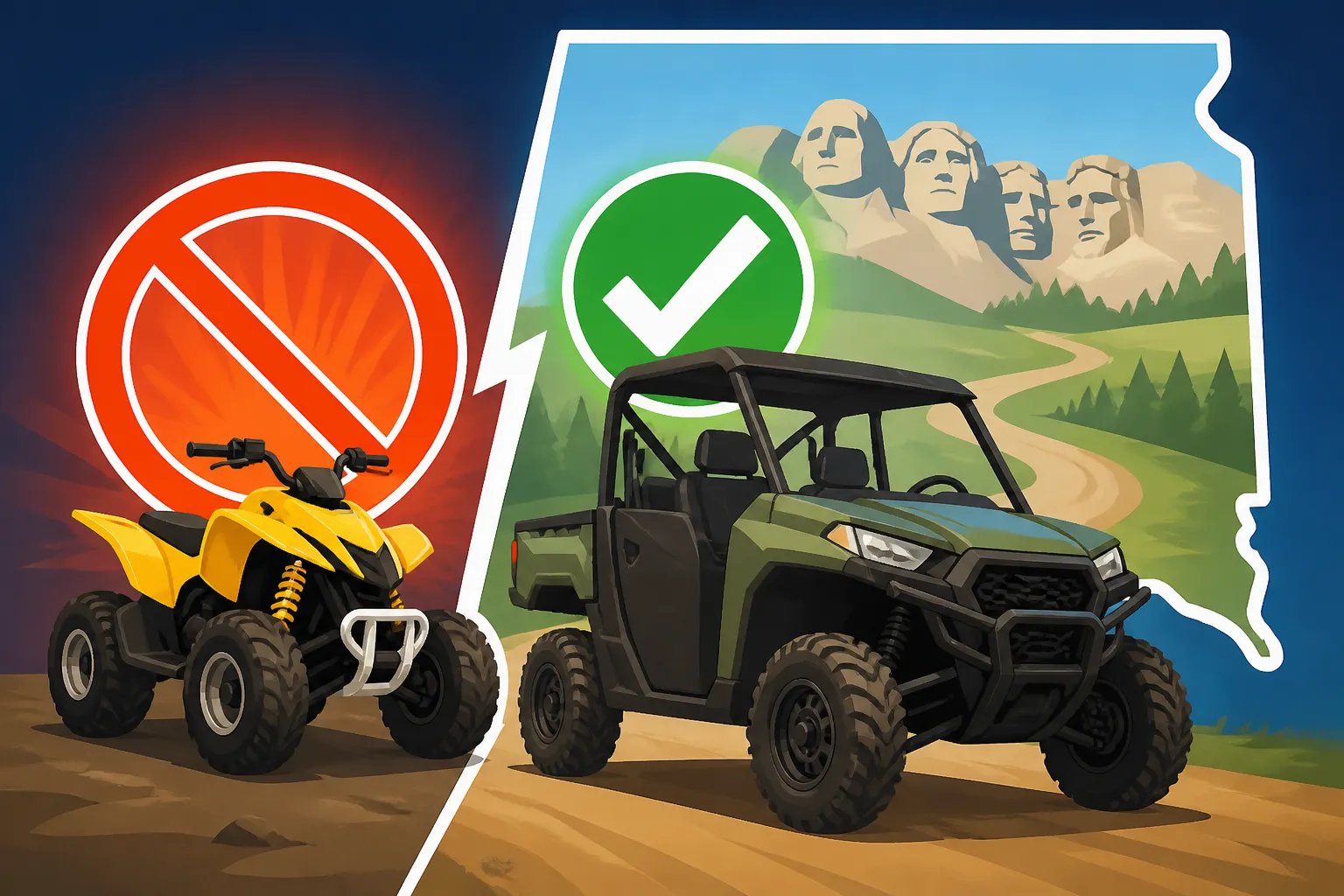
For a four-wheeled off-road vehicle, such as an ATV or UTV, to be considered eligible for a motorcycle plate, it must have an engine displacement of at least 200 cubic centimeters (cc). This rule isn't arbitrary; it's a legislative decision aimed at ensuring that vehicles sharing the road with cars, trucks, and traditional motorcycles meet certain performance and safety expectations. A machine under 200cc, while perfectly capable and fun on trails, is generally deemed by the state not to possess the necessary power or stability for safe integration into mixed public road traffic.
Think about it from a safety perspective. While your smaller quad might feel zippy on a trail, the demands of road use are different. You need sufficient acceleration to merge, enough power to maintain speed, and a certain mass for stability, especially if you encounter crosswinds or need to react quickly to other vehicles. The 200cc threshold, for ATVs, is South Dakota's way of drawing a line in the sand for these capabilities. It doesn't mean smaller machines are unsafe inherently, just that they're not considered suitable for the public road environment where larger, faster vehicles are prevalent.
The Motorcycle Plate Connection
Many riders scratch their heads wondering why their ATV is being treated like a motorcycle for plating purposes. It's important to understand that South Dakota doesn't have a separate "ATV plate" category for road use. Instead, if your ATV meets certain criteria – including that crucial 200cc engine minimum for four-wheeled machines (or 120cc for two-wheeled dirt bikes) – it can be issued a standard motorcycle plate. This means your quad, when legally plated, will display a motorcycle-sized license plate, and you'll be subject to many of the same rules that apply to motorcycles on South Dakota roads.
This distinction is fundamental to understanding the plating process. It's not just about getting any plate; it's about getting the right kind of plate that allows road access. The state wants to ensure consistency in how vehicles are classified for on-road operation, and for ATVs, the motorcycle category is where they've been placed, provided they meet the specific requirements. This is why you'll often hear discussions about [South Dakota's 200cc Motorcycle Licensing Rule] when talking about plating an ATV.
Why the Specific Engine Size Threshold?
The 200cc engine size threshold for four-wheeled machines, and 120cc for two-wheeled dirt bikes, is part of a broader regulatory framework. It's designed to differentiate between recreational off-road vehicles and those deemed capable of safely navigating public roads. Smaller machines are often lighter, have lower top speeds, and less robust suspension systems, which, while fine for off-pavement adventures, can be less predictable on asphalt at higher speeds. The state's goal is to ensure public safety by setting minimum standards for vehicles allowed to operate on its extensive road network, from quiet gravel section lines to busier state highways.
This regulation helps to maintain a baseline for road-legal vehicles. It's a pragmatic approach to avoid a free-for-all where any off-road vehicle, regardless of its design or performance, could be used on public thoroughfares. It also simplifies enforcement for law enforcement officers; they can quickly assess if a machine meets the basic criteria for road-legal operation simply by checking its engine size and the presence of a proper plate. You can find more details about what the state considers an off-road vehicle and its rules for road use by checking resources like [How South Dakota Defines an Off-Road Vehicle].
What This Means for Smaller ATVs
So, what does this 200cc rule mean for you if your beloved ATV falls below that threshold? Unfortunately, it means that your machine will not be able to obtain a South Dakota license plate for on-road use. This can be a real disappointment, especially if you had plans to ride from your campsite to a nearby trailhead, or to cruise down a scenic gravel road.
The inability to plate a sub-200cc ATV means it's restricted to off-road environments. This includes private property (with permission), designated OHV parks, and sanctioned trails where street-legal status isn't required. It's a stark contrast to larger machines, which, once plated, open up a vast network of legal road access across the state, including many section lines and gravel roads.
Limitations for Sub-200cc Machines
Without a license plate, your smaller ATV is inherently limited in where it can legally operate. You cannot ride it on paved public roads, state highways, or even most county gravel roads. Attempting to do so could result in fines and citations. This restriction is often a source of frustration for riders who see their friends on larger machines enjoying the freedom of road access while they're confined to trailers and specific off-road areas.
It's also important to remember that this rule applies universally, regardless of how well-maintained your smaller quad is or how many aftermarket accessories you've added. You might have invested in top-tier suspension or rugged tires from a company like SuperATV, designed for the toughest trails, but these upgrades won't change the fundamental fact of your machine's engine displacement. The state's rule is based purely on that cubic centimeter measurement.
Where You Can Still Ride Your Smaller ATV
Just because your smaller ATV can't get a plate doesn't mean your riding adventures are over in South Dakota. Far from it! The state boasts a fantastic network of trails and designated riding areas that are perfect for unplated machines. These areas are specifically designed for off-road recreation, offering diverse terrain and experiences without the need for a license plate.
For instance, the Black Hills National Forest offers hundreds of miles of motorized trails, many of which are perfect for ATVs of all sizes. Places like Oahe Downstream OHV Area and Revheim Bay OHV Area are also excellent choices where the focus is purely on off-road fun. These locations are where your sub-200cc machine can truly shine, navigating challenging terrain, kicking up dust, and providing all the thrills you bought it for. You might even find that some areas have specific width restrictions, making your smaller quad a perfect fit. For planning your adventures, consider resources like [Where to Ride an ATV in South Dakota].
Exploring Alternatives and Permitted Riding
While a traditional South Dakota license plate might be out of reach for your sub-200cc ATV, there are still avenues for legal and enjoyable riding in the state. Understanding these alternatives is key to making the most of your machine.
One crucial distinction to make is between a license plate for road use and a permit for trail use. Many of South Dakota's designated motorized trails, particularly those in the Black Hills National Forest, require a Black Hills Motorized Trail Permit. This permit is separate from a road-legal plate and is required for all motorized off-road vehicles using these trails, regardless of their engine size or whether they have a street-legal plate from another state.
The Nonresident ORV Permit
If you're visiting South Dakota from out of state and your ATV doesn't qualify for a South Dakota plate (or you simply don't want to go through the full titling and plating process here), you might look into the [South Dakota's Nonresident ORV Permit]. This permit is specifically designed for out-of-state visitors to legally operate their off-road vehicles on designated trails and some other permitted areas. It doesn't grant you street-legal status, but it ensures you're compliant for trail riding.
It's a straightforward process, and it allows riders of all eligible ORV types and sizes (including those under 200cc that don't meet plating requirements) to enjoy the incredible trail systems without worrying about violating state rules. However, remember that this permit is specifically for off-road use; it doesn't magically make your small quad street legal.
Riding on Private Land
One of the most straightforward ways to ride any ATV, regardless of engine size or plate status, is on private property with the landowner's explicit permission. This is often the primary domain for youth ATVs or smaller recreational machines that are strictly for fun and not intended for road use. Many farms and ranches across South Dakota have extensive private trails, fields, and open areas where you can ride freely.
If you have friends or family with private land, or if you yourself own property, this offers unlimited opportunities to enjoy your machine without needing to worry about state plating or permitting requirements. Always ensure you have clear permission and respect the landowner's rules. For general guidelines, consider learning about [South Dakota Rules for Riding Private Land].
| Engine Size Category | South Dakota Plate Eligibility (ATV) | Primary Legal Riding Locations | Additional Permits/Requirements |
|---|---|---|---|
| Under 200cc (4-wheel) | No | Private Land, Designated OHV Areas, Some Forest Trails | Black Hills Motorized Trail Permit (for trails), Landowner Permission |
| 200cc and Up (4-wheel) | Yes (plated as a motorcycle) | Public Roads (where permitted), Private Land, Designated OHV Areas, All Forest Trails | Black Hills Motorized Trail Permit (for trails), Driver's License, Required Equipment (for road use) |
| Under 120cc (2-wheel) | No | Private Land, Designated OHV Areas, Some Single-Track Forest Trails | Black Hills Motorized Trail Permit (for trails), Landowner Permission |
| 120cc and Up (2-wheel) | Yes (plated as a motorcycle) | Public Roads (where permitted), Private Land, Designated OHV Areas, All Forest Trails | Black Hills Motorized Trail Permit (for trails), Driver's License, Required Equipment (for road use) |
Note: This table summarizes general rules for ATV/UTV road access and trail permits. Specific regulations and designated areas may have additional requirements.
Navigating the Frustration and Making Informed Choices
It's completely understandable to feel a pang of frustration when you learn about these rules, especially if you just purchased a smaller quad with visions of hitting all the scenic routes. Many riders move to South Dakota or visit, only to discover that the regulations around ATVs and UTVs on public roads are more nuanced than they might have expected. The expectation that "an ATV is an ATV" and should be able to get a plate often clashes with the specific classifications and requirements of the state.
This isn't South Dakota trying to spoil your fun; it's the state attempting to balance recreational opportunities with public safety on shared infrastructure. While it might seem like a bureaucratic hurdle, these rules are in place for a reason, even if that reason isn't immediately apparent or personally convenient.
Why This Rule Can Feel Restrictive
For riders who primarily enjoy leisurely cruises or need a utilitarian machine for chores around a property, a smaller ATV often makes perfect sense. They're lighter, sometimes easier to handle, and often more fuel-efficient. The idea that these capable machines are barred from even quiet gravel roads can feel overly restrictive, especially when larger, more powerful UTVs easily qualify for plates. It creates a perceived inequality that can be genuinely irritating.
This frustration is particularly acute for those who bought a smaller machine before understanding the local plating laws. You might have envisioned using your ATV for quick errands or short hops between properties, only to realize you need to trailer it everywhere you go. It changes the entire dynamic of ownership and use.
Making an Informed Decision
If you own a sub-200cc ATV and want to ride in South Dakota, your best bet is to embrace its capabilities as an off-road machine. Focus on the extensive trail systems and private land opportunities. Invest in good off-road gear, perhaps even from a brand like SuperATV, to enhance its trail performance and durability. You can make your machine an absolute rockstar on the trails, even if it's not a road warrior.
If road-legal access is an absolute must-have for you, then you might need to consider a different machine in the future. For example, some riders find that a larger ATV or UTV, meeting the 200cc minimum, offers the versatility they desire. When buying a used machine, always verify its engine size and title status. You can learn more about this by reading articles like [Checking a VIN Before a South Dakota Purchase] or [Buying a Used ATV in South Dakota].
Ultimately, understanding these rules from the outset, whether you're buying a new machine or bringing one into the state, saves a lot of headaches down the road. South Dakota is an incredible state for ATV and UTV enthusiasts, with breathtaking scenery and diverse riding opportunities. Knowing the specific rules for your machine ensures that your adventures are always legal, safe, and enjoyable.
Disclaimer
This article is for general informational purposes only and does not constitute professional advice. Laws, prices and regulations vary by location and change over time. Consult a qualified professional for guidance on your specific situation.